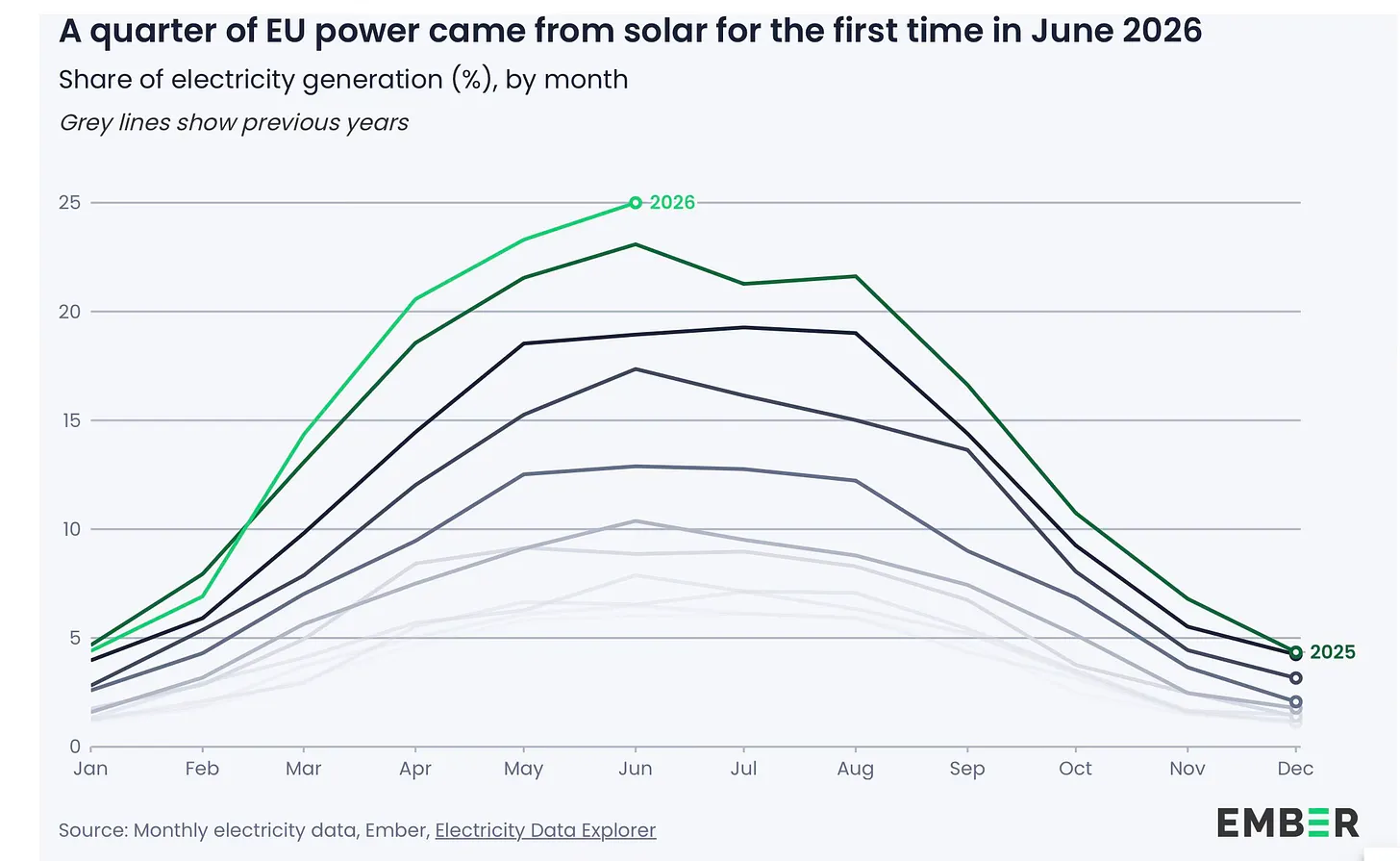
Need-to-Know: Solar is poised to become the world’s largest source of electricity in the next couple of years
Wind and solar together generated more electricity than gas globally for the first time in April. Yes, globally. Wind and solar produced a record 531 terawatt-hours (TWh) of electricity, compared with 477 TWh from gas.
Just five years ago, combined solar and wind generation totaled only 245 TWh in April 2021. While solar and wind electricity production has more than doubled over those five years, gas generation has remained exactly the same as in April 2021.
No one can talk anymore about whether renewables are economically viable or reliable. The question is whether fossil fuels can remain competitive.
—Francesco La Camera, Director-General, the International Renewable Energy Agency
Need-to-Know: Coal-power declined in 2025 even as China added more coal power plants
Wind and solar generation increased 18% globally in 2025. Gas use increased by only 0.6% and coal-fired power fell by 0.6%, despite China’s addition of 90 gigawatts (GW) of new capacity.
Every year, humanity uses more power than the year before. That’s a big part of the reason why fossil fuel emissions keep going up and up. However, new solar and wind additions covered last year's increase in global power demand.
Need-to-Know: Renewables now produce more electricity than coal worldwide.
Renewables have overtaken coal in every region except Asia, where coal accounts for more than 50% of electricity generation.
Solar is poised to become the world’s largest source of electricity before 2030, with wind close behind.
Two key things to remember about renewables:
1. They tap into free sources of energy—sun, wind, water.
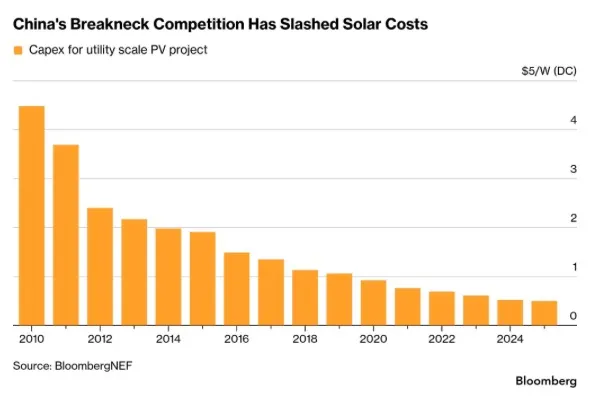
2. Solar and wind also benefit from the “experience curve”—increasing production volumes, along with innovation and continuous technical improvement, lead to greater efficiency and lower costs.
That’s why the cost of solar panels has fallen 90% since 2000, while the cost of grid-scale batteries has fallen by 90% since 2010. Meanwhile, fossil fuel prices show no signs of declining and remain unpredictable.
Consider this fact: The EU has been forced to pay an additional 37 billion euros in the 100 days since the start of the US-Israel war with Iran, because of increased fossil fuel prices.
All fossil-fuel-importing countries could pay more than +$500 billion more this year because of that conflict. All of us are paying more. As I wrote back in April:
The fastest and most affordable way to protect oil- and gas-importing countries from the price and supply volatility of oil and gas imports is with electrotech—solar and wind power generation, battery storage, electric vehicles, and heat pumps.
Need-to-Know: Intermittency is dead—24/7 wind and solar power is now a reality
Solar and wind, paired with sufficient battery storage, can now deliver “firm power,” i.e., electricity 24 hours a day, seven days a week. They can do so at costs that are competitive with coal and natural gas in many parts of the world. In some regions, they are significantly cheaper, according to a new cost analysis by the International Renewable Energy Agency (IRENA).
For example, the cost of a solar-plus-storage system that provides electricity 24/7 ranges from $54 to $82 per megawatt-hour (MWh). New gas-fired generation often costs over $100 per MWh. And there’s the 5-7 year wait list to make new gas turbines.
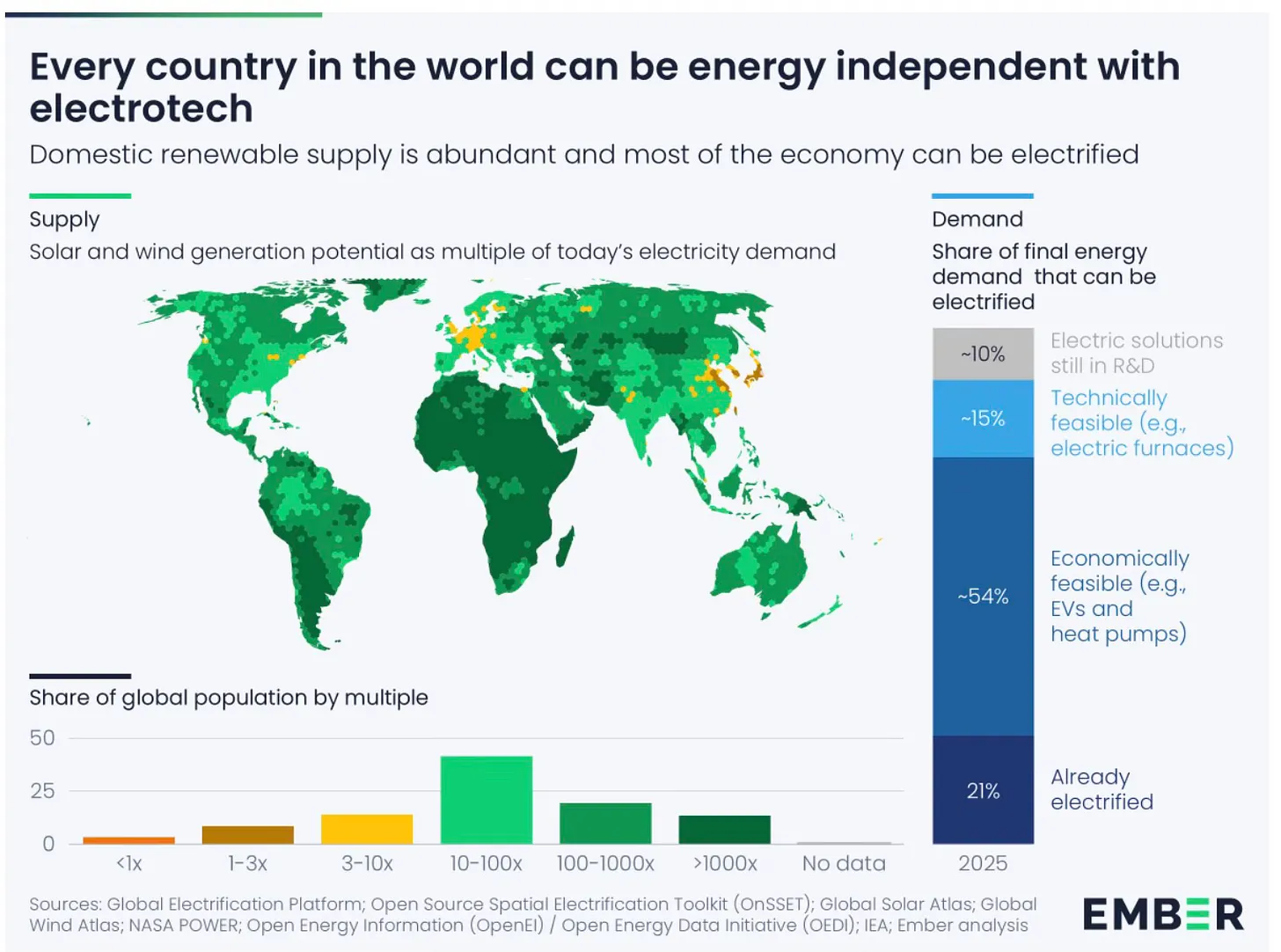
Need-to-Know: Electricity is the fastest-growing energy source globally.
More and more companies and countries are ridding themselves of their expensive, dirty, fossil-fuel-burning tech in favor of cheaper, more efficient, cleaner electrotech.
Until next time. Be well.
Stephen