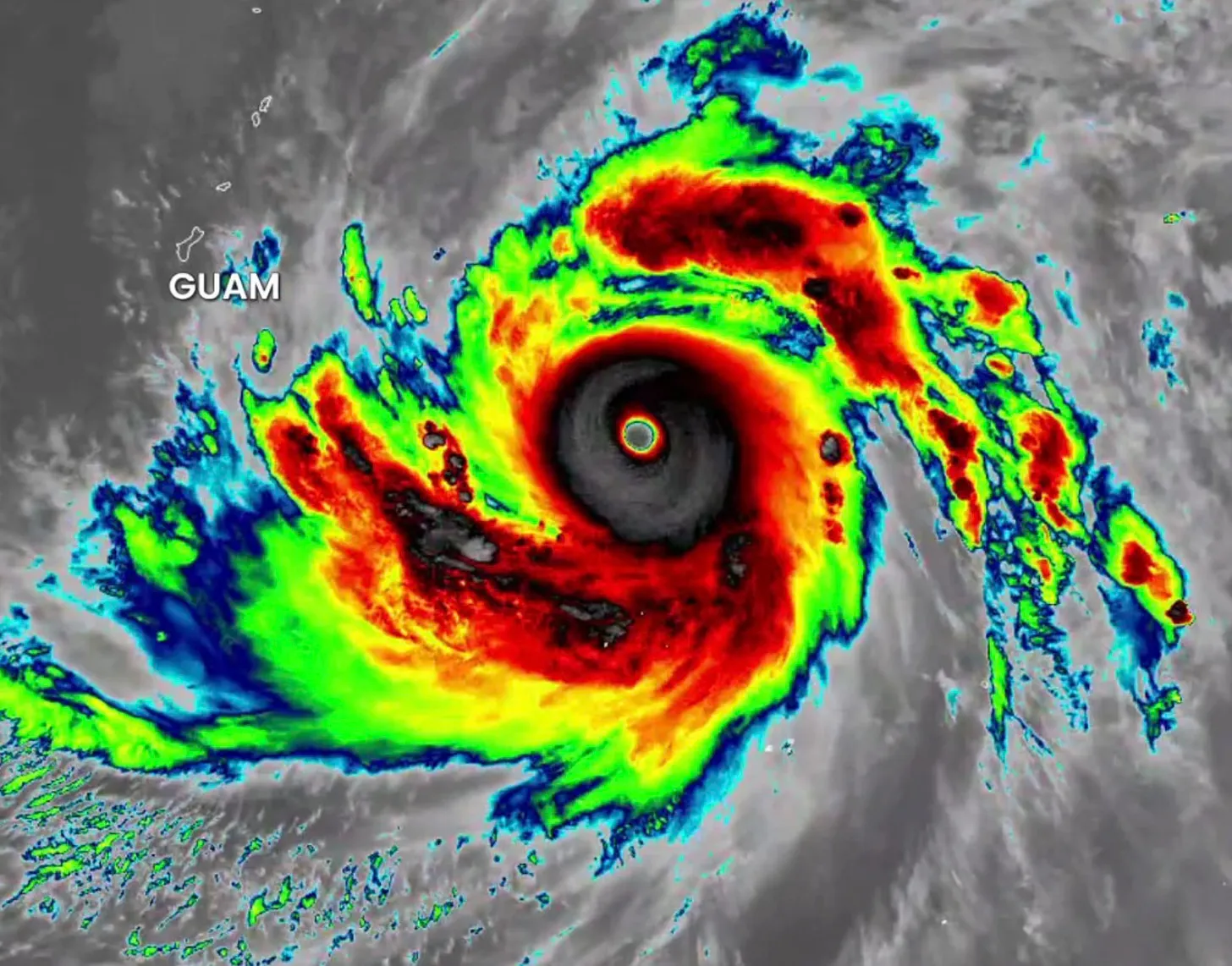
The Godzilla of El Niños is shredding hurricanes in the Atlantic while stirring up Asia’s worst typhoon season.
This is the least active Atlantic hurricane season in over 60 years. No hurricane has formed in the Atlantic Ocean yet, when there should have been two or three by now. And we’re more than halfway through the season.
Only 5 tropical storms have been named in the Atlantic. A tropical storm is named when sustained winds reach 63 kilometers per hour (km/h). To become a Category 1 hurricane, wind speeds must exceed 120 km/h.
This year’s 5 named storms were small and short-lived, collectively generating an accumulated cyclone energy (ACE) value of 4.4. ACE measures how long storms last and how strong they get. A 4.4 ACE is the lowest ever at this point.
The average ACE value for an entire Atlantic hurricane season is 123.
Need-to-Know: Texas to Florida should thank El Niño
Folks in the Caribbean and Southeast U.S. can thank the monster El Niño emerging from the Pacific for the hurricane drought.
El Niños events are known to tear apart tropical storms in the Atlantic before they can ramp up into hurricane strength.
The conditions in the central Pacific that give birth to El Niños often produce lots of vertical wind shear over the Atlantic. Wind shear—significant changes in wind speed or wind direction—disrupts the structure of a growing storm.
This summer, wind shear has been the strongest in over 40 years—thanks to the strongest-ever Super El Niño.
All that wind shear has limited tropical storm formation and growth, even with near-record-high ocean temperatures in the Gulf of Mexico and Caribbean.
It is worth remembering that the 1992 hurricane season produced only seven named storms, but one was Andrew, a Category 5 hurricane that caused 65 deaths and nearly $30 billion in damages.
Need-to-Know: No hurricanes? How about 14 hurricanes in the Pacific… so far
In sharp contrast to the quiescent Atlantic, the Pacific hurricane (typhoon) season is hyperactive with 37 named storms so far.
(Note: In the Pacific, hurricane-strength storms are officially called typhoons, although some media confusingly call named storms typhoons. Super Typhoons are equivalent to a Category 3 or stronger hurricane.)
Of the 37 named storms, 14 reached hurricane strength, and 8 of those were Category 3 to 5 super storms. This includes a couple of hurricanes that sideswiped Hawaii, causing more than $5 billion in damage.
The Pacific’s ACE value is a whopping 397, up from an average of 266 for this time of year. That’s 50% more hurricane activity.
Keep in mind that the Pacific Ocean is nearly twice as big as the Atlantic Ocean and averages 45 named storms a season. That’s more than three times as many storms as the Atlantic.
That said, an ACE of 397 in the Pacific vs. 4.4 in the Atlantic is a historic disparity.
An active typhoon or hurricane season needs two essential ingredients:
1. Hot water. Warm ocean water fuels tropical storms, while extremely warm ocean water is jet fuel for hurricanes and typhoons.
2. Weak wind shear. Ironically, a super typhoon can only be born in a calm, serene atmosphere.
The Godzilla of El Niños is expected to peak in November or December, with ocean temperatures in the central Pacific 4.0 degrees C above normal. That’s well beyond what most scientists thought was possible. (All that warm water is being pulled out of the ocean’s depths and will make 2027 the hottest year in 125,000 years by a long shot. There will be consequences.)
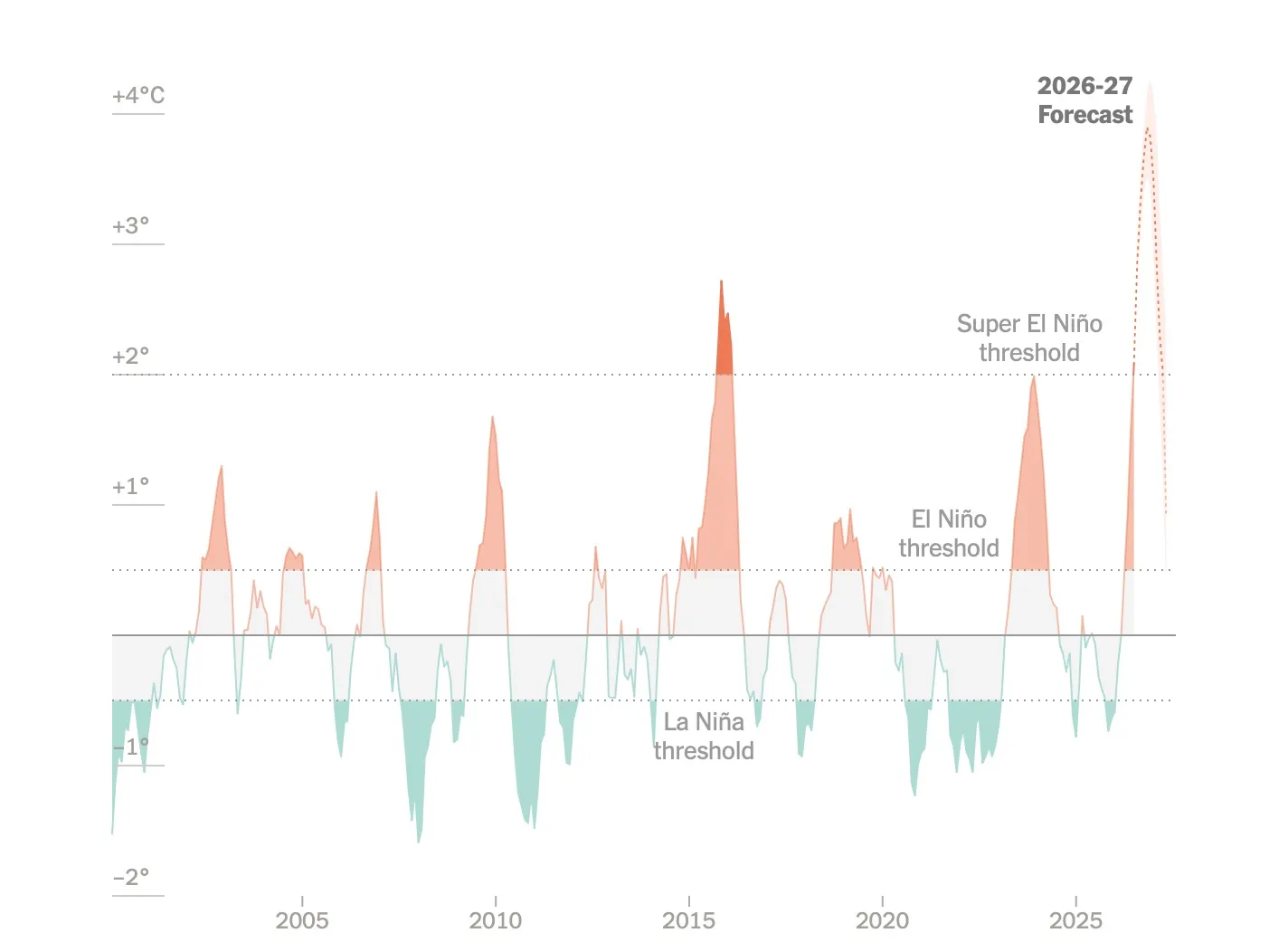
FYI: El Niños redistribute existing heat. They do not add heat, unlike emissions of CO2 and other greenhouse gases.
Those off-the-charts sea surface temperatures will provide ample fuel for many more typhoons and super typhoons over the next few months. However, less predictable wind shear will ultimately determine how the season plays out.
Need-to-Know: Climate change is turning regular El Niños into more powerful Super El Niños
Climate change is increasing the strength of El Niños, according to a recent study.
September through November are among the most active hurricane months in the Atlantic and Pacific. Forecasters expect the Pacific hurricane (typhoon) season to end with ACE values at least 60% higher.
The damages, economic losses, and deaths across the Pacific will also be far higher than average
For example. China reported $8.5 billion in direct losses and up to 320 deaths from three named storms in July that caused extensive flooding.
Meanwhile, the Southern Hemisphere’s hurricane season will just be getting started.
Until next time. Be well.
Stephen