Solar, wind, batteries, electric vehicles, and heat pumps offer an affordable escape from the volatile world of fossil energy.
Jet fuel prices have increased by 70%, gasoline prices by 30% to 40%, and wholesale gas by at least 60%. Heating oil, which many rural households rely on, has climbed even higher.
Need-to-Know: Countries spent at least $1.7 importing oil and gas last year. It’ll be a lot more this year.
For every $10-per-barrel increase in oil prices, global net import costs rise by about $160 billion a year, according to a new report by Ember.
If oil averages $110 a barrel this year, it will cost oil-importing nations an additional $480 billion, compared to 2024.
Yes, that’s an extra $480 billion we’ll have to dig out of our wallets to maintain our addiction to oil.
It’s also a potential $480 billion windfall for the oil industry—the world’s richest in history.
Need-to-Know: We will be hundreds of $billions out of pocket because of the war in Iran.
About 75% of the world’s population lives in fossil-fuel-importing countries, including the UK and the EU. These countries spent at least $1.7 trillion on oil and gas imports in 2024, assuming an average oil price of $80 per barrel.
Before the war in Iran, most forecasts had projected oil prices of $60 to $65 a barrel for 2026. Oil was $120 a barrel yesterday.
Share Need to Know by Stephen Leahy
It’s the same story for countries that import LNG. They are paying $billions more for this frozen, pressurized gas.
Need-to-Know: Fossil-fuel volatility has become a clear threat to global stability.
So, where is all this money for this coming from?
We’re all being forced to pay higher prices for everything as a result.
Many governments (France, Italy, Canada, Ireland, and dozens more) are using $billions of dollars in public money to moderate oil and gas price increases. That means higher government deficits and cuts to publicly-funded programs like health care, education, social security, and so on.
The fastest and most affordable way to protect oil- and gas-importing countries from the price and supply volatility of oil and gas imports is with electrotech—solar and wind power generation, battery storage, electric vehicles, and heat pumps. (See: Our Electrotech Revolution.)
Need-to-Know: Electrotech brings energy security, stable power prices, and big CO2 reductions
Fortunately, electrotech alternatives have become cheaper, better, and more readily available since the 2022 energy crisis.
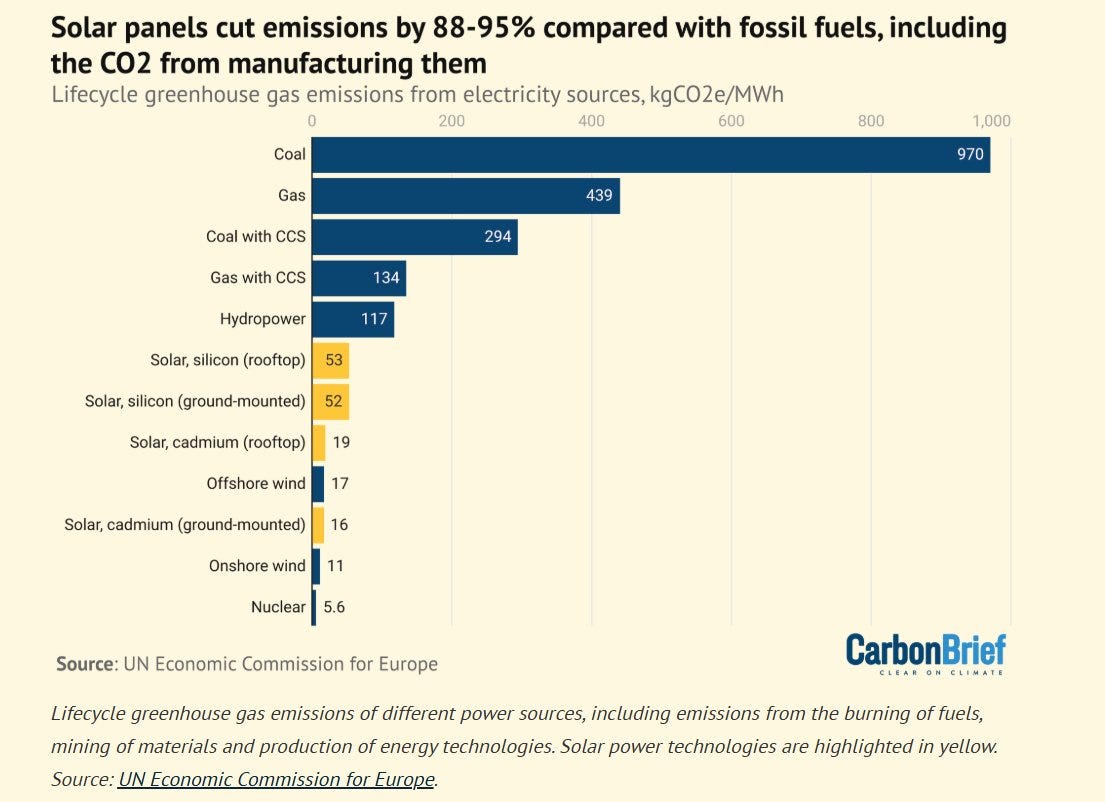
For example, since 2022, the cost of solar panels has dropped by half, and annual solar installations have nearly tripled. Battery prices decreased by 36%, and yearly deployment of grid batteries increased sevenfold.
Unlike fossil fuels, wind and solar energy resources are abundant and accessible everywhere. The sun and wind are not affected by geopolitics, tariffs, shipping delays, chokepoints, price volatility, currency fluctuations, or conflicts.
Although intermittent, solar and wind power have a significant efficiency advantage since 60% to 65% of energy produced by fossil fuels is lost as waste heat. (See: Yes, One Third of ALL Energy USED is from Renewables.)
Need-to-Know: About half of low-income countries have a higher share of solar energy than the U.S. and higher rates of electrification
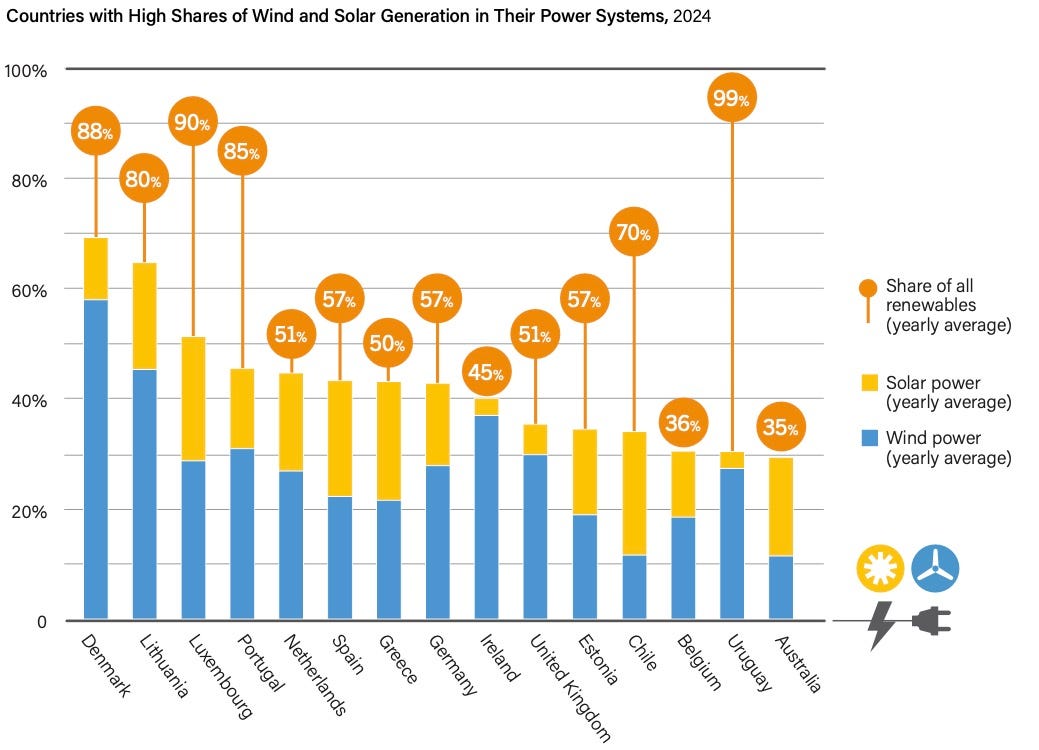
The lowest-income countries have been among the most eager to reduce their oil and gas imports with electrotech such as Pakistan, Senegal, and South Africa.
Cuba, currently under an oil embargo by the U.S., has increased its solar capacity by 350% since 2024, using low-cost Chinese solar panels. Solar and other renewables may provide 15% of Cuba’s power this year.
Need-to-Know: EVs eliminated over 800 million barrels of oil
Electric vehicles have already slashed oil consumption by 2.3 million barrels per day last year. That will jump to 5.25 million barrels a day in 2030, according to BloombergNEF’s analysis.
Before the +40% hike in gasoline and diesel prices, owning an EV saved up to $2,200 a year in fuel costs, according to a 2024 analysis by the U.S. Department of Transportation. (The webpage has escaped the purge by the Trump White House.)
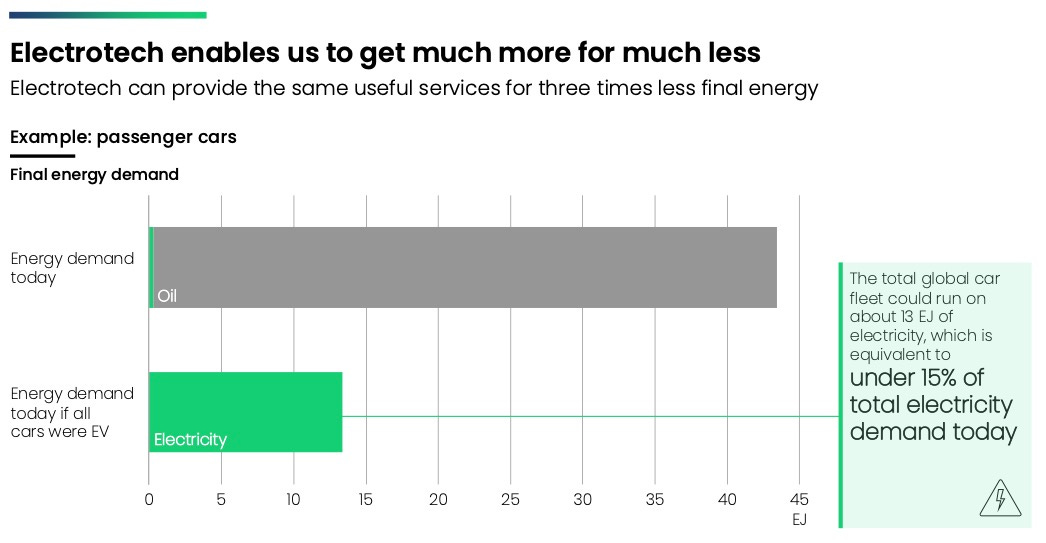
Need-to-Know: EV sales are soaring nearly everywhere.
India’s EV sales jumped 24.6%, Europe was up 31%, the UK was up 24.2%, and Australia saw a huge 89% increase. South Korea 172% increase in February, thanks to a revised subsidy program.
Hope this was helpful. Do share
Until next time. Be well.
Stephen