
A young adult walking slowly will show cardiovascular strain, with a “feels like” temperature of only 27 °C*, according to a lab study conducted in a special hot box.
Crank the temp and humidity up to 29.4 °C, and a young person’s heart starts to work harder to cool the body even when sitting down.
These are healthy young adults being tested.
Prolonged exposure to these levels of heat and humidity may become dire for vulnerable populations such as the elderly and those with heart disease and other chronic conditions, the study concluded.
Even in dry, hot environments, there is a limit to how much the body can sweat and still stay cool enough. For example, 45 °C with 20% humidity can cause cardiovascular strain in a young person, even when sitting in the shade.
Our bodies sweat to cool off via evaporation. When it’s humid, water evaporates slower, making it harder to cool down. If we can’t cool off, our body’s core temperature rises, which causes our hearts to work harder to pump more blood to the skin to help dissipate the heat. Should our core temperature continue to rise, our internal organs can be damaged, and death can occur within a few hours.
Need-to-Know: Dangerous heat waves now affect most of the world every summer.
We live on a much hotter planet than 60 years ago. And it’s getting hotter every year.
(See my 2022 post: Europe Now Endures 3 to 4 times More Heatwaves).
Heat kills thousands of people every year, often because they have other health issues. That doesn’t diminish the risk. We all will have health issues at some point that could endanger our lives during a heat wave.
There are record-breaking heat waves worldwide every year now.
Need-to-Know: Heat waves last longer and are hotter than in the past.
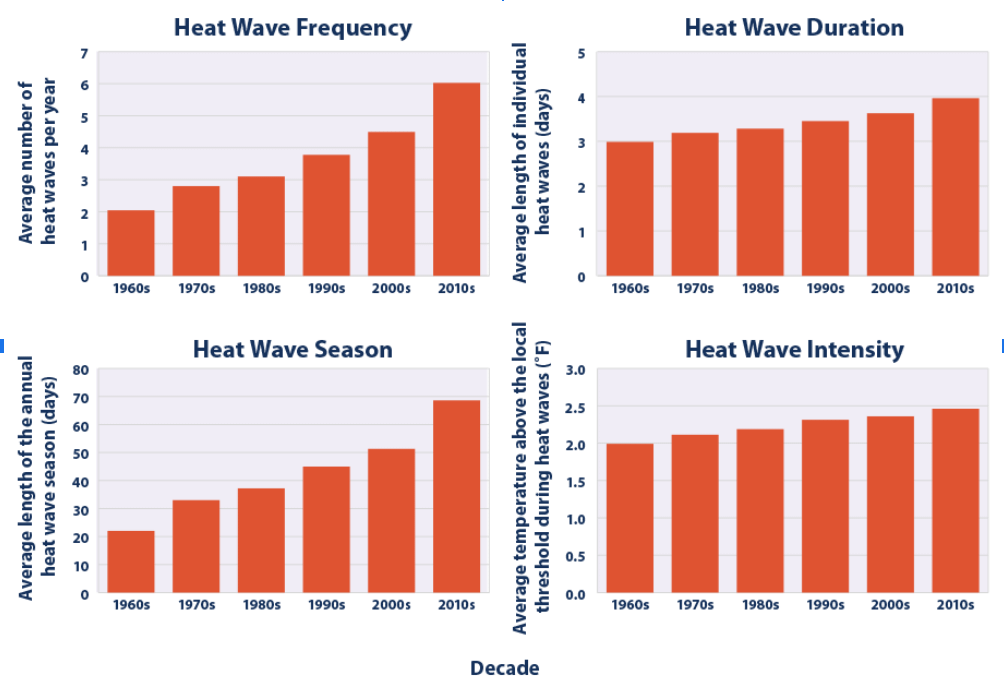
We need to understand the health risks of extreme heat and learn how to live with a hotter climate.
Equally important, we need to stop making things hotter to protect ourselves, our families, and our communities.
Until next time, be safe and stay cool.
Stephen
*"Feels like” or “real feel” or "heat index" temperatures are similar to wet-bulb temperature (WBT) used in the study. WBT takes temperature, humidity, wind speed, and other variables into account.