England’s record points scorer retired after 2025 World Cup following 17 years and 119 games. So what are her best memories of a career that spanned generations?

MORGAN HARLOW/THE RFU COLLECTION VIA GETTY IMAGES
We had to get one thing out of the way early. I was embarrassed to mention it — though, implacably, I believe it. And I knew enough of the character of Emily Scarratt to know that she would find it hard to answer. Here goes then. “Emily,” I boldly ask, “are you, as you have been described by many people, including on your own podcast, the GOAT — the greatest woman player of all time?”
“I find it difficult to cope with,” Scarratt replies. “I got a lot of it when I announced my retirement [soon after winning the World Cup in September]. I’d never describe myself as that. I love the game, which is why I did it, and always just wanted to be the best version of myself — but not by killing myself in the process.
“I always wanted to squeeze as much out of myself but it was always about the enjoyment, and the journey the game has been on while I was part of it. I am grateful to have lived in this time.”
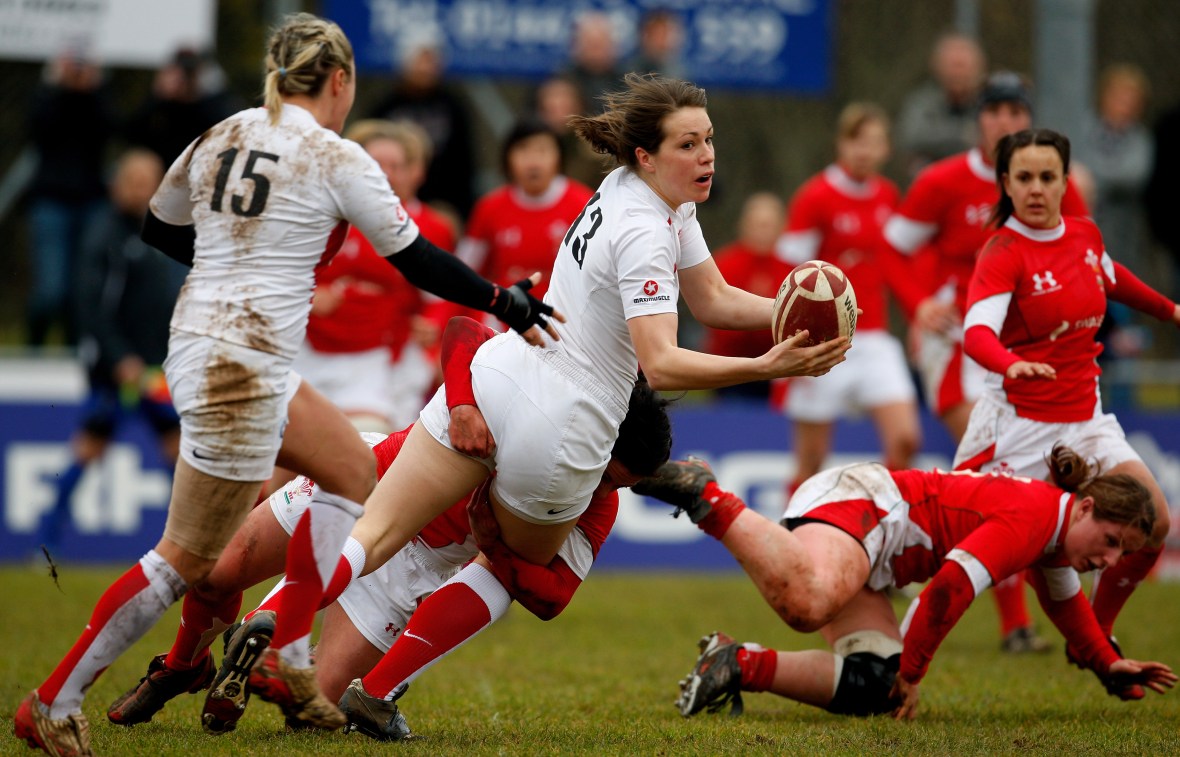
Scarratt in the early stages of her international career in 2009
STU FORSTER/GETTY IMAGES
Me too. Otherwise I would have missed her, and missed a galaxy of golden-era players, from Gill Burns to the rocket that is Ellie Kildunne, the signature player at this year’s World Cup, and all the great women in between: Portia Woodman, Liza Burgess, Maggie Alphonsi, Rochelle Clark, Heather Fisher, Catherine Spencer, Sarah Hunter, Abbie Ward, Sadia Kabeya, Rachael Burford, Danielle Waterman and enough others to fell forests for the paper necessary to record them.
For me Scarratt, 35, still stands out, for her play, her demeanour, her status as an ambassador for women in rugby, and for rugby. She won 119 caps in a 17-season career with England, was voted World Rugby women’s player of the year, and is England’s leading points scorer with 754. She was the best goalkicker of her era, she changed the opposition game because of the distances from which she could deliver penalties.
A devastating attacker, she played in five World Cups, in which she was twice part of the winning squad. She led Great Britain in the sevens at the Rio Olympics. And at the end, it seems to everyone who knows her that she was the same person as she was at the start.
Some of the players once told me that they were tired of her being great at everything. So when they had time off during an England camp a small group went to practise at a golf range, determined that they would find a sport in which they could beat her. On the appointed day they invited her to the range and gathered with a bagful of random clubs to take their glory. But then Scarratt drove up, parked and went to the boot of her car to draw out a gleaming set of golf clubs. She was clearly a proper golfer and the whole plan collapsed.
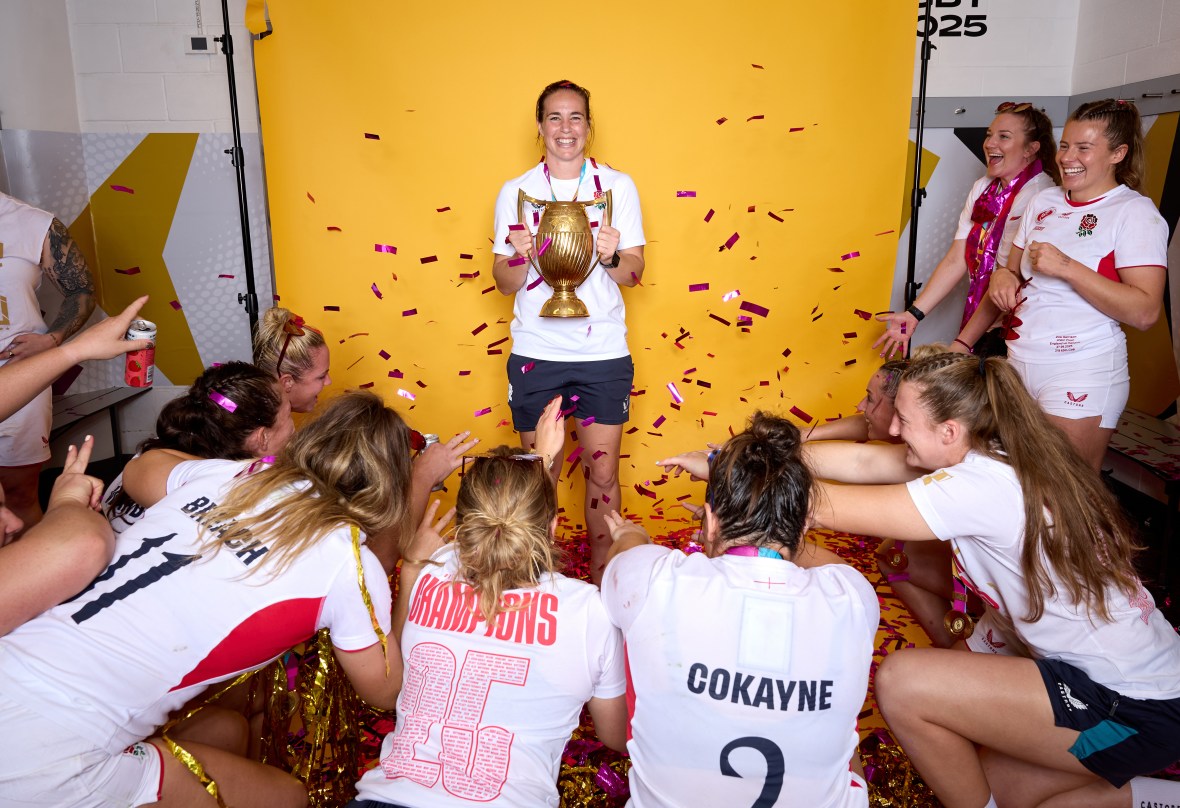
Scarratt had been hampered by injury in the build-up to the World Cup but her contribution did not go unnoticed by her team-mates
How does she view the three lost World Cup finals? Is it greedy not to settle for the two triumphs, in 2014 and 2025? I remember in particular the post-match feeling after England, leading at half-time, had lost devastatingly to New Zealand in the 2017 final in Belfast. Scarratt was brave enough to attend the media conference to explain what was probably, in her head, inexplicable. Her eyes were streaming red but she answered every question and congratulated the winners. Frankly, a few hard old hacks were almost crying too.
“You’re always going to have a place for those you didn’t win. I lost to New Zealand in three finals and if I said it didn’t hurt, then I am not a competitor. But sometimes sport is sport and it doesn’t work out for you. If you understand that, and if you know that you could not have given any more, then you can cope. I would have loved five winners’ medals but that is unrealistic in the sporting world, and you learn something from every loss.”
She is particularly pleased that the present team established a powerful connection with England players of past eras, when the privations were vast, when they had to put in a full day’s work and then act and play like international sportswomen.

The England centre, along with Pieter-Steph du Toit of South Africa, was named World Rugby player of the year in 2019
On one memorable occasion, the recent World Cup squad got together with scores of old internationals, on behalf of whom the great Burns spoke — about what they had endured, the sacrifices, the triumphs in spite of the background.
“I was capped at 18,” Scarratt says. “We would have weekly camps, we often had to travel long distances and I think it was 10p a mile, which didn’t cover any of the costs. Everything happened in London and I was at Leeds University at the time. The support network wasn’t so good, the sport science wasn’t there, girls older than me were taking unpaid leave and sacrificing careers.”
Cast your SWOTY vote
Have your say on this year’s winners — and enter the running for a £1,000 Times Holidays voucher
Sportswomen of the Year: meet the grassroots heroes
But, relatively, she was blessed. You sense that some of the strength of the England squad at present, and a contributor to its glorious triumph, was the knowledge of the courage and struggle of their predecessors.
What are Scarratt’s warmest memories? They are not so much of the grand occasions, but of those moments of hysterically funny comments or actions in the dressing room or the team room, or on the coach. “But I do remember getting off the bus before the final at Twickenham,” she says. The England team were mobbed by thousands of followers. “It was all the things I never thought I’d be part of, or that I’d only ever see at a men’s game.”
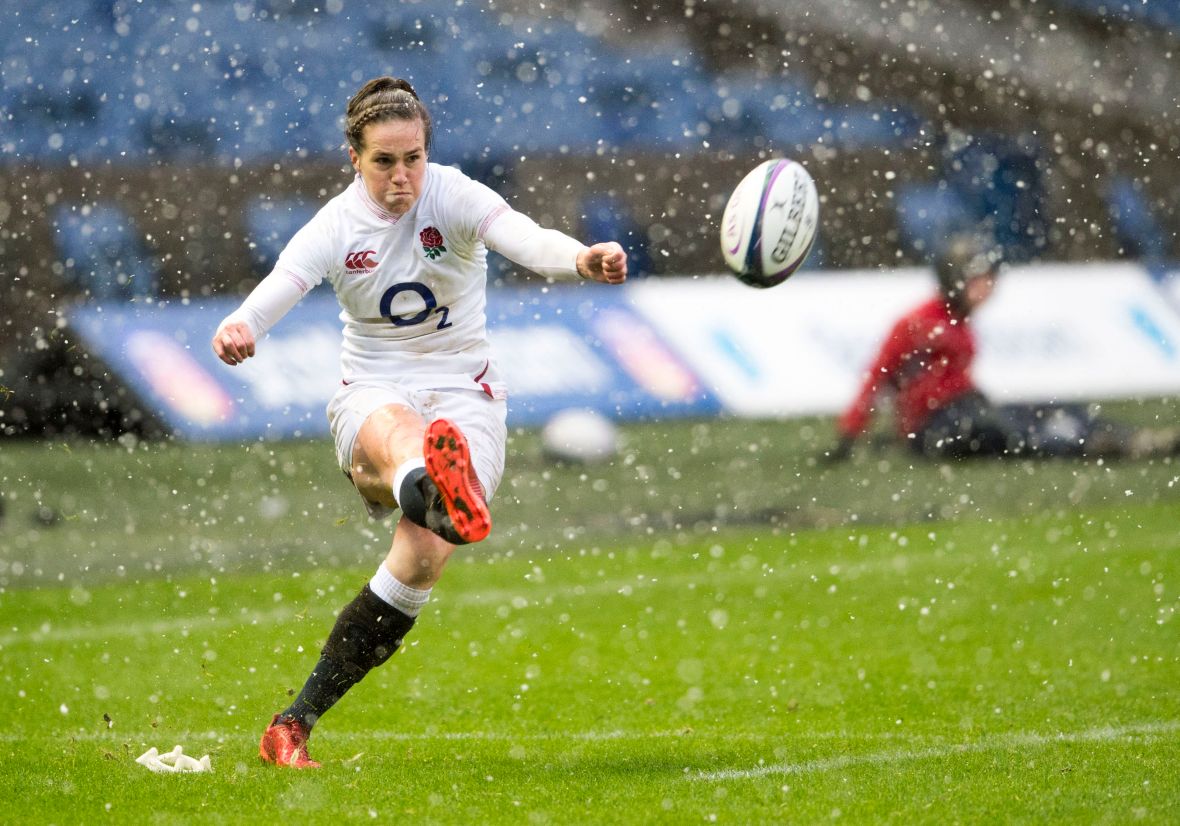
Scarratt recalls her early international career in which older players were taking unpaid time off to compete for England
And what of the knifing try she scored against Canada in the astonishing 2014 final, the score that turned a promising position into one from which England could not lose? “We had just had a penalty and Katy McLean [the captain] looked towards me, but I didn’t want to take the shot [at goal]. So we went for a lineout and the forwards were driving it. So Katie and Rachael Burford [Scarratt’s partner at centre] and I looked at each other. We hadn’t called a move or anything and we were wondering what to do.
“When the ball came back, Rachael ran on a fade, and Mandy Marchak, who was a brilliant player for Canada, came up but didn’t make contact with me. The path seemed to be opening up so it was a case of putting my head down. Everyone was piling on after I touched down, there was the joy on everyone’s face.”
Scarratt did not play in the final stages of this year’s tournament. She had a very significant neck operation during the previous season and had to work hard to get back, and she admits that it probably did cost her a little momentum coming into her fifth World Cup.
“You take a little while to rebuild, perhaps your approach to taking contact slightly differs from when you were young. I did want to play in all those big games, of course I did, but there was the role of senior player. I’d never been in the position before to role-model others because I’d been too busy playing.”
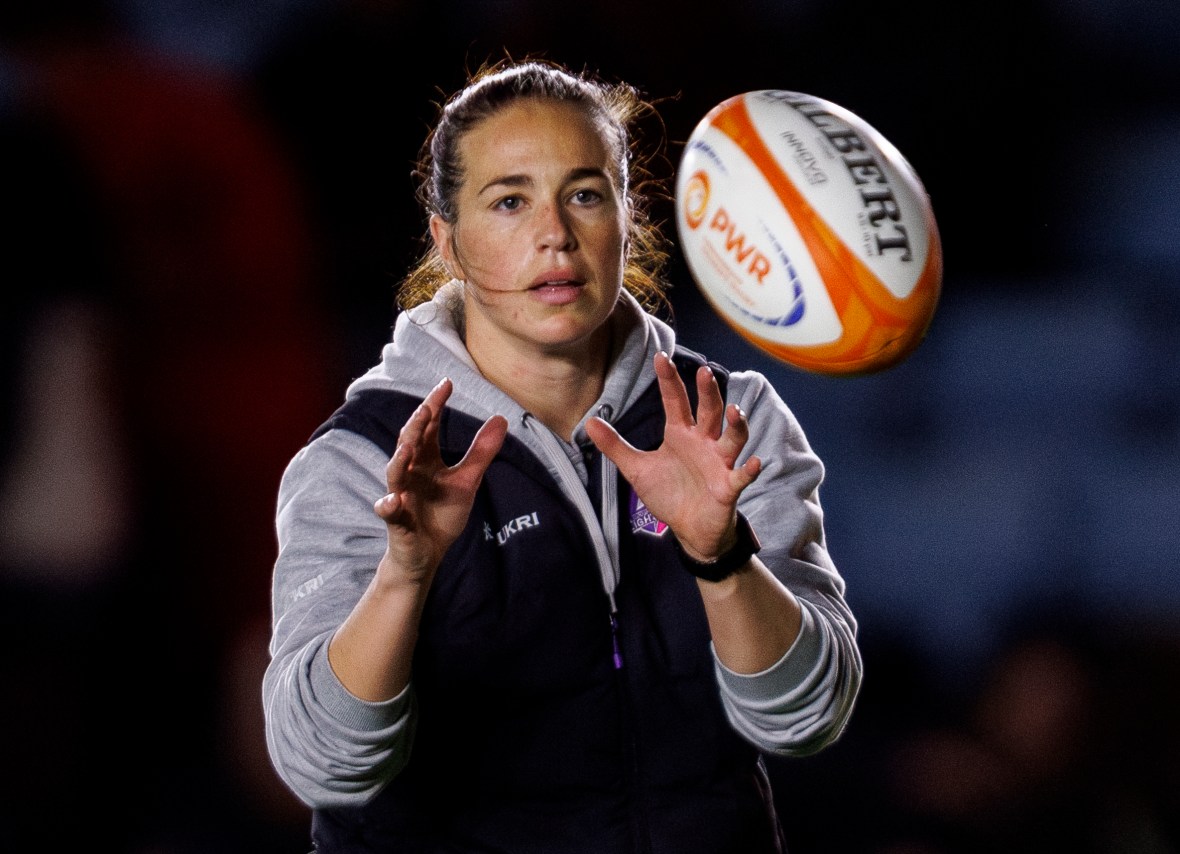
The 35-year-old has made the transition into coaching on a part-time basis but admits she’s “not figured out the rest yet”
BOB BRADFORD – CAMERASPORT VIA GETTY IMAGES
That is probably her way of saying that, by all accounts, her achievements and character were revered by the rest of the triumphant England squad. As a guide to the inner woman, an interview she did for a British Airways-sponsored project was remarkably insightful. One of the conclusions made in the interview, with Elma Smit, was that a great deal of her stability and sense of contentment springs from farming life and the tranquillity of surroundings when all the machinery and processors have been turned off.
The interview ended with shots of the clubhouse wall at Leicester Forest RFC, the club where Scarratt and her brother started out, which has a giant mural dedicated to its most famous player.
The two-storey mural in tribute to Leicester Forest’s most famous player
What is next? She has been asked by so many. At the moment she is at Loughborough University as a part-time coach. She is testing the water but you do feel that her character would demand she did the job full-time if she was convinced that was her future.
“Perhaps it helps the transition because you are not completely losing contact with the kind of environment you are used to being around,” she says. “I’ve not figured out the rest yet, and the part-time post puts me in a position to explore the other things. The last few months have been a little unearthly, but good fun.”
In part, I remember feeling the same when Jeremy Guscott retired. How dare our entertainment be truncated by these people disappearing from the game. But for Scarratt, it is a magnificent achievement to have been true to herself, to have retained her playing edge and her vast popularity all the way through.
Whether I or others believe her to be the greatest player would not figure high in her list of priorities, you feel. She was a great team player in great teams, in boom years. What could be better?