

When a foster child reaches the age of eighteen, it is a time for celebration and an introduction to adulthood. But for many of them—80 percent, in fact—it is also the moment when they officially become homeless.
You read that right. An incredible four-out-of-five foster children in the United States becomes homeless or imprisoned the day they turn eighteen. This is an amazing and frightening statistic, and you're probably wondering how this could happen. It all comes down to funding and the need for adult volunteers.
You see, most of these children are housed in state-sponsored group homes that function much like an orphanage. Group homes receive money from the state to function, and that money is cut off the instant a foster child becomes an adult. This is referred to as "aging out of the system."
Already dealing with the struggles of living without parents, these young adults are often handed a black trash bag to gather their belongings before being sent on their way.
Happy birthday, indeed.
It is in response to this need that Gary Webb, U.S. missionary chaplain with Chaplaincy Ministries, began his ministry, OCJ Kids, which stands for Opportunity, Community, and Justice for Kids. Their mission is to help these vulnerable foster children with mentorship, a proper suitcase, and help transitioning into adulthood.
The first step in starting this ministry was to launch the suitcase initiative.
"We got churches and businesses to collect suitcases," he says. "We would fill them with resources like hygiene products, bedding, gift cards, bus passes, and clothes, so they wouldn't have to carry a black trash bag."
Because of OCJ Kids, the use of trash bags as suitcases in the state of Arizona is now a thing of the past. But OCJ Kids didn't stop there. Volunteers in the ministry then began to go into the group homes on a nightly basis to mentor the foster children. As Webb explains it: "They play board games, do makeovers, tutor, cook, play video games . . . anything they (the foster children) like to do."
Helping Prepare for Adulthood
"From that, some teachers said they wanted to help kids who aged out," Webb says. "So we created a 'Journey into Adulthood' program and assigned each kid a life coach to put together a life plan and exit strategy as they prepare to age out. It includes a manual we've written with every topic, from setting a budget to teaching them how to shop to getting a driver's license."
Every step of the way, OCJ Kids has found creative ways to minister to the needs of those in the foster care system. Many children, for example, were coming into the group homes without hygiene products.
Helping the Transition
"It might take two to four weeks to get shampoo, a toothbrush, and underwear," Webb explains. "So we put together hygiene 'Welcome Kits' with full-size products . . . we call every orphanage in the state each month and see if they need more kits for the new kids. Every kid who comes into an orphanage that we're associated with gets a Welcome Kit."
In their mission to help foster children, OCJ Kids also set up Transition Success Centers across the state of Arizona.
"A Transition Success Center is a church that collects, stores, and distributes all the resources that we've talked about that we have for foster kids, and a 'Kinship Kit.'
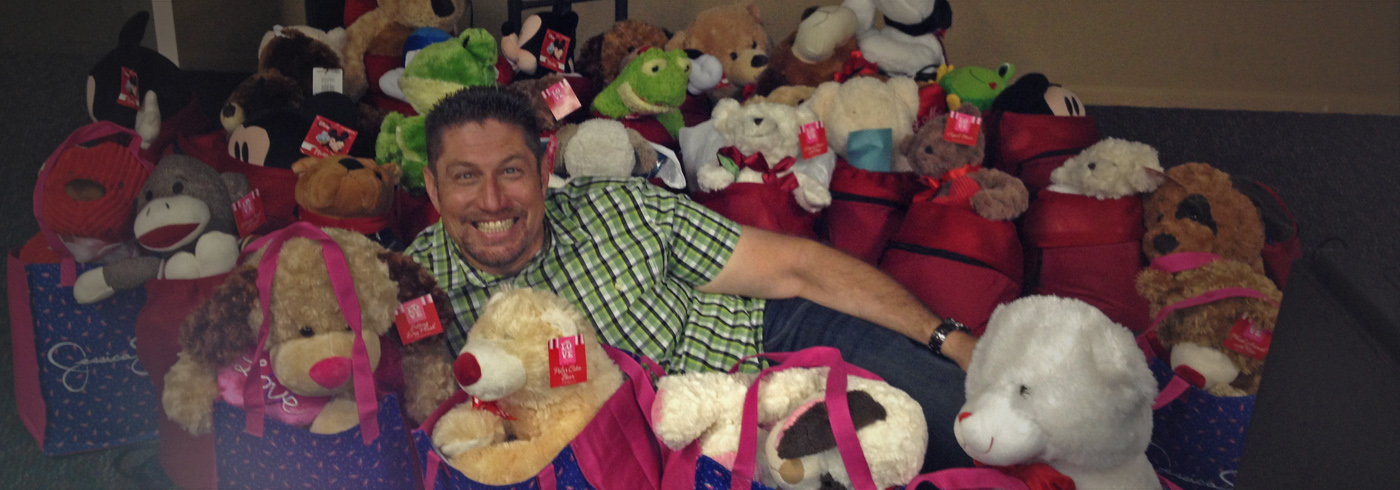
"A Kinship Kit is for when the caseworker helps Child Protective Services (CPS) remove the child," he says. "They have a little cinch bag filled with a blanket, a teddy bear, overnight hygiene products, gift cards, snacks, activity books, pajamas, and crayons. So when they bring a kid in, they can give them pajamas and a teddy bear."
Being removed from their home can be traumatic for children, so the Kinship Kits help ease the transition by giving them something comforting.
Taking Christ's Mission to Children in Need
One can't help but see the love of Jesus shining through this ministry. It brings to mind the Parable of the Sheep and the Goats:
"For I was hungry and you gave me something to eat, I was thirsty and you gave me something to drink, I was a stranger and you invited me in, I needed clothes and you clothed me, I was sick and you looked after me, I was in prison and you came to visit me.'
"Then the righteous will answer him, 'Lord, when did we see you hungry and feed you, or thirsty and give you something to drink? When did we see you a stranger and invite you in, or needing clothes and clothe you? When did we see you sick or in prison and go to visit you?'
"The King will reply, 'Truly I tell you, whatever you did for one of the least of these brothers and sisters of mine, you did for me.'"
And OCJ Kids, led by U.S. missionary chaplain Gary Webb, has really taken that mission to heart. The kits, the suitcases, the relationships they build with businesses, churches, and CPS isn't everything they do. They set up visitation rooms at churches where biological parents can see their kids; they donate air mattresses to CPS so newly arrived children don't have to sleep on the floor; they collect and distribute baby items for young mothers, host career development fairs, give over one thousand backpacks full of school supplies every year, and so much more. From hosting summer camps to throwing Christmas parties, OCJ Kids is constantly working to bring joy to the lives of foster kids across America.
How You Can Help
If you can spare a suitcase, it would go a long way to helping these kids. Please visit the Web site to see how you can donate and help Gary and his team change the lives of kids in the foster care system.
If you would like to show the love of Christ to foster care kids in your state, Gary would love to speak with you!
(602) 439–2171

Stephanie Dube Wilson loves to write about the impact that Christ is making in people's lives. She also writes about news, technology, and even cats for a variety of publications. In her spare time, Stephanie writes screenplays and novels. A few years back, Writer's Digest awarded her fifth in the nation for a science fiction screenplay.