
Newport Heights was quite a different place years ago, when the 11-acre public housing complex in the north end of the city – then known as Tonomy Hill – had a reputation as a dangerous place to live.
When Kate Dyl moved in more than two decades ago, there was not only rampant crime and illicit drug use, but the development’s barracks-like buildings – originally constructed to house U.S. Navy personnel in the 1940s – were decaying, and the Newport Housing Authority lacked the funds to maintain them.
That all changed in the early 2000s, when the housing authority partnered with private developer Trinity Financial Inc. in an intricate arrangement that opened the door for financing.
The old buildings were demolished and replaced with modern multifamily townhouses in a massive $74 million redevelopment effort that took several phases and years to complete. The improvements, in turn, allowed the complex to change from 100% low-income housing to a mixed-income model, blending various levels of affordable housing.
Crime dissipated at the 300-unit development, renamed Newport Heights.
“It just needed someone to believe in it,” said Dyl, who is now the property manager overseeing the same community where she once lived.
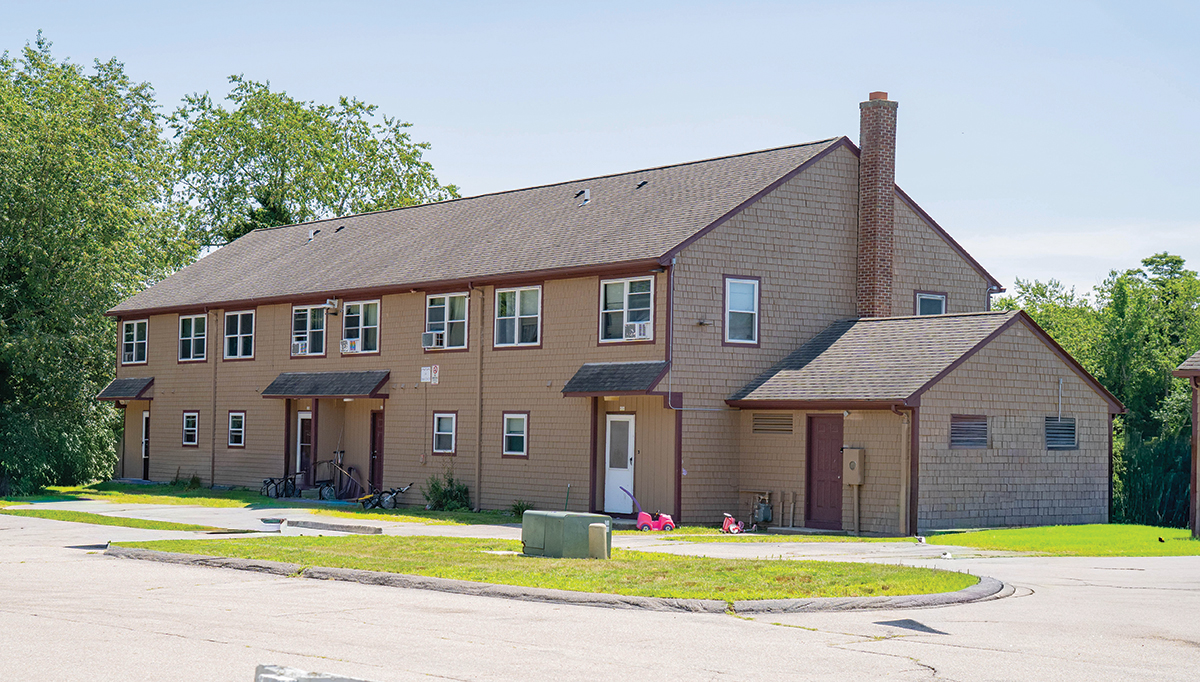
But about 20 years on, Newport Heights is showing its age. Boilers are breaking down. Siding on the townhouses is starting to fall apart. Windows leak. The renovation work spread over 30 buildings and hundreds of apartments will cost tens of millions of dollars.
And the owners have discovered the funding to upgrade affordable housing is hard to come by, particularly amid a housing crisis in which a great deal of effort and resources are being funneled into the production of new housing.
And the problem isn’t just at Newport Heights.
Numerous public housing complexes around the state are reaching the age at which significant investments are needed.
As a result, some developers have had to assemble complex, layered financial packages that involve numerous agencies and funding programs over years in order to fix up deteriorating housing complexes, leaving those involved lamenting about Rhode Island’s limited resources.
The problem is not lost on state officials.
Rhode Island’s 27 public housing authorities oversee about 9,000 units in traditional developments, with the largest share located in Providence, Pawtucket, Woonsocket, Newport and Central Falls, according to a 2024 report from the Rhode Island Public Expenditure Council.
And there are thousands more affordable units categorized as “project-based rental assistance” housing that are operated by private development, such as at Newport Heights, according to state housing officials.
But as Rhode Island races to build 15,000 new homes by 2030, housing officials and developers say the state cannot solve its shortage by looking only ahead – it must also protect the affordable units already standing.
“Preservation is production’s twin,” said Deborah J. Goddard, the state’s housing secretary. “We can’t take a step back while we’re trying to move forward.”
STIFF COMPETITION
Since 2006, Rhode Island voters have approved five housing bonds totaling $310 million, with funding used for a mix of housing programs designed to get more Rhode Islanders into affordable housing. With house prices and rents skyrocketing, voters passed the largest bond issue in November 2024, a $120 million package.
Through the state’s Housing 2030 programs, administered through the quasi-public agency R.I. Housing and Mortgage Finance Corp. – or R.I. Housing – $66 million from bond-funded programs has been allocated for affordable housing initiatives, including new construction, supportive housing, acquisition and preservation.
But a financial breakdown illustrates the competing needs facing housing officials.
The largest share – up to $27 million – is dedicated to building new affordable rental housing development.
In comparison, just $10 million is targeted for preserving and rehabilitating existing affordable housing nearing the end of its affordability period.
Another $120 million housing bond issue is on the ballot in November, although officials haven’t decided yet how the money will be divvied up, if approved. “We are planning to continue many of the [preservation] programs,” said Peter Asen, director of housing production and preservation at the R.I. Department of Housing.
In the meantime, competition for preservation funding remains fierce.
R.I. Housing CEO and Executive Director Carol Ventura says the agency has been increasingly focused on identifying properties that need renovations before aging buildings and deferred maintenance become larger problems.
As of now, R.I. Housing officials forecast that developers overseeing more than 1,000 existing affordable housing units across the state could seek redevelopment funds in fiscal 2027.
At Providence-based Sokoloff Farias Associates – a consulting firm specializing in affordable housing development and finance – partner Derek Farias regularly helps to assemble financing packages, including for the work at Newport Heights.
Farias says that competition for funding has become one of the defining challenges of affordable housing preservation, which includes developments from the postwar era more than a half-century old and those buildings in the 1990s and early 2000s.
“There’s kind of two flavors of preservation,” Farias said. “Is it the really old stuff that we need to fix, or is it the more recent old stuff that we should be fixing?”
Part of the problem is that the importance of maintaining existing properties is often overshadowed by the excitement of building new homes.
“Nobody publicly sets a goal of preserving 9,000 housing units,” Farias said. “There’s no ribbon cutting for replacing a boiler or fixing a roof.”
UNLOCKING FUNDING
Some say declining federal investment has pushed states and local agencies into increasingly complex financing arrangements.
In 2024, the U.S. Department of Housing and Urban Development estimated that the nation’s public housing system faces more than $50 billion in unmet capital needs, after decades of funding levels that have not kept pace with the cost of maintaining aging developments.
More than half of the nation’s public housing stock was built before 1970, according to HUD.
The department, which oversees many of the nation’s public housing programs and has played a role in shaping preservation efforts through programs such as the federal Rental Assistance Demonstration initiative, did not participate in an interview after a request for this story.
Programs such as the federal Rental Assistance Demonstration program have become a cornerstone of public housing preservation as traditional federal capital funding has declined over the years.
Instead of waiting for annual appropriations that often cannot cover major rehabilitation, housing authorities enter into partnerships with private developers, transferring ownership of housing structures to the developers while keeping control of the land.
RAD allows housing authorities to convert public housing subsidies into long-term rental assistance contracts that lenders and investors can finance, but the involvement of a private developer opens the door to private debt, Low-Income Housing Tax Credits and other funding sources that make comprehensive redevelopments possible while preserving long-term affordability.
For statewide housing authorities, deciding to undertake a comprehensive redevelopment represents a significant organizational shift, according to Farias.
Agencies accustomed to managing housing suddenly become long-term development partners responsible for projects that can span decades.
“You’re not just operating housing anymore,” Farias said. “You’re becoming a real estate developer and long-term asset manager.”
Because of that, Farias said only about five of Rhode Island’s 27 housing authorities have pursued large-scale preservation or redevelopment efforts.
LIMITED RESOURCES
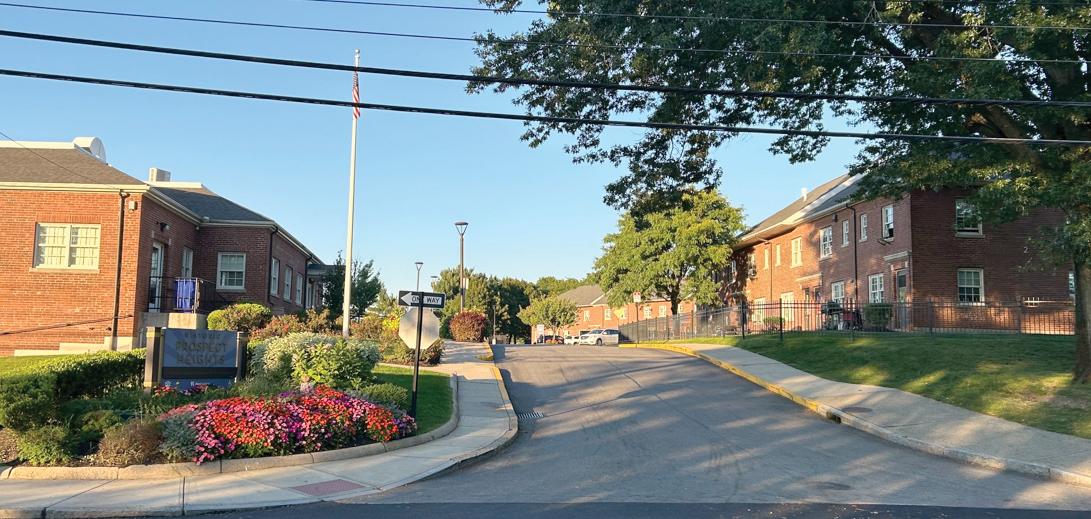
The Pawtucket Housing Authority became one of those five when it was forced in the 2010s to come to grips with a massive backlog of deferred maintenance at the 300-unit Prospect Heights, a historic New Deal-era public housing complex that badly needed an overhaul.
In 2016, the 1942 complex was successfully placed on the National Register of Historic Places, a designation to secure historical tax credits. The following year, the authority kept control of the 21 acres but transferred ownership of the structures to WinnDevelopment Co. LP, an arm of the Boston-based WinnCompanies housing firm, and Omni Development Corp., a Providence nonprofit developer.
That maneuver opened the project to the private capital markets, and the partners raised $42 million over three phases in funding stacks that included Low-Income Housing Tax Credits, federal historic tax credits, Rebuild Rhode Island tax credits, RAD assistance, Federal Home Loan Bank grants, federal HOME Investment Partnerships, and R.I. Housing Affordable Housing Trust “soft” loans, and R.I. Housing construction and permanent financing.
The project broke ground in May 2018 and focused on replacing roofs, windows, masonry and doors, as well as mechanical and health systems, and safety and accessibility features.
The three phases of work were completed by April 2020, at the height of the COVID-19 pandemic.
In the end, it took 12 different funding sources, according to Adam Stein, president of WinnDevelopment, which in November 2025 completed a $29.3 million renovation of 108 income-restricted apartments and townhouse units called Lockwood Plaza in Providence.
WinnDevelopment is seeking another layered financing package to start a second phase of Lockwood renovations.
“Rhode Island is a small state, and because of that, has limited housing resources,” Stein said. “We’re competing for resources. We’re competing today against a mindset of new production.”
South Kingstown is another municipality making a commitment to update its public housing.
In 2024, the town’s housing authority began advancing plans to redevelop Champagne Heights, 40 aging family apartments built decades ago off Curtis Corner Road.
With the authority working in partnership with the nonprofit Women’s Development Corp., the multiphase, $50 million project will construct 40 modern units in 16 new buildings in a vacant field on the 21-acre property. Then the original structures will be demolished and 45 additional affordable units will be constructed, along with a community center.
Laura Lee Costello, South Kingstown Housing Authority executive director, said the project will also replace and repair the property’s roads, utilities and underground infrastructure, most of which date back decades.
“People see the buildings. They don’t always see everything underneath that’s reached the end of its useful life,” Costello said. “We’re preserving what we have while creating more opportunity.”
The project has secured more than $20.4 million in state housing funding and nearly $2.9 million for infrastructure improvements. The remainder of the $50 million budget is expected to be financed by Low-Income Housing Tax Credits, federal grants and private debt.
“These projects don’t happen with one funding source,” Costello said. “It really takes everyone coming to the table.”
THE MONEY PUZZLE
Putting together such deals remains complicated, even if preservation is less expensive than new production, according to Ventura.
Newport Heights, for example, requires an estimated $235,000 to $240,000 per apartment in preservation investment, Ventura said.
By comparison, R.I. Housing rewards the highest financial marks to new construction projects that keep costs at or below $375,000 per apartment.
Yet the lower cost of preservation does not necessarily make those projects easier to complete, said Eva Erlich, vice president of development at Trinity Financial, one of the principal development partners behind the redevelopment of Newport Heights.
Indeed, the complications of securing construction financing hasn’t changed much since the 2000s, when the Newport Housing Authority didn’t have the money to maintain, never mind renovate, the sprawling low-income residential complex.
By that time, Tonomy Hill had become one of Rhode Island’s most distressed public housing communities, with deteriorating buildings and outdated infrastructure.
That’s when the housing authority transferred ownership of the structures to Trinity-controlled Newport Heights LP while the authority retained the land to ensure it remained affordable housing.
Completed in three phases by 2007, the redevelopment relied on a roughly $74 million financing package assembled by Trinity that combined federal HOPE VI funding, Low-Income Housing Tax Credits, city support and state housing resources.
The project replaced the aging barracks with today’s mixed-income Newport Heights neighborhood.
This current investment effort at Newport Heights requires that same kind of financial coordination and will need multiple phases to complete, Erlich says.
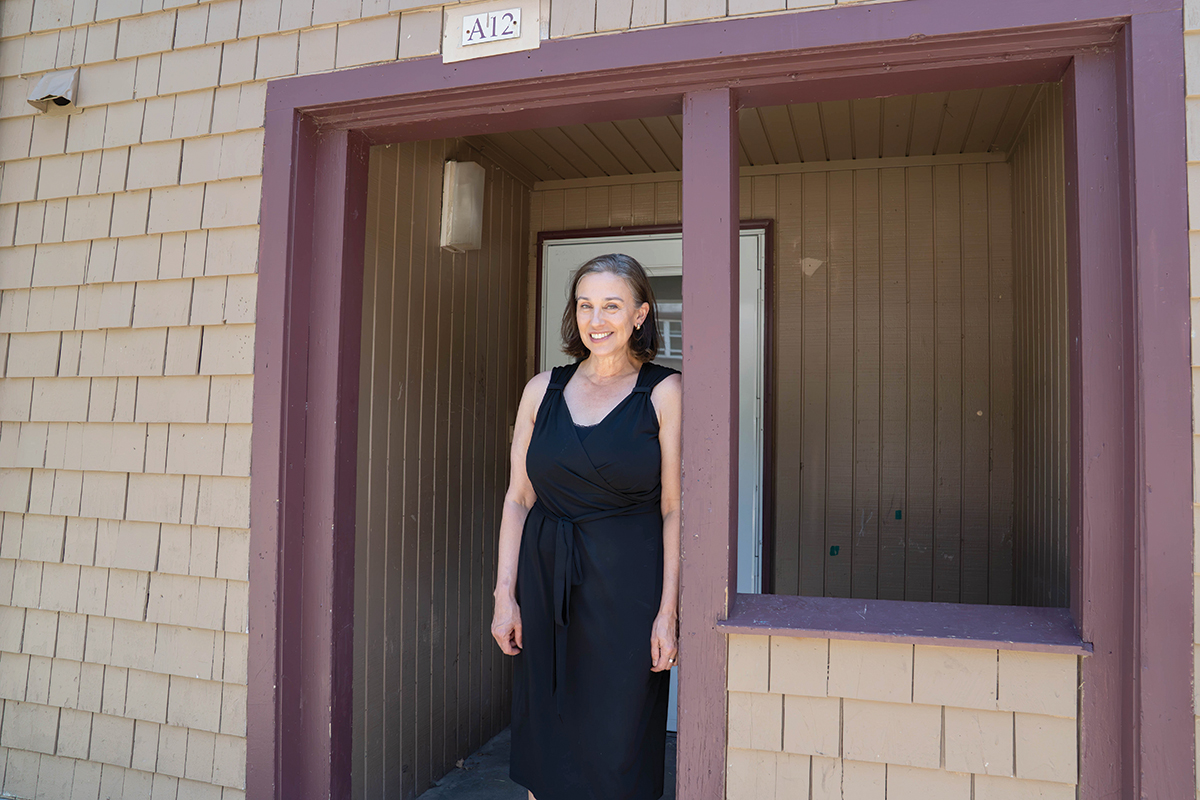
The $32 million first phase will encompass 81 units in 30 townhouses along the north side, with renovations that will include the installation of new boilers, windows, bathrooms and exterior siding, which “has [been] beaten down over the years,” she said.
The capital stack includes up to $10.3 million in tax-exempt financing from R.I. Housing, a $2.8 million Housing 2030 Preservation Loan, nearly $1 million from the federal Capital Magnet Fund and federal Low-Income Housing Tax Credits.
The work is expected to start by the end of the year and will take about a year to complete. Plans for future phases to renovate the remaining 60 buildings – as well as the financing – haven’t been finalized.
“Every preservation deal is a puzzle,” Erlich said.
For Newport Heights resident Ellen Pinnock, the investments in affordable housing complexes are more than about fixing up buildings; they’re about maintaining communities where people have built their lives.
Pinnock arrived at Newport Heights more than 20 years ago with her 1-year-old daughter. She has remained there and is now a city councilor.
“I’ve raised my family here,” Pinnock said. “This is home.”
Dyl, the property manager, says it took three years and three funding cycles for Newport Heights to secure enough money for phase one. Even then, the scope of the work had to be narrowed to reduce costs.
Still, Dyl says she knows what it means for residents to see their home receive the attention they’ve needed for a few years.
“We fought so hard for this funding,” she said.