In 2023, the General Assembly made its biggest bet yet on Rhode Island’s life sciences industry.
Lawmakers committed $45 million over three years to create the R.I. Life Science Hub, a quasi-public state entity charged with centralizing, connecting, funding and coordinating life sciences initiatives across the state.
Since then, the hub has poured most of that money – $30 million – into 33 companies and eight “ecosystem” organizations.
Industry leaders say the outlines of what that investment could produce are beginning to emerge. New lab infrastructure is filling long-standing gaps, and a foundation intended to support sustainable growth is beginning to take shape, namely the creation of a life sciences startup incubator.
What remains much harder to see is the return.
There are still few measurable results from the state’s investment, and one company backed by the hub, Organogenesis Holdings Inc., recently reported losing millions of dollars in the second quarter.
“The challenge with biopharmaceuticals and biotech is that they are high-risk, and they’re highly volatile,” said Bob Cormier, the hub’s new executive director.
There are no guaranteed returns, and companies in the industry can take more than a decade to turn a profit.
And the volatility can extend beyond individual companies, whose survival can depend on the success of clinical trials and access to venture capital. The industry itself has had its ups and downs.
In Greater Boston, the life sciences sector slumped between 2022 and 2025 as a post-pandemic bubble burst following a flood of venture capital, aggressive hiring and real estate speculation.
There has been a bounce back in 2026.
Meanwhile, in Rhode Island, the political landscape surrounding the industry has been altered.
Two prominent Statehouse supporters of life sciences are no longer in positions of influence. Former House Speaker K. Joseph Shekarchi stepped down in May, while Gov. Daniel J. McKee is set to leave office in January after losing the September primary.
The question now is whether others at the Statehouse are ready to champion the cause – and make a yearslong commitment to an industry whose payoff could still be years away.
Some observers are expressing strong optimism about the industry’s prospects, but they acknowledge that it will require heavy lifting to retain and foster companies – and possibly tens of millions of dollars more in state funding – before the state can reap the benefits.
“It is really an incredible moment in time, and if you don’t seize it, you know, opportunities – they slip through your fingertips,” said Dr. Mukesh K. Jain, dean of medicine and biological sciences at Brown University.
IF YOU BUILD IT…
For decades, Rhode Island has watched from the sidelines as neighboring Boston and Cambridge, Mass., built one of the world’s most flourishing life sciences economies.
Less than an hour away, Rhode Island had a health sciences ecosystem of its own. But despite significant assets, industry experts say it remained largely siloed.
Multibillion-dollar, globally recognized companies have maintained a presence in Rhode Island for years, including medical device firms ZOLL Medical Corp. and Becton, Dickinson and Co. and pharmaceutical giant Amgen Inc. Yet the state has lacked the infrastructure and name recognition needed to build a thriving, interconnected life sciences industry, said Glenn Robertelli, executive director of trade group RI Bio.
“The fact that we do have very large brand-name companies in the state is something that most people within the state – and definitely people outside the state – don’t know,” Robertelli said.
Rhode Island’s universities have also produced notable life sciences talent, including 1982 Brown graduate Craig Mello, who won the Nobel Prize for his co-discovery of RNA interference, and 1990 Brown grad Dr. Sangeeta Bhatia, the first woman physician to be named to all five U.S. National Academies.
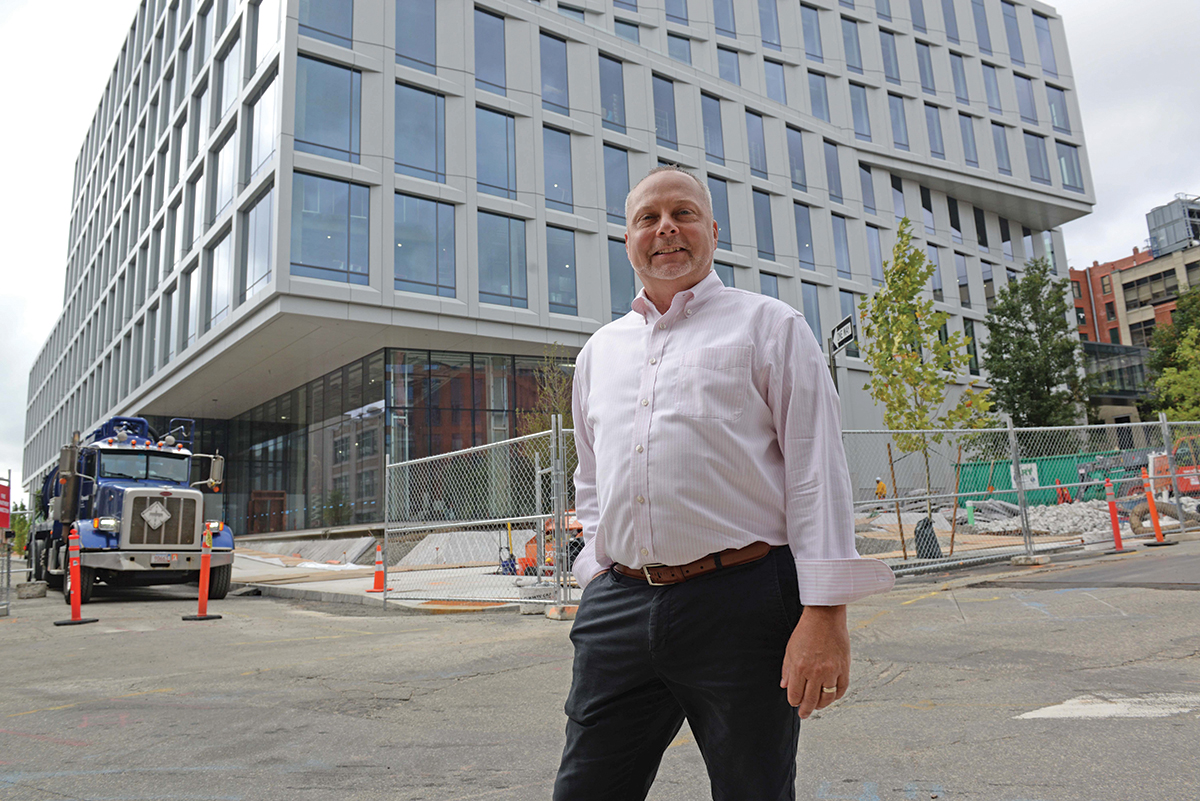
For its part, Brown is making a major investment in its physical life sciences footprint. The university is constructing the seven-story, 300,000-square-foot William A. and Ami Kuan Danoff Life Sciences Laboratories. The $400 million facility is expected to open in the next six months.
But Rhode Island’s challenge has been keeping the biotech talent – and the companies it creates – here, according to Stefan Pryor, Rhode Island’s commerce secretary.
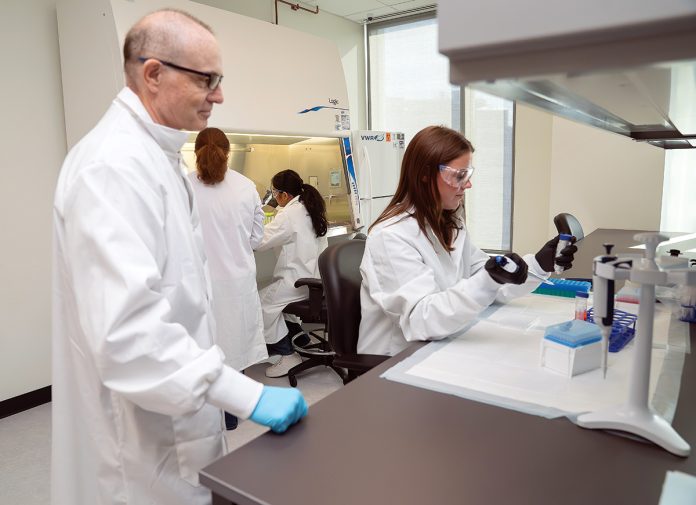
Officials argue that one reason has been a long-standing shortage of wet lab space – specialized research facilities equipped with sinks, water lines, ventilation and safety equipment.
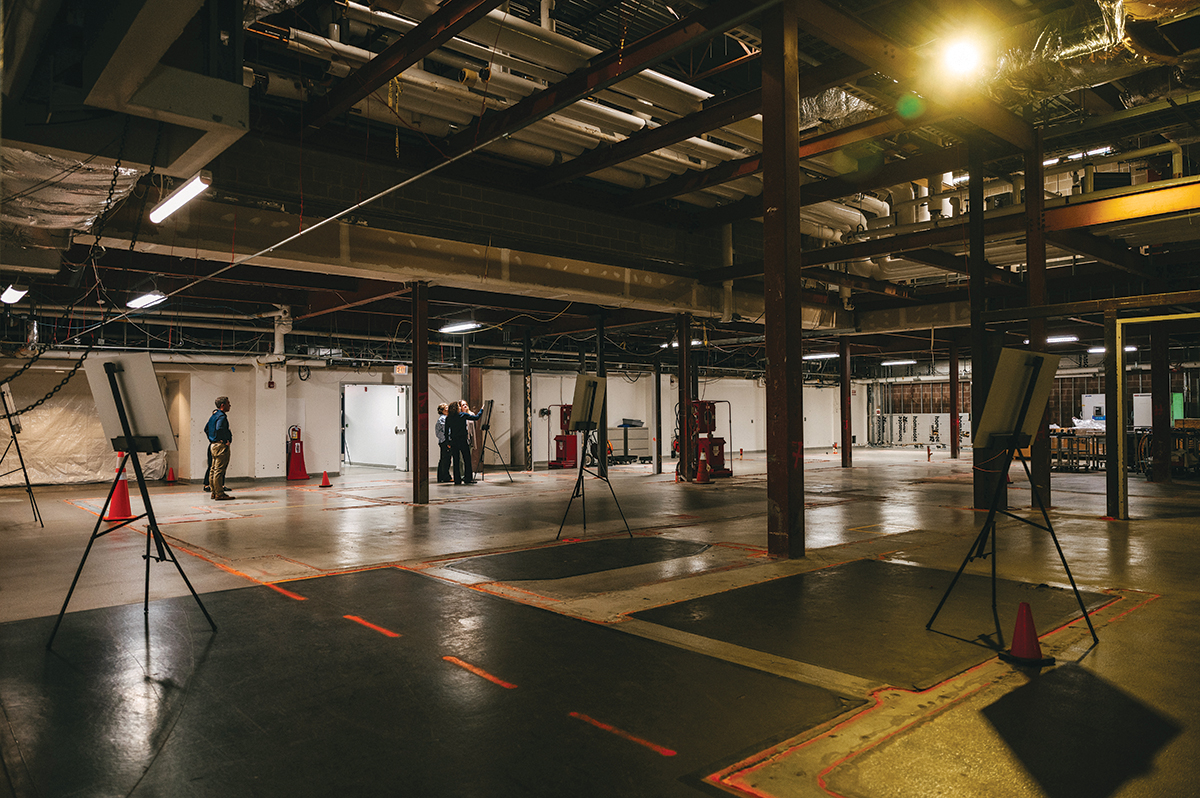
The state’s response: Ocean State Labs, Rhode Island’s first life sciences incubator that opened in March with the help of $9 million in funding from the R.I. Life Science Hub. Managed by Chicago-based Portal Innovations, the Providence facility can accommodate up to 30 companies in 30,000 square feet of lab space, with 64 workstations and 100 lab benches.
“I have never seen government move so fast,” Cormier said of the speed with which the hub established Ocean State Labs.
Within its first six months, the incubator – located on the fourth floor of the new building at 150 Richmond St. in Providence’s so-called Innovation District – signed 15 companies and opened applications for its Founders Compass Program, a $250,000 initiative offering a year of free lab space for up to eight startups.
So far, seven of the companies are actively using the labs, according to Cormier.
“Now we need to wait to see, does that lab work materialize into companies and products that come out to the market on the other side?” he said.
That sentiment extends across the industry. It will take years before the economic and workforce development effects of the Life Science Hub become clear, maybe as long as 10 years, according to Neil D. Steinberg, former chair of the R.I. Life Science Hub.
“Assessing it in three years is fine. Judging it after three years, I don’t think it is appropriate,” Steinberg said.
… WILL THEY COME?
MindImmune Therapeutics Inc. is on the cusp of becoming a homegrown life sciences success story.
Founded more than a decade ago as a University of Rhode Island spinout, the company has been working to develop novel treatments for Alzheimer’s and other neurodegenerative diseases.
MindImmune has grown to 15 employees and raised $35 million as momentum builds around its Alzheimer’s treatment.
Now CEO Isaac Stoner said MindImmune is close to receiving the green light from the U.S. Food and Drug Administration to begin human clinical trials.
Stoner has only led MindImmune for the past year. A biomedical engineer and Brown University graduate, he previously had a long affiliation with local nonprofit early-stage investor Slater Technology Fund.
Officials rejoiced when MindImmune agreed a year ago to become an anchor tenant at Ocean State Labs, aided by a subsidy from the R.I. Life Science Hub. But MindImmune’s scientists have yet to move in, and they may never.
The company informed the hub in late September that if its human clinical trials are approved, it likely won’t need the lab space after all. Instead of conducting lab research in Providence, MindImmune employees expect to oversee trial sites across the country.
“The need for lab space is reduced the more advanced you get,” Stoner said.
For now, about half of MindImmune’s staff works out of labs at URI and the other half from research facilities in Cambridge. Stoner is making plans to establish an office in Providence that would give employees a place for face-to-face meetings.
That two-state existence also illustrates what some observers say Rhode Island’s ultimate ambition should be: not trying to build a life sciences industry that stands apart from its neighbors, but becoming part of a broader New England cluster that includes Greater Boston and Worcester, Mass.
Rhode Island, the thinking goes, can capture some of the industry’s expansion because it’s close enough to Boston’s established biotech hub.
“There’s no harm in being a spoke,” Stoner said.
MEASURED REACTION
So what will success look like for Rhode Island?
For Devendra Kale, an associate professor at the URI’s College of Business, no single number will provide the answer. Instead, he said, the state should track a collection of measures over time, including how many incubated companies advance to commercialization, how much venture capital and federal funding is secured, and the number of workers relocating to Rhode Island to take life sciences jobs.
The state’s workforce numbers indicate both the opportunity and the challenge.
Between 2015 and 2025, Rhode Island lost approximately 450 life sciences manufacturing jobs, according to the North American Industry Classification System data.
Today, about 6,000 people work in life sciences across Rhode Island, Cormier said. He thinks that number should double over the next decade.
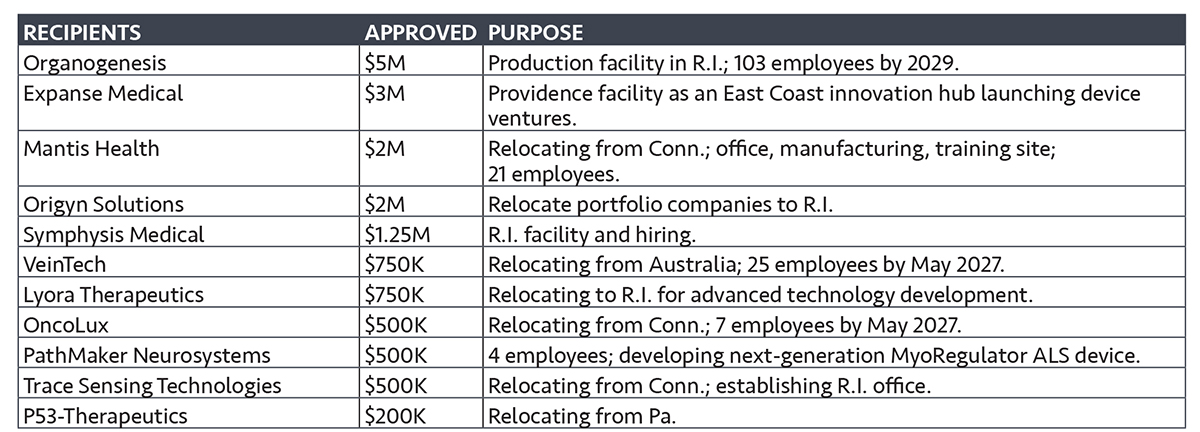
Companies receiving investments from the R.I. Life Science Hub have so far contractually committed to creating 160 jobs. The hub expects between 260 and 360 jobs will ultimately be created through company formations, relocations and expansions.
One company shows both the potential payoff – and the uncertainty involved in getting there.
Organogenesis, a regenerative medicine company that develops and manufactures wound care products, received a $5 million commitment from the R.I. Life Science Hub to support development of a $100 million, 122,000-square-foot manufacturing facility at the former Rubius Therapeutics site in Smithfield.
The Canton, Mass.-based company expects to employ more than 300 workers once the facility is completed, said Patrick Bilbo, chief operating officer. That includes 103 jobs Organogenesis committed to creating as part of its agreement with the hub.
The company has already created some of those positions, Bilbo said, though he declined to say how many have been created or whether any have been filled.
Organogenesis has completed the first phase of construction, which will allow the company to bring manufacturing of Dermagraft, its wound care product for diabetic foot ulcers, to Smithfield.
But financial struggles have delayed the move.
Organogenesis reported $43.8 million in second-quarter revenue, down more than 50% from $100 million a year earlier. Its quarterly loss more than doubled year over year from $43.8 million in the second quarter of 2025 to $96.3 million this year.
Amid those struggles, the company laid off 88 employees in late July, including some in Rhode Island.
Bilbo attributed much of the downturn to changes in reimbursements for advanced wound care imposed by the Centers for Medicare & Medicaid Services, which shifted from a product-specific reimbursement model to a flat rate.
Bilbo isn’t discouraged. He views the setback as part of the natural fluctuations of running a biotech company.
“We’re a very resilient company,” Bilbo said of the 41-year-old firm. “We have such a strong product portfolio [and] we have an excellent sales force that we’re very well-positioned to adapt to changes with Medicare and grow from that point.”
Cormier acknowledged he had expected Organogenesis to be further along by now, with more employees hired and construction in Smithfield progressing more quickly. But he also noted that the CMS reimbursement changes were unforeseen.
After recently meeting with company executives, Cormier said he remains optimistic about Organogenesis’ ability to rebound.
“They are very well-capitalized, so yes, their cash is burning out, but they have no debt as a company,” he said. “I think they are OK, and I think they’ll manage through this.”
And the state’s $5 million commitment comes with protections.
Pryor said Rhode Island built safeguards into the Organogenesis deal requiring the company to meet certain benchmarks before accessing the funding. So far, Organogenesis hasn’t received any of the money.
“We include those protective features because there is a natural ebb and flow to commercial development,” Pryor said.
For Jain, Organogenesis is another example of why judging Rhode Island’s life sciences investments in the short term can be difficult. Less than two years have passed since the company received tax incentives from the R.I. Commerce Corp. to move to the Ocean State.
“You’ve got to give them time to get their feet firmly planted,” Jain said.
POLITICAL WILL
Time is one thing. Money is another.
Just as Rhode Island’s life sciences strategy enters a period in which supporters say patience and sustained investment will be critical, the political landscape is changing.
Two of the industry’s most prominent Statehouse champions, Shekarchi and McKee, are no longer in the positions they held when Rhode Island made its initial push into life sciences.
As speaker, Shekarchi threw his political weight behind the creation of the R.I. Life Science Hub and its initial $45 million in 2023. He stepped down as speaker in May while pursuing a seat on the R.I. Supreme Court and did not seek reelection.
McKee, meanwhile, eagerly signed the legislation creating the hub and later pushed for a 2026 economic development bond that would provide another $45 million for ocean, defense, data analytics and life sciences infrastructure.
But McKee lost the September gubernatorial Democratic primary to Helena Buonanno Foulkes. The proposed funding will now go before voters in November as part of the $100 million Question 3.
Cormier said the hub will seek a $20 million to $30 million slice of the bond money, if approved, for its business-attraction efforts and will ask for another $2 million to $3 million allocation next fiscal year for operating costs. Also, its five-year capital plan calls for expenditures of about $12 million.
But will Rhode Island’s next generation of political leaders be willing to keep investing?
New House Speaker Christopher R. Blazejewski, D-Providence, expressed his support for life sciences in a statement to Providence Business News, though he did not directly answer funding questions or whether he’s seen enough progress.
“We are hopeful this sector will continue to grow and provide good-paying jobs and cutting-edge research that will attract and retain highly skilled workers and lead to critical medical breakthroughs,” Blazejewski said in a statement.
In the meantime, Senate Finance Committee Chairman Louis P. DiPalma, D-Middletown, sees the support in the General Assembly, pointing in part to lawmakers putting the bond before voters.
DiPalma said making the state’s initial investment and stopping there would be akin to planting vegetables and then never watering them. “Doing this one-time investment was critical … but not sufficient,” he said.
Yet he isn’t sure how much Rhode Island will need to spend to sustain the industry’s growth.
DiPalma acknowledged that he’s unsatisfied with the industry’s progress so far. He would like Rhode Island to be further along, with companies actively seeking to establish themselves in the state.
“The ideal situation would be that there are companies that are knocking on our door, flocking to our door, saying, ‘I want to be here,’ ” he said.
The General Assembly may bear some responsibility for the state not being further along, he said, because it hasn’t invested enough.
For Jain, maintaining momentum will require more than another one-time infusion of money. Ideally, he said, Rhode Island would invest at least $10 million annually in life sciences for the next seven years, extending the state’s commitment to a full decade from its original investment.
“We have been successful and we will be successful,” Jain said. “The question is, do we have the willpower to sustain this for another five, seven years when you start to see the full benefit of the investment?”