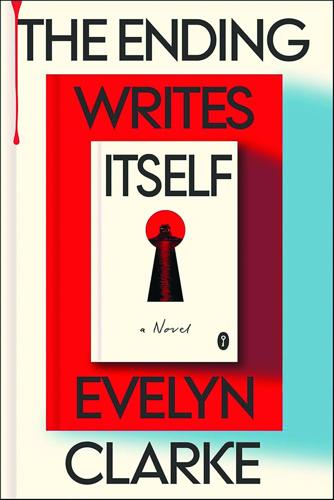
Every summer, I hunt for a meaty mystery with enough might to cleanse my palate of the standard beach read. This year, I was convinced I found it in the much-hyped “The Ending Writes Itself,” the debut thriller from Evelyn Clarke, published on April 9 by HarperCollins.
Evelyn Clarke is the shared pen name of fantasy powerhouse V.E. Schwab and young adult novelist-turned-screenwriter Cat Clarke, two longtime friends who hatched this collaboration and bravely pitched it to their agents. Together, they brought the project to Sarah Stein at HarperCollins, who acquired North American rights.
The cleverly packaged book initially piqued my interest, making me feel as if a mystery were unfolding in my hands, and its promise was the kind that makes a reader cancel their plans. Six midlist authors are summoned to the private Scottish island estate of Arthur Fletch, the world’s most famous and reclusive literary titan, only to learn upon arrival that Fletch is dead and his final manuscript sits unfinished at 90,000 words. The offer is brutal in its simplicity. Whoever completes the ending in 72 hours — all forms of communication locked away in a safe — wins a two-million-dollar deal and an escape from the literary purgatory that has defined their careers.
I wished the opening chapters lured me in more strongly. I was really hoping to be more engrossed. What kept me reading had less to do with the competition than the cutting commentary on the writing world. Schwab and Clarke demonstrated that they know publishing from the inside and made the industry the main character rather than the characters themselves.
Carved into the front door of Fletch’s estate is the line that doubles as his personal motto, “He who holds the pen tells the truth.” It is a shrewd bit of set dressing, but it is also the real question the novel asks beneath all the genre trappings. By the time the truth comes out, the novel has made its case.
The observations regarding genre prejudice, the silent dismissal of authors with declining sales, and the frantic calculations of financial survival felt painfully authentic. The discourse was often laced with dark humor that landed harder than any of the actual kills. This is less a mystery wearing a publishing costume than a meta-commentary on what it means to be a working writer.
In my view, the story faltered when introducing its supporting cast beyond the main duo. Sienna and Malcolm, the thriller-writing spouses behind the Penn Stonely pseudonym, hoarded the creative oxygen, receiving narrative attention that left the rest of the estate gasping for air.
Sienna was depicted as a gifted individual, exhaustedly carrying the artistic burden of their union, which was no longer a balanced collaboration. Meanwhile, Malcolm relied entirely on his charisma, lacked professional rigor, and benefited from his spouse’s work, yet remained largely unaware of her dissatisfaction.
Because the authors spent a great deal of time on their history together, their resentments, their old wounds, I found myself genuinely invested, which helped to me feel the full weight of their misfortune. Nobody else in the house, sadly, received that same care.
* ‘Between the Lines’ is a monthly book review column from freelance reporter Stephanie Bernaba. For the full story, pick up a copy of this week's Independent on newsstands now or purchase a subscription to our E-Edition by clicking here.