They called her Jackie. They called her Mrs. Kennedy. They called her Mrs. Onassis. But long before she became one of the most photographed women in the world, Jacqueline Bouvier was a girl who spent her summers in Newport.
Bouvier would marry then-senator John F. Kennedy at St. Mary’s Church in 1953, and later gathered with the family at Hammersmith Farm. This sprawling Aquidneck Island estate became a second home to Camelot.
It was in Newport that the Kennedy story first bloomed so brilliantly.
But for Maria Shriver, daughter of Eunice Kennedy Shriver and the niece of JFK, that story was no fantasy. It was an inheritance that would imprison her long before she understood the bars.
Shriver grew up inside a mythology the rest of the world could only comprehend from a distance. She channeled that trademark Kennedy drive into a distinguished journalism career, anchoring for CBS and NBC News, earning multiple Emmy Awards along the way. She seemed, by every public measure, to have it all.
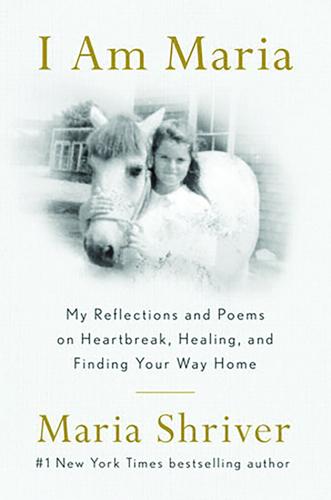
In “I Am Maria,” a memoir-in-poetry, Shriver peels back that exterior to reveal a woman who spent most of her life feeling unseen. Raised in a household where love was conditional based on achievement, she describes an aloof mother and a father who was too weak and deferential to fill the emotional void her mother created. Shriver chased worth through visibility and career, running a race with no finish line.
When news broke in 2011 that her husband, actor and former California Gov. Arnold Schwarzenegger, fathered a child with a household staff member, the relationship around which Shriver had built her identity collapsed. The divorce was not finalized until 2021. That decade in limbo forms the core of much of her poetry.
The narrative prose that opens the book is genuinely engaging. Shriver writes with a careful vulnerability that earns the reader’s trust. For those who love Kennedy history (and there is no shortage of us in South County), these early pages beckon like a door left ajar, silently inviting us inside.
Shriver’s post-breakup spiritual journey is where the book starts to get shaky. Despite an obvious and genuine reverence for God, with threads of prayer and scripture woven throughout, she eventually turns to shamans, mediums, psychics, yogis, and spiritual healers, seeking answers faith alone seems unable to provide.
And then the poems begin.
Organized into sections including Uncovering, Heartache, Healing, and Home, the collection moves through the wreckage of her marriage, her fraught relationship with her mother, and her reconstruction of self.
The most moving poems are those about motherhood and her tender new role as Mama G to her grandchildren. The poems written to each of her four children on their 18th birthdays were quite beautiful as well.