When it comes to birth control, you’ve got lots of options. These range from condoms and other barrier methods to pills, gels, shots, and more.
Getting some types of birth control used to require a trip the doctor’s office, which could be time-consuming and even inaccessible to people without reliable transportation.
Now a recent rise in telemedicine is breaking down some of those barriers.
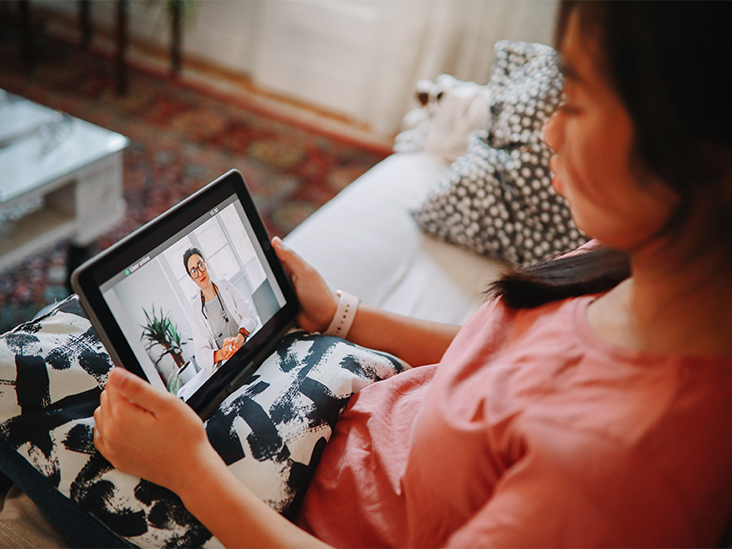
Telehealth allows people to meet with a doctor virtually to talk about family planning and get a prescription for birth control from the privacy and comfort of their own home.
Thinking of taking advantage of telemedicine for contraception? Here are some questions to ask during your birth control telehealth appointment.
There is no one-size-fits-all type of birth control that works for everyone. Instead, there are a variety of factors to consider.
These factors are:
As the name suggests, nonhormonal birth control is a method that protects against unwanted pregnancy without affecting your natural hormones.
While technically it can include behavior-based methods, such as abstinence, withdrawal, and the rhythm method, the term nonhormonal birth control is typically used in reference to contraception methods like condoms, copper IUDs, diaphragms, spermicides, or gels.
Hormonal and nonhormonal birth control have different pros and cons, so it can be helpful to discuss your options during your telehealth appointment.
How quickly your birth control becomes effective can vary depending on which type you use.
Going over the timeline of each option during your telehealth appointment can help you decide which contraception fits your needs. It’ll also help you understand how long you may need to use back-up birth control (if at all).
Here’s how long it takes some common types of birth control to become effective at preventing pregnancy:
Prescriptions for birth control medication from a telehealth service can range anywhere from a few months to a year. This will depend on:
Knowing the length of your prescription can help you plan ahead for refills and make sure your supply doesn’t run out unexpectedly. It can also give you an idea of when you might need to schedule your next birth control telehealth appointment.
No contraception is 100 percent effective, and taking certain supplements or medications could reduce how well some birth control protects against unwanted pregnancy.
For example, some antibiotics — like rifampicin and rifabutin, used to treat tuberculosis and meningitis — could make hormonal birth control less effective, according to the U.K. National Health Service.
St. John’s Wort, an over-the-counter supplement, may also make some birth control less effective, according to a 2016 systematic review.
Talk with a healthcare professional about what might make your chosen birth control method less effective. This way, you can use a back-up method or opt for a different type of contraception if necessary.
While birth control is considered safe, some types can come with the risk of side effects. These include:
Some contraception methods also raise your risk for certain health conditions, including:
Not all birth control methods come with the same side effects or risks, though. Asking about the risks during your telehealth appointment can help you make an informed decision about taking any particular type of birth control.
This will also help you know what signs or symptoms to watch out for when you start using birth control.
Birth control won’t affect your fertility, so you should be able to try getting pregnant right after you stop taking it. Research from 2018Trusted Source, which looked at data on nearly 15,000 women, found that around 83 percent were able to get pregnant within the first 12 months of stopping birth control.
Bear in mind, though, that you won’t be able to get pregnant until you ovulate again — and if you had irregular periods before taking birth control, you might not know when you’ll ovulate after you go off it.
Still, ask the doctor about it if you have any questions or concerns.
The rise in telehealth is allowing people to explore their contraception options and get some types of birth control without the need for a trip to the doctor’s office.
During your telemedicine appointment, you may want to ask about:
Understanding your options, along with their risks and benefits, can help you feel more confident in choosing the right type of birth control for you.