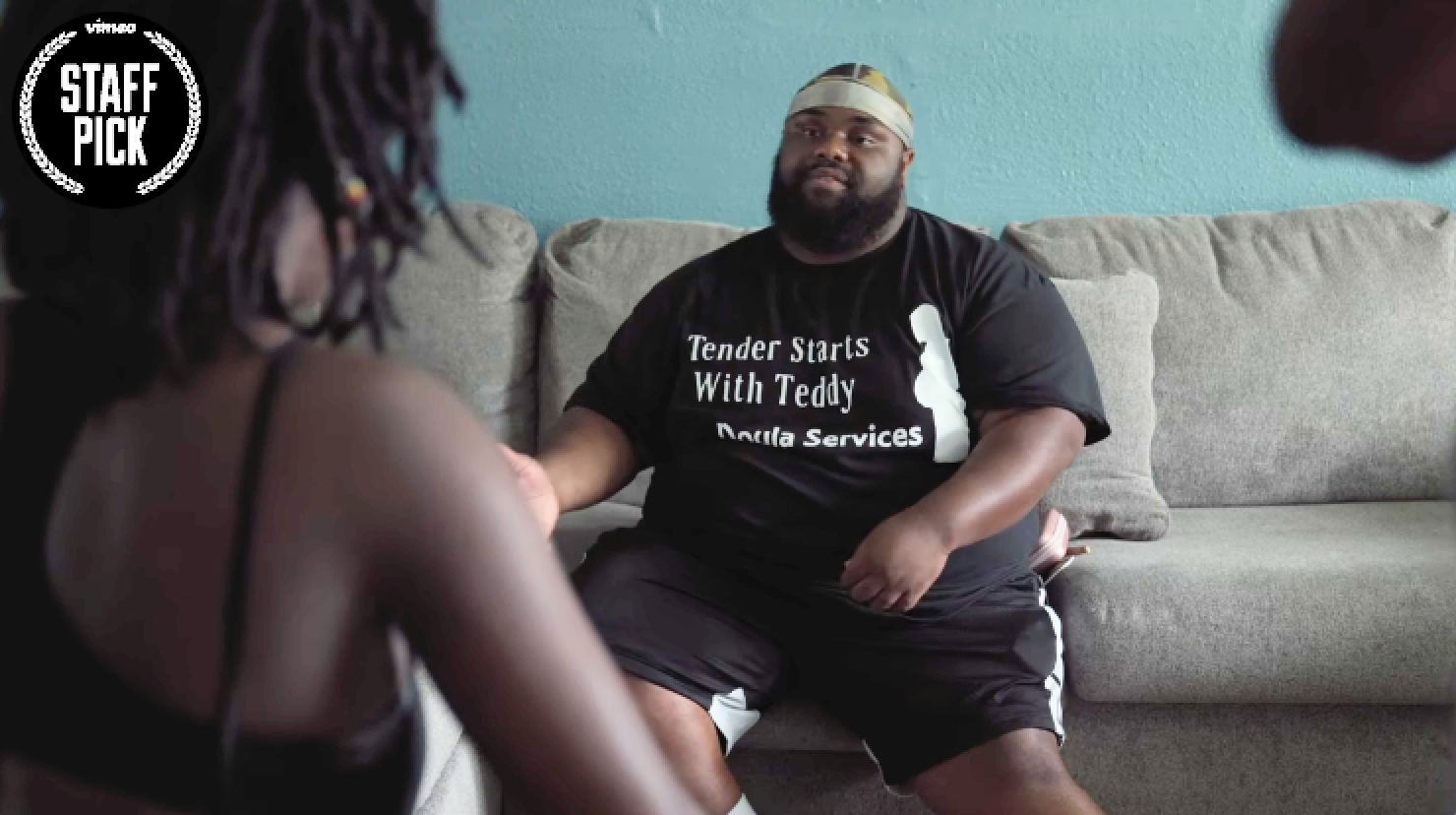
When most people envision doulas, they’re not likely to think of a burly and bearded security guard, but that only scratches the surface of who 30-year-old Timothy “Teddy” Gant Jr. is. In 2024, Gant went from working 70 hours a week as a bank security officer to working full-time as a doula and massage therapist, according to TODAY.com. His journey shatters stereotypes about the role men can play in birth support.
Doulas are trained, non-medical professionals who provide “continuous physical, emotional and informational support,” according to DONA International. Yet male doulas are exceptionally rare. In 2021, less than 6 percent of doulas were men. Gant notes in a documentary called “Teddy” that he only knows of two other male doulas in his home state of Texas.
Gant’s protective instincts carry over from security work into the delivery room. “When you’re around me, just know that you should feel safe,” he said.
For Black women, that reassurance resonates as safety in the maternal health space can feel more like a luxury than a basic right. The CDC reports that Black women are three times more likely to die from pregnancy-related causes than white women, and social determinants of health impact the care they receive.
RELATED: We Asked a Doctor About Some of the Most Common Black Health Myths: Here’s What She Wants Us to Know
A stat displayed at the end of the documentary highlights the systemic disparities in Texas: “Black people who gave birth in Houston between 2016 and 2020 had the highest pregnancy-related death rate among all racial and ethnic groups in the U.S.”
The crisis hits close to home for Gant. His advocacy is rooted in his own mother’s birth trauma, which nearly took his life. He shares the story in the documentary filmed by one of his own clients, Lauren Santucci, who was pregnant during filming, according to TODAY.com.
Gant brings research and personal history directly to his clients, ensuring they have the facts and an advocate by their side so their experiences don’t become another statistic. He stands firm in spaces where Black women are often dismissed or mistreated, noting, “How police do your Black men is how the doctors do Black women.”
His approach extends to partners, too. Many fathers open up to Gant about feeling clueless or being told their involvement in birth is “weird.” To that notion, Gant insisted, “That should be normalized. That should be praised.” Whether he is coaching partners, guiding labor positions, explaining contractions, or talking families through next steps, Gant is committed to changing the birth experience.
As he told his mother in the documentary, “I know I can’t physically give birth, but if I can be able just to help one person, I think that would’ve been enough for me.”