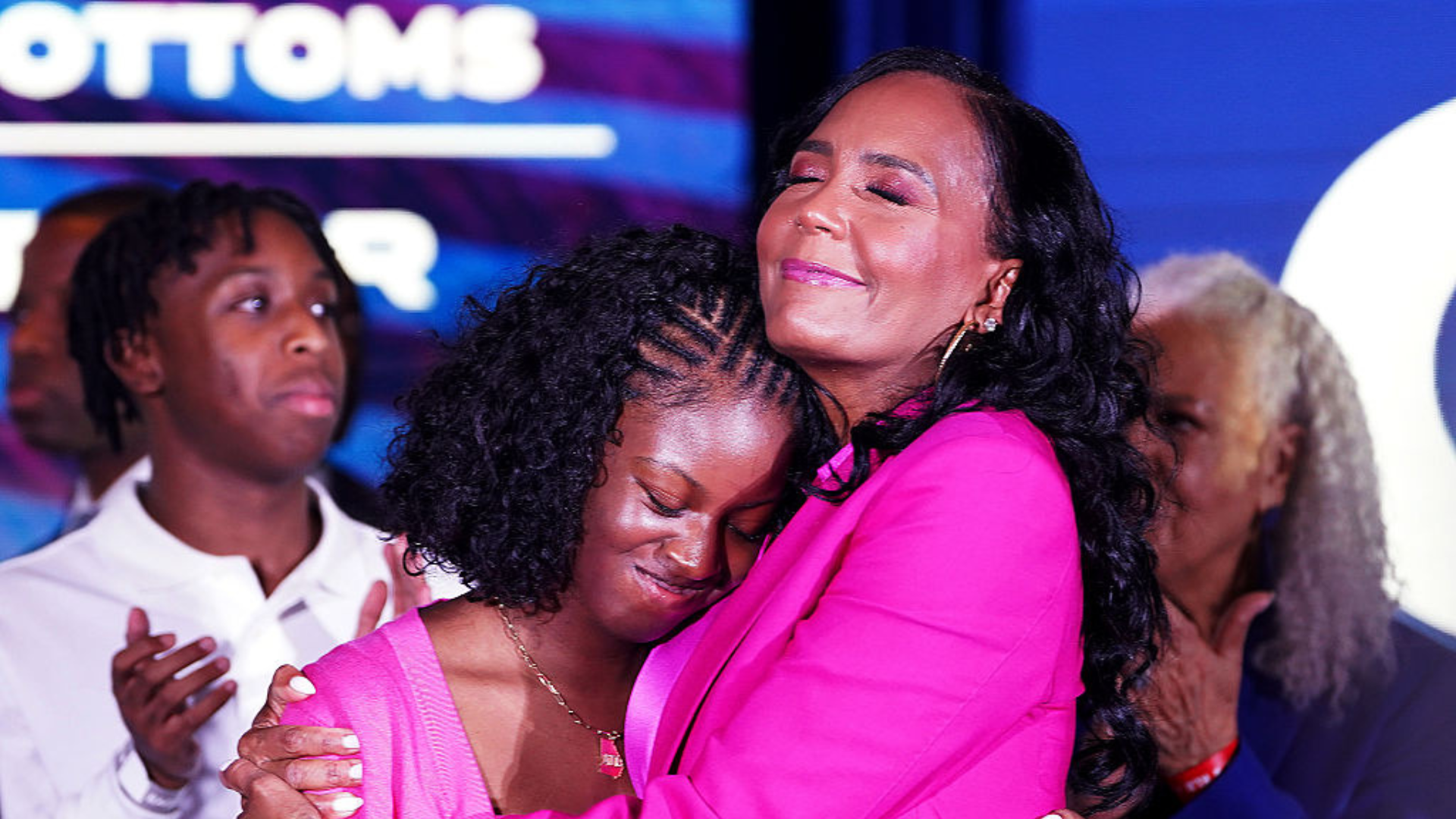
Keisha Lance Bottoms is a mom to three boys and one girl, but her journey to motherhood came with its share of twists and turns. While the Georgia governor-elect campaigned for her historic win as the nation’s first Black female governor, she spoke about affordability and other issues affecting families. But there’s a side of her own family’s story that many people may not know: all four of her children are adopted. November is National Adoption Awareness Month, and Bottoms’ story offers a glimpse into the way Black families navigate challenges, stigma and the joy of building a family through adoption.
Bottoms and her husband, Derek W. Bottoms, met in law school and have been married since 1994, according to USA Today. Like many couples, they hoped to have children biologically, but fertility issues turned into more than a dozen surgeries, three rounds of IVF and plenty of “anguish,” Bottoms told the Atlanta Journal-Constitution (AJC) in August.
They made the decision to pursue adoption, but that brought its own set of challenges. Bottoms told the outlet that red tape, fees, home visits and rejection complicated the journey.
“I went through a period of being hurt, being angry and just not understanding why God had done that to me,” she told AJC. “But my grandmother used to always say, ‘It always works for your good.’”
RELATED: How HBCU Grads Made Their Mark on the 2026 Midterms
The couple eventually adopted two sons, Lance, now 24, who voted for the first time in a general election and got to vote for his mom, and Langston, 18. Derek was content with their family of four, but a nighttime call during a night out changed their family’s course. Bottoms told the AJC that when asked if they were open to adopting twins, her answer was an absolute yes. “We’ll take them both. And then I got back in line and told my husband,” she recounted to AJC.
Eventually, her adoption process came full circle. Nearly two weeks before the election, a woman named Lisa approached the microphone at a Gwinnett County campaign stop. She introduced herself as someone Bottoms guided through the adoption process 11 years earlier after a mutual friend connected them.
“I call you my adoption coach,” Lisa told Bottoms, explaining that they had communicated regularly by text, despite never meeting in person. She then introduced her son, Grant, who she said she adopted with Bottoms’ help. “Grant, this is our new governor. I’m calling it,” Lisa declared into the microphone.
But Bottoms’ experience also revealed a troubling reality of adoption. She told the AJC that Black and biracial children often face shorter wait times than white children and described the truth as both a “blessing” for her family and “heartbreaking” for children who had not been considered “the most ‘desirable’ to adopt.”
That disparity is reflected in federal foster care data highlighted by the National Council for Adoption. In 2024, Black children made up 24% of youth awaiting adoption but accounted for just 17% of finalized adoptions. By contrast, white children represented 41% of those awaiting adoption while accounting for 48% of completed adoptions.
Bottoms shared her story in her 2026 memoir, “The Rough Side of the Mountain,” and celebrates the path that brought her family together. She told the AJC: “I say with all of the physical and emotional anguish that we experienced, I’d do it all over again if it got me back to these four.”