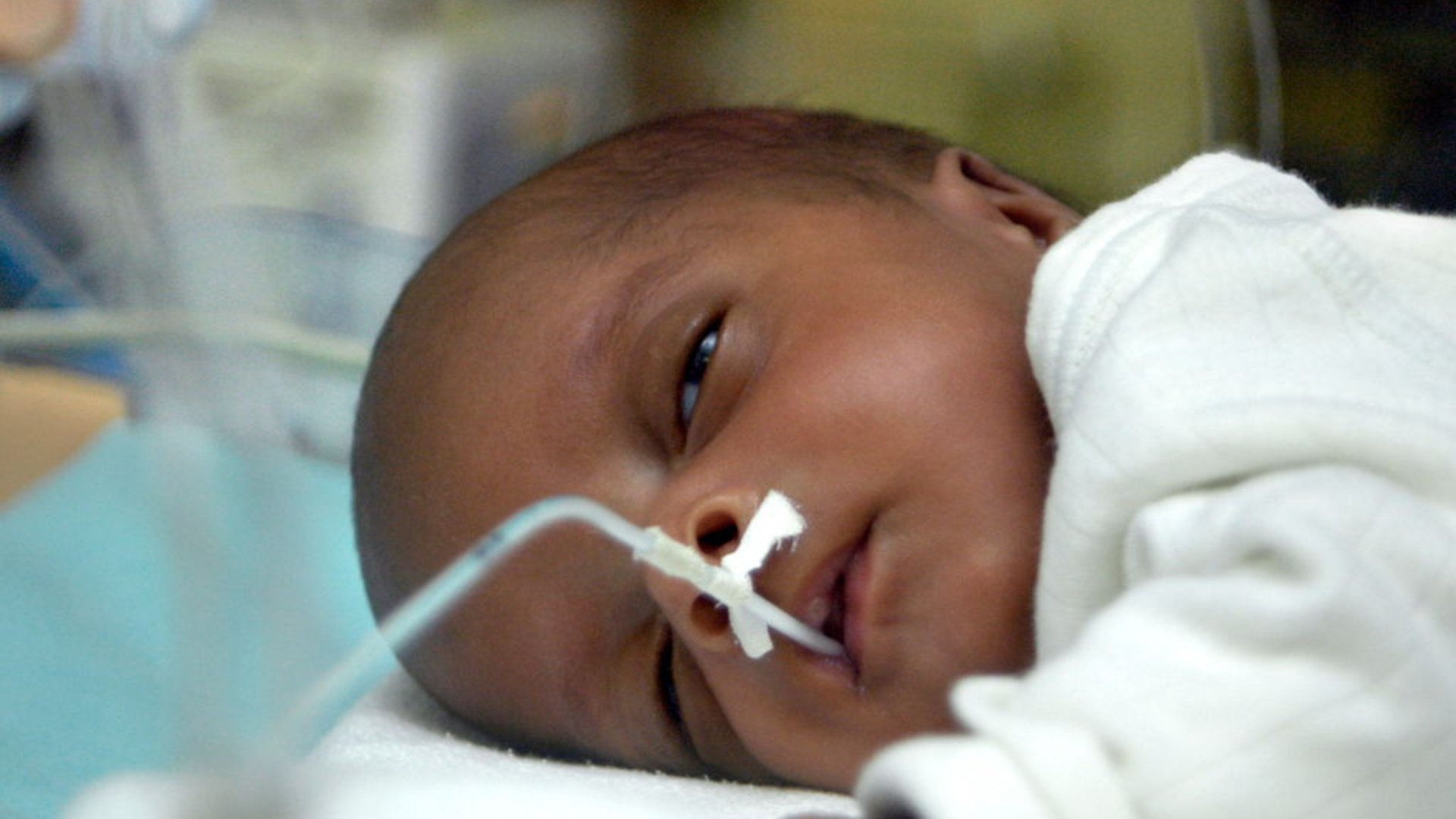
Reportage in the neonatal unit of Robert-Debre hospital in Paris, France. Premature baby in an incubator with a feeding tube. (Photo by: BSIP/Universal Images Group via Getty Images)
One Black family is celebrating after their baby girl was released from a NICU in Reston, VA, after spending more than five months fighting for her life. Northern Virginia Magazine reported that Afua, a pregnant woman identified only by her first name, left Ghana—where her husband and son remained—to attend her cousin’s wedding in the United States last October. She was 23 weeks pregnant, when a baby is typically the size of a carrot.

She planned to spend a few days in Northern Virginia before heading to Houston, Texas, but she never made it. The outlet reported that three days into her trip, Afua felt ill and visited Virginia’s StoneSprings Hospital Center. There, she learned she was six centimeters dilated. The hospital airlifted her to Reston Hospital’s Level III NICU, which provides specialized care for critically ill newborns, including those weighing less than 3.3 pounds or needing surgery or breathing support. Afua gave birth to her daughter, Akosua, who weighed just 1 lb., 1 oz.
Preterm birth rates are highest for Black infants, according to the March of Dimes. Babies born extremely early, or micropreemies, are born before 25 weeks, according to the Cleveland Clinic, and face a highly intensive and uncertain course. Babies born before 22 weeks rarely survive.
Because their lungs are not fully developed, micropreemies require ventilators, CPAP machines or supplemental oxygen. Cleveland Clinic notes that their fragile systems also leave them vulnerable to infections, brain bleeds, and difficulty regulating blood pressure and temperature. Blood transfusions are common due to anemia and immature digestive systems, which can make feeding a challenge.
Complications can affect vision, including retinopathy of prematurity, a condition caused by abnormal blood vessel growth that may require surgery or ongoing treatment. Many preemies spend weeks or months in incubators with limited parental contact due to sterile requirements. While these interventions are critical for survival, they can also limit parental bonding, adding to the emotional strain. For families, the NICU is both a lifeline and a source of emotional stress, with days marked by constant monitoring and slow, incremental milestones.
Afua and Baby Akosua’s NICU journey lasted 172 days and included isolation, pneumonia and multiple reintubations. The baby went home with a feeding tube, according to Northern Virginia Magazine. Throughout this ordeal, with her family far away, Afua relied on the compassion of nurses and doctors for comfort.
“Often, you have a partner, but my husband wasn’t here,” she said. “The nurses and doctors hugging me and saying, ‘It will be okay,’ offered so much comfort,” she told the outlet.
Straight From 
Sign up for our free daily newsletter.