Health officials also warn their go-to drug is facing a shortage
Along with other sexually transmitted diseases, syphilis rates are surging in all U.S. regions and age groups, and the best drug to treat it, an injectable antibiotic, is costly and scarce. But syphilis has become a top priority in many state health departments, with experts working to manage the epidemic as well as the drug shortage.
Diana Prat, Deputy Director at the Virginia Department of Health (VDH) Division of Disease Prevention says the issue in her state is very serious.
“Syphilis can be absolutely devastating to pregnant women and especially their fetus,” Prat tells The Messenger. Cases in Virginia are the highest they've been in 30 years. And nationwide, cases jumped 75% from 2017-2021 according to the CDC. Data from last year has yet to be reported but is expected to be even higher.
The antibiotic used to treat syphilis, penicillin G benzathine, is manufactured by Pfizer under the brand name Bicilin L-A. One dose is usually enough to treat early syphilis, but if the infection has been present for more than a year, or for an unknown amount of time, then three doses are needed, taken once a week for three weeks, the CDC says.
“There is a Bicillin shortage. We're keeping track of every dose of Bicillin that we have access to and making sure that our local health departments have the drug in stock and that they're only using it for syphilis,” Prat says of their current approach in Virginia.
Last month, Pfizer wrote a letter about its plans to increase production, but noted they still expect Bicillin to become more scarce in 2023. The VDH is making sure that pregnant women are first priority for Bicillin since they cannot take the other treatment for syphilis, called doxycycline, because that drug can affect bone development in the fetus. Between 2017 to 2021, cases of the mother passing syphilis to her baby during pregnancy, or congenital syphilis cases, surged 203%, reaching a 27-year high, the CDC reported.
Prat says the VDH encourages private providers to send any patients who tested positive for syphilis to their local health department for additional testing and treatment. This allows the department to have accurate reporting on the number of cases as well as data about the most affected populations.
- Rates Spike 1,000% for Infants Hospitalized With Syphilis
- Hawaii Reports Surge in Syphilis Cases, Pregnant Women at High Risk
- Biden Slammed for ‘Slow-Walking’ While Newborn Syphilis Deaths Surge in US
- Syphilis and Other STDs Are on the Rise. States Lost Millions of Dollars to Fight and Treat Them
- Newborn Syphilis Cases Rise 10-Fold as Deaths Jump 1,500% Since 2012: CDC
- Several States Grappling With Out of Control Epidemic of Sexually Transmitted Diseases
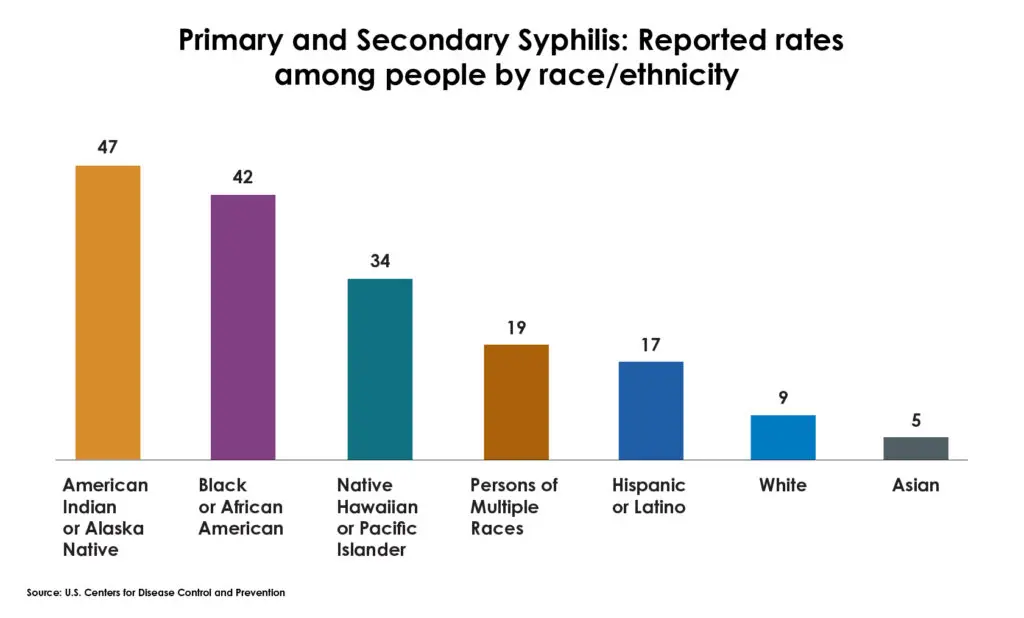
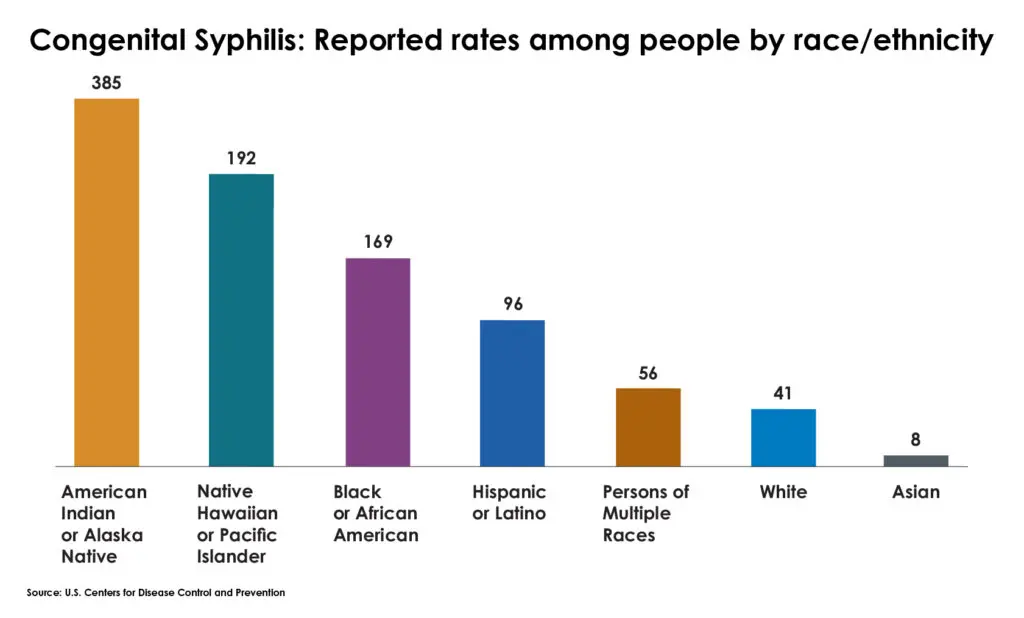
“Rates of syphilis are disproportionately high among racial and ethnic minority groups and gay and bisexual men,” Prat says. “But syphilis cases among women of reproductive age in all populations have also increased and that's led to an increase in congenital syphilis cases."
When the mother has not been treated, congenital syphilis can cause miscarriage, stillbirth, premature birth or birth defects like deformed bones, enlarged liver and spleen, blindness or deafness. In some cases, the baby dies shortly after birth, the CDC reports.
Newborns can be treated with penicillin for 10 to 14 days. “We can't reverse any damage that's already been done [in babies], but we can prevent any further damage from occurring,” Prat says of the treatment. Without treatment, additional health problems could occur weeks or even years after birth.
Syphilis can be easy to miss because the primary stage is marked by a painless ulcer. The ulcer appears where syphilis enters the body, and will heal even if the person goes untreated. Secondary syphilis can appear as rashes or lesions as well as symptoms like fever, fatigue, hair loss, headaches and sore throat. These symptoms will also go away without treatment, according to the CDC.
The disease then enters a latency phase, when syphilis remains in the body but is asymptomatic. If the person goes untreated, they may enter the tertiary phase, even years later, which can be fatal. At any stage of the infection, the brain and nervous system can be affected, causing confusion, problems with memory and personality changes. Vision and hearing can also be compromised. Syphilis reached historic lows in 2000-2001, but since then rates have steadily increased almost every year.
Once someone tests positive, the VDH makes contact with the patient to make sure they are aware they have the disease, to educate them about it and to share treatment options. The VDH will also interview the individual about their sexual history and attempt to contact any partners who may be affected. This interview process also gives the department some insight into the sharp rise of cases, which Prat says is often due to an increase in the average patient's number of sexual partners and not using condoms with every sex act.
Prat feels the ubiquity of dating apps could also be fueling the rise. “Sometimes [patients] admit to us that they meet a different person almost every single day who they might have a sexual encounter with and never see again.”
Prat also says that the rise in syphilis cases intersects with drug use, and the opioid epidemic in particular. A 2023 study found women with syphilis who had substance abuse problems were twice as likely to give birth to babies with congenital syphilis in Arizona and Georgia. Out of those congenital syphilis cases, the mothers were six times more likely to report illicit use of opioids. In 2019, the CDC reported heterosexual syphilis transmission and methamphetamine use as “intersecting epidemics.”
An increase in testing, Prat notes, is also a cause for the rise in reported cases. Testing is vital to slowing the epidemic, she says, and testing pregnant women during the first weeks of pregnancy is key. In Virginia, and at least three-quarters of other states, the regulation is that all pregnant women should be tested in the first trimester, often at the first visit for prenatal care. All states recommend prenatal testing for syphilis, some allowing for testing later in pregnancy.
“We do see pregnant women, particularly those who may be using illicit substances, who are not in prenatal care. They may be afraid of getting tested for drugs, perhaps, or they haven't signed up for Medicaid, which is free for pregnant women if they don't have health insurance. Sometimes they might be living in unstable housing or have unstable transportation,” Prat says. In those cases, the VDH will offer them transportation to treatment, links to prenatal providers in their communities and offer resources for substance abuse treatment.
But all syphilis patients are contacted by a disease intervention specialist who can help with any roadblocks to treatment. There are cases, though, when patients won’t participate or will skip too many appointments and have to restart the antibiotic regimen. This is often due to drug use, homelessness or unstable housing, the department has found.

“Our disease intervention specialists have to have a lot of patience,” Prat says. “Even if it seems like the patient doesn't care about their status, we care about them and we'll do whatever it takes to get them in for treatment.”

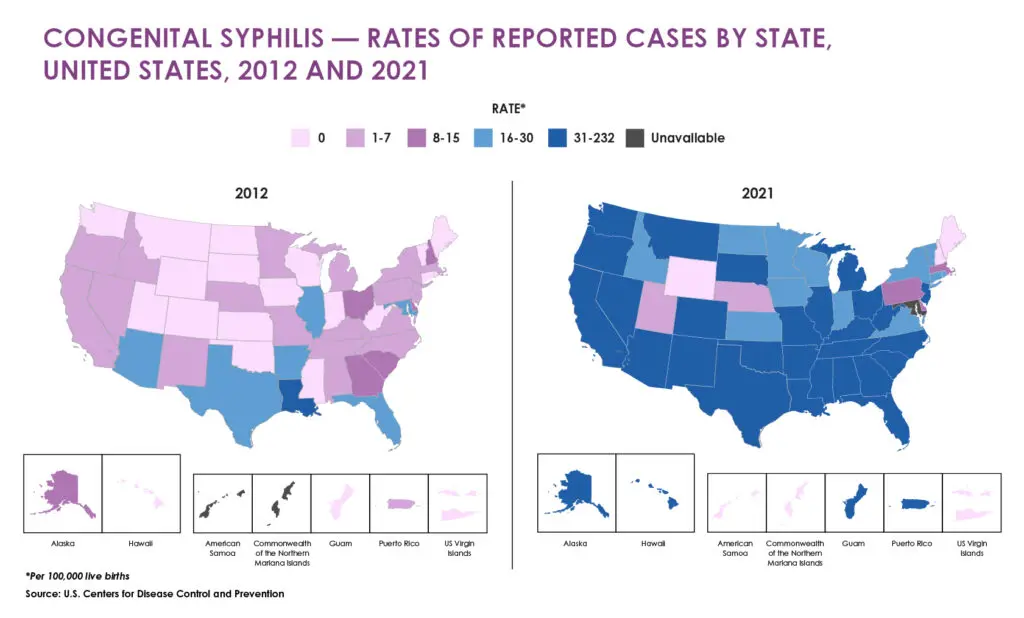
Many other states are reporting drastically increasing rates of syphilis in 2023, particularly a rise in pregnant mothers. In February, Mississippi reported a 900% increase in congenital syphilis cases over the last six years, with infant deaths and severe neurological development disorders as a result. Last week, the Houston, Texas, health department issued a warning that syphilis cases were up 57% between 2019 and 2022, with congenital syphilis rising from 16 cases in 2016 to 151 cases in 2021. South Dakota, New Mexico and Arkansas had the highest rates by population as of 2021, per the CDC.
"All the states that we work with are doing whatever they can to try to prevent syphilis, to raise awareness and to get people tested and treated as quickly as possible," Prat says. "And a lot of [health departments], including us, are trying to raise awareness on social media as well about STIs and HIV and encourage people to get tested if they believe they're at risk."
To find free and confidential STI testing in your area, use the CDC’s