Gawking at the neighborhood of Kensington, Philadelphia is a phenomenon on YouTube. There are dozens of so-called documentaries that explore its plight, most of them made using cameras mounted on cars that cruise the neighborhood to shock viewers with images of “zombies.”
The videos seek out opioid addicts who have injected drugs that contain fentanyl and xylazine, a large-animal tranquilizer that slows the central nervous system. The deadly mixture subdues the user to the point where they may stand or lean over for hours while practically unconscious, causing them to appear as something other than human.
Advocates for safe injection sites, also called overdose prevention centers (OPCs), say the routine dehumanization of people struggling with addiction prevents their recovery, and the centers can provide them safety, understanding, a place to shower, therapy and, if they ask for it, placement in a rehabilitation center.
Those opposed argue that it’s the neighborhood’s small business owners and families who have been degraded. They say they’ve been left out of the conversation about opening one of these controversial centers next to their homes.
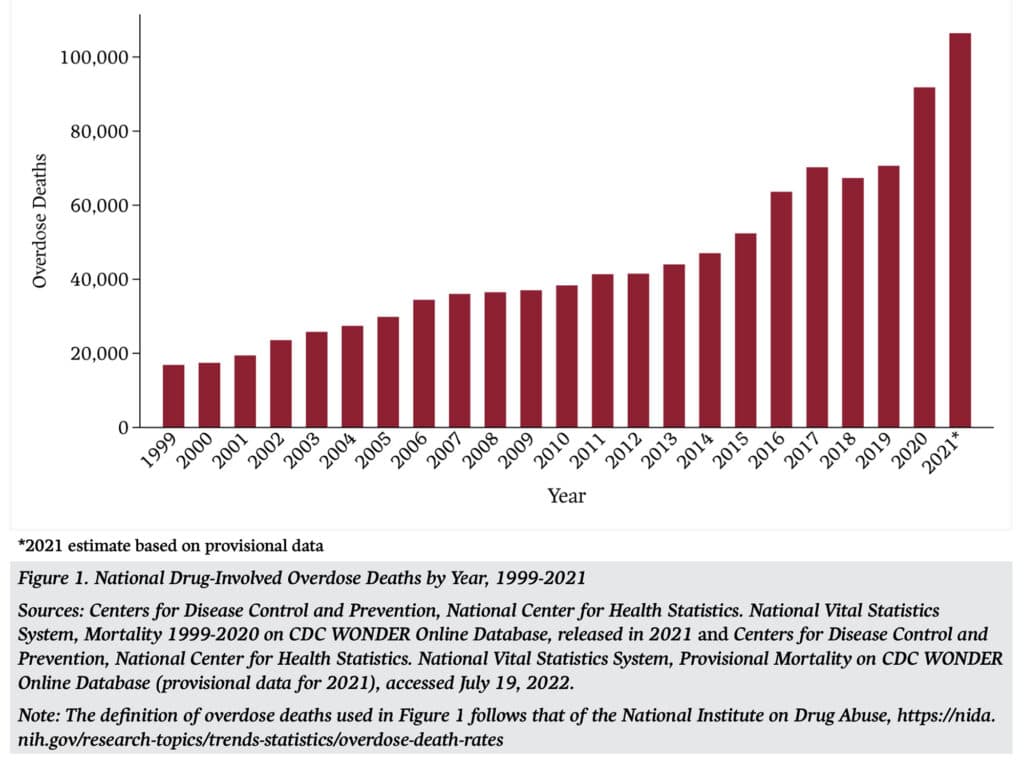
But all can agree the situation is dire — at least 1,276 Philadelphians died from overdoses in 2021, according to the latest statistics, and the current numbers are likely higher. This is twice the national rate, twice the rate of New York City and slightly higher than the rate of San Francisco that year.
The Philadelphia neighborhoods of Kensington and Harrowgate have been hollowed out by crime, violence and the largest open-air drug market on the East Coast, which attracts opioid users from all over the country.
Philadelphia Rejects Overdose Prevention Centers
- Drug to Stop Opioid Overdose Available Over-The-Counter
- ‘Rainbow fentanyl’ is the latest twist in the opioid crisis — and shows how illegal drug dealers are adapting
- Synthetic Opioid 10-Times Stronger Than Fentanyl Linked to String of Overdoses
- Fentanyl, Opioids Surpass Guns, Obesity as US’s Biggest Fear: Poll
- Prescription Opioid Shipments Declined Sharply Even as Fatal Overdoses Increased, New Data Shows
- Naloxone could soon be sold over the counter, but that won’t solve the opioid crisis
Philadelphia mayor Jim Kenney announced Wednesday he will veto the City Council’s bill against overdose prevention centers. A veto is a symbolic gesture however, since the council has enough votes to override him at their meeting on Thursday.
Council members voted 13-1 to prohibit OPCs across Philadelphia, over fears of legitimizing illicit drug use, increasing crime and putting children at risk.
Kenney, who supports the centers, criticized the council in a press conference last week for its decision:
“If you really want to say that you want to fix this problem or address this problem, then address it, and stop trying to put your head in the sand and say this doesn’t work because it works,” he said of the overdose prevention centers.
Do Overdose Prevention Centers (OPCs) Work?
In Kenney’s rebuke of the city council, he pointed to research that has shown OPCs to be effective in other cities.
“It works in New York. It works in Toronto. It works in Vancouver. It works in Europe. It works everywhere and we can make it safe and make it work,” he said.
Studies have shown that OPCs decrease overdose deaths, lower the number of people injecting in public, lessen risky injection behaviors like sharing needles, reduce the litter of syringes on the street and help prevent incidence of HIV and hepatitis among those who participate.
Further, people struggling with drugs who go to OPCs are more likely to access drug treatment programs and other health and social services, according to a policy brief from Jerry Stahler, Ph.D., a professor of Urban Studies at Temple University in Philadelphia. His brief from 2022 also shows OPCs have no effect on crime or drug sales in the neighborhoods where they are located:
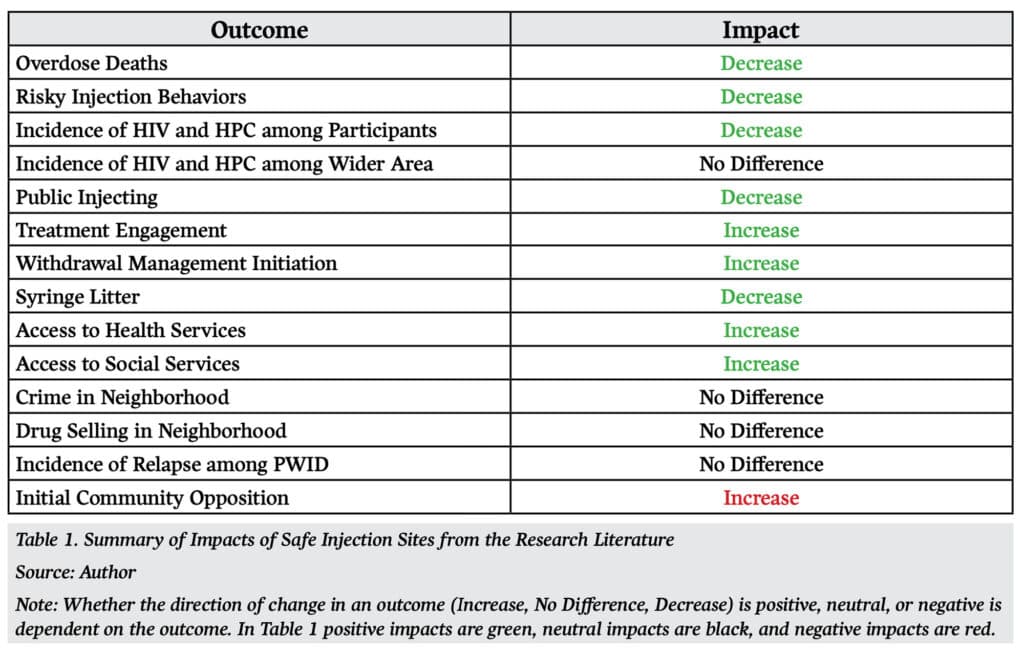
Dr. Stahler says there is a large body of research showing the efficacy of OPCs, and that the initiative to open a center should be led by the health department.
“It’s an evidence-based health intervention,” he tells The Messenger, pointing out that the Biden administration has approved harm reduction as a part of its drug control strategy, and awarded NYU and Brown University grants to study OPCs.
“Because we're in so much of a crisis, I think it's really foolhardy to ignore something backed by data, and we should at least continue dialogue on how best to implement it, how best to mitigate people's fears and concerns, to listen to various stakeholders, but not to just wholeheartedly reject something without really looking into it,” he says. “To not even entertain this is a possibility, I think is a real mistake.”
Philadelphia Communities Don’t Want OPCs
Council Member Quetcy Lozada, who represents Kensington and Harrowgate and introduced the bill, says that her constituents are against OPCs.
“This bill is just a reflection of my constituents' requests,” Lozada tells The Messenger. “The community has been struggling and we, as a city, have not been able to figure out exactly what we need to do to fix it.”
Kensington’s drug problems are not new. The neighborhood began to decline in the 1950s when industries like cigar and hat making that had thrived there began to wane, leaving behind empty industrial buildings that would later house the illicit drug market, according to a report by the Philadelphia Inquirer that traces the neighborhood’s decline.
The area was neglected by city officials for decades and was taken over by the crack cocaine epidemic in the 1980s, giving the area the nickname "The Badlands." The next decade saw an influx of heroin, which has been adulterated by fentanyl, and now fentanyl laced with xylazine.
“People have to walk in the middle of the streets because the sidewalks have been taken over [by drug users], and they have to walk over syringes, they have to walk over human feces,” Lozada, who grew up in the area, says.
Although research shows OPCs help reduce syringe litter, residents have been turned off to safe injection sites in part because they are frustrated with the planning process. Lozada says three locations for an OPC had been identified in the Kensington area without community consent. “This bill is another step to ensure constituents have a seat at the table,” she says.
Lozada says the bill is not an outright ban, but it makes it difficult for an OPC to open in the future. Special permission from the Zoning Board for Adjustment would be required, along with the approval of a community group and the council member for the district where it would open, the Philadelphia Inquirer reports.
Scott Burris, law professor at Temple Law School and director for the Center for Public Health Law Research, was a part of the opioid task force that recommended an OPC in Kensington, but agrees that the process has been flawed.
“The problem is that there was just never a time when a consensus was developed about the value of and need for a facility, and for the site for the facility,” Burris tells The Messenger. He says an OPC would help the community, but it shouldn’t be presented as a panacea.
“I feel pretty confident that if you convince the Kensington community that they're going to get a comprehensive set of supports for preserving and improving their community, and just a part of that is a safe injection site, I think you could make a deal, but I don't think that deal was really ever offered,” he says.
Burris adds that an OPC was never backed by the city because it was not adopted as a formal recommendation by the commission. “Instead of the commission embracing it, they just kind of ignored it. And then the mayor said, ‘but I think it's a good idea.’ But the mayor also did not adopt it as something the city was going to fund.”
“But the bottom line was that if you want to start one of these things, you really have to get the community on board. And I am convinced that there was a deal to be made with Kensington's residents where this would be a win-win,” he adds.
But Lozada says the research doesn’t reflect the reality: “I think that there's a lot of statistics out there. There's a lot of folks that I have talked to in academia, but none of that compares to the reality that we're experiencing on the ground. None of it.”
Both Burris and Lozada note a common “not in my backyard” reaction to OPCs.
“Until people put a safe injection site next to their home in an area where they would be comfortable with their children walking around, then none of those statistics and none of that research and none of those surveys matter,” Lozada says.
NYC Overdose Prevention Centers
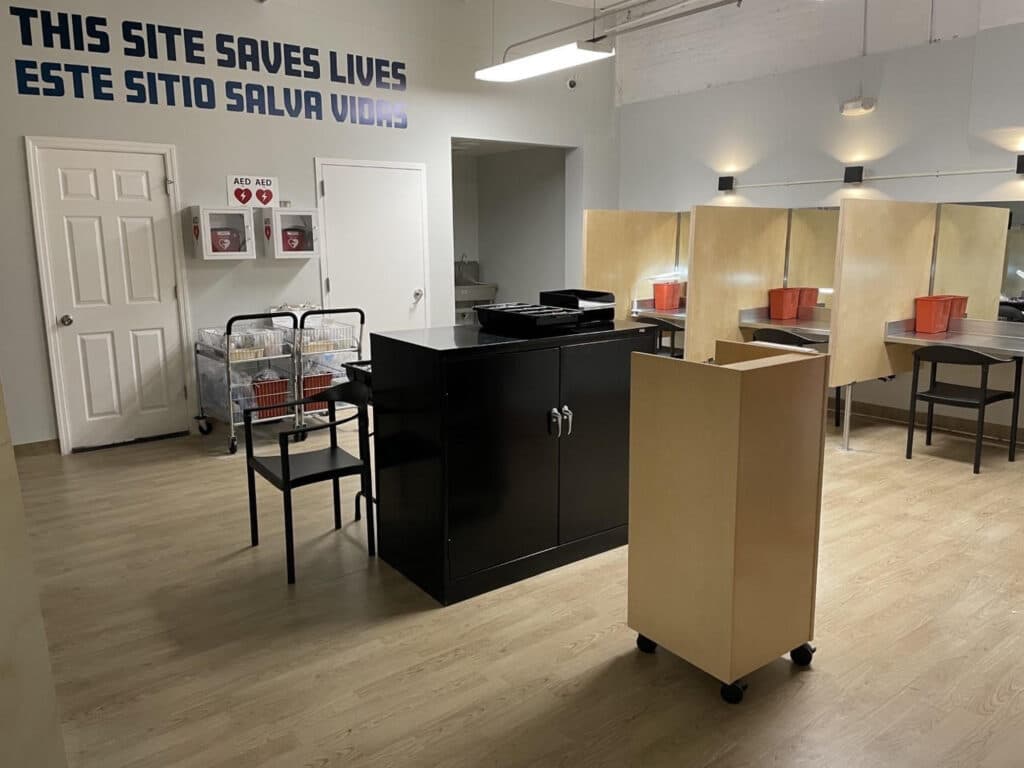
The only overdose prevention centers in the country are both in New York City. OnPoint NYC has two locations run by executive director Sam Rivera, a harm reduction expert, who says the organization has registered into the program more than 3,700 people and prevented over 1,000 overdoses since opening in November 2021.
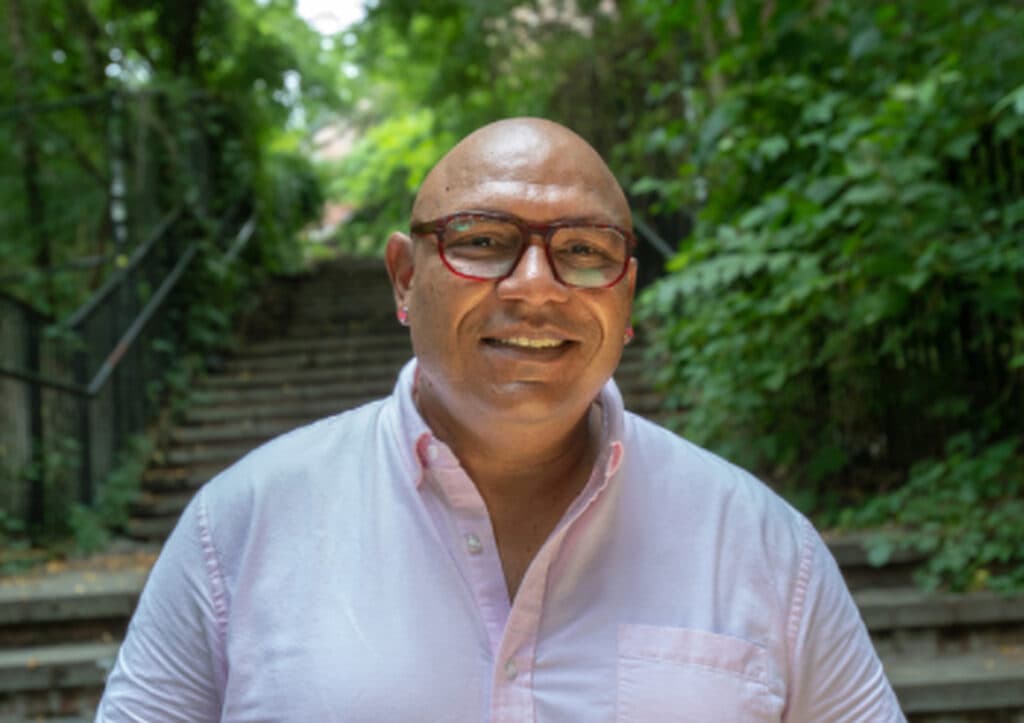
Rivera says between the centers in East Harlem and Washington Heights, they have had over 83,000 utilizations, meaning instances of drug use happening in the center, and not in public.
“At the same time, we’ve safely disposed of over 2 million units of hazardous waste that's no longer in the street,” Rivera tells The Messenger. “And we're seeing a reduction in the use of ERs for overdoses in our communities.”
Rivera says that those who oppose OPCs and other harm reduction programs place unnecessary blame on people who struggle with addiction.
“If they looked at these folks from the lens of, ‘these are people in pain, they are self-medicating pain,’” he says. “[Opioids] are not a party drug.”
“We're meeting people during a time in their life when people have thrown them out, people have given up on them, people have dehumanized them,” he says.
Rivera says he understands the concerns of those who oppose OPCs and their fears that the programs legitimize drug use and put children at risk.
“People say, ‘I don't want public drug use. I don't want paraphernalia around kids' schools and in the streets. We don't want people dying in our community. We don't want people dying in our public bathrooms.’ We agree a hundred percent. We agree with you. You don't like our answer,” Rivera says.
“Our response is to move all those people indoors with us to use safely until they're ready to reduce and stop when they're ready, not when we believe they should reduce and stop, but when they're ready.”
Rivera adds that the proof of concept is in the successful outcomes they have measured at OnPoint NYC, and they plan to publish additional data this fall.
Ready for recovery?
The communities of Kensington and Harrowgate are not ready to make a leap in New York's direction. Despite the compelling evidence that OPCs work, Lozada says those suffering from addiction need to go “to real recovery programs, long-term recovery programs that would allow them an opportunity for a real life."
But Rivera says that all of the people who come to OnPoint NYC have already been to detox and treatment numerous times, and have failed.
“I think that's the answer people need to live with,” he says, adding that the program sends participants to treatment centers regularly. “Every time someone says to our amazing team, ‘I'm ready to stop, can you connect me?’ It is a go. We jump on it right away, we connect them, and I'll thank the treatment providers and the detox providers out there who have been partnering with us in this.”
Now that OPCs are off the table for Philadelphia, Lozada is putting together “a Marshall plan, where we're bringing together all of the city services with federal and state services, and we're coming to the table to have conversations about what is the next step, how do we better improve the quality of life for the constituents of the Kengsinton and Harrowgate communities?” She asks.
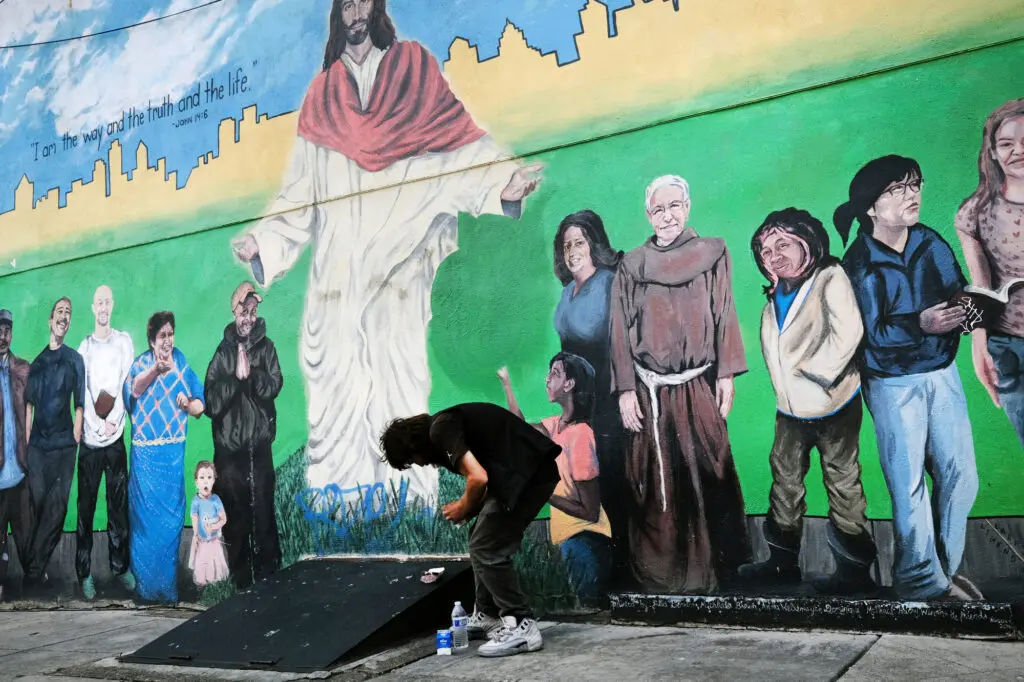
In the meantime, a livestream of Kensington draws hundreds of viewers on YouTube. Many watch it regularly and have given the drug users they see pet names. Viewers chat with each other in the comments, and seem to know one another.
At first glance, it seems like a perverse pastime, but some viewers comment that the destruction they see in the livestream helps them to stay sober, and they share their milestones of months or years clean, which other viewers in the chat celebrate.