Patients of an influential Arkansas doctor are sharing horror stories of being imprisoned in an inpatient psychiatric facility, and describing alleged incidents of physical and emotional abuse, strip searches, forced sedation, intimidation and fraud in the mental health facility.
And all so the doctor could make some extra cash off the insurance.
Brian Hyatt, M.D., stepped down in May from his position as chairman of the Arkansas State Medical Board — the group that works to protect the public and regulate doctors' practices — following allegations of fraud that the state’s Medicaid Inspector General called "credible." Further, a Medicaid fraud investigator for the state said there was "little doubt" of fraudulent billing.
But defrauding Medicare, Medicaid and private insurance companies are not the only allegations. At least 27 former patients have filed civil lawsuits against Hyatt and Northwest Medical Center, which houses the Inpatient Behavioral Health Unit in Springdale, Arkansas.
According to court documents obtained by The Messenger, patients describe startlingly similar stories of abuse: They would go to the ER for help and end up in the psychiatric unit for days.
In many cases, patients needed help with mental health related crises, like suicide attempts or suicidal ideation. But other patients reported less serious mental health concerns like anxiety attacks or confusion brought on by unknown causes.
In one case, court documents claim a woman went to the ER to detox from alcohol, reported no suicidal thoughts, but still ended up in inpatient care for days against her will even after she and her family pleaded for her to be released.
- Arkansas Psychiatrist Accused of Imprisoning Dozens in Psychiatric Unit as Part of Medicaid Fraud
- Therapists With Pasts of Pedophilia and Financial Exploitation Allowed to Keep Practicing Due to Disturbing Legal Loophole: Investigation
- How Physicians Still Get Away With Sexually Abusing Patients
- Counselor at Church Treatment Center Run by Arkansas Man Pardoned by Trump Accused of Horrific Abuse
- Former NYC Urologist Now Accused of Sexually Abusing At Least 70 Juvenile, Adult Patients
- Child Psychiatrist Who Used AI to Turn Pictures of Kid Patients Into Porn Gets 40 Years Behind Bars: ‘It Is Horrific’
Plaintiff William VanWhy has had mental health issues since he was 12 years old and has been on medication and in treatment with a psychiatrist consistently. He occasionally has bouts of severe depression and anxiety, and has admitted himself to inpatient treatment in the past to get help, which has been beneficial to him. In March 2022, when he was then 30 years old, VanWhy went to the emergency room due to suicidal thoughts.
“I knew I had to go somewhere for help, and my options from the ER doctor were either Northwest Health, which is 10 or 15 minutes from my house or go to Missouri, which is obviously another state. Probably an hour, hour and a half away,” VanWhy tells The Messenger. So he decided to stay close to home, and was voluntarily admitted to the inpatient clinic that night.
“The following day, the nurses prescribed Prozac, which I'm actually allergic to,” VanWhy says. He refused the medication, but it took him another full day to finally receive his normal medication, he says.
Despite this, the lawsuit alleges nurses and staff continued to offer VanWhy Prozac and Ativan, against the orders of his regular outpatient psychiatrist, Michael Lozovatsky, M.D. The lawsuit states that Dr. Lozovatsky was never contacted by Dr. Hyatt or anyone at the inpatient clinic about medications or a treatment plan, even after Dr. Lozovatsky reached out to coordinate with them.
“They wanted me to be on the same medication my roommate was on," VanWhy says. "And as I was in the unit talking to people, they said they were all put on Prozac. I realized that it was kind of like a blanket treatment for everybody.”
VanWhy explained that he felt the health care wasn’t personalized at all, which was worrisome. “After not seeing any doctor for two days or so, I knew something was wrong,” VanWhy says.
During the five days he was there, VanWhy says he received no mental health care. A health care provider who was not a doctor did a five-minute evaluation each morning, he claims, that was not confidential, but in front of other patients. He says group therapy consisted of discussing favorite movies and the best drinks at Sonic.
“The extent of the therapy was that discussion,” he says. “I knew that stuff just was not adding up, and the second that you start to feel that you're trapped, you start to feel it an extreme way if you're literally locked up somewhere.”
VanWhy asked to leave the facility on day three. “I knew they could hold you for 72 hours, so I started pushing really hard after three days,” he says, referring to the state law that allows for a psychiatric hold if a patient is a danger to themself or others.
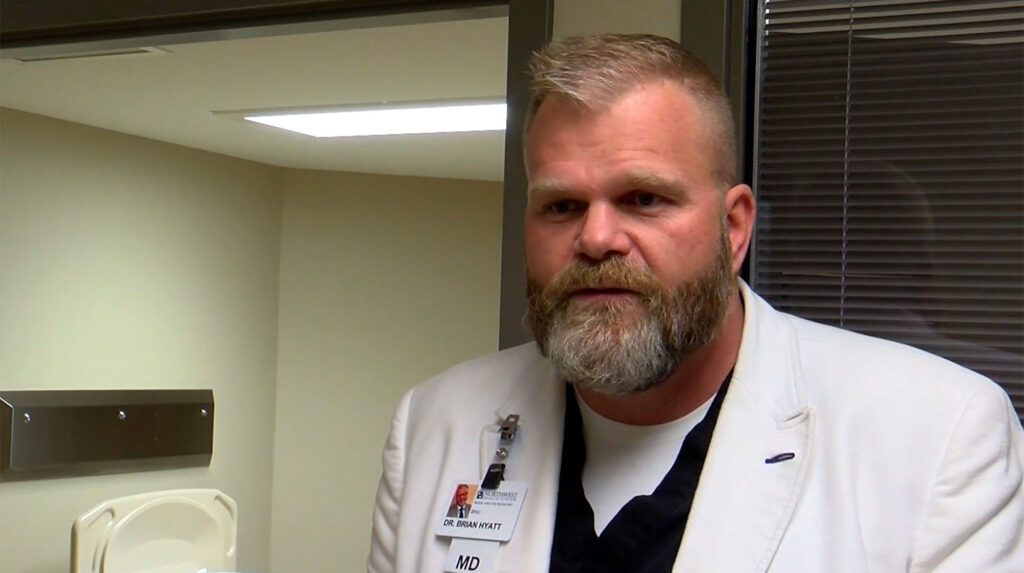
However, VanWhy admitted himself voluntarily, and says he never saw a doctor who could make that assessment. Further, his complaint says the facility never petitioned a Circuit Court to hold him involuntarily, which is required.
In each of the 27 lawsuits, patients allege they were told by Inpatient Behavioral Health Unit staff that they had to remain in the facility, often for seven days, which according to Arkansas state law is false.
Additionally, court filings allege, the facility did not file a petition with the court for any 72-hour involuntary holds. Yet staff refused the patients any visitors and ignored phone calls from family members who wanted to know when their loved ones could return home.
“It didn't matter who you were — you could be homeless, you could be a business person, you could be wealthy, you could be not wealthy, you could be in-between and, and it could have happened to you,” patient attorney Aaron Cash tells The Messenger.
Instead of seeing people in a moment of crisis, the suit alleges, Dr. Hyatt only saw dollar signs.
“It was about billing. It was about keeping people as long as you could until the last moment [of insurance coverage] and then kicking them out the door and filling the bed space,” Cash says. “Dr. Hyatt was making $1,300 a day just from that.”
Hyatt's attorneys have not responded to repeated requests for comment.
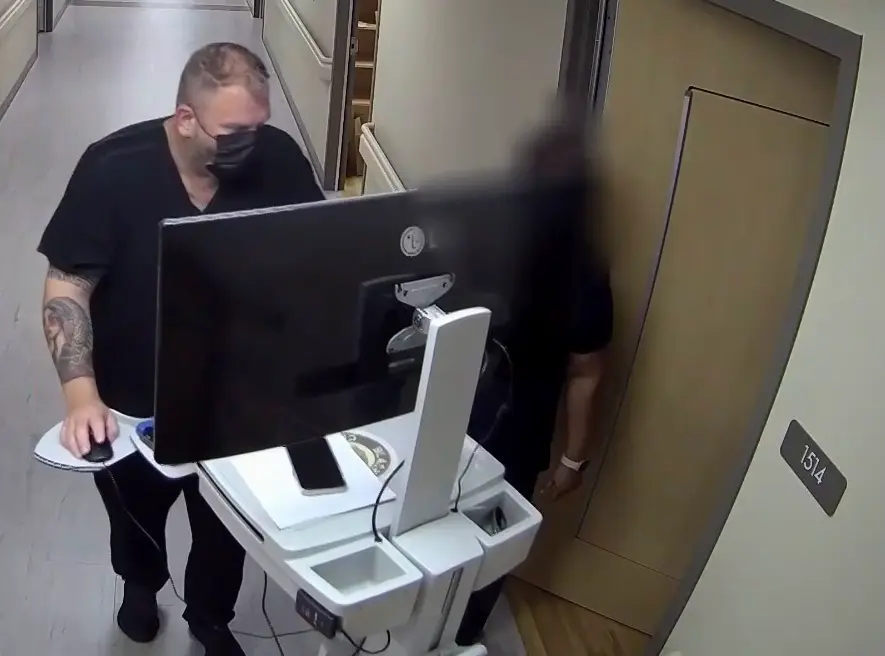
In a January affidavit obtained by The Messenger, Mary Bowen, a Medicaid fraud investigator for Arkansas, writes that a whistleblower alleged Hyatt had no contact with patients and was on the floor only a few minutes a day. The Medicaid Fraud Control Unit (MFCU) obtained video footage that confirmed this. They also found evidence of fraudulent billing.
“Dr. Hyatt billed more Medicaid recipients at the highest code (99233); more than any other doctor billed for all of their Medicaid patients,” Bowen writes. He used the highest severity code on 99.95% of his billing, leaving “little doubt that there has been a significant overpayment.”
Arkansas attorney General Tim Griffin announced in April that Northwest Health would pay back over $1 million to settle 246 Medicaid claims in which “the documentation provided did not justify or support the medical necessity requirement for hospitalizations.” The statement acknowledges the claims were certified by Hyatt and non-physician providers under his supervision.
In May, Hyatt's contract was terminated by Northwest Health. Further, federal officials from the Drug Enforcement Agency raided his office, but the reason for the search is unclear, Cash says.

In addition to Hyatt, some of the lawsuits also allege that some of the providers who worked under Hyatt physically and emotionally abused patients, but those individuals are not being charged with a crime as of yet. According to the lawsuits, the typical intake procedure involved a strip search, having one’s clothes and belongings confiscated and being given a pair of hospital scrubs, often that were the wrong size.
“I was not given anything except that one pair of disposable scrubs for the entirety of my stay,” VanWhy says.
Several plaintiffs also allege they were sedated against their will, often in retaliation for asking to leave and speaking negatively about the facility when on the phone to family members.
One female patient’s complaint reads:
“When she began asking questions about her diagnoses and treatment plan (or lack thereof) and her rights to leave as a voluntary admission, she was approached by a nurse and orderlies with a syringe and told that she was going to get a sedative injection referred to as a “booty shot.” Plaintiff asked why she was being given the shot, but the nurse and orderlies refused to answer. They told Plaintiff that if she did not agree to get the shot she would be held down by the orderlies and forced to take it. Fearing that she would be physically assaulted and injured by the orderlies, Plaintiff allowed the nurse to pull down her pants and give her the injection, which quickly caused her to become lightheaded, groggy, and fall asleep.
Unit staff then continued entering Plaintiff’s room and giving her sedative injections while she was under the effects of the first injection and could not resist.
When Plaintiff finally awoke and the effects of the multiple sedative injections wore off, Plaintiff realized that she had been moved to the fourth floor (where there was heightened security and even less privileges) at some point without her knowledge and was being held there as a form of punishment for not “staying in line” and instead questioning her treatment and asking to leave.”
Other plaintiffs detail in their complaints physical violence from the staff, such as chokeholds or being wrestled to the ground; one patient suffered broken ribs, Cash says.
Patients were detained in a hospital wing with two sets of locking doors. “It looked just like a normal hospital,” VanWhy says, “except they had a payphone outside in the hallway that they would turn on during certain hours to make phone calls. And that was really my only window to the real world.”
Soon after arriving at the facility, VanWhy called his husband, Cameron Tryan, for help. According to an affidavit filed in VanWhy’s case, Tryan quickly met with Chief Nursing Officer Al Velotta, and spoke on the phone with a caseworker at the facility. He later met with a behavioral health director and the patient experience department at the hospital — but none of these attempts helped his husband to get released, although the couple knew and stated VanWhy's patient rights.
Exasperated, Tryan called the National Alliance on Mental Illness, which informed him that another patient had complained about the Inpatient Behavioral Health Unit, and had hired a lawyer. That led Tryan to Aaron Cash, who eventually got a court order to have VanWhy released.
“That's when I realized it was a bigger issue than just the one case,” Cash says. “After the first case, Dr. Hyatt emailed me, making fun of me and making fun of my office, making fun of my university.”
According to the email provided by Cash, Hyatt also writes, “Don't email me again or I will be forced to file a motion for harassment and I will ask a judge to incarcerate you in the county jail. PS - I really like the repurposed dentist's office you're working out of.”
“That shows you, in my opinion, how he treats people,” Cash says. “I just felt like there must be more to this. And so that's when we started digging in.”
Since then, Cash has interviewed more than 100 of Hyatt’s former patients and some former employees. “People have told me, you don’t question Dr. Hyatt,” Cash says. “And we've heard stories of retaliation against staff and against nurses.”
VanWhy says many of the patients didn’t know how to advocate for themselves.
“I think that my life experience dealing with depression and anxiety and the mental health system was really a game-changer here, because it allowed me to decipher this was not right. This was illegal,” he says. “So I'm gonna continue to speak up for the people who can't speak up or advocate for themselves.”
Dr. Hyatt is still practicing psychiatry at his private practice, Pinnacle Premier Psychology and the Inpatient Behavioral Health Unit at Northwest Medical Center continues to operate.
If you or someone you know is contemplating suicide or struggling with suicidal thoughts, help is available 24 hours a day through the Suicide and Crisis Lifeline at 988. You are not alone.