Females of reproductive age who lived in states with automatic abortion bans experienced worsening mental health after the Supreme Court overturned Roe v. Wade compared with those from states that did not have trigger laws, a new study shows.
In the JAMA study published on Tuesday, researchers analyzed data from the US Census Bureau’s Household Pulse Survey (HPS) after the Supreme Court decision in Dobbs vs. Jackson Women’s Health Organization was leaked on May 2, 2022, as well as after the court’s formal announcement on June 24, 2022.
According to the survey’s patient questionnaire, an established screening tool for anxiety and depression, people of all ages in impacted states experienced worsening mental health symptoms after the leak and through the final decision. This includes Arkansas, Idaho, Kentucky, Louisiana, Missouri, Mississippi, North Dakota, Oklahoma, South Dakota, Tennessee, Texas, Utah, and Wyoming.
The study, conducted by the Johns Hopkins Bloomberg School of Public Health, found that the general adult population across the country experienced increased anxiety during this time. However, the people who lived in the thirteen states with trigger laws — automatic bans against abortion in the first and second trimesters “triggered” by the Supreme Court decision — had greater increases in anxiety and depression than those in other states.
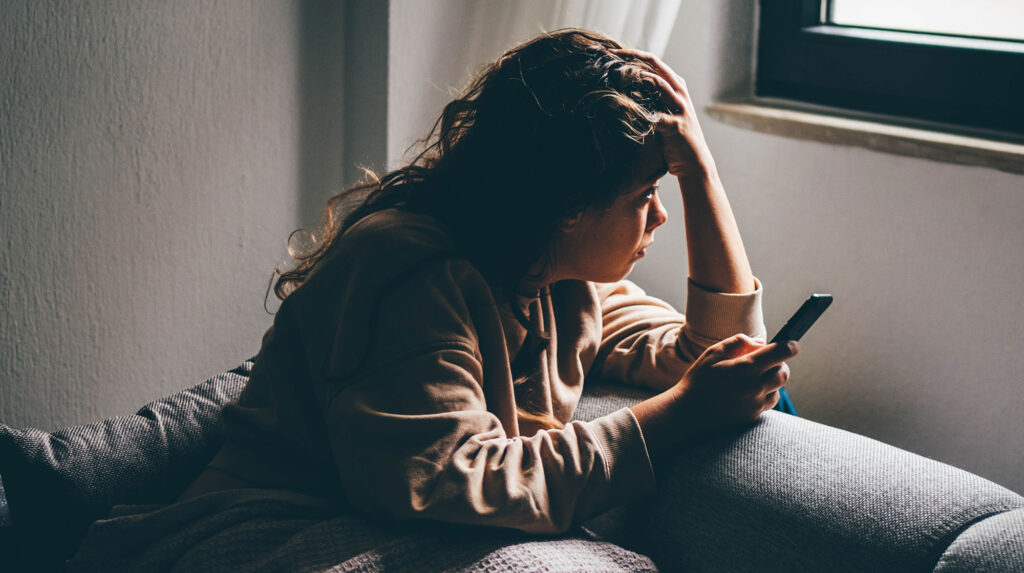
In trigger states, females aged 18-45 years faced the most symptoms, while males in that age group and females beyond reproductive age experienced minimal changes.
The anxiety and depression symptoms peaked in October 2022 and then lessened, but the gap between trigger and non-trigger states persisted, researchers found.
- An abortion public health emergency could protect access to a key drug nationwide, but it’s a risky move.
- Asian Americans Lack Access to Abortion: Survey
- Nebraska Legislature Votes to Add Abortion Ban to Trans Health Care Ban for Minors
- Most Americans Say Abortion Should Be Legal And Abortion Pill Should Be Accessible
- Alabama Health Care Providers File Suit to Block Prosecution Related to Abortion Travel
- South Carolina Abortion Providers Ask Court for Clarity on Abortion Ban
“These results provide emerging evidence that at an individual level taking away reproductive autonomy (by not having legal access to an abortion) may increase symptoms of anxiety and depression in all people and particularly females of reproductive age,” writes Julia Steinberg, Ph.D., in an accompanying editorial about the study.
Another study published in 2023 showed states with restrictive abortion policies between 1974 and 2016 had higher rates of suicide among women of reproductive age but not among those who have passed reproductive age.
Although some argue that abortion is detrimental to women’s health, studies show that wanted abortions do not cause an increase in anxiety, depression or suicidal thoughts.