
By LAURA PARKER, The Wall Street Journal
When Jeremy Ellison-Gladstone gives walking tours in Manhattan, he said it isn’t uncommon for passersby to stop and correct his facts. But he is OK with that, since his job is to deliberately embellish—and often downright ignore—the truth.
On a recent Saturday, a dozen or so people gathered outside the High Line Hotel on 10th Avenue, having paid $20 to hear Mr. Ellison-Gladstone’s fictional one-hour tour of the Chelsea neighborhood.
“It’s fun to be deliberately lied to,” said 34-year-old Christine Keefe, who went on the tour.
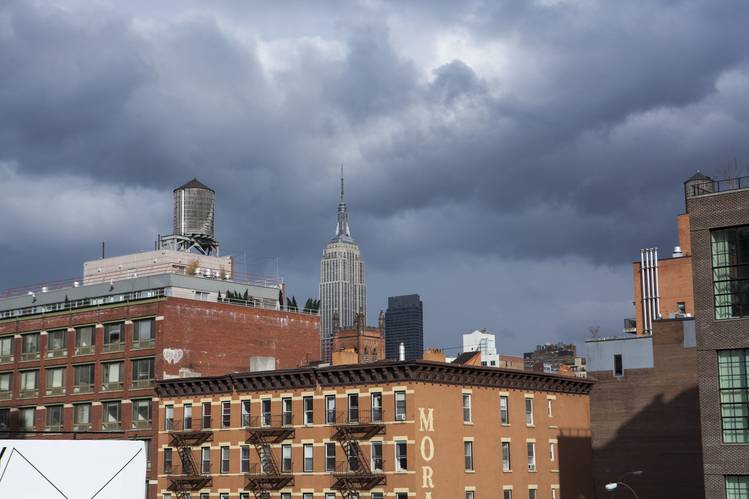
Water towers, as viewed from the High Line, feature in a walking tour narrative that also includes Clement Clarke Moore's cherry trees.
Photo: Mansura Khanam for The Wall Street Journal“I actually feel like a little kid being told a story,” said Karen Yeh, a Manhattan-based electrical engineer. “I want to believe everything is true, even though I know it’s not.”
The story they heard as they walked along the High Line began with a nugget of veracity: In the 17th century, a man named Clement Clarke Moore—believed by many to have written “ ’Twas the Night Before Christmas”—had an orchard, situated in what is now the gated courtyard of the High Line Hotel.
Mr. Moore, the tour guide said, cut down the trees in his orchard and sold the wood to city officials, who used it to construct water towers—only to find that anyone who drank from them succumbed to a strange illness. Some of this wood, Mr. Ellison-Gladstone continued, made its way to the dockyards, where a shipping magnate named Rudolph Marinier used it to build a boat for his only daughter, Penelope.
Mr. Marinier would ultimately drown at sea when the boat capsized. But Penelope later became a famous architect responsible for many of the buildings standing around the High Line today, including the famous Maritime Hotel, which she built in her father’s honor.
Or so the guide said.
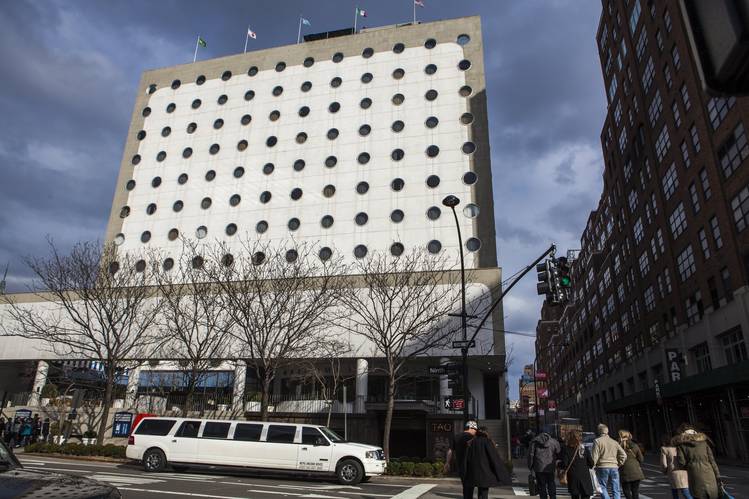
The Maritime Hotel on West 16th Street is one of the buildings featured in the ‘Secret Architecture of Loss’ fiction tour.
Photo: Mansura Khanam for The Wall Street JournalTitled “The Secret Architecture of Loss,” the tour is part of StoryTour LLC, a startup that likens its operations more to a magazine than a tour company. Writers “pitch” stories, which are then edited and turned into one- or two-hour-long scripts set in and around different parts of New York.
Not all the tours are fabricated. The nonfiction one, for example, includes quotes from people connected to the narrative, and audience members are allowed to ask questions. However, the fiction tours are more popular, running—and selling out—more frequently.
StoryTour was founded by Samantha Gross, 35, a former Associated Press journalist who once worked as a tour guide at the Vatican. She created the company last year during a graduate fellowship in entrepreneurial journalism at the City University of New York. She wrote the company’s first nonfiction tour, “The Land of Slow Food Startups,” about food culture and New York’s DIY community, set in the former Pfizer headquarters in South Williamsburg, now a burgeoning artisan-food-company mecca.
Last summer, she teamed up with Brooklyn author and teacher Lucas Loredo for “The Secret Architecture of Loss.”
Of all the possible locations in the city they discussed, Ms. Gross said, the High Line stood out. “There’s something great that happens when you do something like this in touristy areas, because people often stop and listen because they think it’s legit. The idea of everyone listening to something that may or may not be true is fascinating.”
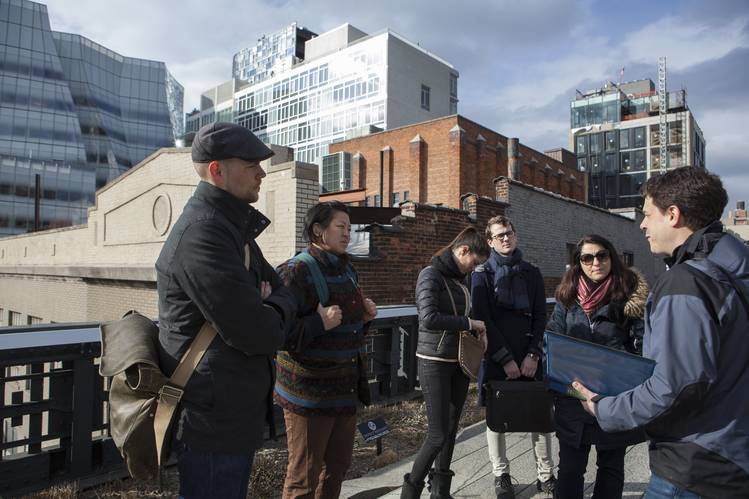
Participants of the ‘Architecture of Loss’ fiction tour are guided through a portion of the High Line on March 28.
Photo: Mansura Khanam for The Wall Street JournalIn the eight months since it started, “The Secret Architecture of Loss” has grown in popularity. After the tour was featured in a December issue of Time Out New York, Ms. Gross began adding more to meet demand, sometimes running two to four a weekend.
“I think it’s exciting for people who already live in New York to see the places they’re familiar with in a new light,” she said. “People often leave the fiction tour not knowing what’s real and what isn’t. Sometimes that’s very distressing—but in an exciting way.”
Almost everyone on this “The Secret Architecture of Loss” tour was under age 35—and a New Yorker.
“There’s a lot of tours in New York that show you a lot of different aspects of the city’s history, but this gives it an emotional component,” said Cristobal Valencia, 26, an advertising supervisor. “It’s a new way to relate to the city. You’re not going to find this in a guidebook.”
A common complaint was that the tour was too short. And that Mr. Ellison-Gladstone, an actor who led the tour since August, should be in character.
“I also didn’t entirely buy this regular guy in regular clothes telling me this story,” said Sahm Forbes, 32. “If he was in character, I think that would have made it more compelling and dramatic.”
Ms. Gross is working on the second “issue” of StoryTour, with two new tours expected later this year. She said “The Secret Architecture of Loss” will run at least until the end of April.
“I love watching people’s faces as they struggle to figure out what’s real and what’s not,” said Mr. Ellison-Gladstone. Passersby particularly pipe up when he proclaims that Penelope was the architect responsible for the IAC building facing the Hudson. (It was Frank Gehry.)
“It’s mostly the husbands and couples who approach me at the end asking for clarification. They’re desperate to know.”
Does he oblige? “Sometimes.”