A lifetime in the car business, first engineering, now communicating
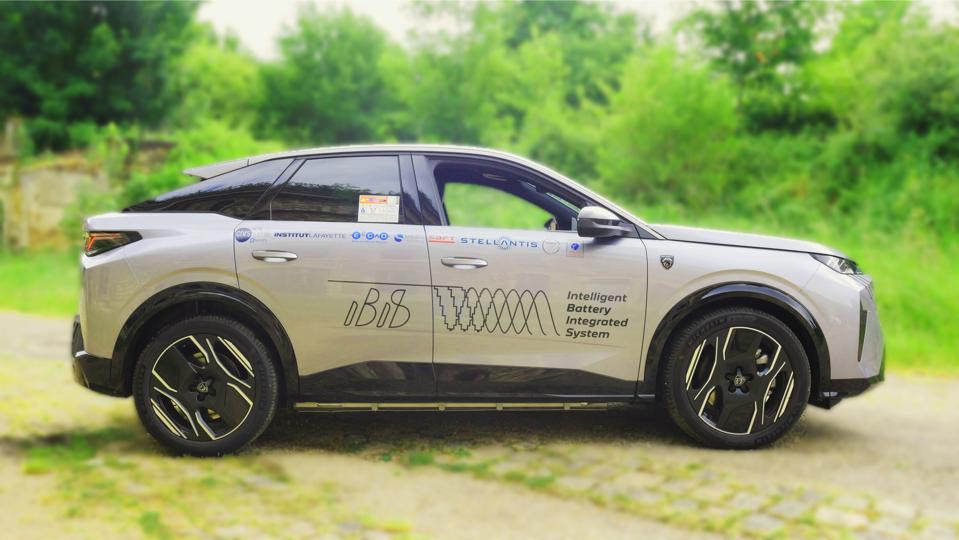
Cost remains one of the biggest challenges of electric vehicles and the single most expensive piece in an EV is the battery, followed by the power electronics module (PEM) and drive units. Electricity comes in two basic flavors, direct current where the electrons simply flow through the conductors and alternating current where the polarity is constantly changing. AC motors are more efficient, but electro-chemical batteries only produce DC. Thus the need for the PEM which enables the transition between AC and DC. Stellantis researchers have been working on a new battery pack design that gets rid of the PEM, on-board AC charger and effectively turns the battery pack from DC to AC.
Stellantis engineers in France have been working with Saft, the battery unit of Total Energy and several research institutions to rearchitect the EV battery. They came up with the Intelligent Battery Integrated System or IBIS.
Current EVs feature a PEM that uses semiconductors to take a DC flow from a battery and turn it into a sign wave AC flow to feed the motors. When the vehicle is slowing down and the motors are regenerating kinetic energy into electrical energy, the PEM also converts that AC flow back to DC to charge the battery. Most EVs also have an on-board charger (OBC) that takes AC from an outlet or Level 2 charger and converts that into DC for the battery. Some vehicles like the Lucid Air integrate the OBC with the rest of the PEM in what they call the “Wunderbox.”
Aside from the cost, one of the problems with a PEM is that the AC sine wave it produces from the high voltage DC flow (typically anywhere from 300V to 800V) is quite noisy. This causes a loss in efficiency of the propulsion system.
What Stellantis has done is dispense with the PEM and OBC entirely. Instead, they have integrated a small inverter and control circuitry on each module within the battery pack. This is claimed to provide multiple advantages. Since the flow from each module is controlled independently, they can control the overall output of the battery more precisely. Each module generates an AC output that are then aggregated and sent to the motors. Each AC flow has a cleaner sine wave so the whole process is more efficient.
This also enables the use of modules with different chemistries in the same pack since each module has its own control. Each module also has an output of just 48V. Thus it is easier and safer to service the battery because special high-voltage equipment and training isn’t necessary. A technician can remove a faulty module and replace it more easily. This can extend the life of the full battery pack and reduce total cost of ownership.
With current systems, multiple modules are linked together to produce a high-voltage output and special procedures are required to discharge the whole pack and then remove modules. This is why when manufacturers like GM, Hyundai and Porsche have had battery recalls, the dealer technicians just removed the battery from the car and shipped it off to a special facility for repair.
Stellantis first deployed this IBIS system in a stationary energy storage system but more recently has implemented it in a Peugeot e-3008 for testing. They claim a 10% improvement in energy efficiency on the World Light-Duty Test Cycle and 15% improvement in power output from 150-kW to 172-kW. The elimination of the separate PEM and OBC saves about 88-lbs. The overall energy conversion efficiency improvement works in both directions with 10% reduction in losses while charging and a 15% reduction in charging time.
The initial IBIS prototypes used nickel-manganese-cobalt cells, but Stellantis says this approach is chemistry agnostic and could work with lithium iron phosphate or even solid-state cells. They also say that it can be executed with a cell-to-pack battery architecture that eliminates the individual modules and fills the pack with more cells.
IBIS still needs more development testing and refinement, but according to Stellantis it could appear in production by the end of the decade.