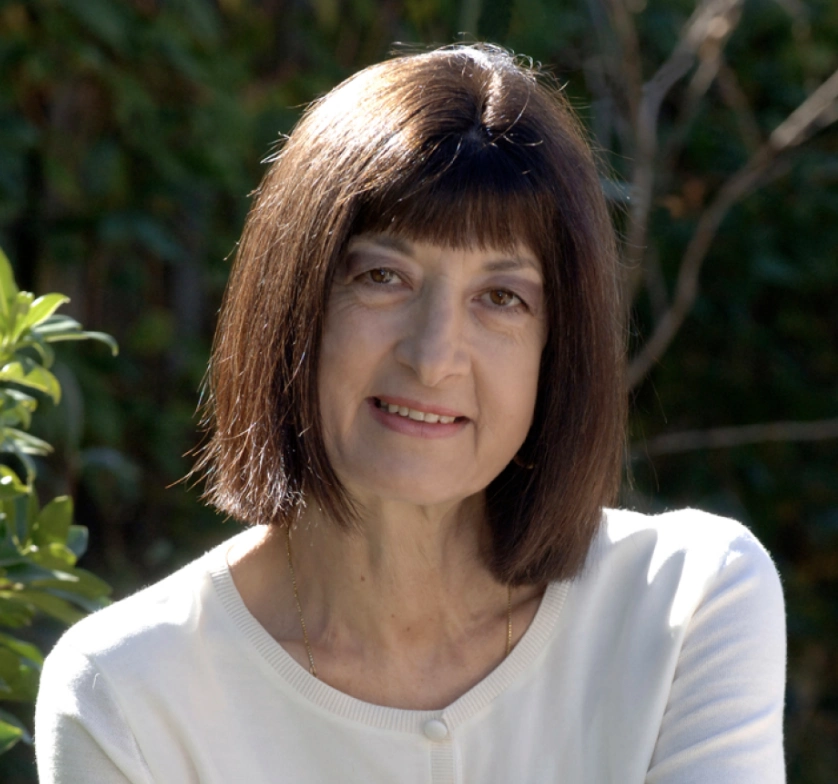
Australian political journalist and author of "Earthquake" Niki Savva
CANBERRA — Niki Savva has spent decades persuading politicians and their advisers to explain themselves, and her books have chronicled the rival accounts behind some of the most turbulent moments and campaign in Australian politics.
In “Earthquake” — a finalist in the Australian Political Book of the Year awards — Savva examines the upheaval reshaping the Liberal Party and the wider political map after the 2025 election. In this interview, conducted by phone, Savva discusses the Coalition’s uncertain future, One Nation’s rise and the risks facing Anthony Albanese’s government.
This transcript has been edited for length and clarity.
What’s striking about your writing is how you get politicians and political advisers to open up to you in depth. Why do you think they reveal themselves in such meaningful ways?
I have been at it a very, very, very long time. People know me, and I guess they get to trust me to tell their stories, right? And the other thing is, I am often surprised at what people will say. It’s amazing what people will say if only you ask them the question.
Some people are reluctant to say what happened, but there are other people who are just dying to tell you what happened.
Part of it is therapeutic. I found that, especially when I was writing “Plots and Prayers” about a very traumatic period for the Liberal Party, I would interview people, and they would be crying as they went through and explained. So they wanted to talk about it because it helped them in healing, I guess. But also, a lot of the time they feel they owe it to history, to give an account, their account of what happened. And accounts differ, so I try and let everyone tell their story.
We’re in a transition period in Australian politics where the two-party system is probably not what emerges at the other end. The 2025 election was an entry point to that era: Did you have that sense at the time?
I definitely feel that is what is happening now, and I think it was obvious even after the ‘22 election: that there was something very serious going on in the electorate, and very sadly for the Liberal Party, they ignored it.
In 2025 I learned very quickly, or decided very quickly in that campaign, that [Peter] Dutton was going to go down. But I didn’t think that he would go down as badly as he did. And once that result was revealed, I thought this was going to have a seismic effect on our politics.
One of the reasons I say that is because I did a speaker’s lecture for Milton Dick, and I spoke to both Andrew Charlton and Lachlan Harris because they’d studied election results since federation and found that when the vote for independents breached 25% then something dramatic would happen to the two party system.
The last time that happened was when the UAP [United Australia Party] splintered in the early 40s, and [Robert] Menzies founded the Liberal Party. So after the 2025 result, when the result was so catastrophic for the Liberal Party, I thought this is not going to end very happily for the Liberals, and I think everything that has happened since has borne that out; the rise of One Nation in particular.
Among people that I spoke to almost immediately after the election, there were those who were saying the Liberal Party could splinter, the National Party could splinter, the Coalition could splinter, people could go off and join One Nation, and the right will realign, and that is exactly what has been happening.
A lot of them were in agreement with me that it would probably be best if the Coalition separated and sorted. If the Nats sorted themselves out and the Libs sorted themselves out around where do they stand on all these huge issues that are confronting Australia at the moment,
But they split, and then there was this huge rush to get back together: Why?
Rather than sitting there and thinking, maybe it would be best if we just had a bit of time on our own, so that we could work out which way is best to go, and what is best to do? They never did it. They haven’t done it yet.
There’s no recipe for rebuilding a broad church, or figuring out who’s in and outside of the church.
Well, the church has crumbled, right? It’s not like there are many moderates left, and their voice inside the party is almost irrelevant. Well, quite irrelevant during the debate on whether to stick with net zero or not. Name one Liberal who stood up and said, “No, we have to stick with this, otherwise we’re killing ourselves.” Not one. So you know, I think in many respects, it’s kind of been decided,
And the leader of the Liberal Party [Angus Taylor] at his ill-judged appearance at the CPAC conference a couple of weeks ago said, “We are a party of right.” Not the center right, but the right.
We might need to update our style guide.
We’re speaking today after something horrendous happened in our politics [the attack on Helen Haines], and you know there are many of us who admire and respect and love Helen Haines who are hoping that this might bring people to their senses. I hope that happens. I don’t know that it will.
If you have some MPs saying ministers should get ‘stoned in the square,’ and then you have just Andrew Hastie being attacked as a traitor, and Jacqui Lambie being laughed at for her health conditions. Does it lead to things like the Helen Haines attack?
Before we heard about the atrocity against Helen, everyone was talking about the One Nation cartoon on Jacqui Lambie, which mocked her serious health issues. And what was Pauline Hanson’s response? Oh, Jacqui, you know, laugh it off and it’s a joke. And what was her response to the outrage over calling Andrew Hastie a traitor? Bad luck. You know, no apology, no nothing.
Well, things like this do not come out of nowhere. Everybody has been warned. [Mike] Burgess, the head of ASIO, has been out there time after time after time, as has the prime minister, saying lower the temperature, be respectful, be civil.
Some of them have taken note of that, others haven’t, and this is where we have now landed. I think it’s devastating for Helen and her family and her friends, but also for our country.
With Albo winning so clearly in 2025, is he entering a kind of complacency danger zone? Is it plausible to bet on kicking with the wind in the fourth quarter, as he was pitching to the Labor party room last week?
I think that is a great danger for the Labor Party and for Albo. I think he has convinced himself, you know, that part of the reason Labor is where it is is because of his own genius. Yep, okay, that is part of the story — but only a very small part of the story.
I think the grave danger is for him to think that just because he did it in 2025, it will happen again. We are in a very different world now from what we were in 2025. It’s nowhere near the same political environment. So you can’t expect what happened in 2025 to happen again. There needs to be change of some sort. Maybe maybe even leadership changes.
That’s the Jim Chalmers question. As someone who’s worked for a treasurer [Liberal Peter Costello], does Chalmers have a way forward?
I think a lot of the blame leveled at Chalmers has been very unfair. I did work for a treasurer, and there were times when 20 million people thought we could not do anything right. It wasn’t all easy. We did go through some very tough periods when people were not very kind to Peter, but they were also not very kind to the prime minister.
So, I think it would be a big mistake for Labor and for Albanese to think that the answer to his problems would be to replace his treasurer. The answer is for Albanese himself to do better, also for Jim Chalmers to do better.
I keep thinking back to when Paul Keating warned that Australia would become a banana republic [May 1986]. That was a very deliberate action on Keating’s part to get people to stop and think of what was at stake, and then it enabled him to come out with a very tough but a very fair budget.
Right now, Labor has time to do that in the next budget: to be very tough but very fair, and then set themselves up for the budget after, which would be leading to the election. Now, whether they have the guts to do that or not remains to be seen.
Albo is a total political animal, and he could go [to the election] whenever he thinks the opposition is weakest from August next year.
Well, everything depends on what conditions are like at the time. His numbers could still be in the toilet. Labor’s numbers could still be in the toilet.
Everybody says, and I think they’re right, that the economy is not going to improve in the next year or so. We are still going to have to deal with high inflation. Even if, you know, Trump’s folly in Iran is settled tomorrow — and there’s no hope that it’s going to be — it’s going to take a while for things to get back to normal.
So I don’t know that the conditions will be right for him to go early, and it may be that he has to sit out the time and hope that it gets better, and to also try to put in place reforms that will hopefully help make it better.
Your book is called “Earthquake.” Are there any aftershocks you’re sensing or willing to predict about where our politics is going over the second half of this term?
I think we are still feeling the effects of the 2025 election. We have seen the rise of One Nation to the point where, in polls, it rated higher than both the Liberal Party and the Labor Party. So I think we’ve yet to see it all play out, and no, I can’t predict what will happen.
There is such volatility, such anger, and such a really nasty feeling at the moment. I don’t know where or how that is going to end up. I hope we are all better off as a result, but gee, it’s not looking real good, is it?
I have friends, blue blood Liberals, who are contemplating voting for One Nation, and they’re migrants. I know people in small business; they’re thinking they’re voting for One Nation. And the big factor is that they think the Liberal Party is hopeless, that it won’t be able to get rid of Labor, and the only way they think they will be able to get rid of Labor is to vote One Nation.