As someone who writes articles and columns I know when I’m making an argument, I need to include the views of real-life people. Real people not only add colour but validity. If I can’t find people, then the article will have to be ditched for the time being.
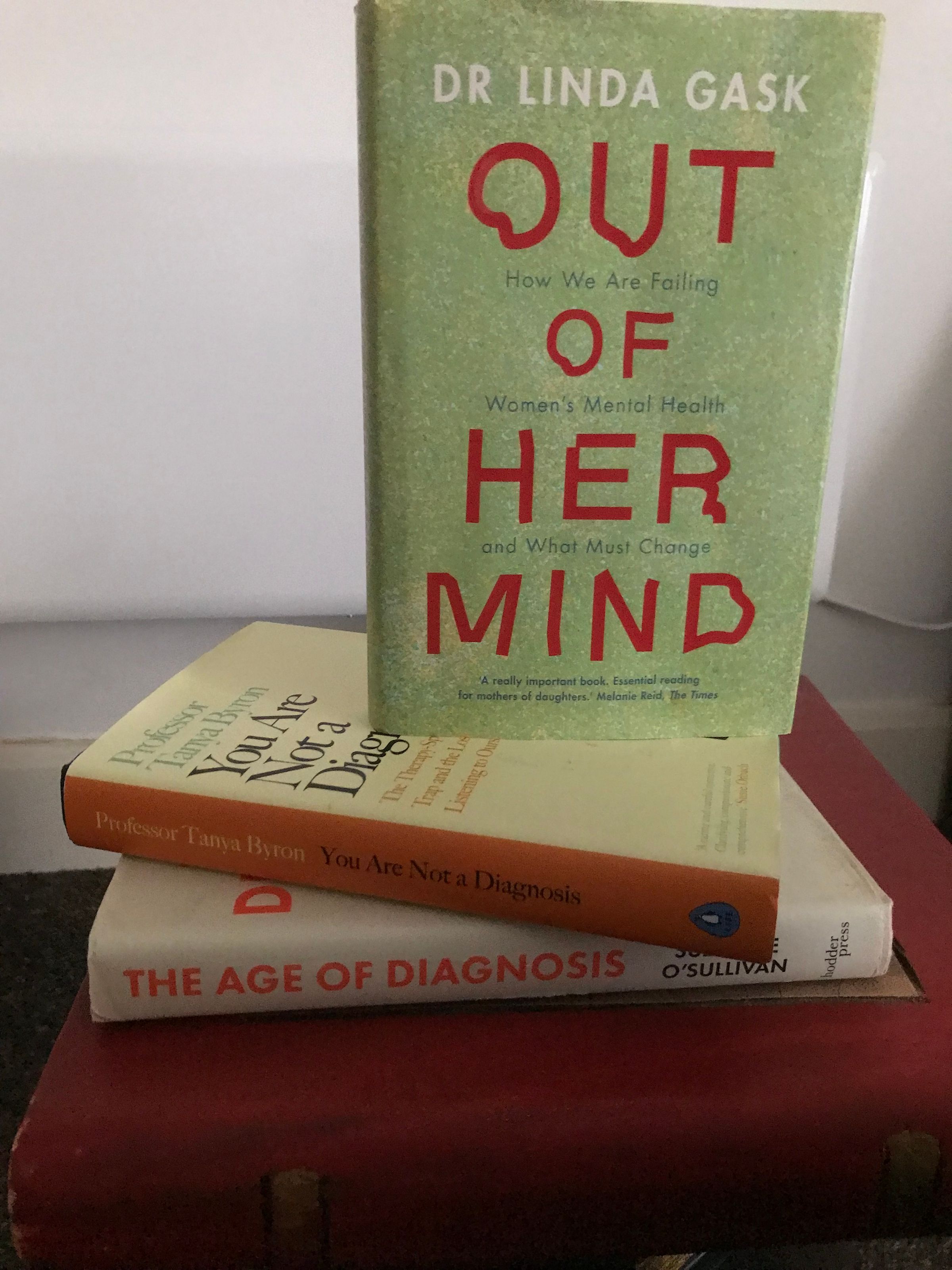
This issue of real-life voices became apparent after I read ‘The Age of Diagnosis’ by Suzanne O’Sullivan and ‘You are not a Diagnosis by Professor Tanya Byron. Both are non-fiction in terms of genre, but one book uses real-life people where the other does not, but instead, tries to make her fictional subjects appear real.
In ‘The Age of Diagnosis’ Suzanne O’Sullivan puts her ‘authors note’ regarding her use of real-life subjects in one paragraph placed in the centre of the page before the prologue. It’s very clear and would be unlikely to be missed by a reader.
The first sentence of this note says: “All the stories in this book are real”. She goes on to explain, in this paragraph, that in some cases she had to change names and identifying details, but when this occurs, she will “make it clear in the text.’
On the other hand, in ‘You are not a Diagnosis’, by Professor Tanya Byron, the authors note covers a lot of topics, including gendered language and the paragraph regarding the topic of sources is tucked away there, and could be easily missed.
In the first sentence of this paragraph, Byron says: “None of the individuals described in this text are real people.
Each story is a composite of many people and their families – stitched together from multiple cases, themes, conversations and outcomes.”
She goes in to say: “I use narrative case study because they bring the science to life. They show how pathological principles play out in practice.”
The text not only shows speech from these composite characters but she also includes mannerisms. For example, on page 144 where ‘S’ is in in mid- conversation he - “hesitated…his voice softer now, almost quiet.”
If a reader missed that authors note they would think ‘S’ was a real person. A real person, who despite some misgivings, ended up agreeing with Byron. All these fictional people agree with the arguments made-by Byron.
This might seem like a small, even petty point. But when reading these two books back-to-back, I could see the value of using real voices and real experiences. In a non-fiction book it adds so much more colour and authenticity.
The benefit of using real- people reminds me of the book, Out of Her Mind by Professor Linda Gask.
‘Out of Her Mind’ is packed full of real-life voices from a variety of backgrounds and circumstances that made the book come alive. As I know Gask has written textbooks too, I asked her about when real-life voices are required, or when fictional stories with composite characters can be used.
Gask said:
“I’ve used fictional stories for textbooks where I’ve been demonstrating a particular way of trying to help someone with a problem. In my memoirs of depression and recovery, I used stories that were composites of real people I’d treated during my career, in order to show what I’d say in particular situations. “
And non-fiction books?
“When it comes to writing a non-fiction book about broader issues in mental health, stories should not only be real but reflect the complexity of the problems people face. For Out of Her Mind, I listened to women and obtained their permission to include their words.”
But what about narrative case-histories?
“I don’t think ‘narrative case histories’ are appropriate for non-fiction books about controversial topics. We need to hear the opinions of real people, some of which may vary from the author’s own views. I’m quite sure not everyone agrees with my views as a health professional, so why pretend they do? I’m not trying to teach, I’m engaging in a live debate in society. Its more work for the author to keep it real but adds to the authenticity of the text.”
Authenticity seems to be the key word here. Both these books were the same genre, covering a similar subject. But the lack of real-life situations and voices in ‘You are Not a Diagnosis’, felt like an opportunity missed by this author, and for the reader - it might lead to a question mark over the validity of her arguments.
RF Hunt is a columnist, author and freelance journalist.