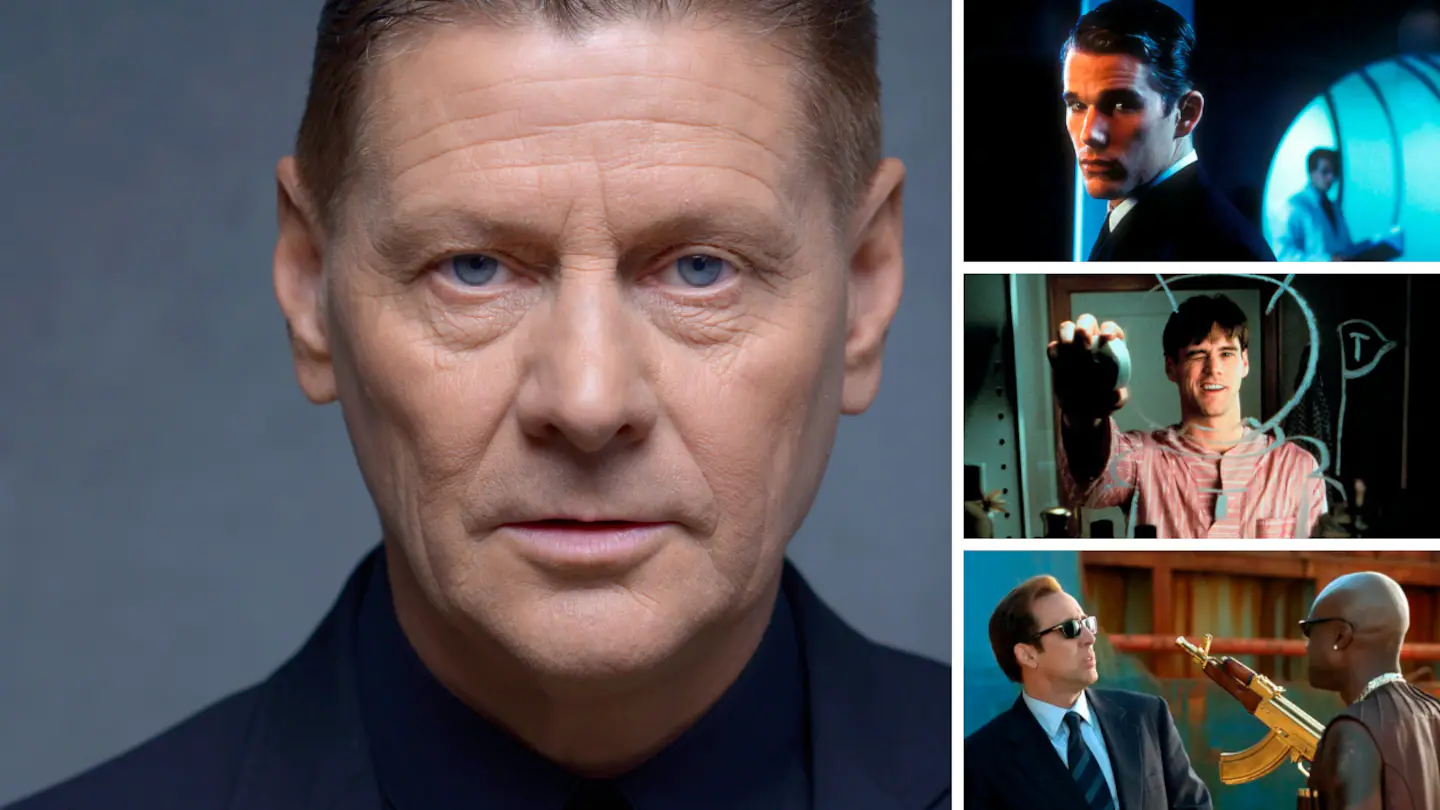
That Andrew Niccol’s new film is about facial recognition might sound true to form for the writer-director whose films have often wrestled with technology. But I, Object, which is also the first feature the Wellington-born, Auckland-raised director has made in his home country, isn’t about visage scans. It’s about face pareidolia – the tendency to see facial patterns in inanimate objects. It’s a condition Niccol and one of his daughters both shared.
He turned it into a script about 10-year-old Tom and his world of everyday objects that become imaginary friends. That’s quite a departure for a man whose past films have explored eugenics (Gattaca) deep fakes (Simone), the arms trade (Lord of War and its forthcoming sequel), drone warfare (Good Kill) and, back in the 1990s, anticipated reality television with his Oscar-nominated script for The Truman Show. By contrast, I, Object is his first family film as well as his first NZ one.
Niccol left for a London advertising career in his early 20s and started his film career in the US in the 1990s. Coming to shoot in Wellington in 2024 wasn’t out of any particular loyalty to the place, he says from his home in Malibu, it’s where the producer found the best tax deal for the NZ-Canadian co-production.
Still, it turns Wellington’s Mt Victoria into an unnamed storybook sunny seaside city that might exist somewhere down the road from The Truman Show.
“I have been kind of a foreigner in my own country in many ways, which I prefer, and I could just look at it with fresh eyes, and I thought, ‘Yeah this looks like San Francisco on a good day.’”
It’s a film of some other nifty transformations. Among those voicing the animated talking cheese grater, bath, mops, houses, car bumpers and manhole covers are Niccol’s regular star Ethan Hawke, as well as Jemaine Clement. Karl Urban plays Tom’s bullying stepfather and Anna Faris his mother – though you’ll possibly see more of them on the poster than you will in the film. Niccol obscured the faces of any adult character who couldn’t see what Tom does.
“One of the most fun aspects of it was finding ways to obscure the adults who didn’t see the faces in things. You can actually get a surprising amount of emotion from someone’s back … we started calling it back-ting instead of acting. We didn’t just cut them off; we threw them out of focus. We just showed them from behind. We just would show their eyes somehow. That was actually the most enjoyable cinematic part of it.”

It’s not his first family film script. Just the first one to get produced.
“The longer you’re in the business, the more you understand that not everything is going to be made. I have a lot of unproduced projects that I want to happen, but you know it doesn’t necessarily work out like that.”
Of course, in this part of the world, it’s an unmade project that won him more attention than most anything he’s made. He was to direct They Are Us, a drama that was to depict how Jacinda Ardern reacted to the Christchurch mosque attacks. The backlash after the movie was announced in 2021 killed the film.
Niccol tells the Listener he was misled by Ayman Jamal, a producer on the film from the United Arab Emirates, who claimed he had the support of victims and the victims’ loved ones, which Niccol knew would be needed.
When plans for the film were revealed at the stage it was still seeking buyers, it blindsided the survivors and others in Muslim communities. The reaction that it was too soon and wrongly focused on Ardern, among other things, was such that the project collapsed.
“I had gone into it with such pure intentions, but it wasn’t me liaising with the community … I could only go on his word.
“I felt really let down by that, but the victims don’t want to make the film, and I think Jacinda Ardern doesn’t want to make the film, so there won’t be a film. The victims’ loved ones have been through such an unimaginable pain that I certainly don’t want to cause any more.
“One of the reasons I wanted to make They Are Us, actually, is because Jacinda Ardern said, ‘Oh, well, the story is not about me’, and yeah, it’s not about you, but when you ban assault rifles in six days, it does make it a lot about you. That would have been a great example for the country that I live in now.”
Niccol has guns on his mind at the moment – he’s in post-production on Lords of War, a sequel to his 2005 Nicolas Cage arms dealer international crime thriller drama Lord of War. What made him go back for a second, er, round?
“Oh, that’s a character that I love; Nick Cage’s character is just a different kind of animal. He’s not weighed down by the ethics morality that you and I have, because that slows him down. I love being in his head.”
It’s the first sequel for a man who has written and directed a series of original films operating in a middle ground where streaming has kind of taken over. But despite previously, with The Truman Show, writing a film about a person whose life became a television series, Niccol has remained in movies for his own reasons.
“Why I think I’m reluctant to do [TV]and why, maybe I’m not good at it, is because with a movie there’s a beginning, a middle, and an end. With a TV show, there’s a beginning, a middle, and a middle, and a middle, and a middle, and maybe there’s an end. But it’s the antithesis of what I do. I’m trying to always compress a story, I’m not trying to stretch it. It’s why I don’t really watch much television. It’s because I just go, ‘Okay, move it along.’”
I, Object is in cinemas from July 23.