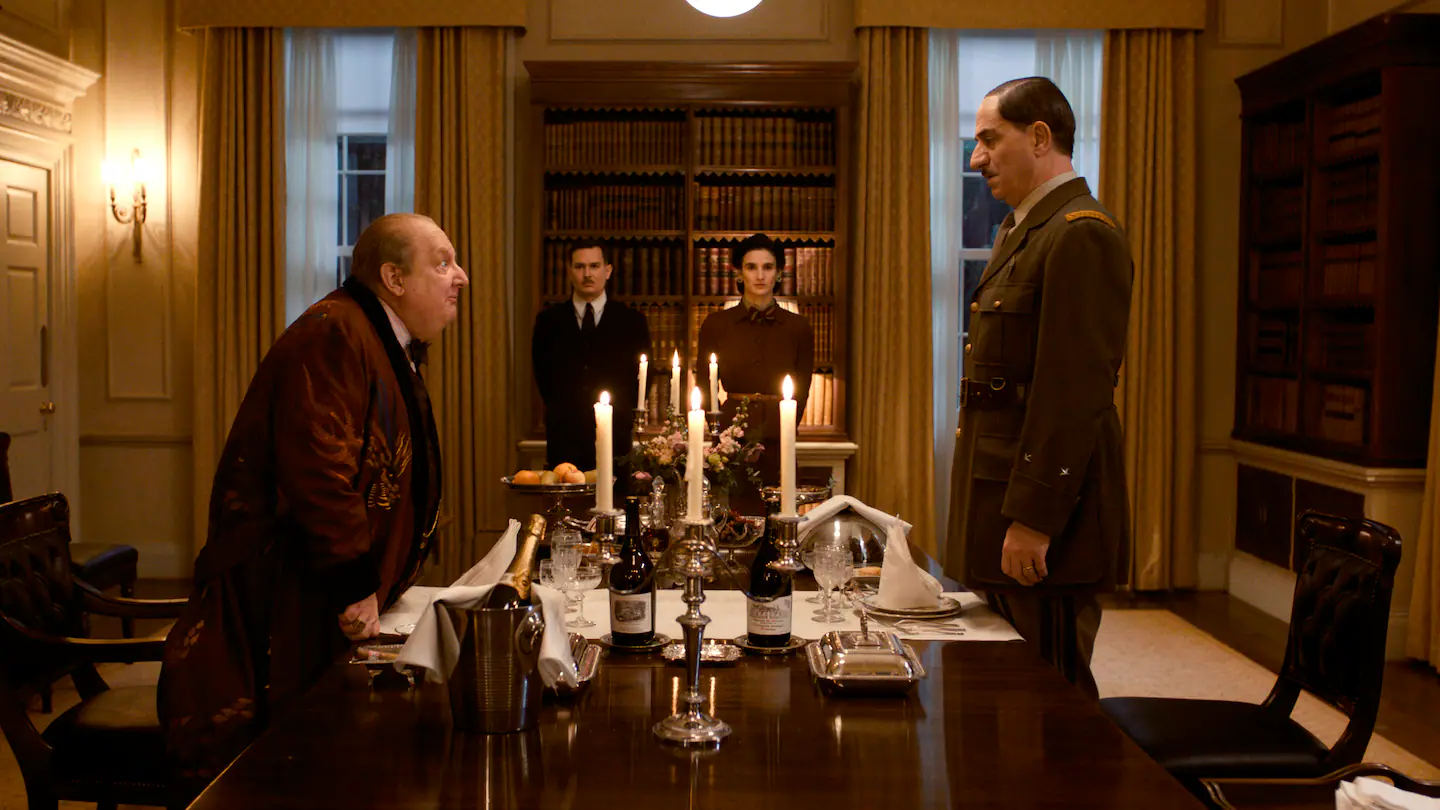
De Gaulle: Tilting Iron (Part 1), directed by Antonin Baudry, is in cinemas now.
As with his fellow wartime leader Winston Churchill, Charles de Gaulle is a symbol of his nation, and his life cannot be contained by one movie. This biopic runs to some 160 compelling minutes, complete with an impressive tank battle or two. And that’s just the beginning. It’s the first part of two films being released a month apart, the production being one of the biggest in French cinema history.
It’s only five or so years since an unrelated, lacklustre de Gaulle biopic. That one focused on a few months in 1940.The two new films, though, are going for the whole baguette. Part one runs from the May 1940 Nazi invasion of France to the first time de Gaulle’s mostly French-colonial troops make an impact alongside Allied forces in North Africa in 1942. Part two follows him through the liberation of Paris as he charges towards his political career, but leaves his subsequent polarising decades in power to the history books.
The new films are based on one book, 2018 biography A Certain Idea of France: The Life of Charles de Gaulle, by British historian Julian Jackson. Which might be why so much of Tilting Iron is spent with de Gaulle (Simon Abkarian) and Churchill (Simon Russell Beale), going head to head, the combo rather suggesting a squat British bulldog and an imperious Dobermann sniffing each other out and occasionally baring their teeth.
Abkarian isn’t a great resemblance to de Gaulle, especially in le nez department, and occasionally the direction and script of diplomat-turned-filmmaker Antonin Baudry has the character close to stiff-upper-lipped parody. But he’s a solid presence and he’s not always in the frame.
There’s a parallel storyline following young Parisian would-be Resistance fighters as they test the patience of German occupying forces, but the main character has his own historical role in the war against the Vichy regime.
There are a few anachronistic touches, like characters given the gift of foresight about how history will see their actions. But as a dramatisation of what de Gaulle achieved through sheer force of will, it’s an admirable first campaign.