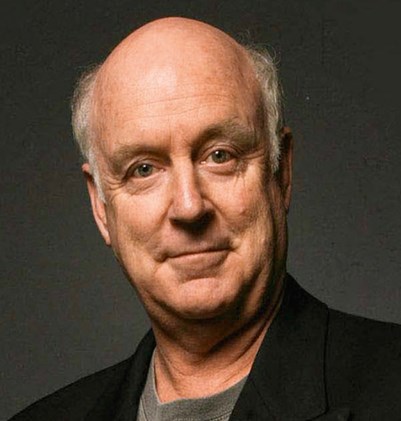
John Clarke, who gave us Fred Dagg and became an institution across the Ditch, was funny to the end.
In his final movie appearance in last year’s A Month of Sundays, John Clarke played an Adelaide real-estate agent. One scene had him extemporising on the agent’s true purpose. “Basically, the function of the real-estate agent is to add to the price of the article without actually producing anything.”
His spiel had a familiar ring – its origins were in a monologue by Fred Dagg from nearly 40 years earlier. The director had asked him to improvise over a shot of two agents wandering around a back lawn. So, Clarke delivered some early thoughts of Chairman Fred. The costume and haircut might have changed between the two renditions. But the rhythm and tone of Clarke’s delivery were unmistakable.
“If you look at the stuff I’ve done since, Fred Dagg is laced all through, it’s just changed its name a bit,” he told the Listener in 2006, when talking about the influence of his beloved 1970s comedy alter ego on his career. “But, of course, the same instincts are at work in what I do. That’s my work and my life, so it’s made of the same sinew.”
On this side of the Tasman, much of the reflection on Clarke’s death this week at the age of 68 has focused on the Dagg era. It’s understandable considering the joy he brought to generations when, in those gumboots, he hoofed his way on to our television screens in the mid-70s, staying in our memories ever since.
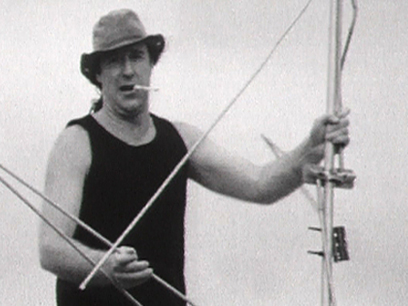
Even without a series to call his own, his appearances in current affairs shows, Country Calendar and the short movie Dagg Day Afternoon, and on stage and an album that remains one of the country’s biggest-selling LPs, made him a pop-culture phenomenon.
Fred Dagg was to New Zealand comedy what The Goon Show (a Clarke childhood favourite) or Monty Python were to the British funny business – the Big Bang. “I very much envied John finding that character,” said Paul Holmes, who performed with Clarke in a comedy show at Wellington’s Downstage Theatre. “It was a perfectly formed idea. Nothing he did with the character would ever be wrong.”
Dagg’s humour, said Clarke, was a reflection of how New Zealanders related to each other. “It’s about the ability of people to amuse one another without jokes, which is to do with liking one another. “We don’t say, ‘I like you.’ We say, ‘Look at that bloody beautiful sunset.’”
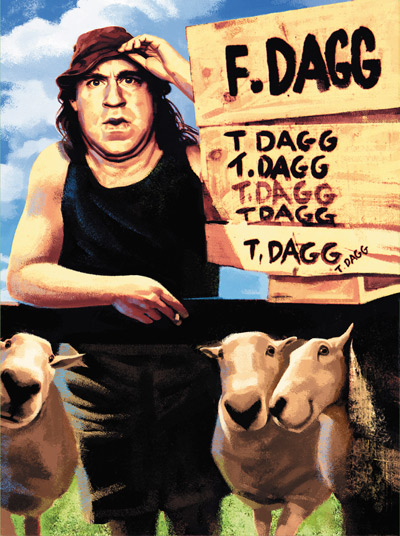
Yet, state television failed to find him as funny as much of the nation did. Clarke, who had worked in the NZBC programme-buying department, had also appeared in and wrote for the corporation’s first sitcom, Buck House, in which he delivered his famous statement-of-the-bleeding-obvious catchphrases “that’ll be the phone” and “that’ll be the door”.
After a one-off Dagg pilot (complete with cameo from Prime Minister Bill Rowling), the NZBC refused to give him his own show. With his art-teacher wife, Helen, Clarke left for Melbourne, where he started again. He was fired from ABC Radio in the early years “for straying into satire”, but he later became a fixture on the public broadcaster.
A phenomenon in New Zealand, Clarke became an institution in Australia. With Bryan Dawe, he satirised Australia’s most powerful in a long-lasting series of mock television interviews. Clarke played the politicians without impersonating them, just by mimicking the obfuscation of their language. He also wrote, produced and played a character called “John Clarke” in The Games, a ground-breaking mockumentary series about the planning of the 2000 Sydney Olympics.
Clarke’s screen work extended to occasional films. His first was a bit part in the 1972 Ocker-larrikin-in-UK comedy The Adventures of Barry McKenzie, which starred Barry Humphries. His biggest big-screen role was arguably voicing Fred Dagg’s cartoon cousin Wal Footrot in Footrot Flats.
Throughout his career, Clarke’s intellectual horizons and writing extended beyond scripts. His published satirical efforts included the book The Even More Complete Book of Australian Verse, in which he parodied the world’s greatest poets as if they were Aussies. In his grandly indulgent comic novel The Tournament, he staged a tennis contest between 128 of the world’s greatest brains – including Katherine Mansfield and Frances Hodgkins as doubles partners.
In 2007, he penned for the Listener an appreciation of WH Auden for the centenary of the poet he had revered since boyhood. “In 1966, I was wandering around my school in Wellington with a book of Auden’s letters tucked into my belt in order to ward off evil spirits,” he wrote. His Scots College English teacher, a friend of Auden, had boxes of correspondence from the poet, which he let Clarke read.
Literature had an early hold on Clarke, who was born in Palmerston North and moved to Wellington as a child. But his school days weren’t happy. The anti-authoritarian streak that powered a life of satire started early. “The teachers could not handle me. I appalled them. What they were trying to produce I’m not sure, but I turned out all wrong. They liked me even less because I managed to do well.”
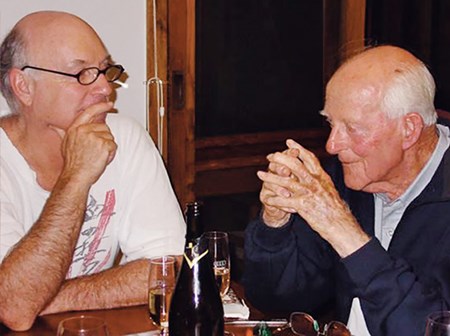
The major influence on his future career was his mother, Neva. She did amateur dramatics and wrote, becoming the New Zealand president of writers’ organisation PEN in 1965. Guests in the family home included Anthony Burgess and John A Lee, and there were regular visits by postman James K Baxter. Through Neva, the young Clarke met Barry Crump after becoming a fan by hearing the writer read his stories on the radio.
Clarke was regarded as a national treasure in both countries, despite his long absence from New Zealand because of an aversion to flying. He remained modest about his talents: “I’m up the shallow end in the Renaissance-man department.”
He first talked to the Listener in 1975 as Dagg conquered the country. Even then, he had hopes for life beyond Taihape. “Everything that happens to me surprises me. I am glad people think I am funny. I enjoy making people laugh and if I can make a living out of doing what I like, I am lucky.”
This column was first published in the April 22, 2017 issue of the New Zealand Listener. Follow the Listener on Twitter, Facebook and sign up to the weekly newsletter.