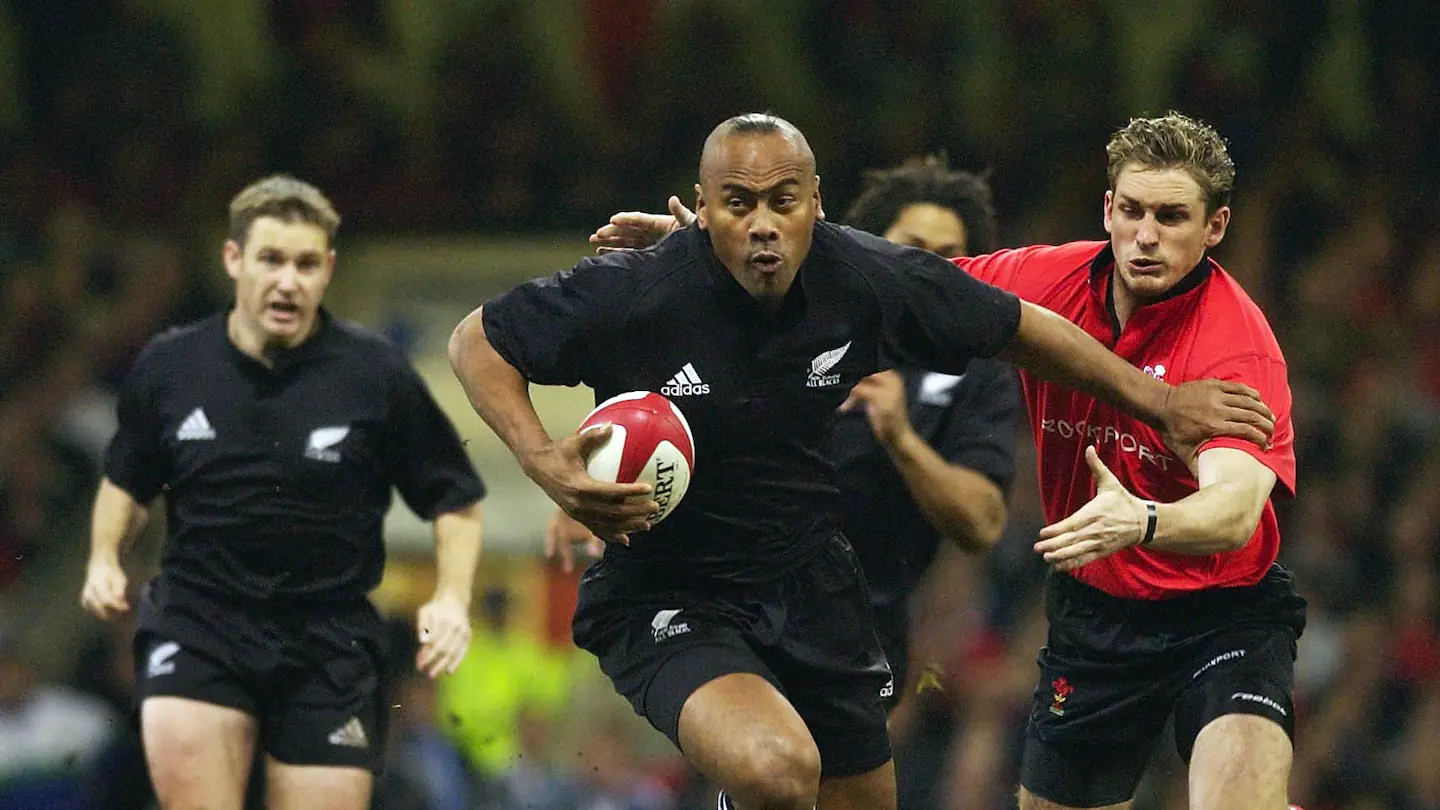
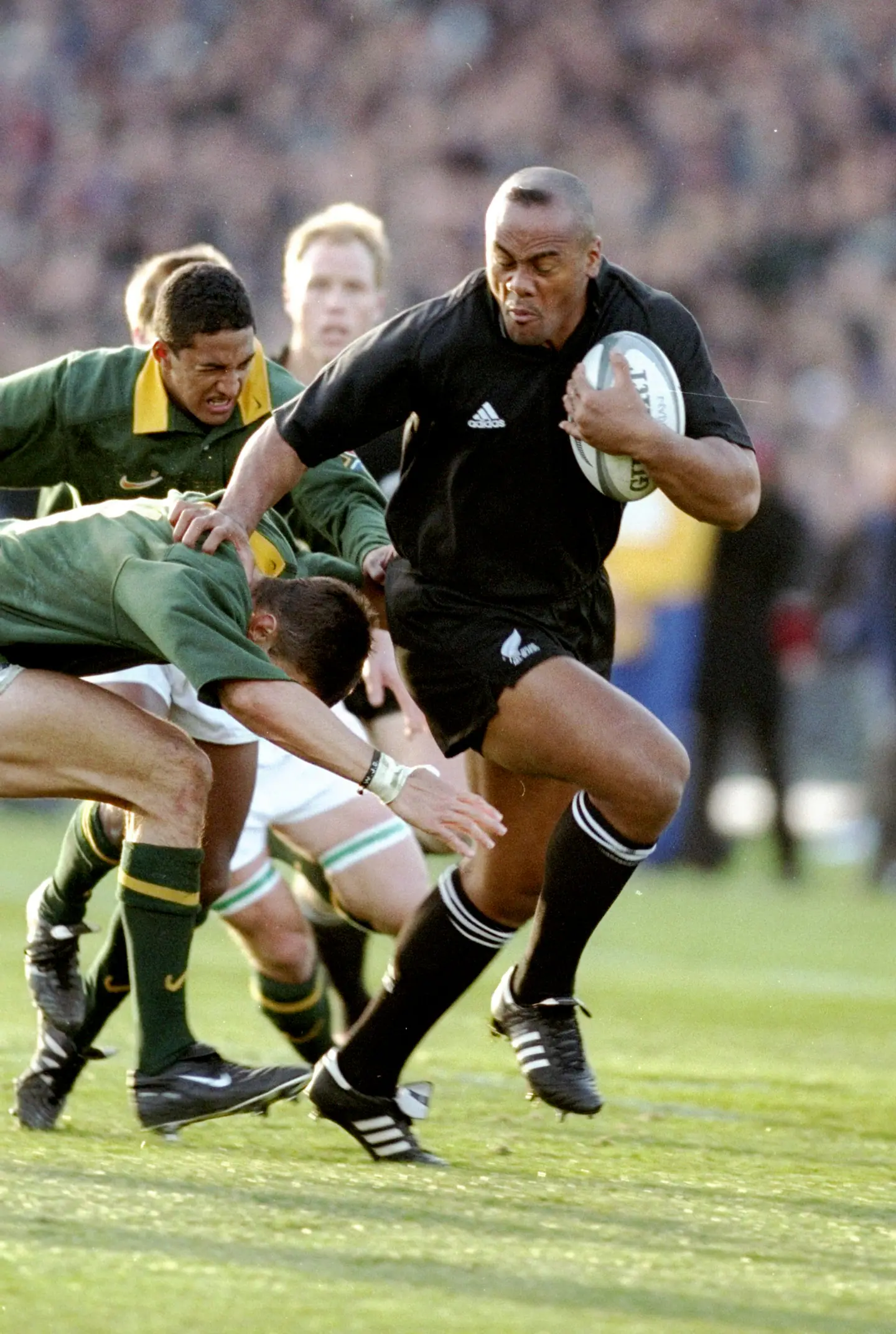
Eventually, every superhero gets an origin story. Now Jonah Lomu is getting his in Lomu, a feature-length documentary about the shy Tongan-Kiwi kid who, a year after becoming the youngest All Black in history, battered his way to become the sport’s most famous player, over the course of four matches at the 1995 Rugby World Cup.
It’s not the first screen profile of Lomu, who died aged 40 in 2015 after two decades of the kidney disease that cut short his All Blacks career. There was a 2019 local telemovie, and he had a British This is Your Life sprung on him at the height of his fame, then a New Zealand one five years later.
But Lomu, a NZ-UK-Ireland co-production directed by Tongan-NZ film-maker Vea Mafile’o and Irish documentary-maker Gavin FitzGerald feels definitive.
It tells the story through an array of lenses: that of his mother Hepi and brother John, and a family trove of home videos; that of his All Blacks team mates, coaches, doctor and manager dealing with a teenage titan who became the face of professional rugby; that of his Tongan culture, and the influence of an infancy spent adopted out to an aunt and uncle in the islands, combined with an upbringing in South Auckland and schooling at Wesley College.
The film is divided into chapters, each prefaced by a Tongan proverb.
One lens that’s not there is that of Nadene Lomu, his widow and the mother of his two sons, who claimed to own all intellectual property relating to her late husband’s image. She attempted a legal challenge that paused the film’s production in 2023 before a copyright tribunal ruled lawyer Chris Darlow, the executor of Lomu’s reportedly insolvent estate, was in charge of those rights and was entitled to allow the documentary.
But there is home footage of Lomu in his later years with his young family as he undergoes dialysis after the failure of his transplanted kidney. He’d returned to playing after the 2004 transplant, retiring in 2007.
The film screened earlier this year at the Dublin, Glasgow and Sydney film festivals before playing to hometown crowds at the NZ International Film Festival in Auckland, and to a crowd of 8000 at the Teufaiva Sport Stadium in Tonga. FitzGerald was at the first two, Mafile’o at the last three.
For lifelong rugby fan FitzGerald, who was brought on by the film’s British producers who specialise in high-end sports docos, Lomu follows his films on UFC fighter Conor McGregor (a huge hit in Ireland), Oasis singer Liam Gallagher, and pigeon racing.
For Mafile’o, who was recruited by Lomu’s NZ producers, it’s her second feature documentary after the 2019 acclaimed study of her own Tongan family and her dad’s devotion to his church, For My Father’s Kingdom. Her family comes from the same island in the northern Ha‘apai group as the Lomu family.
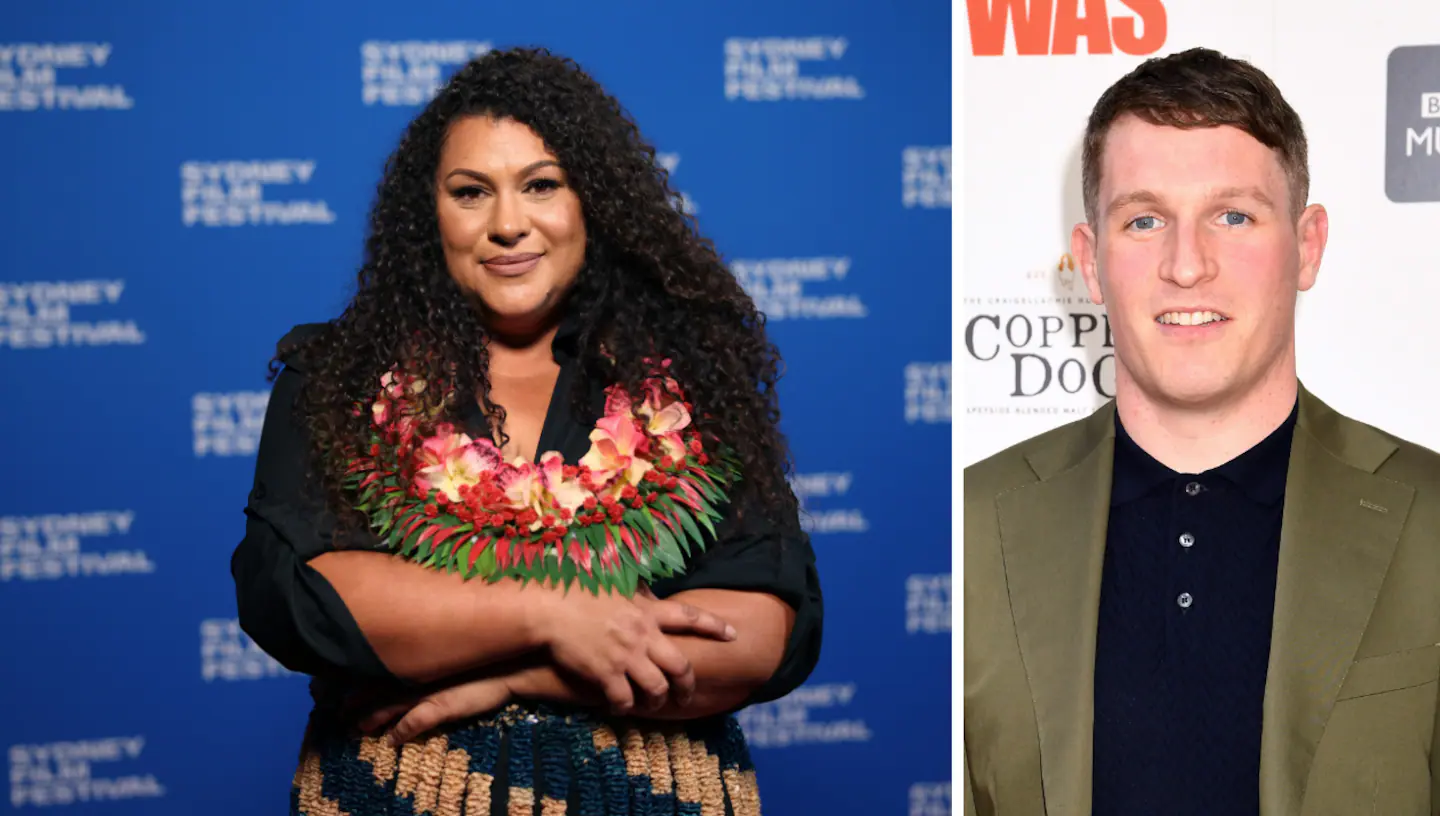
The film seems a harmonious blend of their respective sensibilities – Lomu through the eyes of someone who was a young fan on the other side of the planet, and through the eyes of someone who grew up in Lomu’s world.
The co-directing pair have spent plenty of time on Zoom across the time zones in recent years. We got them together for one further discussion.
Gavin, do you think this film is the one the UK producers had in mind when they came to you with the idea for a Jonah Lomu documentary?
Gavin FitzGerald: That’s a good question. As a director, you always come in with one perspective, and it always changes when you get into the meat of it all. Before I started, I read whatever material was out there and I’m all the way over here in Ireland, and we have one image of the guy. Then you just get into it all, you speak to a lot of people and you start to learn. That’s where it starts to get interesting. So everything changed and a very different film emerged through that process.
You were a Lomu fan as a kid in Ireland?
GF: I played a bit of rugby as a kid and I kind of wanted to be Lomu. You want people to bounce off you like you’re invincible. I remember playing rugby in the garden with my brothers and just going, “I’m like Lomu,” and charging at people. It was like this folklore thing, this superhuman impression. And that stayed with me for a long time because when I heard he had his kidney condition, I still thought, “Jonah will overcome that, no bother.”
But when you actually look at the science of it all … I was just really touched by his death. He gets the tears going in your eye, does Jonah. His soft accent and his mannerisms. I always really liked that vulnerability. So as a film-maker, you’re just trying to understand that vulnerability behind his eyes.
So, yeah, I was a big fan. Loved watching him play. Got to see him once playing with the Cardiff Blues.
Vea, you signed on despite not actually being much of a rugby fan yourself.
Vea Mafile’o: Full disclosure: no. But you know, it’s not too bad after all. My father was actually a first XV rugby coach of a high school in Tonga and he had brought the team over to stay at Jonah’s church, Lotofale’ia [Tongan church in Māngere], and their team had played Jonah. I was quite young then, but I do remember hearing there’s this guy who’s amazing on the rugby field, but not really taking it on board.
That’s when Jonah first came into my world. A few years later, my sister and I got invited to have dinner with the Tongan King in Wellington, and he was there. So, I met him briefly.
Gavin, before you went there, did you know where Tonga was?
GF: I still don’t. I mean, you fly three hours north of New Zealand and suddenly there’s islands. To be honest, I didn’t know Tonga was a series of islands. But it blows my mind how those places were found, how they navigated those seas in canoes. That kind of strength and that history that is still alive in the people and the culture. It’s amazing.
What was your first conversation about how you both saw the film? Were there arguments later?
VM: Well, you had already worked on the bones of a proposal and then it was like, what’s your flavour? What’s your take there? But then, of course, it was a work in progress, and it evolved into something else. I’m not a fighter, and Gavin isn’t really a fighter either … I feel like we were pretty good at being able to compromise and come to like each other’s thoughts and opinions. I don’t really remember too many times where I was like, “Oh, fuck that guy” … I feel like there were just too many other moving parts to have issues between us.
GF: Vea’s perspective was crucial to the project because she’s Tongan and lives in New Zealand and very much moves in that world, and that for me was the bit that was missing from a lot of the stuff I’d read. So really, the more Tongan experts and cultural experts and all these people that we connected with through Vea – that’s where the story opened up and became so much more interesting.
I really think the most interesting thing about this film is his Tongan upbringing and the tension between that and being a superstar. He’s thrown into a world of the [Argentina football great Diego] Maradonas and that sometimes swallows you up. So having that kind of cultural grounding was really important to Jonah. It’s probably why he didn’t end up going off the rails. His family upbringing was so important to his story.
Vea, did you see something in Jonah’s dad, Semisi, that you saw in your father, about whom you made your earlier documentary?
VM: Yeah, although dad’s slightly different, of course, because he married a Palagi wife. I feel that things were hard but the struggles for Jonah’s family would have been much more intense. But when it comes to devotion and religion and those kinds of characteristics, yeah. Every Tongan man over a certain age is the same in that sense. So, I definitely saw that.
Gavin, did the Christian backbone of Tongan society remind you of Ireland at all?
GF: Yeah. I remember thinking, “Why would he not tell his parents about getting married the first time and the second time, etc?” But anyway, the first time it was a big deal, and it was a big media frenzy. But it was like what the Irish do as well. It’s that Catholic, “I don’t know if they’ll approve or not. I won’t tell them today. I’ll tell them the next day.” Then before you know it, it’s in the press. That was a trend with Jonah. Just not being upfront with things, but he was very young. The Irish Catholic upbringing of being dragged along to church and not wanting to be there – you can see that in the home footage of this. You have all these kids listening to hymns and they’re all just messing around and slapping each other on the arms. I could massively relate to that having been dragged along to church as a kid myself.
Did the Nadene Lomu legal challenge and her objections change the documentary in any way?
VM: I guess we worked with the characters who were available to us.
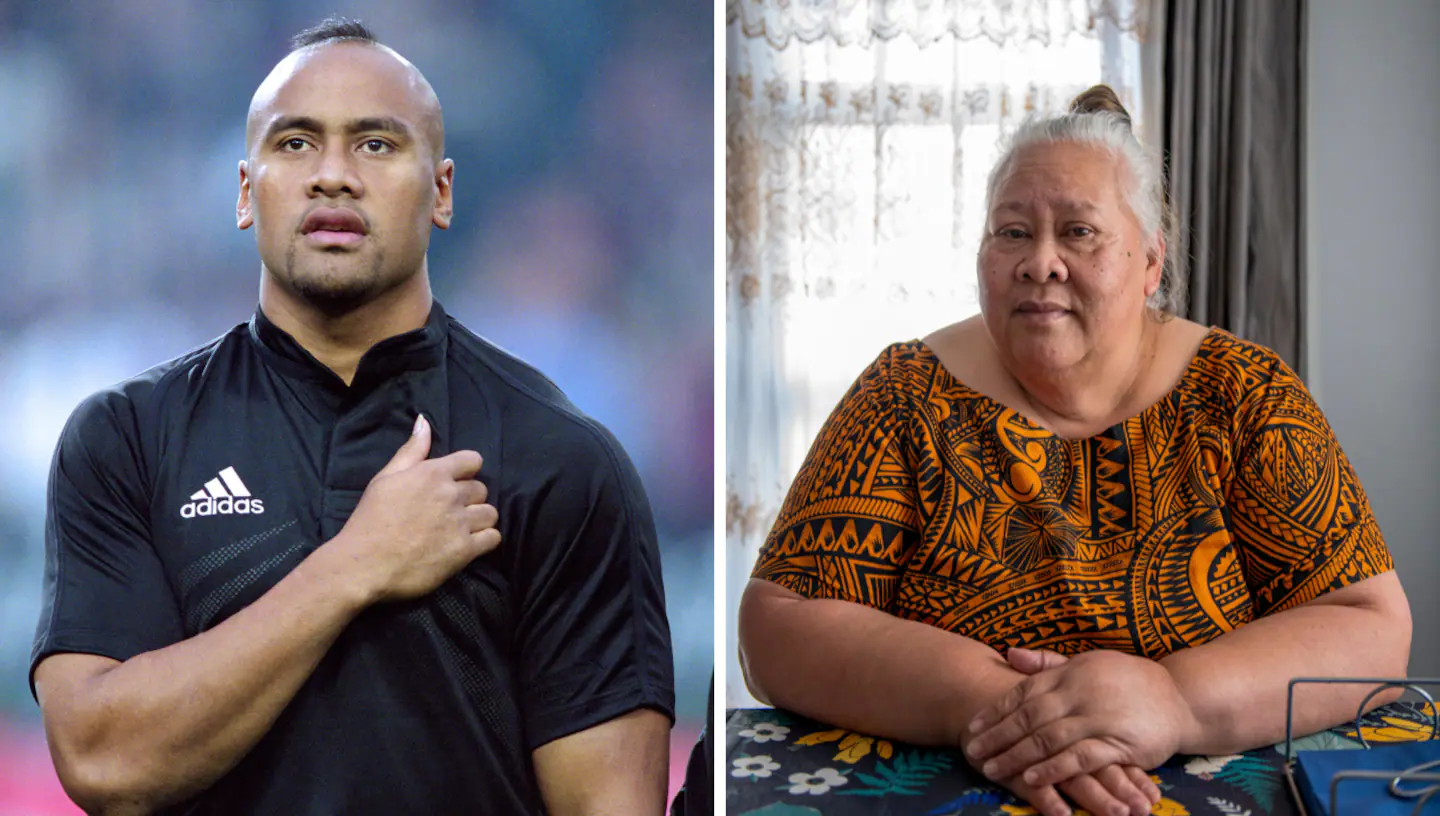
GF: No. We tried to do everything right. And in terms of Nadene, we asked her to be involved at every stage of production. I thought it was really important that we did have her voice. But you get into the story – Hepi and John, his family were the ones who were consistent. You can’t change your family. So Hepi became a central character. It was just this mother’s love at the heart of it and that felt really strong. You have to look at that relationship, I think, to understand Jonah the most.
VM: John was pivotal. He collated all the archives together and he would come over to the studio and hang out for hours and just yarn. He, for me, was the consistent backbone to it all. His birthday is like one whole year after Jonah’s. He’s living in his brother’s shadow. You could tell that it meant so much to him to be able to share this story, and I think that’s why the family was so grateful to be able to be given this platform.
Did you have to make some hard decisions about who to feature and who made the final cut?
GF: We spoke to loads more people and we were really trying to find people who could fill more than one role at once. But Jonah’s life was so complicated. He had so many chapters. In the film there are quite a lot of voices, but no interviews were cut. So, everybody in there completely served their purpose in the story.
For something like this, you can’t just be a sports yarn film. That belongs more in a streamer. This was always made for cinema, and it’s the human story and it’s Jonah’s story and to understand Jonah, you have to understand the Tongan in him. That’s what the film tries to do, because that gives a whole perspective on his life story.
Lomu screens at the NZ International Film Festival in Christchurch (August 22), and Hamilton, Matakana, Napier, New Plymouth, Tauranga, Nelson and Masterton (August 29), before going on general release on September 3.