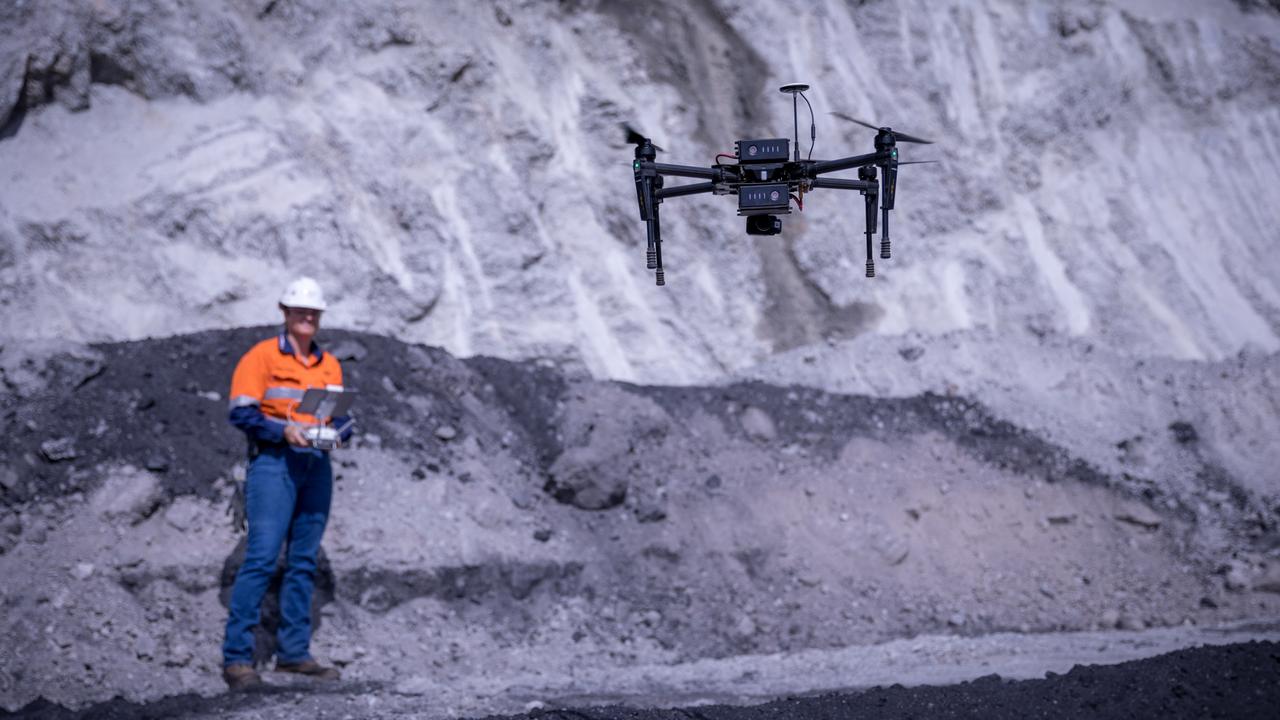
Big data and analytics are driving mining operations and efficiencies, as a safety focus increases efforts on remote operations.
Minerals Council of Australia chief executive Tania Constable says technology is changing the industry significantly, especially in the larger companies, with a range of autonomous trucks, trains and operations under way.
“Work is changing,” she says. “It offers really exciting opportunities where kids are excited about the types of work.
“We’ve gone from traditional mining to modern skillsets, some of which need to occur at the mine site and some of it can occur away from the mine site.”
She points to BHP Mitsubishi Alliance’s $100m investment in 34 autonomous trucks for its central Queensland Daunia coal mine, and other driverless trains and drones across other sectors of the resources industry.
“We’re at the forefront in Australia in creating those new types of jobs and using those types of skills,” Constable says.
Australia’s largest underground coal miner Anglo American is expected to implement remote capability by the end of the year within its drive for “rapid modernisation”.
‘Mining is being overhauled by the same digital forces reshaping industry’
Anglo American’s Metallurgical Coal chief executive Tyler Mitchelson says a new Met Coal Analytics Centre in Brisbane, opened last month, will bring together operational, engineering and data science to consolidate safety and explore efficiency opportunities.
It follows a methane gas explosion at its central Queensland Grosvenor mine in May, when five workers were injured. A Queensland Coal Mining Board of Inquiry remains under way, with hearings expected to resume next year.
“We are focused on the rapid modernisation of underground coal mining, and disrupting some of our more traditional ways of working,” Mitchelson says. “We see this work as essential to making our industry safer, more sustainable and more productive.”
Mitchelson says the analytics centre’s initial focus will be on underground operations, gas and ventilation management.
“We have already mobilised a data analytics team who are working to provide in-depth analytical insights,” he says.
“As the largest underground metallurgical coal miner in Australia, we are uniquely positioned to leverage our own data and technology to transform the way we analyse data to drive safer operations, better decisions and achieve mining excellence.”
Mining is being overhauled by the same digital forces reshaping industry.
EY’s The Future of Work report says robotics and automation through drones, autonomous vehicles and remote-controlled operations will be rolled out widely.
Increased demand for digital skill across all levels of mining “will redesign most occupations”. And cloud computing, information sharing and big data will also continue to change work and enable remote operating centres.
“This trend will accelerate within the sector and increasingly take employees away from hazardous on-site events to an improved work health and safety rating and enhanced workplace conditions,” the report says.
New Hope Group chief operating officer Andrew Boyd says they are incorporating big data and analytics into plans for Bengalla mine in the Hunter Valley, to inform efficient operations.
Year of data from coal feed and quality, flow rates and pump pressures are being analysed across data sets.
“We’re looking at areas where we can get consistency and improvements across operators, across shifts, and really focus on where there are delays and inefficiencies across the system,” he says. “That has been really successful.”
Boyd says workers are embracing the technology and highlighting other areas where automation could improve the flow.
The analytics are also informing the management of their environmental obligations around noise and dust control, he says.
“It’s that really tangible use of all this information to make it more efficient, better run times, reduce cost, reduce waste, all of that.”