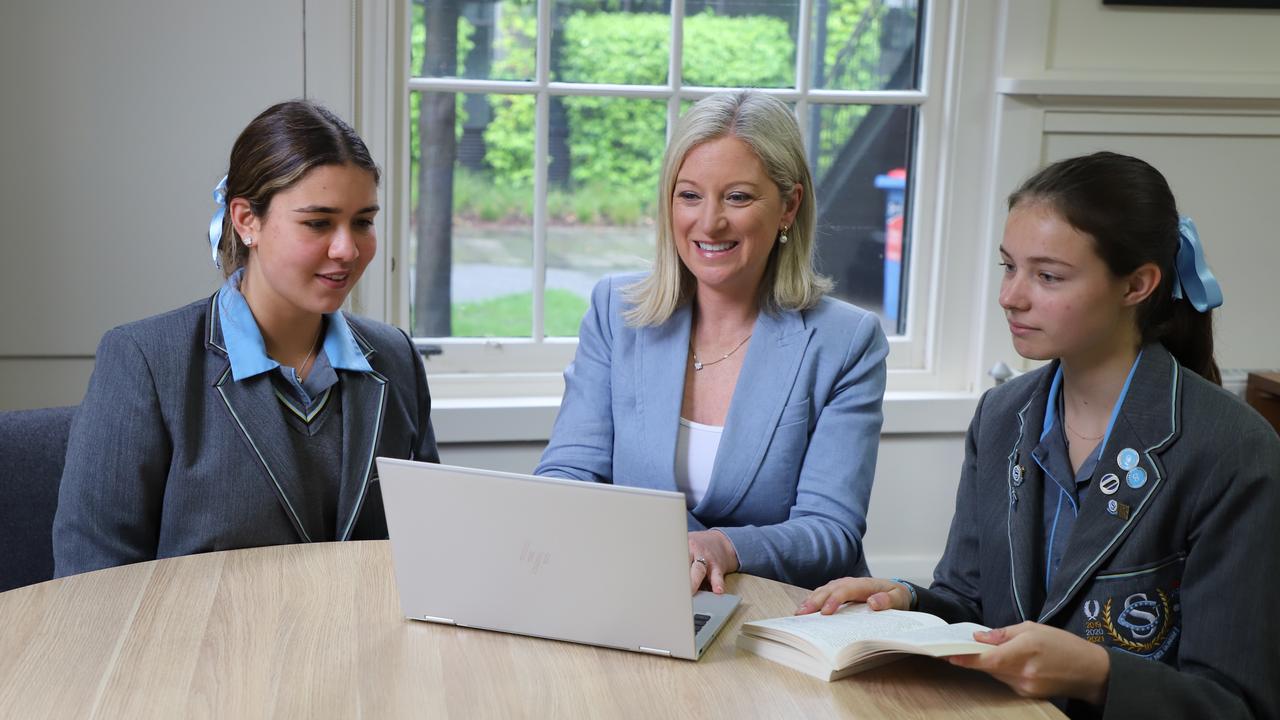
Parents are prioritising their children’s education in the family budget, with rising costs of living failing to dent enrolments at Australia’s independent schools.
Almost one in every six students is now educated at a private independent school – up from one in eight in 2000 – driven by parents’ choices to immerse their children in the values, philosophy or religion of their community.
Independent Schools Australia (ISA) chief executive, Graham Catt, says enrolment growth of 3.2 per cent this year demonstrates the importance of education to families.
“Enrolments are stronger than ever,” he says. “We know that parents, and everyone in the community, is prioritising where they spend. It is a pretty clear indication that the parents who have chosen independent schools for their child’s education, are prioritising that spend over other elements in the family budget.”
A quarterly NAB Consumer Sentiment Survey found respondents are cutting back on some discretionary spending – such as reducing takeaway food and drinks, conserving petrol and curtailing entertainment or holiday plans – but remain committed to meeting the costs of school fees. Cutting back on children’s education expenses is ranked the lowest of all the personal spending categories, driving continued enrolments.
According to the ISA, in 2023 the number of independent school students rose to 17.1 per cent of all school enrolments. During the five years to 2022, however, ABS data showed independent school enrolment growth far outweighed those in other sectors, totalling 12.5 per cent, compared with a 3.9 per cent increase at Catholic schools and 1.9 per cent at government schools.
Independent schools themselves are also growing in number, with 1209 schools now catering to diverse communities. Although all follow the Australian curriculum, many are values or philosophy-based, with religious affiliations, or in line with cultural practices, education methods such as Steiner, or an outdoor education focus.
Mr Catt says the culture and values of an independent school are often the drawcard.
“When parents are looking for a school option, there are schools that align with their philosophy, their values, their religious affiliation, schools in their community or schools with vastly different fees,” he says. “Once they start looking for an option, parents’ eyes are opened to the huge choice that is out there.”
Often governed by a school board or a smaller organisation, independent schools can tailor the delivery of their curriculum, or co-curricular activities, to meet the demand from their students and parents.
Toorak College principal Kristy Kendall says parents are seeking to develop independence and resilience in their children, and independent schools often have a strong focus on teaching and learning in a holistic manner.
“We know that whatever we can do to promote a young person’s confidence, self-belief, their ability to believe that they can set a goal and drive towards it, that is critical for their development,” she says. “We see that private schools have a greater capacity to give outside of the classroom program. We can teach teamwork and mentoring and give them exposure holistically to a range of experiences that really drives their own personal development.
“The last few years have put a spotlight on how important every year is. We’ve all seen the idea of the value of a year for a young person.”
At her Mornington Peninsula school, education is consciously targeted at skill and learning development. In the early years this could be about categorising words as a way of memorising them, but in the high school years it could involve work placements and mentoring.
“They start seeing themselves as competent in the world,” she says. “They start figuring out how they may fit and giving them a bigger purpose over what they’re doing right now. We’re always keeping our heads up and seeing what is the next step.”
This emphasis on skills is also in play at many of the diverse independent schools.
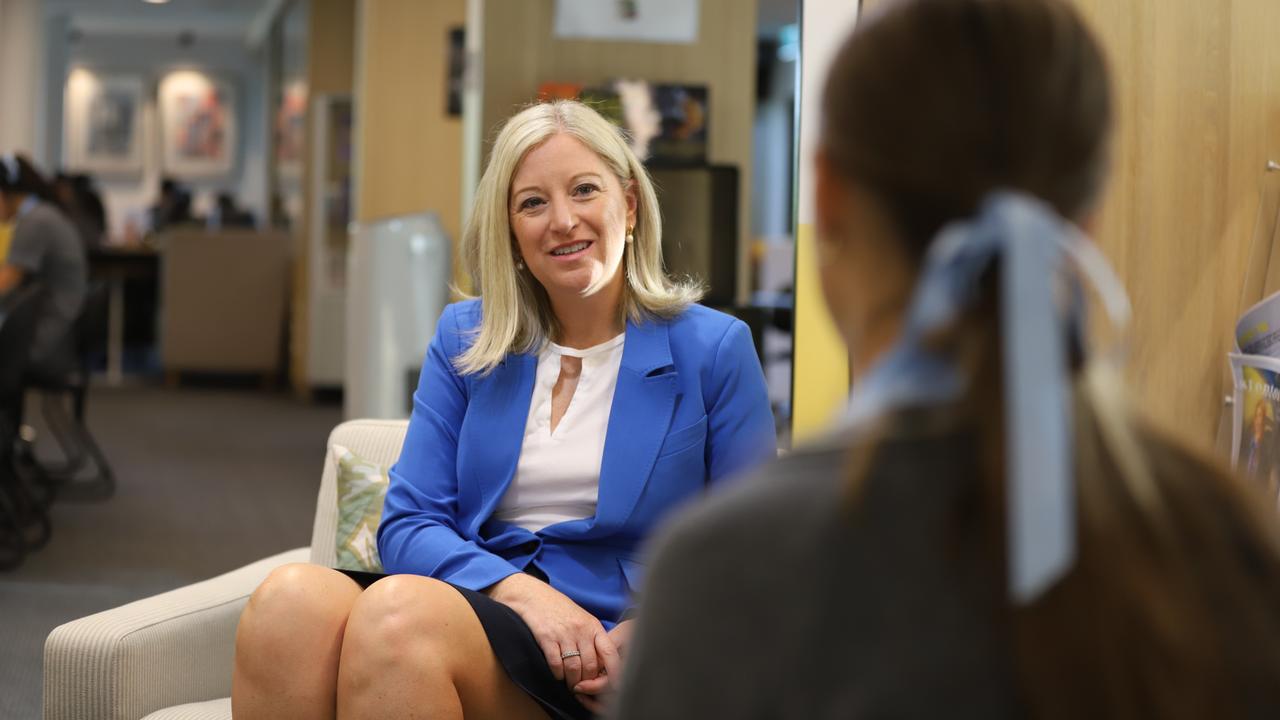
At St Catherine’s School in Melbourne, the all-girls’ school introduced a new framework last year to make their education more contemporary and accessible to all their students.
Developed after the disruptions of the Covid-19 pandemic era, the way the school teaches has shifted to focus on how to learn over what to learn.
Deputy principal of teaching and learning Ceri Lloyd says the research-based approach was built around enabling students to apply, evaluate and reflect on their own learning.
“We wanted them not to passively just receive rote-learning anymore, we wanted them to engage and step into a learning-to-think and thinking-to-learn model,” she says.
“It’s a culture of thinking. It’s not about saturating them with knowledge and content, it’s about how to engage them with a strategy to understand that content. It’s very much a teacher working in partnership and building the student’s skillset.”
She says the program was made possible by the school’s support for innovation and their smaller class sizes, of no more than about 18 students.
Developing the strengths of teachers is also critical for other schools in the independent and
other sectors, given rising demands and workforce shortages.
St Stephen’s School, in Perth, has established an award-winning professional development program that runs from induction to ongoing appraisal and feedback, internal and external learning, and management plans.
Principal Donella Beare says the program is aimed at enabling professional growth and reflection, as well as strengthening collegiality and aligning practice with the mission and values of the school.
“St Stephen’s School values lifelong learning,” she says. “We know that the continued improvement of school performance is directly linked to the ongoing, intentional, and measured improvement of staff performance.”
‘Once they start looking for an option, parents’ eyes are opened to the huge choice that is out there’
- Graham Catt, CEO, Independent Schools Australia
In turn, this leads to improved school performance.
And at the Gold Coast’s Silkwood School, principal Terry O’Hanlon-Rose says their personalised goal-setting, mentoring and individual model – with teachers referred to as advisers instead of teachers – was enabled as an independent school.
“We have a very short turnaround between getting board approval and changing our way of curriculum delivery, our way of engaging students, our wellbeing plan,” he says. “We go to the board and they will look at the criteria so we are compliant with the state and national legislation, and that we’re delivering it in a way that is okay.
“For systems to change, that is a slow grind. We have decision-making based at the school level, whereas if you’re trying to change a whole system, they take longer to respond.”
This can also make the sector more responsive to changes, notably the funding arrangements from last year to taper off a non-government school’s funding based on the capacity of the parents to contribute.
For schools where families have proportionately higher incomes, this has meant a sharp drop off in funding per high school student from about $14,000 to about $2500.
However, ongoing costs continue to rise, with salaries a notable contributor given independent schools’ lower teacher to student ratios than other school sectors overall.
Mr Catt says last year’s implementation of the funding model led some schools to restructure fees, which averaged about $5272 annually across all independent schools in 2022.
“In some cases, the combination of the change to the funding model and the increased costs of operating have meant that has got to be subsidised by parents,” he says. “It includes the fees charged to parents, but schools also engage with their community.”
He pointed to salaries as the primary cost in education.
“When we look at rising costs and operating costs, it is really salaries that are driving that,” he says. “We are grappling with a range of issues around workforce. (Funding challenges) are real and they are a challenge for people in our sector.”
Education leaders say these changes will also require innovation from the schools themselves to meet their ongoing costs.
Fairholme School principal Linda Evans says the southern Queensland Toowoomba-based school was “absolutely mindful” of the restructured funding model, and they were focused on delivering the best quality education to drive ongoing enrolments.
“You don’t have strong enrolments if you don’t have strong practice,” she says. “You’ve really got to work hard to be the best that you can, so that those enrolments are steady and growing and predictable.”
Dr Evans says the girls’ school was also looking into external funding arrangements.
“We are looking at the way our foundation can be regenerated. We will have to look for different funding avenues. That is the reality.”