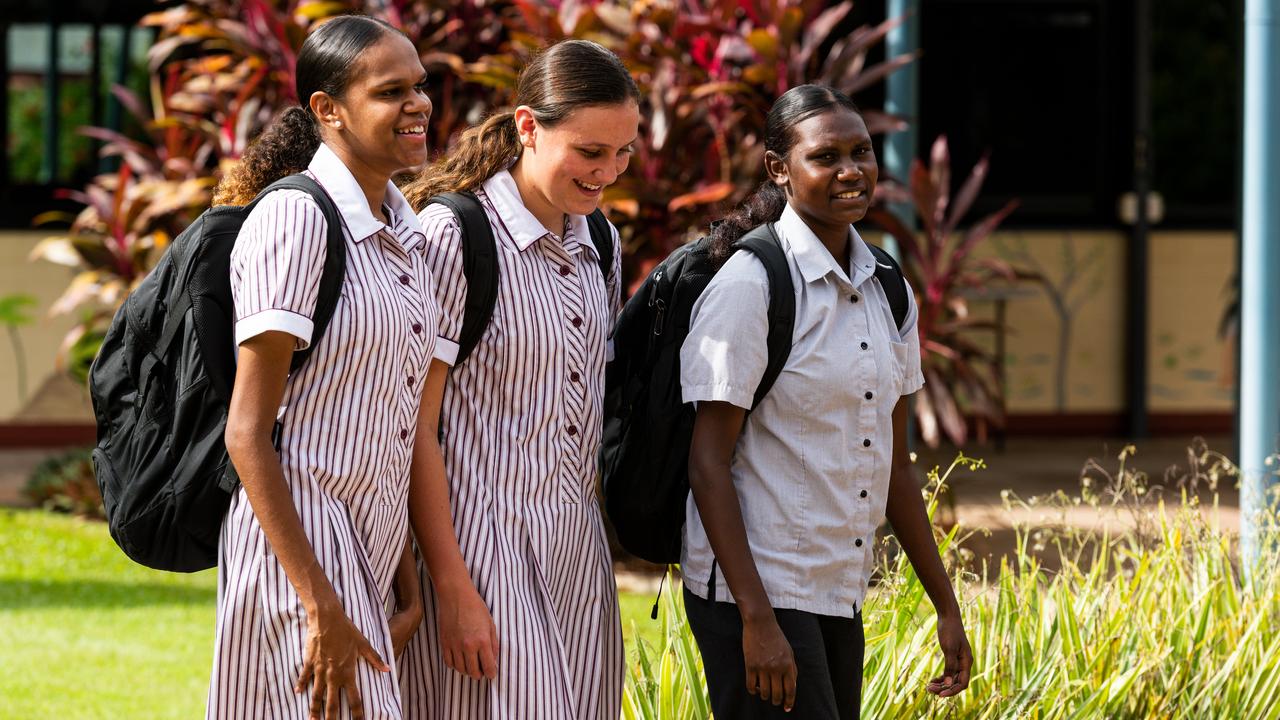
Boarding schools remain a key plank of Australia’s education system, as they meet the schooling needs for a range of young people and their families.
The number of students in boarding has continued to rise, as regional students, busy city families and young people from remote communities choose the residential schooling option.
Australian Boarding Schools Association chief executive Richard Stokes says boarding options are necessary in many cases to allow for a high-quality education.
“There are such a diverse range of boarding schools, from a little hostel on Thursday Island right up to the big names that everybody knows about,” Stokes says. “Our parents need them. It’s not like they choose that school because it looks fancy, they choose that school because there is no other choice.”
Stokes says the reality remains that most boarding families have little choice but to send their children to residential schools.
“Most of our boarders – 76 per cent – are rural and remote boarders,” he says.
“They either come to boarding school, or they get a very limited education at a high school in the local area that might not offer extra subjects or have extracurricular activities, or they don’t go to school at all.

“There are 500 kids in the Torres Strait, for example, who have to go away for high school.”
Across the country there are more than 200 boarding schools and government-run residential hostels.
While the most well-known in the city are traditional, independent schools, other boarding schools specifically address the needs of First Nations young people, such as Victoria’s girls’ school Worowa College, or provide a home and education for aspiring performance artists and sportspeople, such as The Australian Ballet School or The McDonald College.
The 200-plus schools house more than 20,000 young people, mostly teenagers.
The importance of boarding as an option is reinforced by the federal government’s announcement this year of a Commonwealth Regional Scholarship Program.
Up to 50 low-income families will be able to access scholarships of $20,000 per student each year for up to six years from next year, while another 50 low-to-middle-income families experiencing financial hardship will be able to apply for $10,000.
Assistant Minister for Education Senator Anthony Chisholm says boarding schools can provide a quality education when there are limited local options.
“Every child should have access to a high-quality education no matter where they live,” Chisholm says.
More information on the program is expected to be released in coming months, including means-testing and entry requirements.
Additionally, the Queensland government this year budgeted to increase the Remote Tuition Allowance by $4000 to $10,276 for high school boarders and to $8360 for primary students – in recognition of the rising costs for the state’s 1400 boarders.
Brisbane girls’ high school Somerville House offers “a home away from home” for about 100 girls, largely from country backgrounds.
School principal Kim Kiepe says the boarding option provides students from rural, remote, and even interstate and international locations access to “an empowering education”.
“It is not meant to replace your home but there is a feeling that it is a family of itself,” Kiepe says.
She says in addition to the educational value, many families are keen for their girls to have access to a wide range of extracurricular options, as well as raising their levels of independence.
Kiepe adds the boarding experience also leaves the students with a diverse network of friends from different areas and backgrounds.
“In every boarding school I’ve ever been in, and this is my fourth, it is about boarders making those lifelong connections and the social circles that they develop,” she says.
At Tara Anglican Girls School, in Western Sydney, director of boarding Samantha Cocks says families come for the opportunity of a better education for their daughters.
“The girls that we have from rural families, they know they have to move away; it’s ingrained in them from a young age,” Cocks says.
“They get a different perspective, and being at Tara is an easy gap between rural Australia and being in the city. It’s nice and green and they can get out in nature.”
Tara’s Eggleton House boarding school comprises approximately equal portions of rural and regional students, international girls, and weekly boarding for city families.
Further, in a boarding environment, young people learn independence and routine.
A recent study from University of South Australia found that the sleep hygiene and mobile phone restrictions on boarders increased their sleep an average of 40 minutes a day, compared with day students, which is associated with wellbeing.
Cocks says the structured environment means the girls develop effective sleep habits.
“They’re on school grounds, so they don’t have to travel. They don’t have to fight the traffic,” she says.
‘They choose that school because there is no other choice ... 76 per cent are rural and remote boarders’
– Richard Stokes, Australian Boarding Schools Association CEO
Boarding schools are also a growing option for the education of First Nations young people. In 2020, about one in six boarders identified as Aboriginal or Torres Strait Islander.
Darwin’s Haileybury Rendall School has a special focus on teaching and learning for First Nations Australians as an Indigenous Centre for Educational Excellence.
Principal Andrew McGregor says the boarding house provides a home for about 100 students from 30 remote and very remote Indigenous communities.
“One of the reasons we’re successful is our outreach,” McGregor says.
“We have dedicated staff who go out and visit the families in their communities and get their feedback.
“It’s a two-way learning exercise for us, which we think is really important and why we’re doing it well.”
He says remote communities are challenged, with few options for high school.
“We’re really about providing choice so families can send their kids to high school,” he says.
The school of about 1000 students also offers local boarding for regional families, and a brand new boarding house for international students.
Independent Schools Australia chief executive Graham Catt says boarding provides a range of options, from coeducational, sporting options, single-sex, and schools aligned to specific values.
“For most of our families, it is a practical way they can access education and social opportunities,” Catt says.
He says there are increasing numbers of urban families whose young people do weekly boarding, overcoming the logistical challenges of city traffic and high-intensity family calendars.
“We know that school life isn’t just what goes on between the school gates, or between 8.30am and 3pm,” he says.
“One of the reasons parents choose the schools is because of the co-curricular activities.
“If you combine those with our major cities and the difficulties of getting around, then the prospect of having children at school five days a week and not excessive commuting … becomes an attractive option.”
Stokes says the trend is notable in Sydney and Melbourne, where busy families are keen to avoid the logistical challenges of taxiing young people to activities across heavy traffic.
“That scenario is a very logical one,” he says.
“If you can miss sitting in the traffic for an hour-and-a-half in the morning and an hour-and-a-half in the afternoon, and your son or daughter comes home for the weekend, that’s a good situation.”