Women in academia anticipate a work-life imbalance and heavier workloads if their career progresses, and face more “academic housework”, adding to the pressure on females in the education system.
In what has been dubbed the leaky pipeline, girls and women achieve superior education completions and work in greater numbers in the lower levels of academia, but men significantly outnumber them in the senior ranks.
Kerry Brown, Professor of Employment and Industry in the School of Business and Law at Edith Cowan University, says there are a number of factors leading to lower proportions of women at senior lecturer and professor levels.
“Women bore a very heavy workload and as they went up the scale, there would be an even heavier workload for them,” she says.
“They were choosing to maintain their current position without going for higher-level responsibilities, because they felt that they could manage their workload. So it was a work-life balancing effect for them in an individual situation.”
In 2019, there were almost double the number of men in associate professor and professor roles (86 per cent more), despite women outnumbering them in lecturer and associate lecturer positions. Women overtook men in attaining post-secondary qualifications for the first time in 2022, with about two-thirds of Australian females now holding additional training, according to the ABS.
It follows higher academic performance in school – except in maths – and a greater proportion of females holding bachelor or higher degrees.
Professor Brown says the women profiled in her research into gender in higher education were in a “holding pattern” and were performing at their best with the available time and responsibilities.
“They took a more holistic approach to their life than what they were doing and tried to balance that out, whereas the men didn’t have that view,” she says. “They looked at their career as a separate concept to their home life and that balancing act didn’t come into it.
“They saw that the step up was a new opportunity for them rather than an extra workload. They may well have had a very active role within the household; it’s just that they saw their careers differently to their role in the household.”
Brown says women also spent more time doing administrative “academic housework” tasks such as building relationships and supporting their academic work. She cited the organisation of a conference, where women may do the planning and admin while men are figureheads or promoters.

Brown says that when she came to academia after a career in industry, she took a strategic approach to progression and achieved her rank in seven years.
“I was building teams and getting funding for those teams and being able to have more flexibility,” she says. “They were the things that really helped me along.”
Australian Academy of Science Early and Mid Career Researchers’ Forum chair Dr Mohammad Taha says both the ability for self-determination and inclusive environments are crucial to supporting researchers to stay in their fields.
Taha says many people, especially those working in STEM fields, found their research to be more than a job: “It’s almost like a calling.”
But they said that when caring responsibilities or other life events collided with the unreasonable hours that went into their work, it created a divergence in “merit”.
“There is no guarantee that if you are hardworking you will progress accordingly,” Taha says. “The leaky pipeline starts from the moment they graduate from undergraduate study. As you progress further, people leave en masse.”
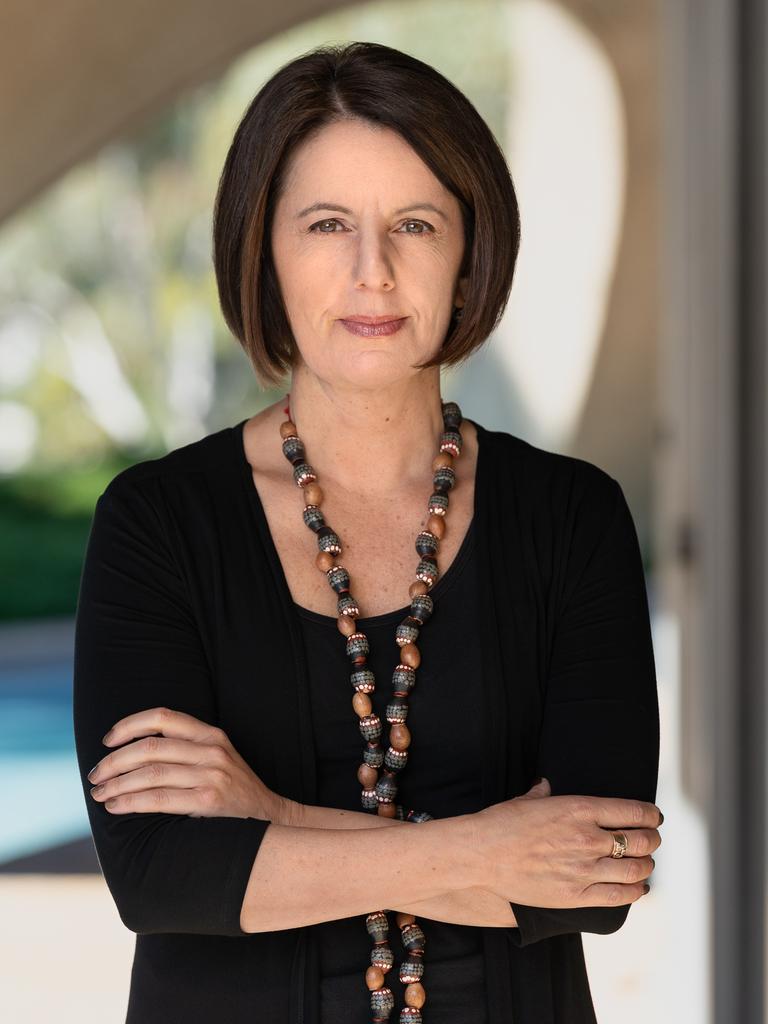
Australian Academy of Science chief executive Anna-Maria Arabia says that although the proportion of women in leadership has improved over the years, it remains “far from what could be considered an equitable representation of women at senior levels”.
Arabia says the most important barrier to women’s participation and retention is the funding environment and the resultant job insecurity, which is exacerbated after career breaks.
She stresses the many years of education investment in early and mid-career researchers – from undergraduate to postgraduate qualifications, then a PhD and postdoctoral studies – declaring it a “poor investment” to structure the industry in such a way that pushes people out.
“No individual who has received that much investment in them or has invested so much of their own ability in time should have to choose between a mortgage and continuing their research,” she says.
“It’s ridiculous really. It’s a poor return on investment when we’re losing such talented individuals.”
However, there are solutions under way.
Arabia points to the National Health and Medical Research Council’s (NHMRC) gender-equity initiative that targets an equal number of grants to women and men at the senior leadership level, despite fewer women applying at those levels.
Devised in 2019, the scheme was a special measure of the Sex Discrimination Act aimed at reaching equity and overcoming systemic disadvantage. In 2023, the scheme awarded more funding to women than men overall.
“It was the first time a funding agency did that,” Arabia says. “To their credit, there had been reasonable efforts. It wasn’t for lack of trying, but we’re simply not nudging the system, or the system isn’t responding to the removal of those barriers at a rate at which would be acceptable.”
In a submission to the Pathways to Diversity report, Universities Australia said removing financial barriers to studying a PhD “must be complemented by clear career pathways for STEM researchers beyond graduation”.
“This is of particular relevance to many early and mid-career researchers who are employed on short-term contracts linked to research grants, who have concerns about job security and career progression,” chief executive Catriona Jackson said.
“As a result, scientists leave Australia, or leave the research workforce completely, and Australia misses out on new scientific discoveries and economic opportunities. While researcher mobility is a core part of the research enterprise, job insecurity should not be a driver for going overseas.”
The UNSW Women in Research Network said there should be a focus on retention of academic women, noting few schemes targeted to support women or under-represented groups already within the system.
Queensland University of Technology vice-chancellor Professor Margaret Sheil says women are underrepresented in disciplines where there is more funding available, but in fields where females were equally represented the success rates were similar.
“It’s complicated,” she says. “If you look at the role of the absolute numbers, women are more representative in areas where there’s less research funding.”
She says the concept of performance relative to opportunity is used when assessing promotions, grant and funding applications.
“The sector has matured,” Sheil says. “Most universities would have a process of taking (career breaks or interruptions) into account and you also have to encourage applications to see that they’re not going to be penalised by not talking about their personal circumstances.”