The Masked Scheduler is looking back at the scheduling and business decisions that built the Must-See TV lineup on NBC. You can go here to read previous installments.
I want to take a little break from the building of the Must-See TV schedule to talk a bit about the two formats that helped us fill out 22 hours — newsmagazines and movies.
As successful as NBC was in the mid-’90s, it was impossible for anyone to schedule 22 hours of successful original scripted series. You had to rely on other formats to fill out parts of your schedule. Over the course of my scheduling career, there were three types of shows that played the role of giving your scripted series relief. I saw it evolve from movies to newsmagazines to reality shows (especially reality competitions). In the 1995-96 season, our first No. 1 finish of the Must-See TV era, I had two nights of movies (Sunday and Monday) and three hours of “Dateline” (Tuesday, Wednesday and Friday), which covered seven of the 22 hours.
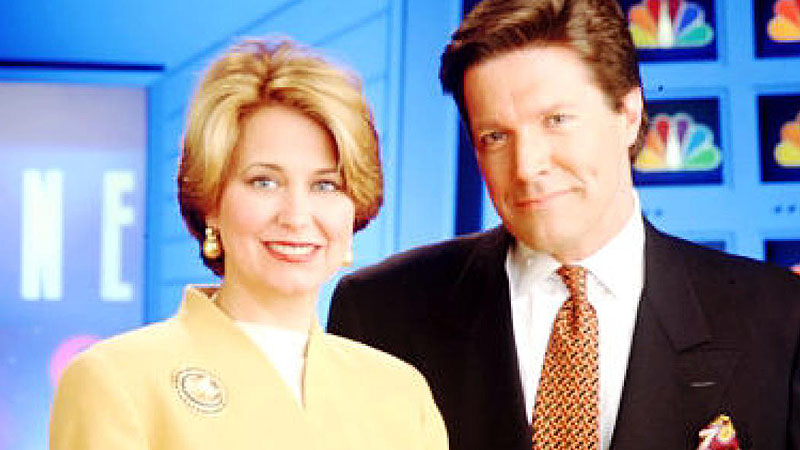
The scheduler is generally the point person between the news division and the entertainment group. Early in my tenure as head of scheduling, I became the unofficial program exec on “I-Witness Video,” which was an early shock video hour produced by our news division. I continued to play that role as we developed the “Dateline” brand. After the executive producer of “Dateline” was fired for blowing up a GM truck, he was replaced by Neal Shapiro, who is currently CEO and president of public television station WNET in New York City. Andy Lack was president of NBC News, and Neal and Andy were important allies over the MSTV era.
My role with Neal was to give him some sense of where the “Dateline” hours were positioned on the schedule, what demographics we were delivering with the lead-in entertainment shows and what sorts of stories would be most promotable to that audience. Working in concert, Neal and I helped make “Dateline” one of the most successful newsmagazine brands in the ’90s.
Each “Dateline” had its own personality, and internally, we actually gave them different names. For example, the Friday “Dateline” was the transition show between “Unsolved Mysteries” and “Homicide,” and we would call it “Law & Dateline,” focusing on courtroom and crime stories. Tuesday’s show inherited a large young female audience, so we anointed it “Touched by a Dateline” and did softer, more emotional, heartwarming stories. When we added it to Sunday at 7 p.m., we were driving more of a male audience from sports, so that was “When Dateline Attacks,” a nod to my soon-to-be best buddies Mike Darnell and Bruce Nash. We would do hard-edged, video-driven stories there.
In addition to all the “Datelines,” we had two solid movie nights on Sunday and Monday. These nights consisted of made-for-TV movies and miniseries under the guidance of Lindy DeKoven and her group, as well as theatricals, which I would buy along with our head of business affairs and my friend, the late John Agoglia.
As I said before, the business was transitioning from movies to newsmagazines as the preferred relief for scripted shows, and we eventually got up to five “Datelines” while eliminating a movie night, but I’ll save that for later in the saga.
Next time, I’ll talk about how Lindy and I would map out the movie strategy and the night I broke the law.