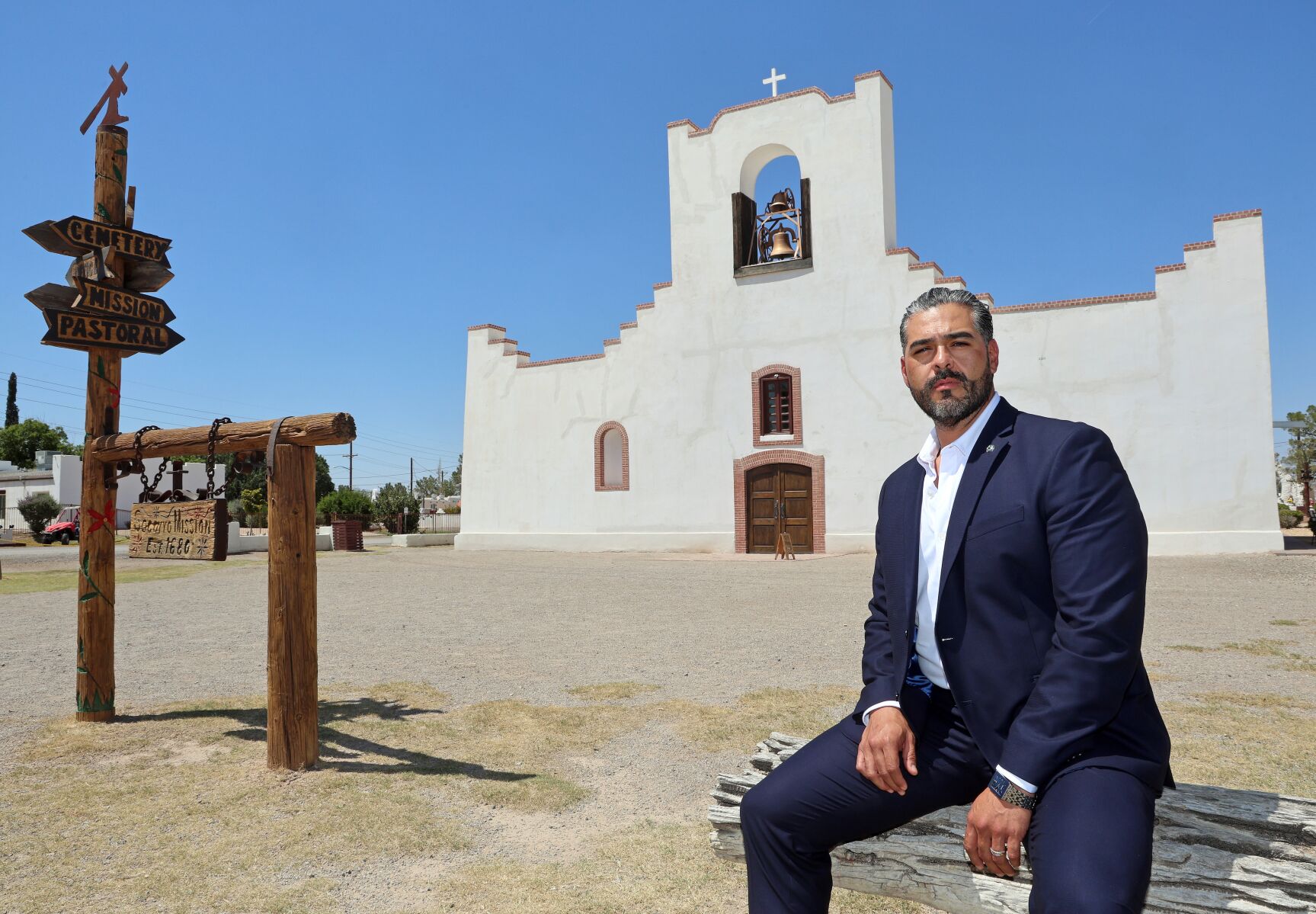
SOCORRO – Earlier this month, Socorro Mayor Rudy Cruz Jr. was about to eat his breakfast at a small restaurant in Valentine, Texas, when his cellphone lit up, displaying a number from Washington, D.C.
“It was Congresswoman Veronica Escobar, and she’s telling me, ‘Mayor, I have good news,’” he recalled in an interview with El Paso Inc. last week.
The three warehouses Immigration and Customs Enforcement planned to turn into massive operation and detention facilities were being pulled from the U.S. Department of Homeland Security and prepared for sale. More important to Cruz: the Trump administration’s plan to detain thousands of migrants in his city had been abandoned.
“That is one of the things we were advocating for so strongly. Not only our government, but also our community partners,” said Cruz, who was elected in 2024 to a four-year term.
With the proposed ICE facility scrapped and the warehouses likely headed back to the market, Socorro is refocusing on attracting private industry, expanding its tax base and managing growth in a community constrained by water, wastewater and other infrastructure needs.
Since the federal government’s $123 million purchase of the warehouses became public six months ago, the issue has roiled Socorro – a largely rural community where nearly 33% of its 39,000 residents are immigrants from Mexico. While there were pockets of support for the ICE facilities, many church congregations criticized the plans, and scores of residents denounced the effort in public forums, calling the planned operation an attack on their immigrant community and an unsustainable burden on the infrastructure.
The three warehouses – nearly 1 million square feet on 60 acres – would be removed from the public tax rolls if the government took them over. Sitting amid large tracts of desert land available for industrial development along Interstate 10, the area has long been viewed by Socorro leaders as a potential hub for private-sector growth that could employ local residents and generate tax revenue for the city.
“Those buildings were supposed to be an investment into our city to help build the tax base,” Cruz said.
The Paso del Norte region has experienced rapid industrial growth driven in part by the reshoring of manufacturing operations from Asia to area industrial parks, especially in neighboring Juárez. Industrial growth has also surged in Socorro, which is becoming a center for the manufacture of server components used in data centers.
Cruz said he’s focused on building the local economy – an urgent need in a community with a per capita annual income of $21,000 and where 20% of residents live at or below the poverty line.
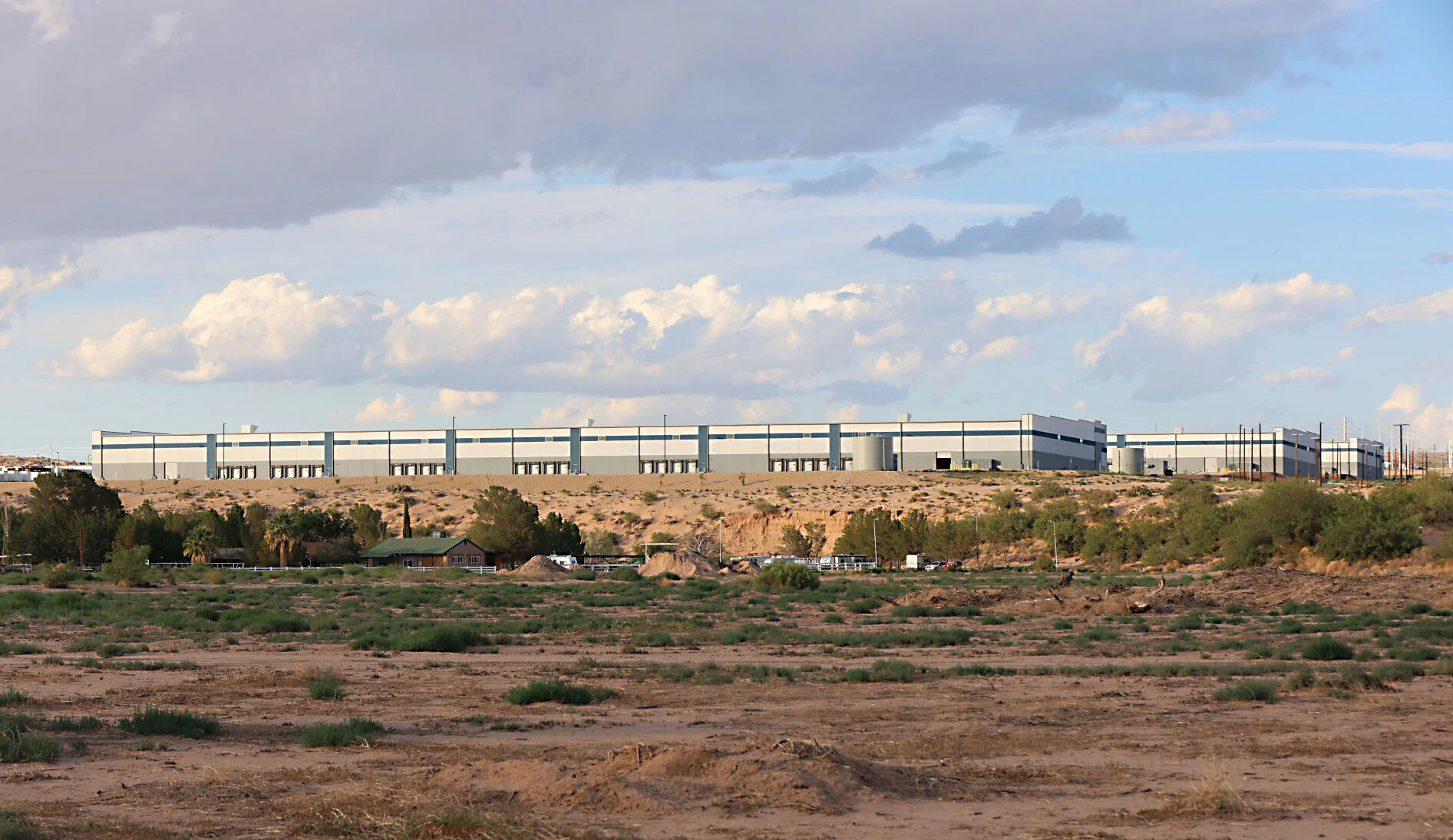
“The federal government was willing to dump $120 million into buying these buildings, but they weren’t willing to make sure that the American taxpayer had those resources first. I’m referring to natural gas, water and sewer,” Cruz said. “They were willing to house a bunch of people in there and give them access to all of those resources, but what about my taxpayers that have been living here for years without those?”
Cruz is a member of the Ysleta del Sur Pueblo, his wife is from Mexico and his children are Mexican American. A long-time rancher, he manages the Tigua tribe’s 77,000-acre cattle and alfalfa operation in the small town of Valentine. He balances his duties as mayor with frequent six-hour round-trip commutes to and from the tribal ranch, and communities in between.
“Sometimes my mornings consist of waking up at 3 a.m., getting ready to head out, and I’m on the road by 4,” he said.
Cruz’s familiarity with regional government and business affairs has made him confident about one thing: Big business and big industry are watching.
“They have people with eyes on this region, not just the city of El Paso or the county but the entire region, and they know what’s going on,” he said.
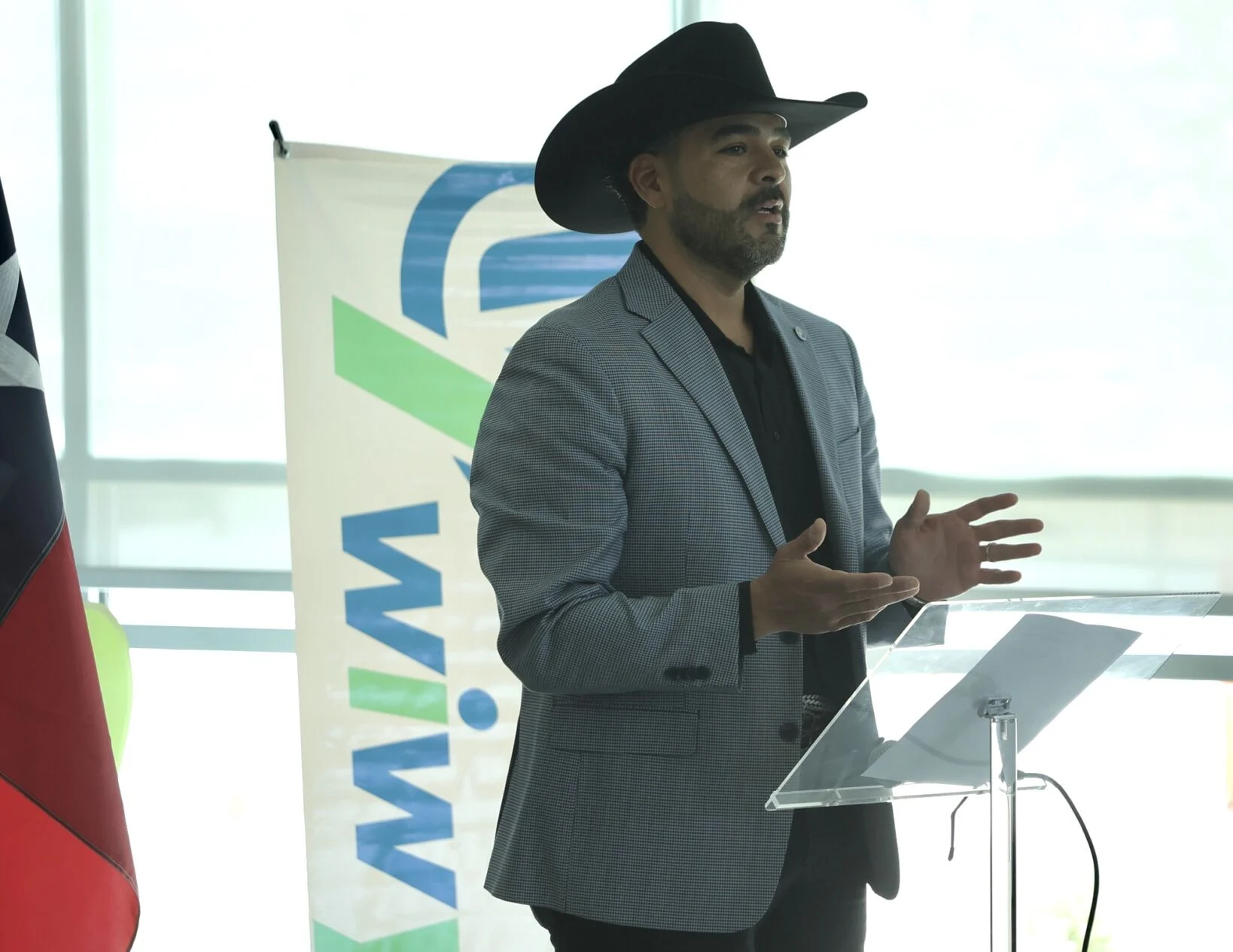
Some proof of that is the recent $275 million investment by Taiwanese technology company Wiwynn, which announced plans to expand its server manufacturing and testing operations at the Socorro Logistics Centre Park. The company plans to hire an additional 2,000 workers, an economic boost for Socorro, Cruz said.
“When you bring 2,000 employees here, they’ve got to eat and shop and consume somewhere,” he said at the company’s Aug. 21 news conference.
Socorro City Council’s approval of an incentive agreement includes a property tax rebate over 10 years valued at a minimum of about $1.8 million, as well as a waiver of the $200,000 construction permit fee. But the agreement also includes a set of requirements. At least 100 of the new jobs must go to Socorro residents. If the company fails to meet the minimum requirements, “the incentive package goes out the door,” Cruz said.
Available land in areas of El Paso County outside the city of El Paso, such as Socorro, is attractive to large industry. Cruz said that should motivate regional leaders to establish contractual safeguards to protect local residents. Beyond technology companies and government operations, there is also the possible influx of data centers, an issue Cruz has been watching unfold in El Paso.
“Hearing everything that’s happened over there, we’ve gone into a moratorium on any type of detention facility or development of data centers in our city because we don’t want our resources just sucked up dry,” Cruz said. “I can tell you that Socorro won’t fold.”
El Paso County, along with U.S. Rep. Veronica Escobar, also pushed back on the federal government’s attempted move into Socorro.
“The community of Socorro has been working on an economic development vision and plan to grow their economy while embracing their rich history,” said Escobar during her press conference where she announced the imminent sale of the warehouses.
The El Paso Mission Trail runs through Socorro and connects two of the oldest continuously active missions in the United States – the Ysleta and Socorro missions – as well as the San Elizario presidio chapel. El Paso County has worked for years to better promote heritage tourism in the area.
Socorro’s latest retail analysis, completed in 2024, identifies its three top economic development priorities: retail, hospitality and entertainment. About 171 of these businesses are in Socorro and provide employment for 2,780 people, which is 15% of the city’s jobs.
These three sectors – known by Socorro city planners as their “strategic industries” – generated $631 million in sales. While representing 33% of all jobs in Socorro, they bring in about half of all the city’s commercial income.
As industry continues to boom in his rural community, Cruz acknowledges that Socorro is changing.
“It’s going through a transitional phase. You’re seeing the older residents, they’re passing on,” he said. “So you have a younger generation moving into Socorro. Now we need to build the Socorro that the younger generation wants.”
Part of that transition is acknowledging a painful shift in Socorro and the surrounding Lower Valley – the slow demise of the agriculture industry.
One agricultural census study conducted every five years showed that from 2017 to 2022, the farms in El Paso County lost $6.3 million in net cash income, El Paso Inc. previously reported.
“Farming is no longer a way of life. It’s now a struggle,” Cruz said. “They’re selling their land, and they’re sometimes negotiating deals with the developers. They’ve become businessmen of a different industry.”