
Shopify’s e-commerce site builder and Etsy’s marketplace both provide opportunities for small businesses to sell physical items, digital products and even services from the convenience of a computer.
They’re well-established companies that help aspiring entrepreneurs run full-fledged storefronts without much technical know-how. But which one is the best choice?
To help you make up your mind between Shopify vs. Etsy, we’ll walk you through these providers and share what they cost, how easy they are to set up and — most importantly — which one is the best fit for your small business.
ShopifyEtsyMonthly pricing for basic account | $39 per month or $29 when annually billed | Free basic plan |
Additional fees | 2.9% + 30 cents per online transaction, 2.6% + 10 cents in person | 20 cent listing fee, 6.5% transaction fee, variable offsite ads fee, 3% + 25 cents payment processing fee |
Products eligible for sale | Services, physical goods, digital items, memberships, event tickets, gift cards | Handmade physical and digital goods, vintage items,handmade and non-handmade crafting supplies |
Shipping/postage discounts | Up to 77%-88% | Up to 30% |
Ease of use | Simple sign-up and helpful resources for onboarding your shop | Simple sign-up, one set template, easy to upload listings and branding |
Collaboration | Collaborators on all plans, additional staff for Shopify and Advanced plans | No official way to add collaborators or store owners |
Integrations and apps | Over 8,000 apps and integrations available | Apps and integrations available, number not disclosed |
Website builder included | Yes, you can build your e-commerce site from scratch or with the help of templates | No, you list items within Etsy’s shop template |
Built-in audience | No, Shopify doesn’t include a marketplace with buyers | Yes, your products will be available for buyers to see and search directly on Etsy |
Better Business Bureau rating | A+ | A+ |
Pricing and plans
At a glance, here’s how the pricing compares for Shopify vs. Etsy:
*Each Shopify plan comes with a free 3-day trial. You won’t be able to sell items during the trial period, but it provides you with a full back-end experience to get a feel for the program.
Shopify plan pricing
Shopify offers three plans suitable for small businesses: Basic, Shopify and Advanced. Each option offers different rates for credit card fees and monthly subscription costs.
Note: The transaction fees cited below are for standard credit card purchases. Fees for other types of purchases, such as business account cards or third-party transactions, may vary. Review these details carefully on Shopify’s pricing page for accurate pricing.
Basic
The Basic plan is $39 per month or $29 when annually billed, with credit card rates starting at 2.9% plus 30 cents for online transactions and 2.6% plus 10 cents for in-person transactions.
This plan is geared toward solopreneurs and allows an individual or small team to design a digital storefront quickly and professionally. You can choose from Shopify’s 180 templates, of which there are free and paid varieties. Tech-savvy entrepreneurs can also opt to build their shop from scratch.
You’ll have access to a sophisticated checkout system that supports up to 10 inventory locations. Shopify’s suite of analytics tracks over 60 performance metrics that help visualize the customer journey, key sales metrics and other sales-related data.
A few other key features of the Basic plan include:
- 24/7 live chat support
- Collaborator accounts
- A free SSL certificate
- Customer segmentation capabilities
- Unlimited contacts
- Abandoned cart recovery
- Up to 77% discount on shipping
- Custom marketing automation
While collaboration is possible with a Basic plan, you won’t be able to add additional staff accounts, which means that other team members won’t be able to control permissions or manage customer data.
Still, Shopify’s first-tier plan offers a robust set of features for its price.
Shopify
The Shopify plan is best suited for smaller teams, notably offering staff accounts and higher shipping discounts. You’ll pay $105 a month or $79 a month when billed annually, which could be an excellent value if your organization actively adds new members.
Card transaction fees are reduced with the Shopify plan. You’ll pay 2.7% plus 30 cents for online transactions and 2.5% plus 10 cents for in-person orders.
Users get all of the features included in the Basic plan and:
- Five staff accounts
- Up to 88% discount on shipping
- USPS small-package discounts
- Shipping insurance
You won’t receive much more in the way of analytics with this plan, but will still have access to the same metrics that come with a Basic account.
Advanced
For businesses that are rapidly scaling, Shopify offers an advanced plan. It costs $399 a month and the price reduces to $299 each month when billed annually.
Card transaction fees are further reduced to 2.5% plus 30 cents per order online, and 2.4% plus 10 cents in person.
Advances users can take advantage of the Basic and Shopify features and also receive:
- 15 staff accounts
- Global customization
- Customized reports and analytics
- Enhanced live chat
- 10x checkout capacity
Being able to customize your reports means you can display the data that matters most to your team, leading to increased efficiency and clarity.
Etsy plan pricing
Etsy doesn’t offer an extensive range of plans; it has a free Standard offering and then one additional plan, Plus, for a fairly minimal monthly fee.
That said, every seller, regardless of plan, must pay four mandatory fees:
- Listing fees: Every time you add a new listing to your Etsy store, you’re charged 20 cents. This listing is live for four months, and at that point, you can manually or automatically renew the item for 20 cents once more. Note that this fee is charged regardless of whether or not your item sells.
- Transaction fees: When an item sells on the Etsy marketplace, the company takes a transaction fee of 6.5% out of the total order price, including the item’s amount, shipping costs and any additional service fees such as gift-wrapping. Taxes are not subject to the transaction fee.
- Offsite ads fees: If Etsy advertises your store or items on another platform such as search engine search results or social media features, the person browsing may click on and purchase your item. If you’ve sold less than $10,000 in a year, Etsy will charge a 15% commission. If you’ve sold more than $10,000 in a year, the fee is reduced to 12%.
- Payment processing fees: Etsy charges a 3% plus 25 cents fee for each order that is sold. This fee supports credit card and debit card transactions and varies by country, so this rate is specifically for US sellers.
In addition to these fees, Etsy users can also opt to purchase advertising with Etsy Ads. Instead of promoting your listings on external sites, the Etsy Ads program pushes your items to the top page of Etsy’s search results and users are charged for each click that an ad generates.
Standard
The Etsy Standard plan allows users to list and sell products through Etsy without any upfront investment. Note: Remember that Etsy does limit the products you can sell to handmade and vintage items, as well as craft supplies.
This plan offers plenty of helpful features for sellers, including:
- A robust market of buyers: There are over 90 million shoppers on Etsy, and the company spends hundreds of millions of dollars on marketing each year. This makes it easier for sellers’ products to be seen by shoppers and takes a fair amount of marketing labor off of the seller.
- Forums that connect sellers: The Etsy Forums community allows sellers to connect, ask questions, share experiences, and keep up-to-date with the latest Etsy changes.
- Etsy search analytics: It’s most helpful to set up Google Analytics to keep track of your traffic sources. But there’s also a handy search stats section in the Etsy dashboard that will let you know how many visitors you’ve had, sales records and overall earnings.
- Up to 30% off shipping: Ship from FedEx, USPS and Canada Post at a reduced rate.
- A simple storefront setup: Etsy makes it easy to upload a store banner and logo and add custom information such as store policies and regular announcements. There’s no need to build a page — simply plug information into the template.
Plus
Etsy Plus is a relatively newer subscription plan that launched in 2018. This plan includes all of the above features but comes with a few additional resources for $10 per month.
Here are the monthly perks you’ll receive with the Plus plan:
- 15 credits for new listings
- A $5 Etsy Ads credit
- Restock requests from shoppers
- Additional shop customization options such as multiple banners and new layout options
- Customized web domains at a discounted price
- Discounted shipping boxes and Moo business cards
These benefits don’t roll over each month, making the Plus Plan best suited for Etsy sellers who regularly list new items and spend money on Etsy Ads.
Verdict: Shopify keeps costs reasonable for growing companies
While Etsy may seem like the winner due to its zero-cost setup, with careful calculation, we think that Shopify ultimately offers more features relative to its cost. The customization that Shopify provides far exceeds Etsy’s options, and Shopify’s lower transaction fees justify the monthly cost for many users.
Setup and ease of use
Both Shopify and Etsy are designed to be relatively easy for beginners and offer extensive knowledge bases to help new users onboard easily. We’ll discuss how user-friendly these products are, assessed by their sign-up process and interface.
Shopify’s ease of use
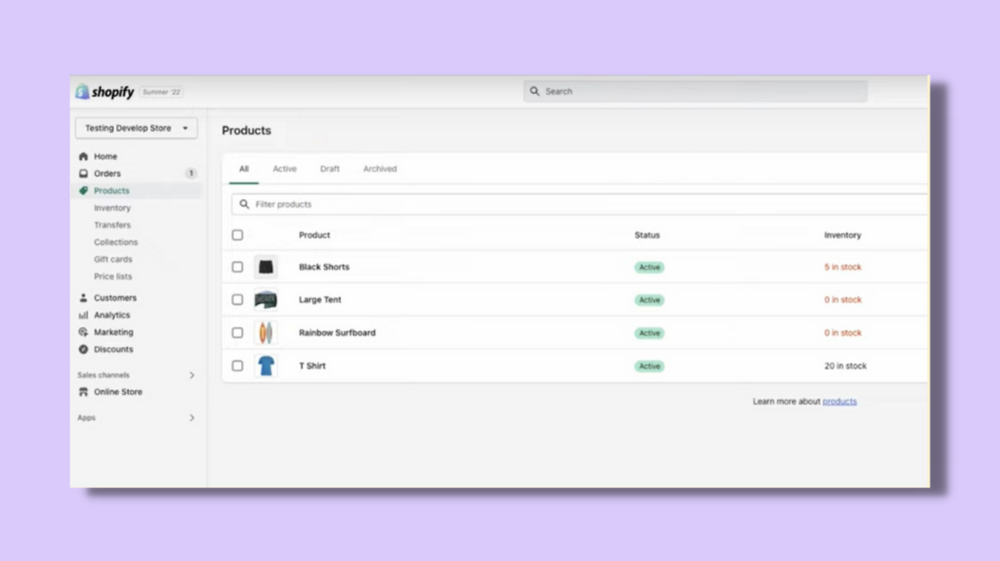
Shopify’s dashboard is clean and minimal, so it’s not too overwhelming to get acquainted with the program’s base features. Users will mostly access the orders, products and customer sections for day-to-day operations, and can use the analytics, marketing and discounts features for marketing tasks.
The initial sign-up process is extremely user-friendly. You’re prompted in plain English to provide details about what you want to sell to help the program adjust to your specific needs.
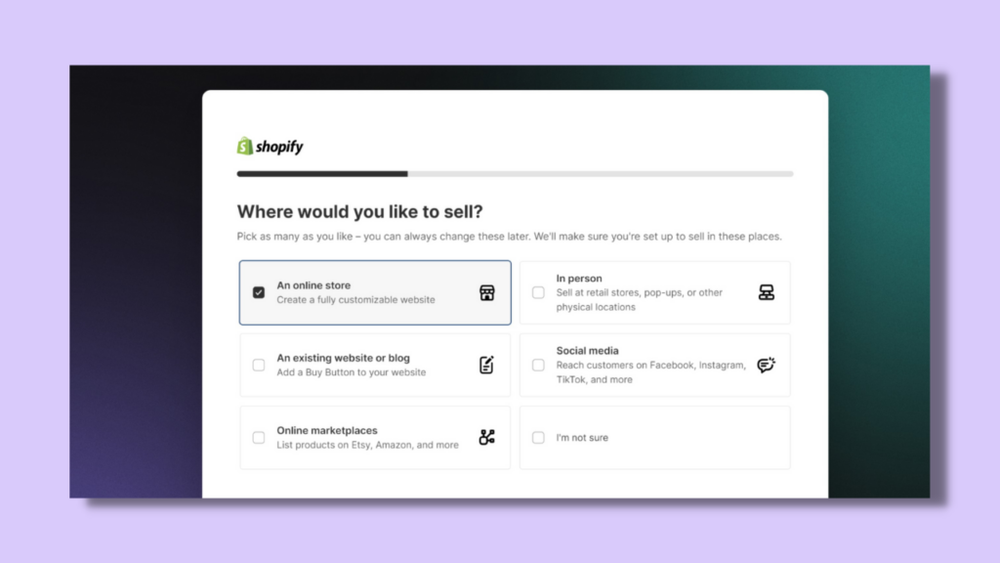
You’ll then be asked to provide your business’s location and create a new Shopify account. From there, you’ll be sent straight to your Shopify dashboard and your free trial will be activated.
Setup is fairly intuitive from here. The onscreen guide will help familiarize you with your dashboard and show you how to build the first product in your store.
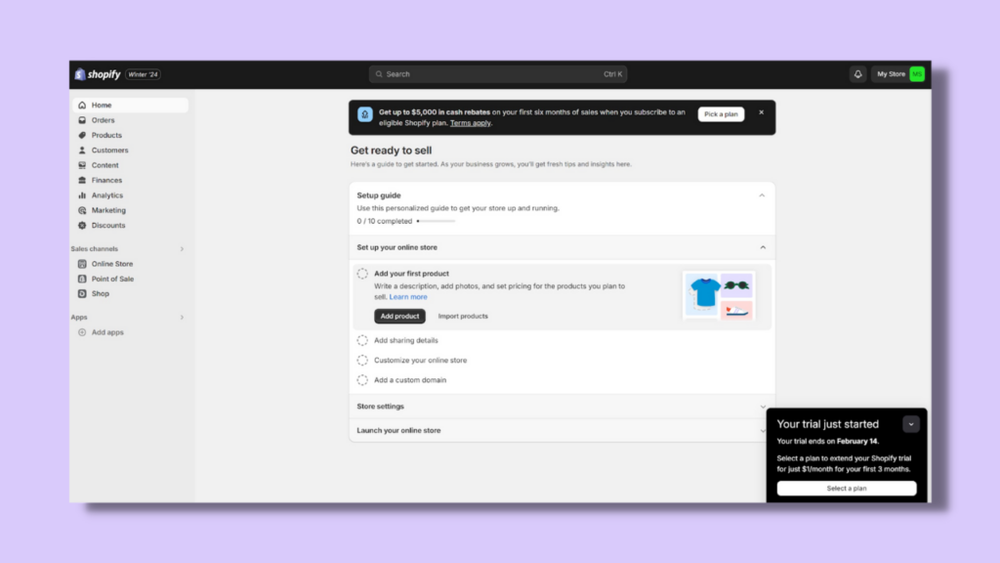
You won’t have to add any credit card information to activate the trial, so the process is quick and simple overall.
While this simple setup will allow you to build a functional storefront, Shopify has plenty of advanced customization options that require more upfront time to develop.
Etsy’s ease of use
Etsy’s dashboard has a modern, clean design that’s easy to navigate. The sidebar allows you to manage your listings, send messages to your buyers, track orders, view analytics and run sales and create coupons in the marketing section.
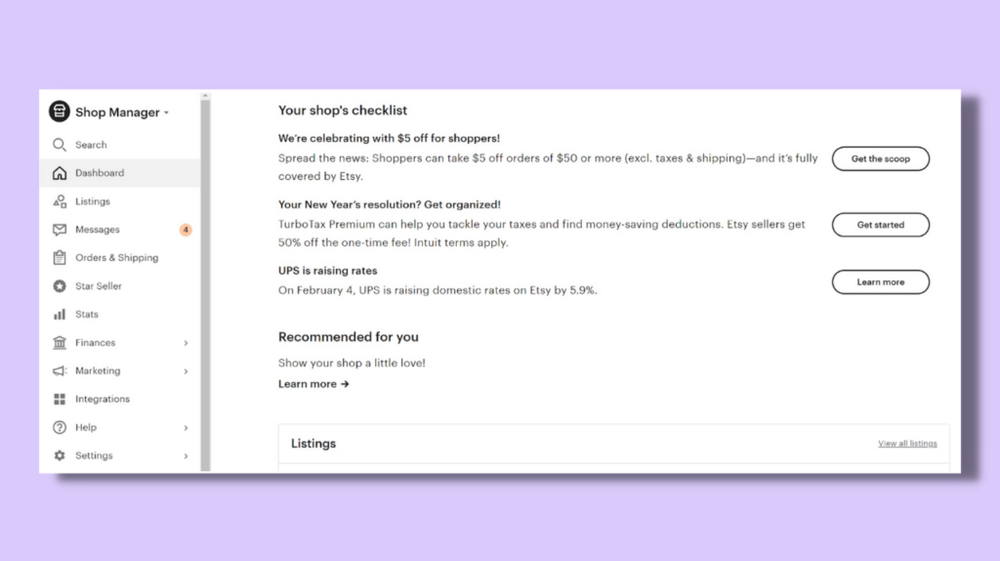
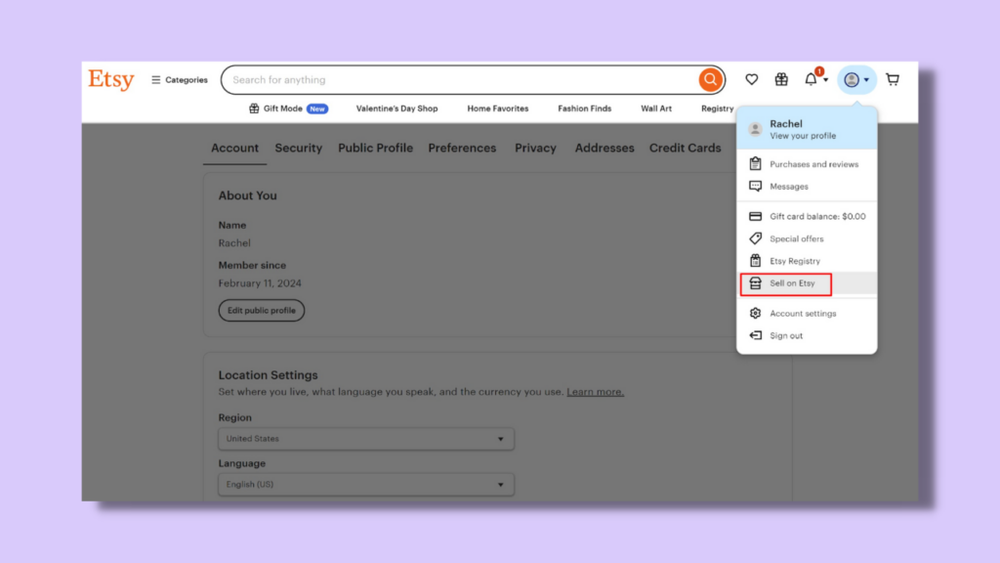
Signing up for Etsy is even faster than Shopify because you won’t need to build a site. After signing up with an email, name and password, navigate to the profile icon in the upper-right-hand corner to select “Sell on Etsy”.
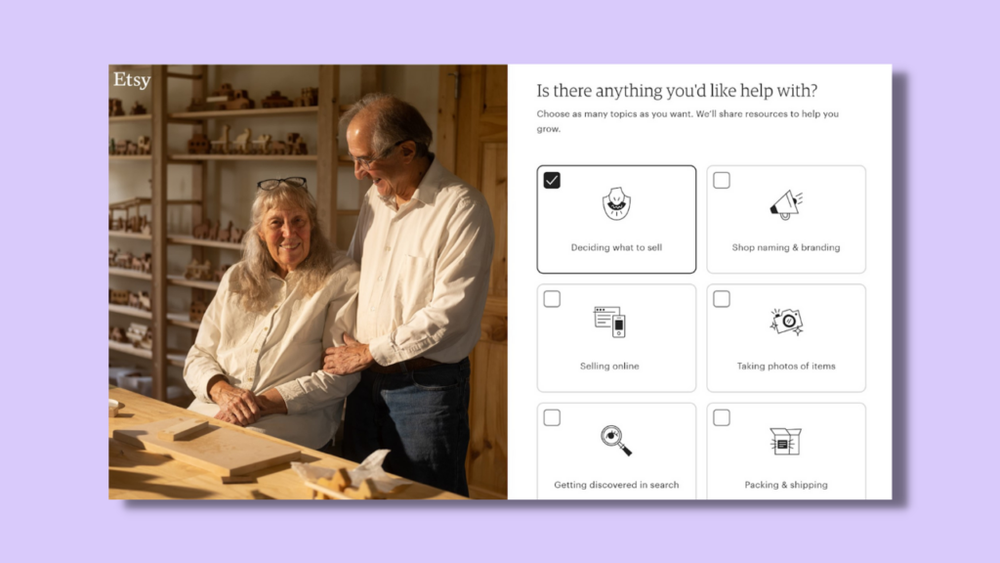
You’ll be prompted with a handful of questions that will help Etsy share specific resources that can help you get started selling on the platform.
Finally, you’ll walk through Etsy’s shop setup, consisting of your preferences, shop name, items, billing and site security. You’ll also be able to add your logo, banner and additional shop details.
There aren’t many formatting options available in Etsy, which may feel limiting to some. However, with fewer options, less time and expertise are needed for setup.
Verdict: Etsy keeps things as simple as possible
Etsy doesn’t require a full e-commerce site build, making it overall more simple to use than Shopify. It has a set template that’s easy to follow and cohesive within the marketplace. It’s a great choice for sellers without the time or technical know-how to build their platform from scratch.
Perks such as being featured by Etsy’s marketing and editing team in emails help to provide additional exposure as well, making it even easier to make sales on the platform.
Apps and integrations
Apps and integrations are an essential addition to any e-commerce software as they allow you to connect programs you already use to your marketplace or add functionality or features not included in your Shopify or Etsy plan. Let’s dig in and see how the providers compare in apps and integrations.
Shopify’s integrations
You can conveniently find Shopify’s apps, which include integrations, in the Shopify App Store. At the time of writing, there are over 8,000 apps in the store, so there’s no shortage of options available.
You can organize your app search results for specific results. For example, you can select “store design” from the filter menu to only display integrations and apps that help with branding.
An even more powerful feature is the comparison tool, allowing you to select a handful of programs and view their features, prices and company details side by side.
With so many apps available, you may be wondering if these apps are of quality. Shopify vets each app with a 100-point assessment before releasing it into the store, so you know that you’re using a program that is up to the provider’s standards.
There are both free and paid options, with several different tiers of membership available for each program. Some programs bill on a subscription basis, while others involve a one-time cost for membership or data migration.
Etsy’s integrations
Etsy also offers apps and integrations to help make sellers’ lives easier. The most popular options are tools that clean up listing photos, help with in-person sales and connect to accounting software.
You can navigate to “Shop Manager” and select “Integrations” for a list of a few integrations. Unfortunately, they’re not all listed in this section, as is the case with Shopify, so you may need to do some manual searching to connect certain programs. Etsy doesn’t list an actual number of apps or integrations, but a customer service rep noted that “sellers can connect as many integrations” as they choose. This is likely done through an API, however, and not from ready-made apps like Shopify.
Similar to Shopify, the cost of integrating an app depends on the cost of the program you’re trying to connect. Etsy provides a tag that states “price varies” instead of giving you specific pricing info. You’ll need to check the pricing directly on the merchant’s site to know how much the integration will cost you.
Verdict: Shopify provides more app and integration options
Since it can be a bit difficult to find out exactly which apps and integrations Etsy offers, Shopify is the winner in this category. Its robust app store paired with organizational and comparative functionality makes it easy for new users to see exactly which programs will seamlessly integrate into their online storefront.
Shopify vs. Etsy: Which is the best choice?
Shopify is the clear winner when it comes to its cost-to-value ratio. But making the right choice for your business ultimately depends on your specific product, audience and budget. Let’s break down the best-case scenario for choosing Shopify vs. Etsy.
When should you choose Shopify?
If you’re already making sales and looking to scale operations, Shopify is the best e-commerce platform for the job. It is also a better fit for those who want a white-label solution instead of being nestled under a brand like Etsy, and you aren’t restricted to handmade or vintage products.
Thanks to the lower transaction fees, you’ll save money overall as orders increase. Shopify’s 24/7 customer support is invaluable for those who are scaling and may run into more technical difficulties than casual sellers.
Shipping discounts are also generous under each of Shopify’s plans, which can save a significant amount of money in the long run for those shipping physical products. And the ability to add a variety of powerful apps is great for entrepreneurs who are already using certain business management software.
When should you choose Etsy?
Etsy is a great choice for new sellers with very little or no initial budget due to its free and easy setup. Those with fewer sales can focus on getting their product out there without worrying about a monthly fee.
Very few platforms allow you to start a business with no money, and the marketplace stands out in this regard. Best for handmade, vintage and craft sellers, it offers a built-in audience that can be helpful for those without a brand following.
Etsy’s Q3 2023 report shows that the marketplace received a record-breaking 92 million visitors, so there’s plenty of traffic for budding brands to take advantage of. This helps new users to build awareness around their products.
Frequently asked questions [FAQs]
Etsy has higher fees than Spotify with a 6.5% transaction fee, a 20-cent listing fee and varying fees for offsite ads. It also has a payment processing fee in the US of 3% plus 25 cents. However, Shopify charges a monthly subscription in addition to its traditional credit card processing fees.
It’s possible to dropship from Etsy to Shopify, but it’s recommended to carefully review the Etsy guidelines and tread lightly to avoid any violations. If you’re considering dropshipping in the other direction, Etsy explicitly states that you can only resell vintage and craft items.
There are no policies that prohibit you from selling on Etsy and Shopify at the same time. Embracing both platforms can significantly expand your reach, especially when scaling.
This content is for educational purposes only and is not intended and should not be understood to constitute financial, investment, insurance or legal advice. All individuals are encouraged to seek advice from a qualified financial professional before making any financial, insurance or investment decisions.
Note: While the offers mentioned above are accurate at the time of publication, they're subject to change at any time and may have changed or may no longer be available.