By Prasanthi Vasanthakumar, Institute of Corporate Directors
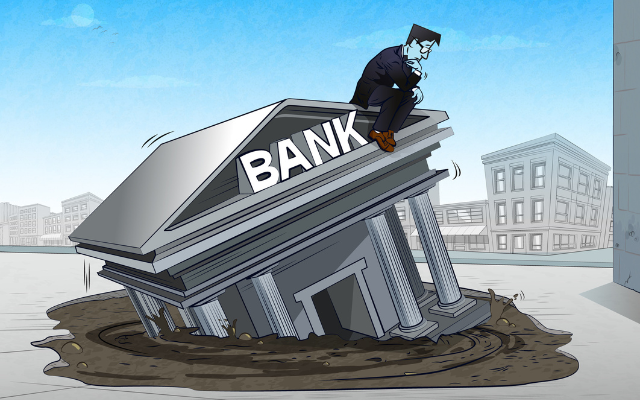
The verdict is in: In its post-mortem report, the U.S. Federal Reserve blamed its weak supervision and regulation for the demise of Silicon Valley Bank (SVB). However, it also singled out the bank’s board of directors for failing to manage risks – confirming what many pundits have observed since SVB’s fall.
When the bank imploded in March, it wreaked havoc on the global banking industry, prompting the fall of Signature Bank and turning up the heat on a scandalous Credit Suisse. On May 1, First Republic Bank collapsed, suggesting bank failures may not be behind us.
SVB was one of several mid-sized U.S. banks whose assets lost billions in value due to rising interest rates, causing depositors to panic. But when an old-fashioned bank run occurs in the modern digital age, you get a stampede: SVB customers withdrew an estimated US$40 billion in just a few hours. In contrast, when Washington Mutual failed in 2008, it took account holders nine days to withdraw US$16.9 billion.
How can boards stay ahead when everything today is a sprint? Alan Hibben, ICD.D, Chair of the Board, Home Capital Group, and Ray Williams, ICD.D, Vice-Chairman, Financial Markets, National Bank Financial, and Director, George Brown College Foundation shared their perspectives on what directors need to think about in the aftermath of Silicon Valley Bank.
Why cash is king
While Washington Mutual and SVB had many differences, both banks ran out of cash. Which is why Alan Hibben advises bank boards to focus more on liquidity.
“No one goes bust because of capital,” Hibben says. “Everyone goes bust because of liquidity.” A strong capital base can create a false sense of security if boards aren’t looking at other risks, such as liquidity and strategy.
Strategy matters
Hibben also urges organizations in and outside the banking industry to spend enough time examining the inherent risks in their strategy. For example, a bank that focuses on lending to the forestry industry and taking deposits from the forestry industry could find itself in hot water because everything goes wrong at the same time. “You don’t want your strategy in such a way that events can overtake on both the asset and liability side of your balance sheet,” he says.
Indeed, an inherent risk in Silicon Valley Bank’s business model was a concentrated client base. Gary Zimmerman, Managing Partner, Six Trees Capital LLC, notes that SVB had a high concentration risk because its clients were primarily tech and healthcare startups that knew each other, with deposits that significantly exceeded insurable limits.
“If you think about a bank run as being like a forest fire where you've got a lot of tall trees standing next to one another, that concentration risk made for a forest where the tinder was dry and what was needed was the spark,” says Zimmerman in a webinar hosted by the National Association of Corporate Directors (NACD).1
In addition to concentration risk, SVB had correlation risk in its business model. Due to high interest rates, some startups may have defaulted on loans, while new venture financings dwindled. “Unfortunately, it all came crashing down pretty precipitously,” he says.
The trouble with Twitter and technology
Twitter gets blamed for much these days, and SVB’s crash is no exception. While rumours swirling in private online chat rooms and message groups may have doomed the bank from the get-go, a new study finds social media added fuel to the fire.
According to the study authors, social media is “a novel channel of bank run risk.” Technology allows bad news to travel faster and farther, but it also enables people to act quickly. Hibben notes the instantaneous nature of transactions is another risk businesses must consider.
“You don't need to go into the bank and ask for your money back anymore,” says Hibben. “You hit the button, and your money has moved. So, you don’t have a lot of notice if you’re in the banking business…your focus on liquidity has to be that much more intense.”
The Fed would agree. Its report notes that social media and technology have “fundamentally changed the speed of bank runs.” This reality means directors have a shorter window to receive and react to critical information. It’s also a reminder that governance never sleeps; being a director is a 24/7 job.2
Getting risk management right
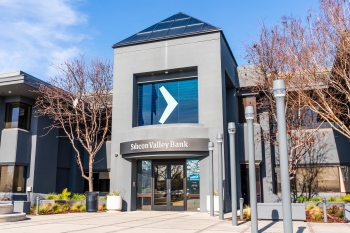
Many have speculated about the board’s expertise and the missing Chief Risk Officer at SVB. However, one thing is certain: boards must take risk management seriously.
“The board has a critical responsibility around assessing risk,” Ray Williams says. “What kind of risk governance have they put in place? For me, this would include greater involvement around evaluating and promoting a strong risk culture in your organization.”
From a board perspective, a good risk culture comes from designing for appropriate fit, including risk appetite and risk capacity.
“It’s about design for the outcomes that you hope for as you look to ensure you are undertaking the right steps that protect the best interests of your stakeholders,” Williams says. “On an ongoing basis, you have to be reviewing because [your business] is a bit of a living entity [and] the environment it is operating in is changing constantly.”
Required: A Chief Risk Officer
To better understand this changing environment, the board needs an empowered Chief Risk Officer (CRO) with the right skills and resources, and enough independence and authority. In SVB’s case, the CRO position was vacant for most of 2022 when investment losses piled up.3 Although board risk committee meetings more than doubled to 18 in this period, directors cannot fulfil the role of the CRO. As the ICD and TMX Group’s report observes, “precisely because directors are not concerned with the pressures of day-to-day operations, they can provide a more measured and far-sighted view of the risks that may confront the business.”4
Required: Strong risk experience
Bank boards also need a risk committee that can perform critical oversight functions like defining risk appetite, reviewing reports and ensuring compliance.
SVB may have struggled in this area because its risk committee was chair-less in 2022, and committee members may have lacked the right expertise. However, this dearth of experience is not unique to the fallen bank. Risk committee members at 15 U.S. banks have an average of only 2.4 years of experience in a risk-related function, compared to audit committee members who boast an average of 9.5 years of experience in a relevant role.5
Evaluating expertise
To avoid a similar fate as SVB, boards of banks and other organizations should consider assessing their overall risk expertise. Have board members guided companies through a crisis? 6 Have they previously served on a risk committee or in a risk-related function, such as CRO, chief credit officer or chief compliance officer? Gary Zimmerman also notes many private companies have small, insular boards that could benefit from diversification, such as adding independent directors.
ESG gets caught in the fray
The Fed chalks SVB’s implosion up to a “textbook case of mismanagement,” but some commentators have used its failure to knock the environmental, social and governance (ESG) movement. Republican presidential hopeful Ron DeSantis claimed the bank was “so concerned with DEI and politics and all kinds of stuff… it really diverted from their core mission,” while a Wall Street Journal columnist speculated the bank’s diverse board was part of the problem.
Amid these unsubstantiated claims about the role of ESG in SVB’s downfall, it’s worth remembering that research consistently shows diverse leadership teams improve company performance.
Ray Williams puts it into context using the fundamentals of investment.
“Every single person who's ever looked at investments has probably heard the notion that you should diversify your assets,” he says. “So, when you look at diversity, what’s your greatest asset within an organization? It's your employees. Why wouldn’t you want to undertake diversification of your greatest asset?”
Life after SVB
Amid increasing polarization, the ESG debate is unlikely to cool down. At the same time, boards must navigate the increased speed of market and technology risks, while shoring up their own risk expertise. Directors have their work cut out for them.
For more Canadian perspectives on the fall of Silicon Valley Bank, read “The Dilemma” in our upcoming May/June issue of Director Journal.
Sources
1 National Association of Directors. Webinar: Implications of the SVB Collapse for All Board Members. (2023)
2 Forbes. “Big Picture” Governance Lessons From The SVB Implosion. (2023)
3 Harvard Business Review. How Banks Can Finally Get Risk Management Right. (2023)
4 TMX Group and Institute of Corporate Directors. Charting the Future of Canadian Governance: A Principled Approach to Navigating Rising Expectations for Boards of Directors. (2022)
5 Directors and Boards. Silicon Valley Bank Collapse: Lessons for Boards. (2023)
6 Chief Executive. SVB’s Failure Reminds Boards To Prioritize Risk Management. (2023)
Originally published in the Director Lens Communique by the Institute of Corporate Directors.