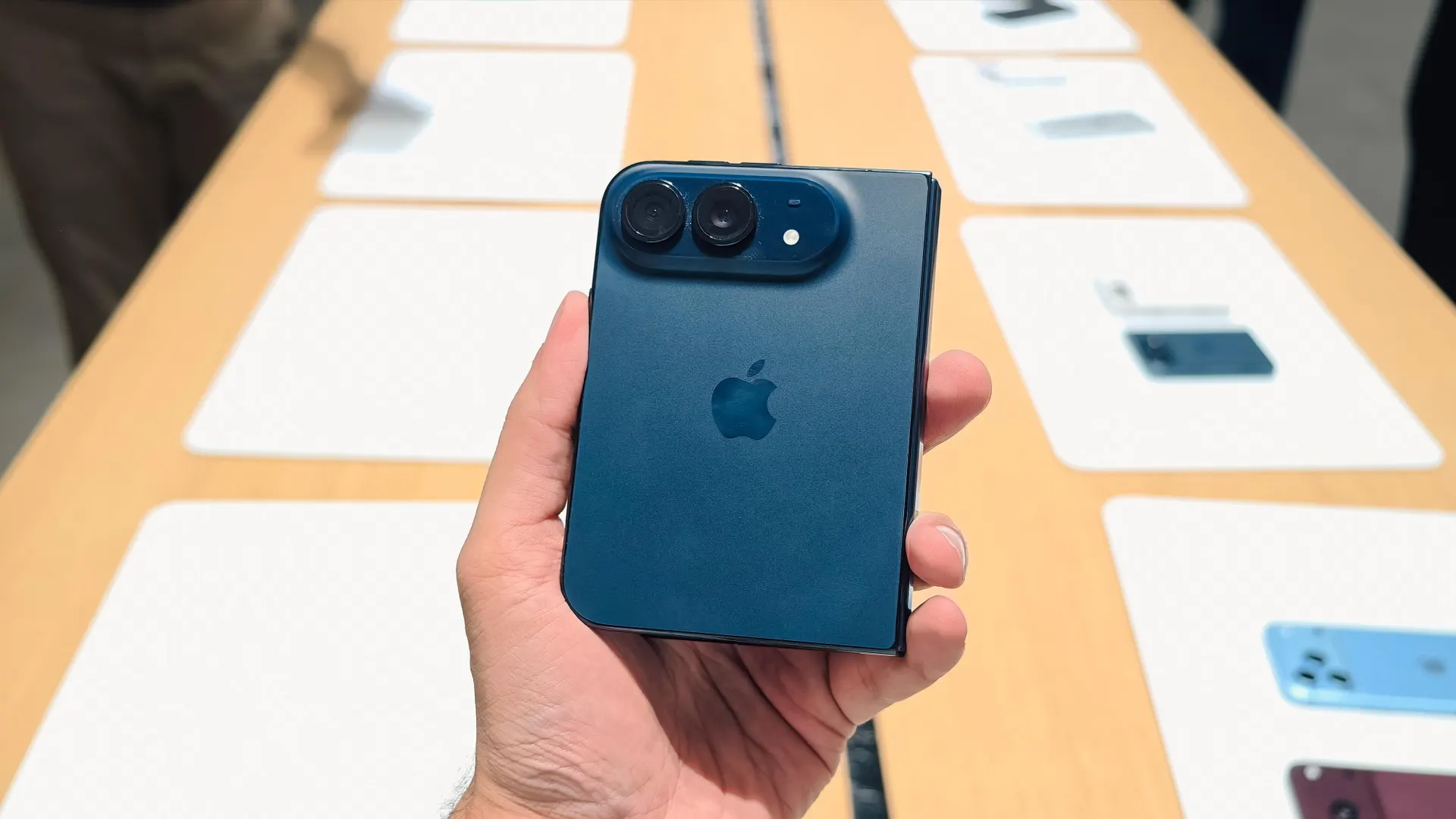
Apple unveiled its first-ever folding phone, called the iPhone Duo, at its fall event earlier this month. It debuted alongside the new-generation Apple Watch, AirPods and iPhone 18 Pro series. While these products are already available for purchase, the palm-sized foldable is set for an Oct. 23 release, with pre-orders going live on Oct. 16. Ahead of its release, I got my hands on the iPhone Duo at Apple India’s briefing in Mumbai. I went in with skepticism, but returned with a few pleasing surprises.
Apple’s software tricks, smart hardware decisions and familiar polish make it a promising rival to well-established players. I’ve had just 30 minutes with the iPhone Duo and it isn’t the best at one particular spec, but it is how everything comes together that makes it exciting.
iPhone Duo Design and Display
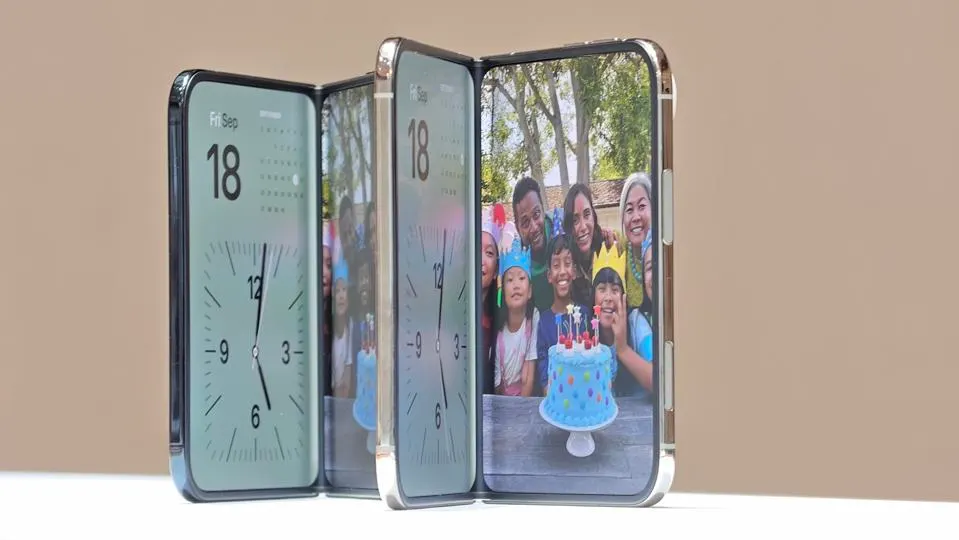
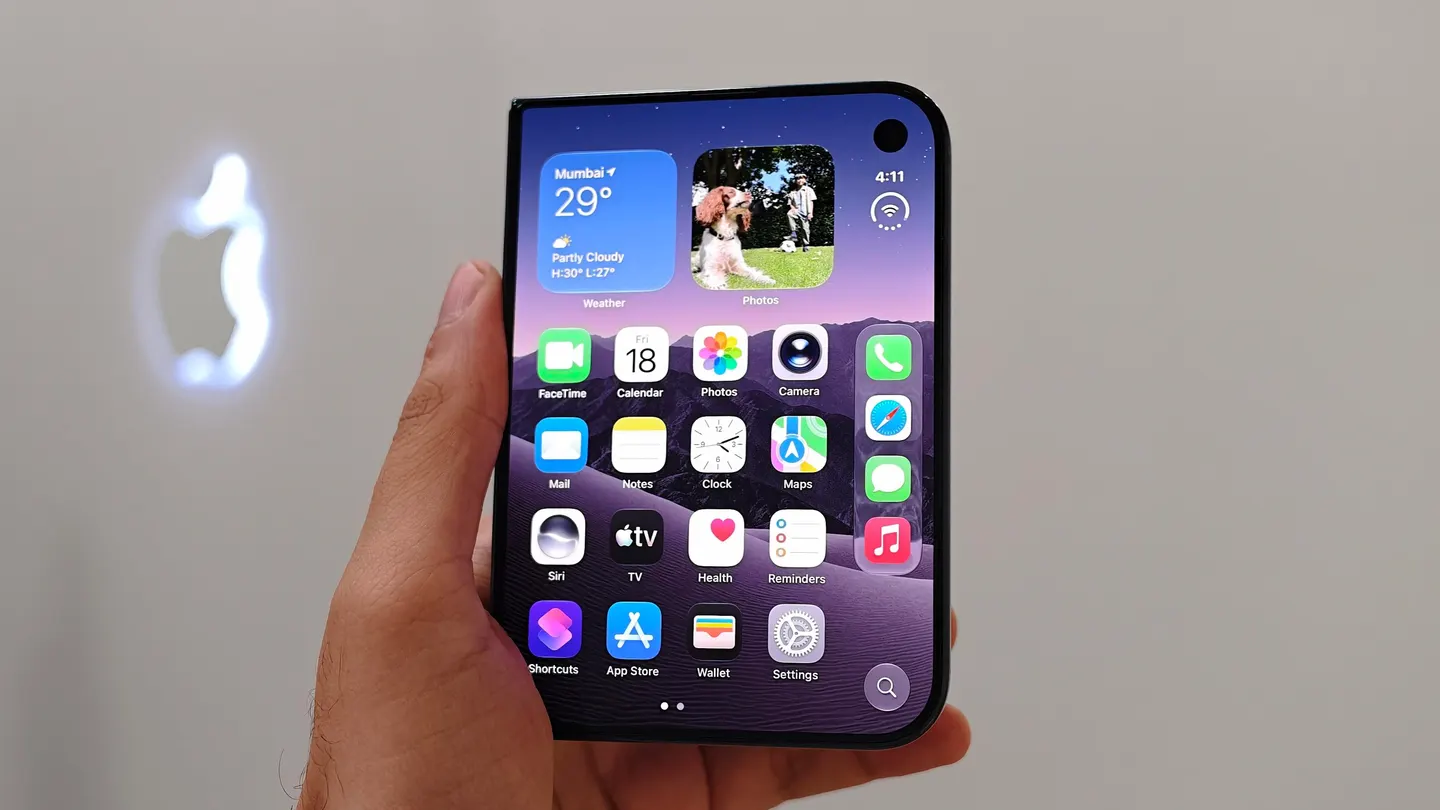
The first foldable iPhone is similar to Samsung’s new wide-screen Galaxy Z Fold 8. It is a palm-sized device that combines the pocketability of a flip phone and the usability of a book-style foldable. It has a 7.6-inch display on the inside and a 5.4-inch outer screen.
The wide-screen format means you can watch movies with less letterboxing (black borders on the top and bottom) in landscape and rotate it to portrait for an intuitive reading and browsing experience – sort of like an iPad Mini. But unlike the Apple tablet, you can fold the iPhone Duo to carry it in your pant pockets.
However, it isn’t a lightweight device. At 254 grams, it is the heaviest iPhone Apple has ever shipped. It also weighs 53 grams more than Samsung’s Galaxy Z Fold 8.
When unfolded, the iPhone Duo is the thinnest iPhone ever, measuring 5.2mm (vs. 4.5mm Fold 8), but it is also 11.3mm thick when folded (vs. Fold 8’s 9.7mm thickness). This weight and thickness combination is felt when using the phone single-handed in its folded state. However, it isn’t as bad as I expected. Apple has done a good job with the weight distribution.
At no point during my hands-on did the iPhone Duo feel flimsy. It isn’t the lightest phone, but that weight also adds a premium in-hand feel to it.
The iPhone Duo has rounded edges. When folded, it might fit your hands better than Fold 8’s sharp edges, but I like Samsung’s uniform look more. Its thin and light design, combined with Android’s gestures, makes the cover screen comparatively easier to use with a single hand. I wish Apple could adopt Android’s back gestures support on both sides instead of asking me to swipe from the left edge to go to the previous screen on a wide-screen device.
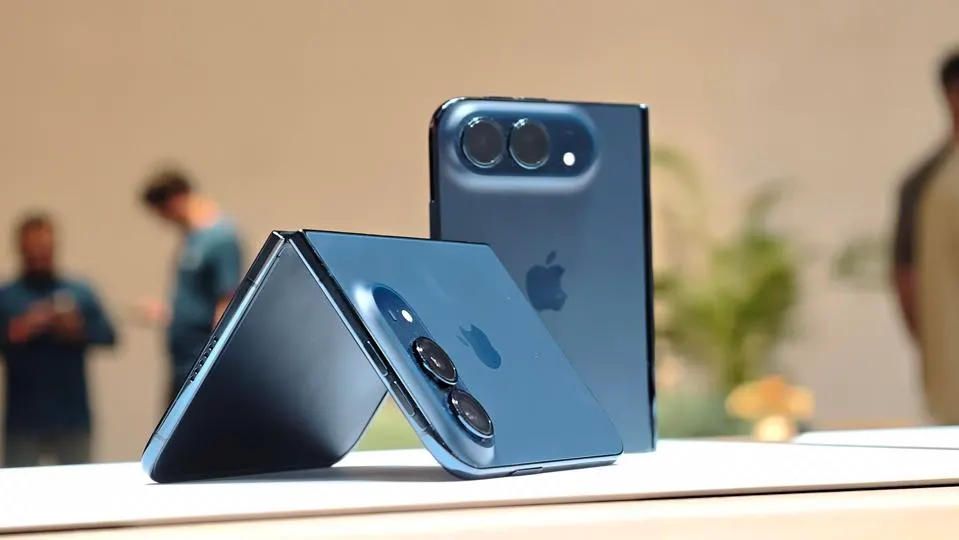
As for durability, the iPhone Duo’s cover screen lies under the protection of Apple’s Ceramic Shield 2, while Ceramic Shield protects the back. After a year of caseless use, I recently wrote about how Ceramic Shield 2 has been a huge upgrade on the iPhone 17 Pro Max, and I’m glad it is present on Apple’s first-generation foldable.
The Duo also joins Google’s Pixel 11 Pro Fold and Honor’s Magic V6 as one of the few folding phones rated for true dust resistance (with an IP68 rating). This matters more on foldables than regular slab phones because they have moving parts in the hinge, which could allow dust particles to penetrate and affect the internals. An IP68 rating gives more confidence in durability.
One of the biggest changes on an iPhone in recent years is the comeback of Touch ID on the iPhone Duo. It is built into the power button and there’s no Face ID for biometric authentication.
The Apple Polish
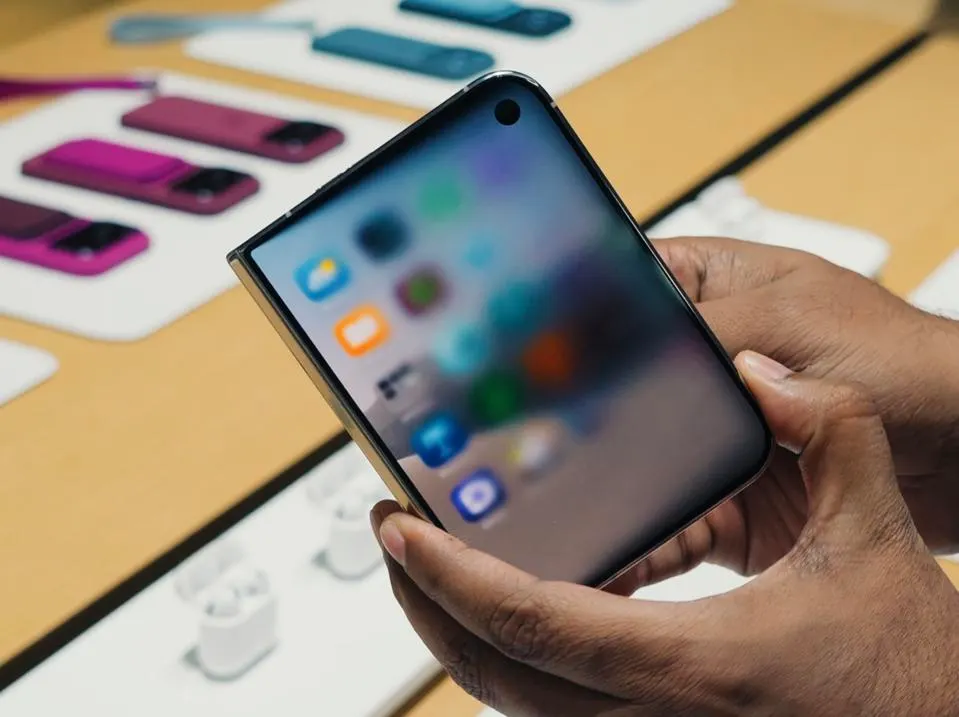
It is the unfolding transitions, inner display and well-thought-out software tricks that could put the iPhone Duo ahead of its competition.
Apple has added a matte, nano-texture finish on the inner display. It reduces glare and also contributes to curbing the phone’s crease. My hands-on time wasn’t enough to test the brightness or screen quality, but there’s a lot to like. Its matte coating is easy on the eyes and it results in a satisfying feel for both video- and text-based media consumption.
I also like the addition of an under-display camera. It is too soon to comment on the quality, but if you like browsing and reading, the iPhone Duo will give you a distraction-free, e-reader-like clean slate. I wish Samsung hadn’t dropped its UDC tech after the Galaxy Z Fold 6 on its foldables.
Then there are the Apple software smarts. I like how the content transitions from the cover screen to the main screen almost immediately. On Android folding phones, the inner screen is treated as a separate display, so there’s a black screen for a split second before it opens the app. I never noticed it before, and it isn’t a huge difference, but Apple’s thoughtful transitions will definitely contribute to a pleasing user experience.
While Samsung dropped its Flex Mode on the Fold 8, Apple’s iPhone Duo can be propped up to reposition apps to the top half of the display. So if you’re watching a movie and fold it in half, the Duo will shift the video to the top and give you controls on the bottom half for a few seconds. It will then mimic the frames of the video on the bottom half to give you a mirror effect on the matte screen. Again, you won’t see this on the spec sheet, but it will be noticeable in day-to-day use. It looks fabulous.
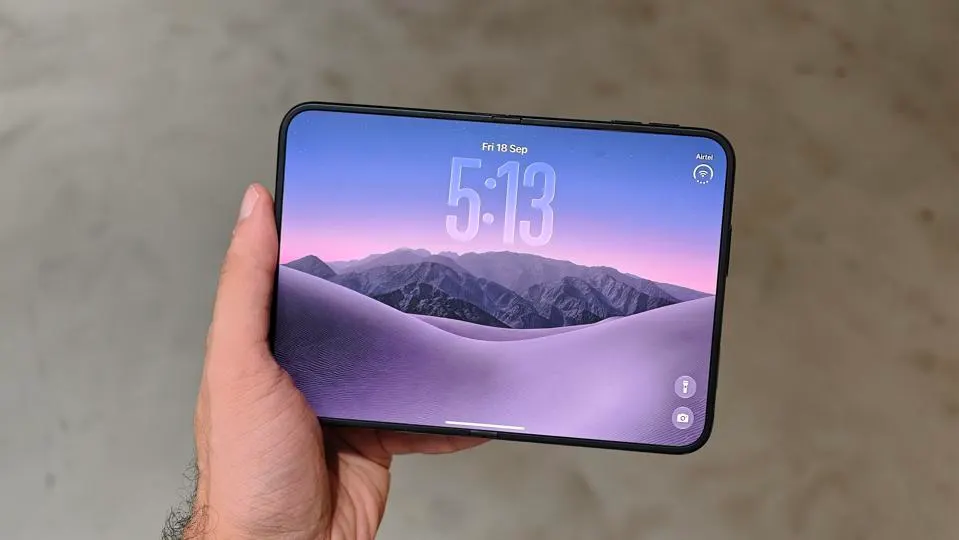
For the first time, Apple is allowing you to run two apps side-by-side on an iPhone. However, the multitasking isn’t as extensive as the Fold 8 or other Android foldables. Samsung and Oppo let you run more than four apps simultaneously with split-screen and popup windows. It might sound like an overkill, but I tend to use popup windows when I have to raise invoices or research and take notes for a story.
Like the iPhone 18 Pro and Pro Max, the foldable iPhone Duo is powered by Apple’s A20 Pro chip. It is rated to last up to 31 hours in video playback on the inner display, and 44 hours when using the outer screen. According to the company, if you use both screens equally, the iPhone Duo can go up to 24 hours without needing a charge.
The iPhone Duo supports fast charging. It is rated to charge up to 50% in around 20 minutes with a 60-watt adapter or higher. The foldable iPhone supports MagSafe technology for magnetic wireless accessories and can be charged up to 50% in 30 minutes, as per Apple.
The iPhone Duo Cameras Aren’t As Versatile As The iPhone 18 Pro
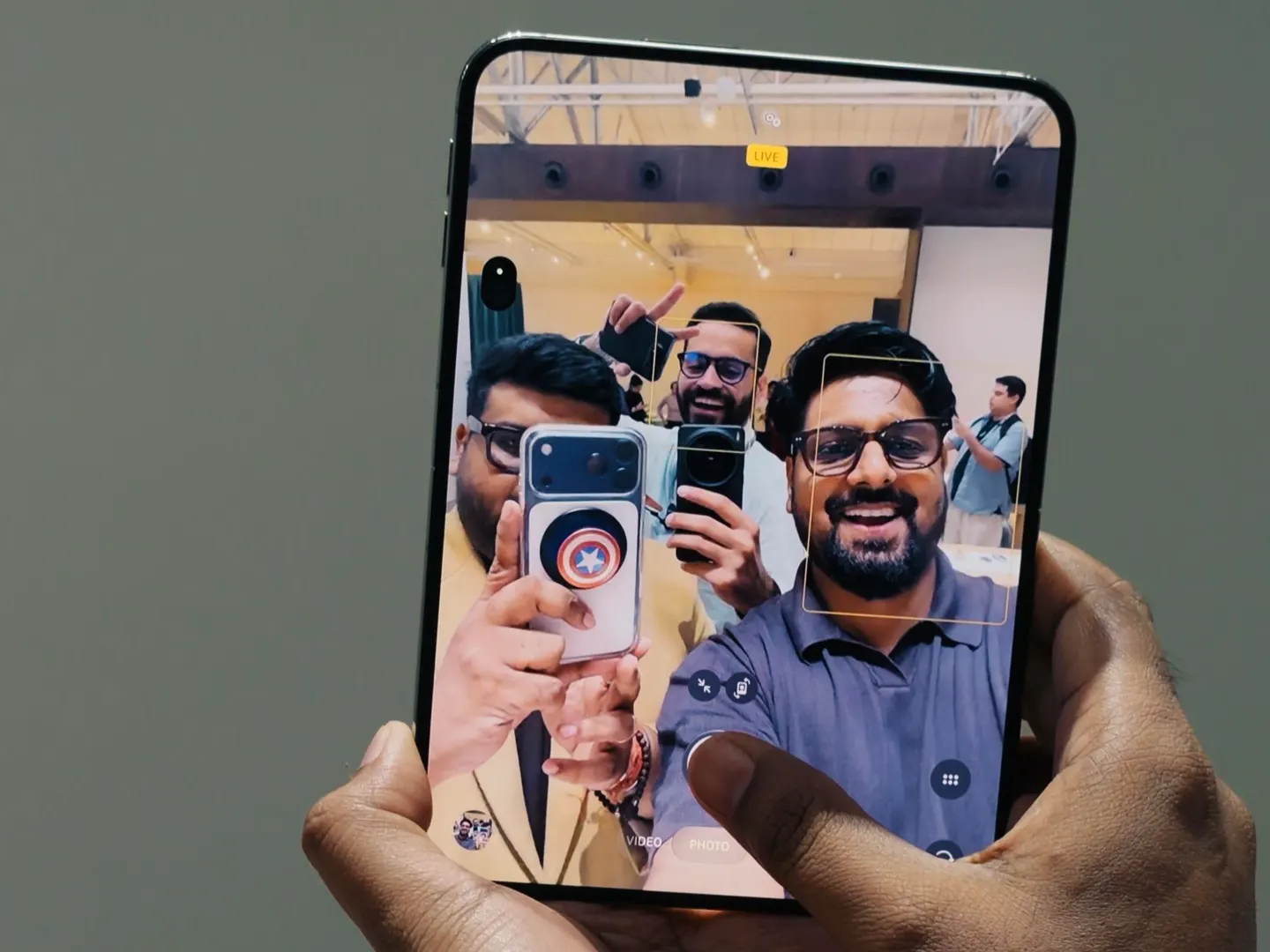
Like the Galaxy Z Fold 8, the iPhone Duo has a two-camera setup on the back. It sports a 48MP main sensor and a 48MP ultrawide-angle camera. There’s no telephoto camera, so you’ll need to rely on the main sensor’s digital crop for your zooming needs. It also lacks support for ProRAW and ProRes videos, which could be a letdown for creatives.
Apple’s foldable iPhone can record 4K videos at 120fps and 4K timelapse. You also get support for Dual Capture in FaceTime to use the front and rear cameras simultaneously. There’s a Duo Preview mode, which lets your subject see how the shot will look as you take photos with the rear cameras. Like the Google and Motorola foldables, the iPhone Duo has a Kid Cue feature that displays cartoons (Peanuts animations in this case) on the cover screen to draw kids’ attention to the cameras.
It is too early to say if the iPhone Duo is worth its $1,999 price tag, but it is definitely the most exciting iPhone in the last decade. Apple is entering the market at a time when almost every major phone maker (Samsung, Huawei, Oppo, Honor, Google and Motorola, among others) has already made a few generations of foldables. However, this is the phone that’s expected to expand the niche category and take it forward.
The iPhone Duo has a lot going for it. Apple’s clever software tricks, a full-screen media consumption experience without any hindrance and its premium build quality have me looking forward to the release date like no other iPhone in recent years.