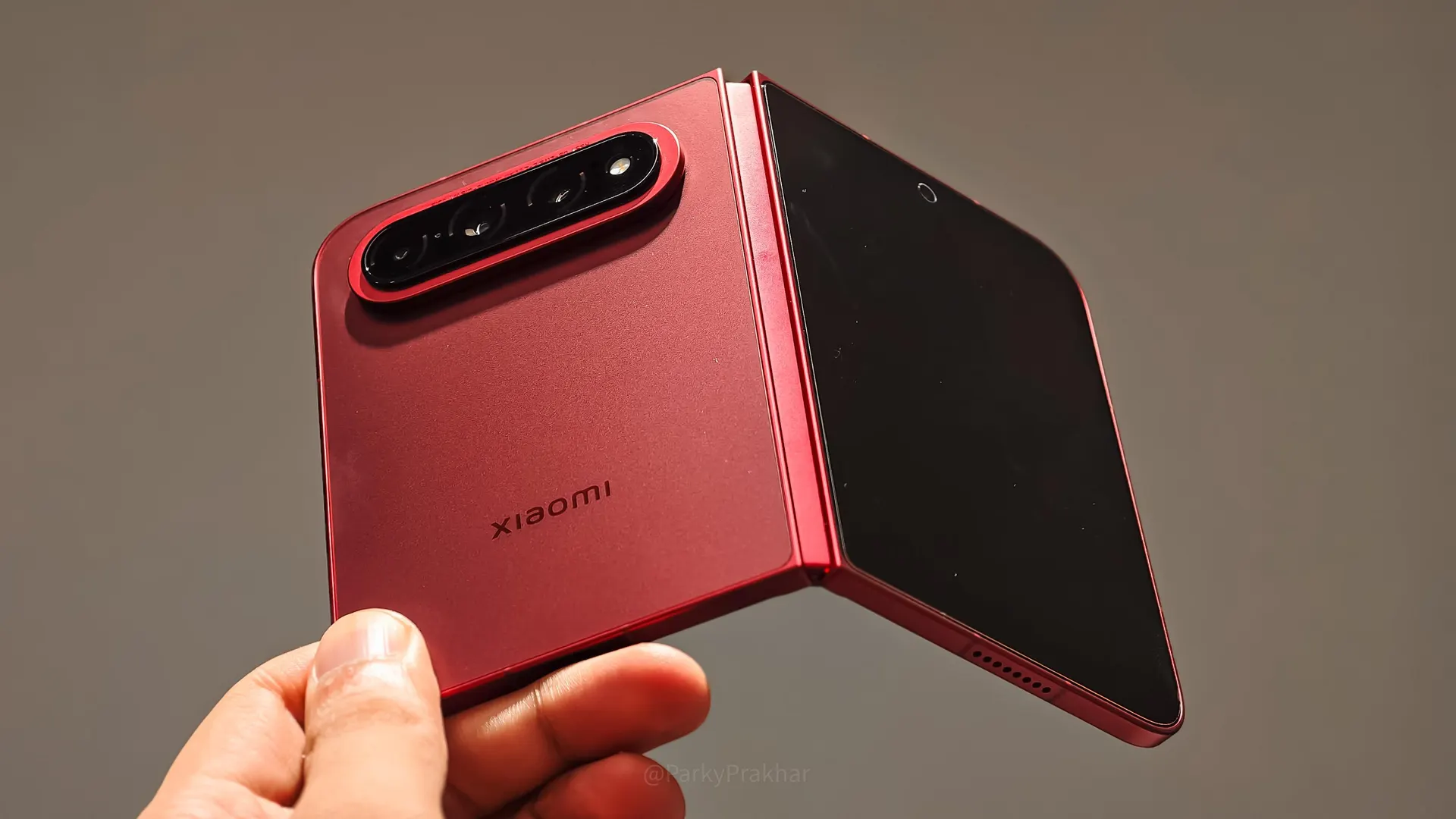
After showing off the phone in a glass box at IFA 2026, Xiaomi has taken the wraps off its passport-sized foldable in its home market. The Xiaomi 18 Fold debuts ahead of Apple’s long-rumored foldable iPhone Ultra and brings stiff competition to Samsung’s Galaxy Z Fold 8.
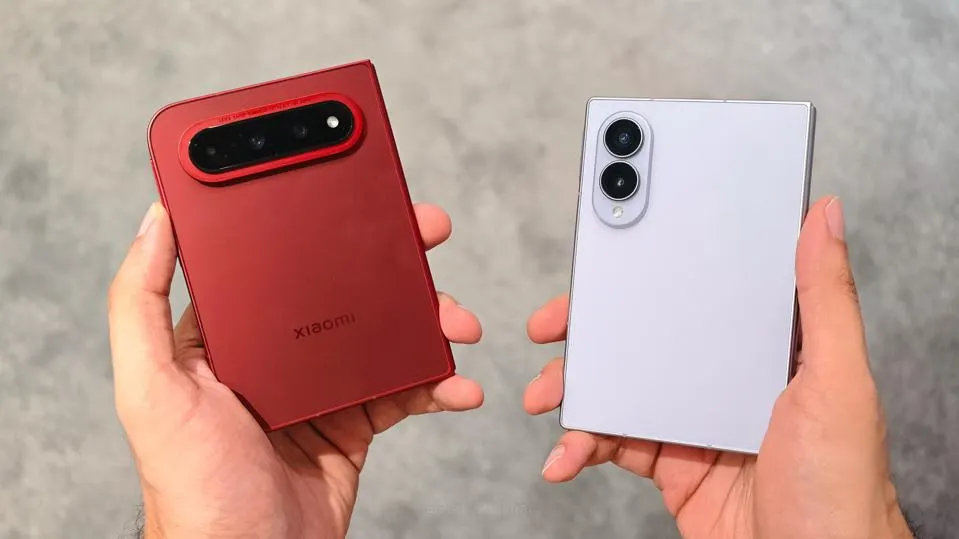
I was one of the few media members packed in a private room at Messe Berlin last week who got the opportunity to go hands-on with the new Xiaomi 18 Fold. I put it side by side with my Galaxy Z Fold 8.
While it is slightly thicker and heavier than Samsung’s wide-screen foldable, it has everything you’d want from a compact folding phone. Xiaomi has packed it to the brim with flagship features, including a big 6,000mAh battery, a 200MP main camera and a telephoto sensor. After using it for 30 minutes, I am already impressed.
This is Xiaomi’s best folding phone yet.
Folding phones generally have two different aspect ratios on their two displays. The book-style foldables have a regular phone-like outer screen and a squarish folding screen, whereas the flip phones have a very limiting small front display and open into a tall phone.
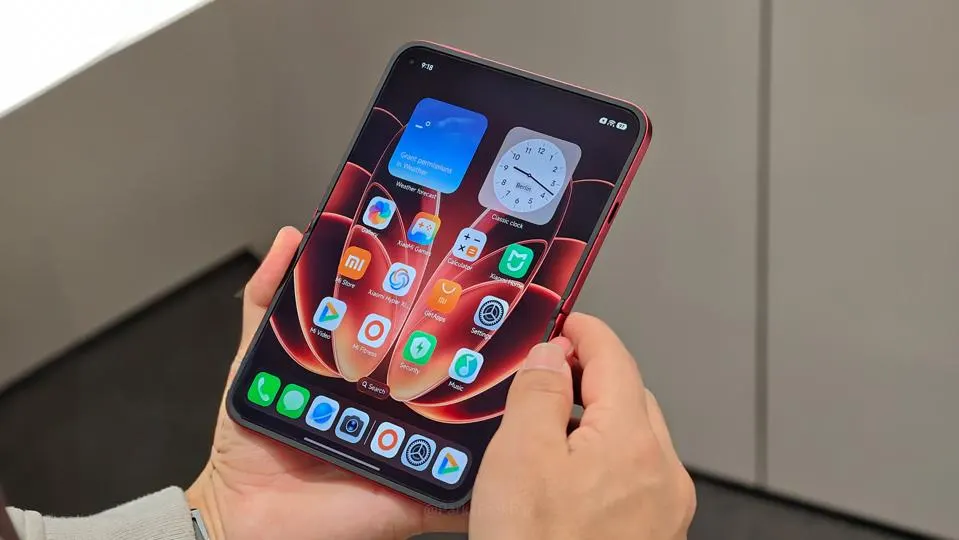
In comparison, passport-sized foldables like the new-gen. Galaxy Z Fold 8 combine the best of both worlds. You get flip pocketability with fold usability in a phone that unfolds into a wider format, so it is great for watching videos. While Samsung delivered a 4:3 inner screen and 16:10 outer display, Xiaomi’s new approach brings the same aspect ratio to both screens.
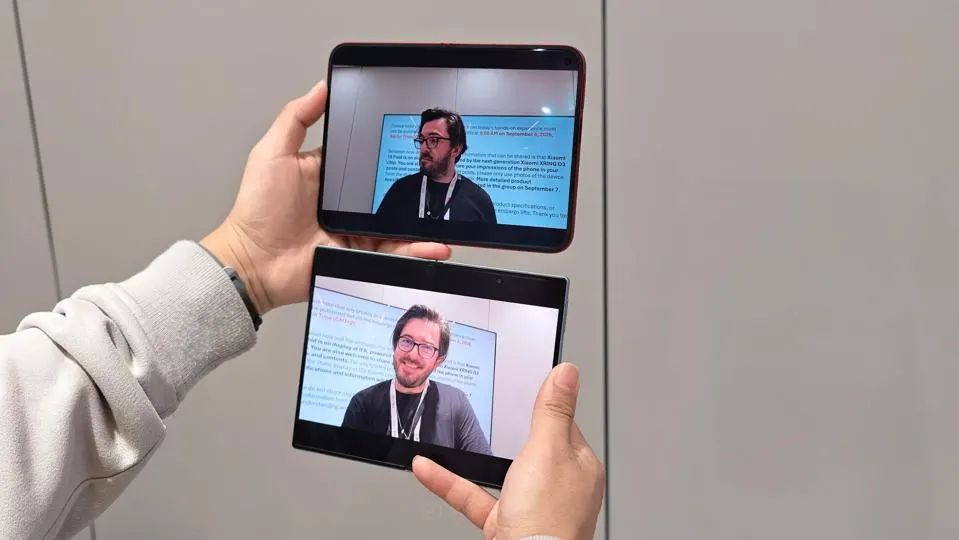
The Xiaomi 18 Fold has an A4 paper-like 1.4:1 aspect ratio on both screens. As The Verge points out, it is about the same proportions as international paper standards or a 1.43:1 IMAX screen.
This also means it is smaller than Samsung’s Galaxy Z Fold 8 and opens out into a wider form, resulting in less letterboxing (black borders on the top and bottom) when watching horizontal videos. It has a similar anti-glare coating and minimal crease, which allows for an immersive media consumption experience.
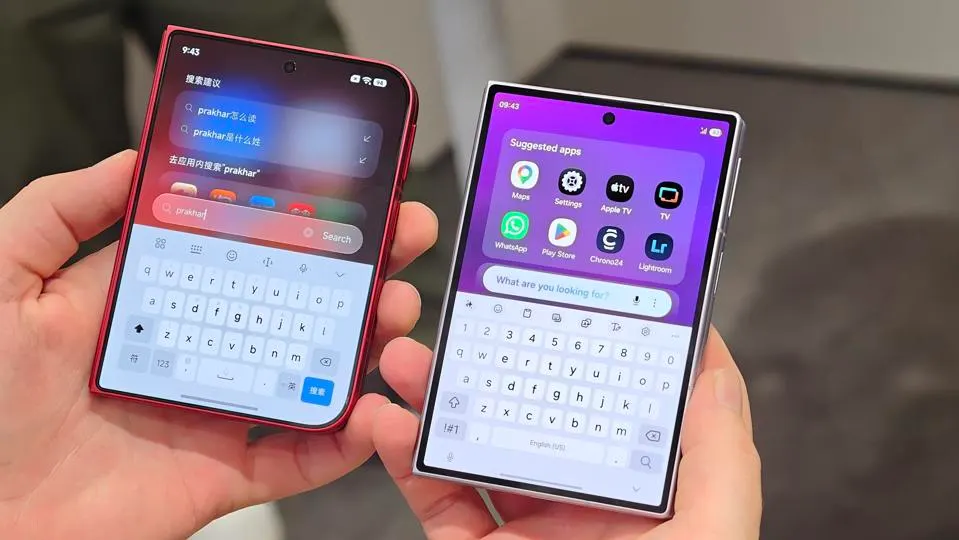
You get a 5.38-inch screen on the outside, alongside a 7.58-inch inner display. It is like holding a small tablet when unfolded. Both displays looked bright (at least in the room’s dim artificial light) and were comfortable to type on.
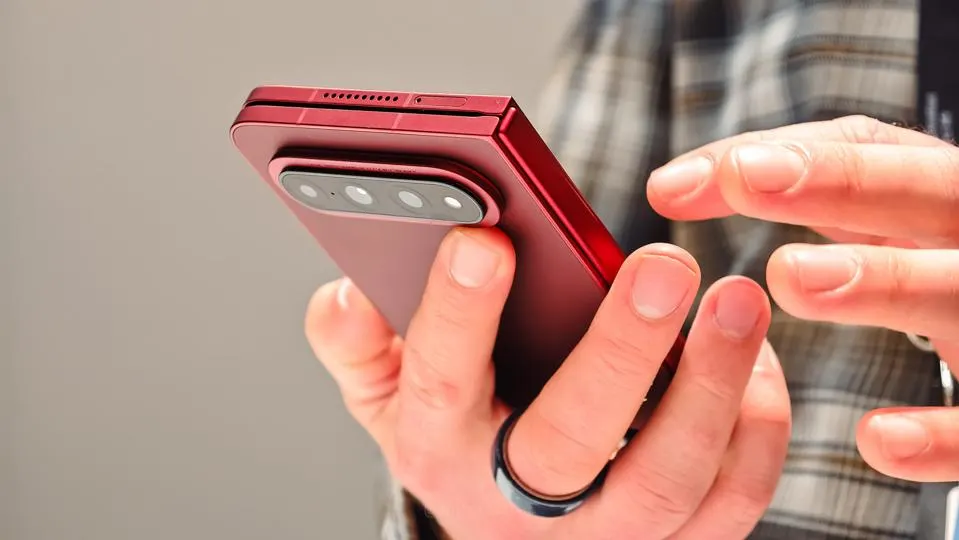
I held both Samsung and Xiaomi foldables side by side and noticed a slight weight difference. The Galaxy Z Fold 8 remains a thinner and lighter fold. To compare, the Xiaomi 18 Fold weighs 219g (vs. 201g Fold 8) and measures 5.02mm thick when unfolded (vs. 4.5mm) and 10.68mm when folded (vs. 9.7mm). However, Xiaomi edges out Samsung in two areas.
First, the punch-hole camera on the Xiaomi 18 Fold’s inner screen is located in the top-right corner as opposed to Fold 8’s more central positioning. This allows for a better reading experience. (As I wrote in my review for ZDNET, Samsung’s camera cutout is frustrating to look at when you’re reading in full-screen mode.)
Second, the slightly thicker and heavier design allowed Xiaomi to add a telephoto camera for optical zoom. While the Galaxy Z Fold 8 has two 50MP sensors (main and ultrawide), the Xiaomi 18 Fold offers a versatile flagship camera setup, at least on paper. It is led by a 200MP main camera with a 1/1.56-inch sensor, which is paired with a 50MP periscope camera with 3.3x optical zoom and a 50MP ultrawide camera.
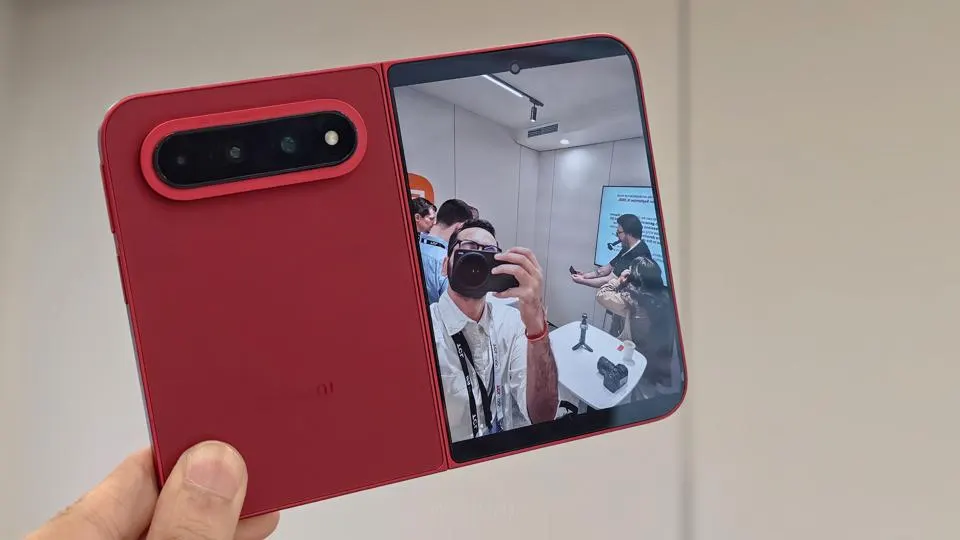
I couldn’t get any camera samples in my brief hands-on, so it is too early to say how it compares to the Galaxy Z Fold 8 cameras. In my experience, changing a few settings can lead to a vastly improved camera experience on Samsung phones, but the Korean phone maker undoubtedly missed a trick by not giving the same 200MP main camera to Galaxy Z Fold 8 as its Fold 8 Ultra sibling. It would have allowed for more room with digital crop in the absence of a telephoto sensor.
Since the foldable iPhone Ultra is rumored to skip the zoom lens too, the Xiaomi 18 Fold could be the only book-style foldable with a camera system that’s as versatile as regular flagship phones.
This is also the first Xiaomi phone to be powered by the in-house XRing 03 processor. It is claimed to be as powerful as any other flagship chip right now. It is an interesting step, especially when you consider Xiaomi’s recent push for interconnectivity between its phones, home products, and cars.
Both Apple and Google have done similar things to get more control over their hardware and software, and I can’t wait to see if this results in a more sophisticated phone experience on the Xiaomi 18 Fold.
The chip is paired with up to 16GB LPDDR6 RAM and 1TB of storage. This is ChangXin Memory Technologies’ next-generation LPDDR6 RAM, which is based on a 24-bit interface width (up from 16-bit on LPDDR5X) and can deliver data rates of up to 10,667Mbps.
Theoretically, the in-house chip and faster memory should make the phone feel faster, but my limited hands-on time wasn’t enough to form an opinion here. It felt on par with my Galaxy Z Fold 8.
Other specs include a 6,000mAh battery with 67W wired charging and 50W wireless charging, Wi-Fi 7 and UWB ultra-wideband connectivity, and support for Dolby Atmos on its stereo speakers.
The Xiaomi 18 Fold is priced at CNY 10,999 (~$1,640) for the base 12GB RAM and 256GB storage variant. It goes up to CNY 15,999 (~$2,385) for the ceramic special edition model with 16GB of RAM and 1TB of storage. The new folding phone is now available in China, but there is no word on global availability yet.