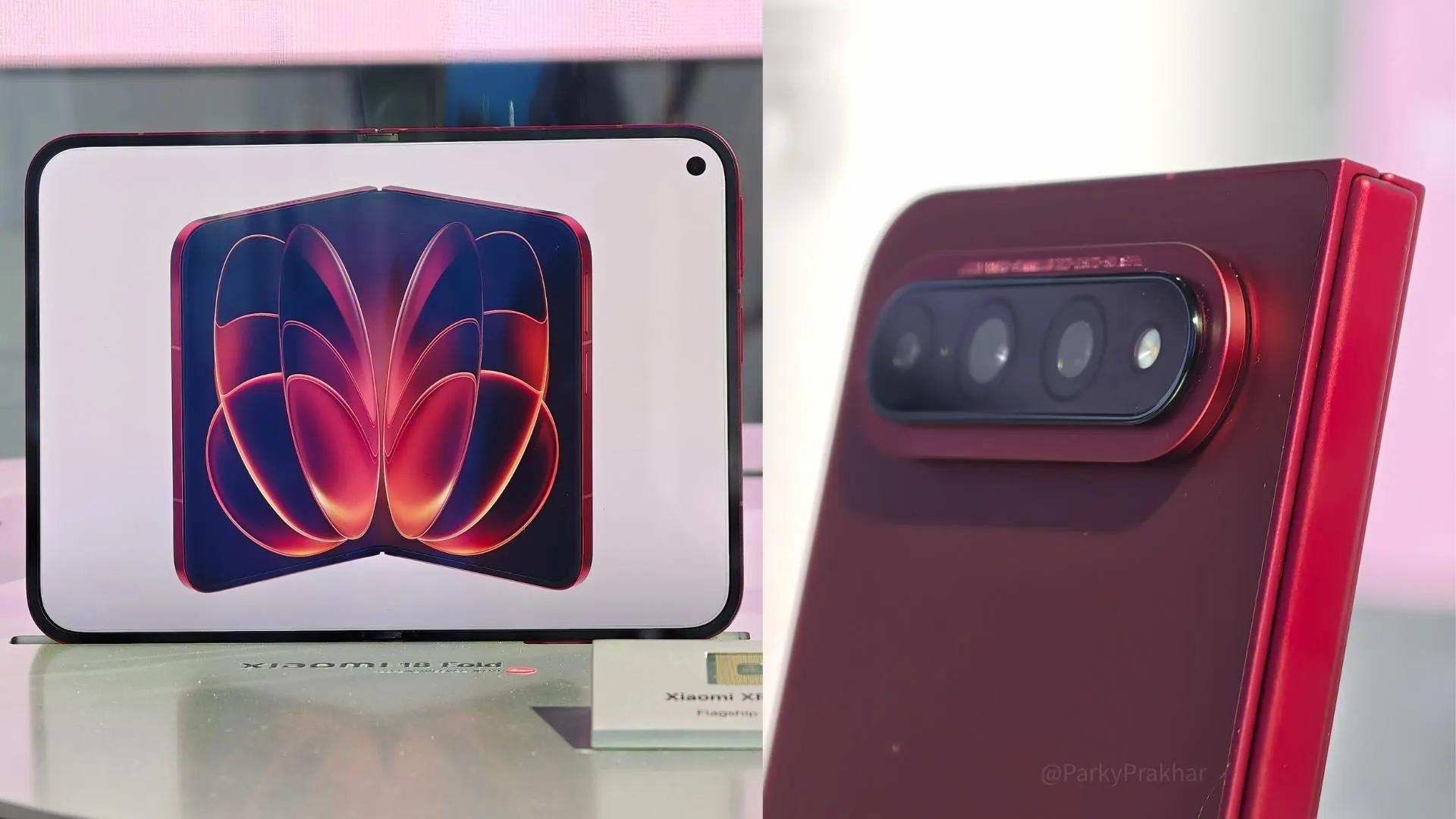
Xiaomi is the latest entrant in the resurgence of passport-style foldables. The Xiaomi 18 Fold is taking on Samsung (and Apple, if the iPhone Ultra rumors are true) with a short and wide design, which looks more compact than the new Galaxy Z Fold 8. The foldable phone is all set to launch in its home market next week, but Xiaomi gave us a first look at IFA Berlin 2026.
The Xiaomi 18 Fold Looks Shorter Than Samsung’s Galaxy Z Fold 8
At its huge IFA booth spanning over 380 products across smartphones, smart home devices, cars, AI, and a whole lot more, Xiaomi put the upcoming foldable behind a glass box to reveal its first look. Unlike Samsung’s boxy design, the Xiaomi 18 Fold has a D-shape, thanks to its curved corners on the top- and bottom-right sides. We weren’t allowed to touch the device, but from my first impressions, it looks shorter than the Galaxy Z Fold 8. I’m curious to see if it leads to less letterboxing (thick black borders on the top and bottom in videos) on the inner screen.
I can’t say if the Xiaomi 18 Fold is better or worse than Samsung’s wide-fold, but it does have two design distinctions that could put it ahead of its rival.
First, the punch-hole camera is located on the top-right corner of the folding screen as opposed to Fold 8’s more central positioning. As I wrote in my review for ZDNET, that camera cutout is frustrating to look at when you’re reading in full-screen mode. Xiaomi’s camera positioning could result in a better reading experience.
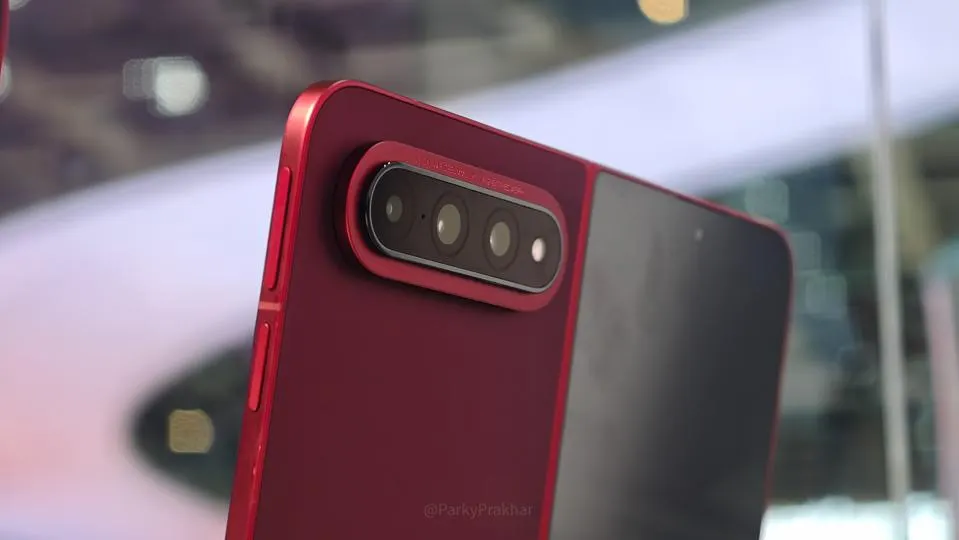
Second, the Xiaomi 18 Fold has a triple rear camera setup, which likely includes a telephoto camera for dedicated optical zoom. The text on the camera bar also suggests a focal range of 17mm - 80mm. It could mean that the ultrawide and main cameras are accompanied by a tele sensor with support for ~3x optical zoom. This is a feature I’ve dearly missed on my Galaxy Z Fold 8, which relies on digital zoom due to the lack of a telephoto camera.
Interestingly, Xiaomi isn’t using a Qualcomm or MediaTek chip on its upcoming foldable. The upcoming foldable is powered by the company’s in-house XRing O3 chip. This is the first time that Xiaomi is adding its own chip to a flagship phone. It is also confirmed to be paired with ChangXin Memory Technologies’ next-generation LPDDR6 RAM, which is claimed to deliver up to 12,800Mbps speeds.
We are yet to get a detailed spec sheet, but I expect Xiaomi to give us new teasers leading up to the China launch on September 7.
As for IFA Berlin 2026, the upcoming foldable is only a small part of Xiaomi’s 3,300 square meters of exhibition space. “This year’s IFA marks a significant milestone in Xiaomi’s global journey,” said Xu Fei, Xiaomi’s chief marketing officer, in a press release. “This goes beyond bringing more products to Europe. It is about bringing Xiaomi’s technology and ecosystem capabilities to more users across the region.”