Locals GPT will is a series about people who have or have had a connection to Larchmont, Mamaroneck, or the greater area. We ask OpenAI’s ChatGPT to prepare a biography and explain the individual’s local connection. We welcome your constructive feedback on the use of artificial intelligence and your assistance in understanding other pertinent insights related to the person’s local life. You can add comments at the bottom of each article.
Historic articles from the New York Times follow.
How Film Stars Helped Turn Mamaroneck Into a Center of Early Movie Magic
Long before Hollywood became the unquestioned capital of American filmmaking, Westchester—and Mamaroneck in particular—played a vital role in shaping the country’s early movie industry. For a brief but shining period in the 1910s and 1920s, the village attracted major film stars, visionary directors, and bustling studio activity that put our corner of the Sound on the cinematic map.
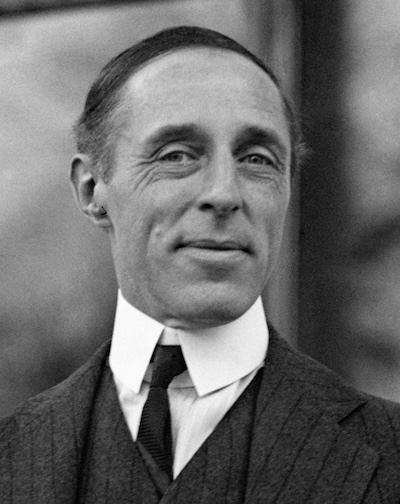
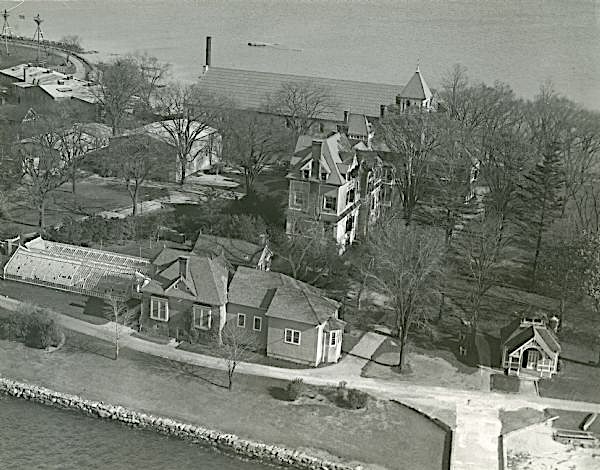
One of the most influential presences was D.W. Griffith, the pioneering (and controversial) director whose innovations helped define early film language. In 1919, Griffith bought the 28-acre Flagler estate on Orienta Point (also known as “Satan’s Toe”) and converted it into a full-scale motion picture studio. Wikimapia+2The Museum of Modern Art+2 His studio brought a steady stream of actors, technicians, and onlookers to town, with locals often catching glimpses of well-known silent-film performers passing through the village. Wikimapia+1
Just steps away from the studio activity, Griffith reportedly constructed a miniature horse racing track on Flagler Drive, complete with scaled-down horses and riders. While built with cinematic ambitions in mind, the track also became a local curiosity—a playful intersection of movie-making and community. (Some accounts suggest Griffith used parts of the estate for stunts and smaller set pieces, though detailed documentation is limited.)
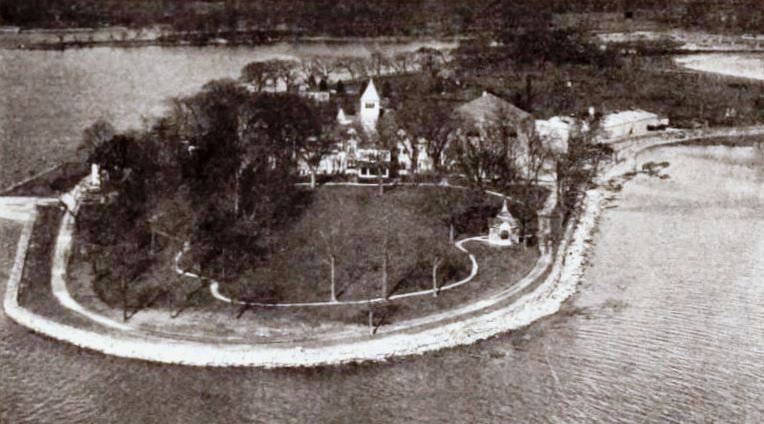
above: In his day, the spit of land upon which D. W. Griffith built his studio here was called Satan’s Toe. The coastal setting is still fitting for a great movie pioneer, but the studio has been long gone. Private houses, clustered along a road guarded by a gatekeeper, now occupy the site.
Under Griffith’s direction, several major films were shot in and around Mamaroneck:
Way Down East (1920) — a melodrama starring Lillian Gish, featuring an iconic blizzard rescue scene shot in and around Mamaroneck’s waterfront. Westchester Magazine
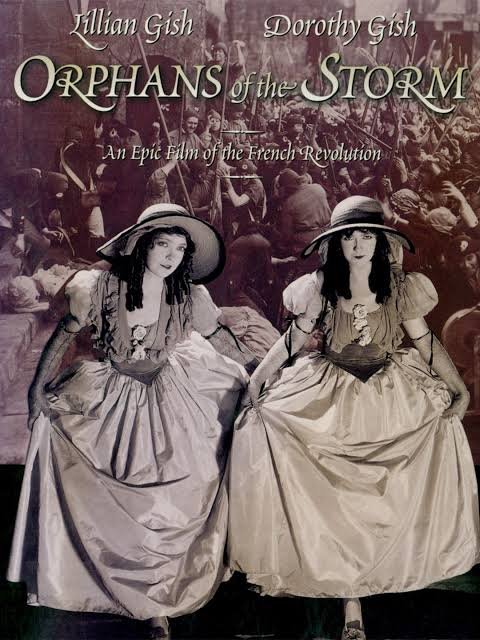
Orphans of the Storm (1921) — a sweeping costume drama starring sisters Lillian and Dorothy Gish. For this film, Griffith built elaborate sets on his Mamaroneck estate to recreate 18th-century Paris, and even used local fire crews to simulate rainstorms. Mamaroneck Historical Society
Scarlet Days (1919) — also filmed during his Mamaroneck years. The Museum of Modern Art
Beyond Griffith, the broader region had already been energized by earlier film companies—such as the Thanhouser Film Company in nearby New Rochelle—whose stars, including Florence La Badie, Marguerite Snow, and James Cruze, frequently used local Mamaroneck locations (shoreline, homes, streets) for their productions. Later, film royalty Mary Pickford and Douglas Fairbanks added gravity to Westchester’s reputation when they worked in and around Mamaroneck, thanks to the Pickford–Fairbanks studio presence.
By the late 1920s, the gravitational pull of Hollywood eventually drew most filmmaking westward. Yet the imprint of those early days remains. Archival photographs, studio foundations, and neighborhood stories preserve the memory of a remarkable chapter when Mamaroneck was not just a suburb, but a center of movie innovation—a place where film legends worked, experimented, and even staged miniature horse races.
For residents who stroll today along Flagler Drive or past what once was Griffith’s studio, it’s a reminder that our communities once played a starring role in the earliest days of American cinema.
1924 New York Times article about “Satan’s Toe,” the Flagler Estate, becoming a center for motion pictures in Mamaroneck.
A New York Times article from 1996 about Mamaroneck and D.W. Griffith
Please note: If your comment doesn’t show up right away, sit tight; we have a spam filter that requires us to approve comments before they are published.
Though his masterwork BIRTH OF A NATION (1915) contains some of the most shocking anti-black racism ever put on film, the movie’s development (perfection?) of modern film editing (cross-cutting in particular) has influenced every movie made since then. Watching the film is an exercise in history. At 3 hours in length, it is also an exercise in racial hatred.
Thank you Polly for this informative story about our link to the birth of the motion picture industry. Had heard bits and pieces but never the full story.