A good friend who is a Red Sox fan messaged me the other day to call my attention to this tweet:
It’s been 32 years.
I’m so ready for this. pic.twitter.com/eVxr5PFIEX
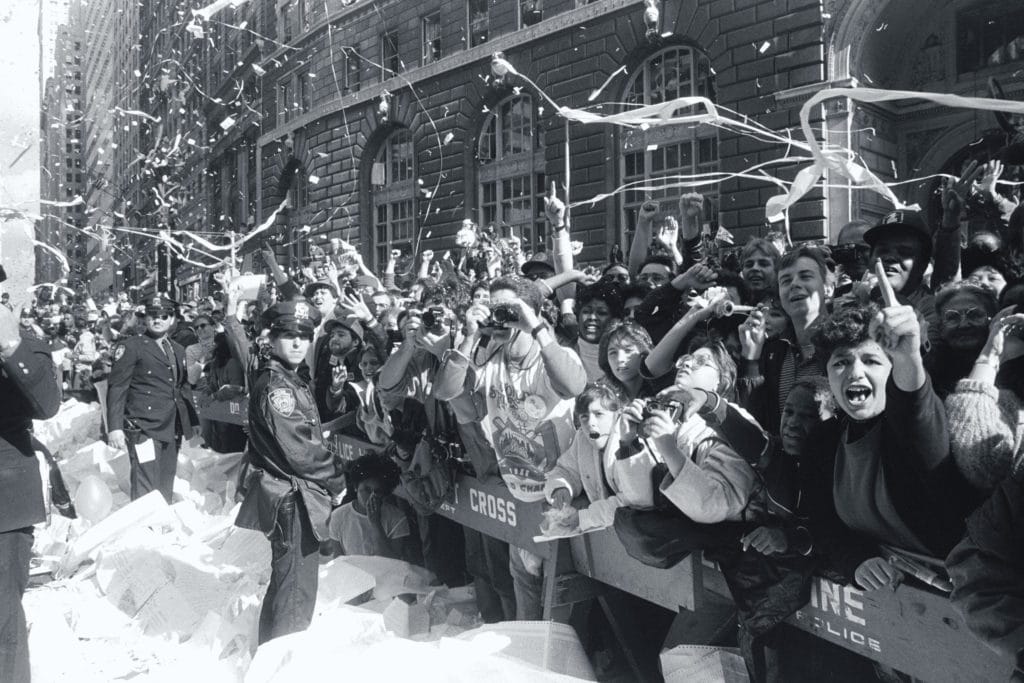
The Red Sox and Mets having the two best records in baseball, even at this early date, can’t help but make their loyalists think about the possibility of a rematch of the 1986 World Series, and about that miraculous or tragic — depending on your allegiance — Mookie Wilson/Bill Buckner Game 6 in which the Red Sox never got the one final out they needed to win the Series.
Having been born in Flushing, not far from the site of the old Shea Stadium, and grown up a Mets fan, it doesn’t take much to bring the memory of that classic Game 6 to my mind. But lately, it’s not just the fast starts of the Mets and Red Sox that have done it. Other, non-baseball stories, like the two African-American men arrested at a Starbucks in Philadelphia while merely waiting for a friend, and the 14-year-old African-American boy who was shot at when he knocked on a door asking for directions, have reminded me of where I was when I witnessed that amazing ending.
On Oct. 25, 1986, I was in Tuscaloosa, Ala., a young sports writer at the Miami Herald covering one of the biggest games in college football that afternoon, sixth-ranked Penn State at No. 2 Alabama. (As hard as it is to believe now, there was a time when newspapers had the budget to routinely send reporters to important games that weren’t even in their market.) I don’t remember much about the game, which the Nittany Lions won 23-3, although I do recall being in a group of writers who talked to Penn State’s defensive coordinator about how his unit had shut down the Crimson Tide’s offense. (You may have heard of the guy. His name was Jerry Sandusky.)
I was distracted by thoughts of Game 6 that night, a must-win game for the Mets, who were trailing 3-2 in the Series. It took me well into the evening to do all the postgame interviews, then write and file my story, by which time the Mets and Sox were in the sixth inning, tied 2-2. My hotel was more than an hour’s drive away — try getting a room on a few days’ notice in Tuscaloosa on an Alabama football weekend — so I decided to find a nearby bar to watch the rest of the game. I came across one not far from the stadium, and though I’ll never remember the name of it, I’ll never forget the feeling I had when I walked in. I was the only black person in the place, and the decor was about a 50/50 split between college football and the Confederacy.
This, I thought, might have been a mistake.
Even more disconcerting, the TV behind the bar was tuned to football — Auburn vs. Mississippi State. But the pull of watching the Mets in a do-or-die Series game was stronger than my urge to get back in my car, so on a Saturday night in the deep South, in bar full of white customers who were watching SEC football, I sat down, nodded toward the television and asked the bartender, “Any chance you could flip that to the World Series?”
The bartender put the question to the dozen or so patrons sitting at the bar and received no objection. In fact, there wasn’t much reaction at all, as most of them seemed either to stare straight ahead or check me out from the corner of their eye. So he changed the channel and the voice of Vin Scully came from the television as the Mets and Red Sox headed into the late innings.
What happened next was what tends to happen when people watch a compelling sporting event together — the game gradually connected us. We talked about managers’ decisions — should the Red Sox have stayed with Roger Clemens longer? Should the Mets use one of their starters in relief in this do-or-die game? As we all became more comfortable with each other, the bartender encouraged me to drop my business card in the fishbowl full of them on the bar, explaining that they pulled one every week and gave the winner a free lunch. I did it, even though I knew I’d never visit the place again.
Other customers asked how a guy who was clearly not from around those parts happened to walk in to watch this game, and I explained why I was there. Since I was the only one in the place with a rooting interest, by the time the game headed into extra innings tied 3-3, almost everyone gathered around the bar had decided to become a temporary Mets fan.
“Who we pulling for?” I heard one woman ask her husband.
“New York,” he said with a drawl.
“New York?”
“It’s not the Yankees.”
“Oh, OK.”
When the Red Sox scored a pair of runs in the top of the 10th, all those customers I had been eyeing warily earlier were now my buddies, consoling me as what appeared to be the inevitable drew nearer. Keith Hernandez made the second out for the Mets in the bottom of the 10th, putting Boston one out away from the title, and a fresh beer appeared in front of me. On the house.
And then, of course, magic happened. Gary Carter singled. Kevin Mitchell singled. Ray Knight singled to make it 5-4. Calvin Schiraldi’s wild pitch brought Mitchell home to tie the game, 5-5. That left Mookie Wilson at the plate with a man on third, and you know the rest: Ground ball. Buckner. Through the legs. Mets win.
There was bedlam in Shea Stadium and a pretty fair amount of noise at the best little Mets bar in Tuscaloosa. My new friends clapped me on the back and slapped me five and offered to buy me drinks, partly, I think, out of gratitude for being the reason they had seen one of the most memorable sports endings of all-time. By the time I left the bar, I couldn’t believe what I had just experienced, and I don’t mean the baseball.
Flash forward two nights later. I’m back home in Florida and after a rainout the previous night, the Mets win Game 7 to take the Series. Shortly after the end of the game, my phone rings. I don’t recognize the voice on the other end until he identifies himself. It’s the bartender from Tuscaloosa, calling to congratulate me. He explains that he pulled my business card from the fishbowl.
You can draw your own conclusions about what this story says about the power of sports to unite people, about the importance of pushing past our preconceived notions about others, and about how far we have or have not come in this country in the way we relate to those who don’t look like us.
It makes me think about all of those things, and about how I wish I could have gone back for that free lunch.
(Top photo: Owen Franken/Corbis via Getty Images)
If you enjoyed this article, start a free trial today to get full access to all the smart, in-depth coverage on The Athletic, then get 25% off the annual plan.