New Zealand is about to decide whether to invest seriously in quantum technologies.
The answer should be yes, but only if we do it smartly – and hitch our wagon to Australian efforts.
By July, the recently established New Zealand Institute for Advanced Technology (NZIAT) will wrap up a six-month discovery phase and advise the Government on whether to launch a dedicated quantum research platform.
The precedent set by the institute's earlier moves – up to $70 million over seven years for research platforms devoted to artificial intelligence and high-temperature superconductors – suggests similar firepower could be directed at quantum.
The question isn't really whether we can afford to invest. It's whether we can afford not to.
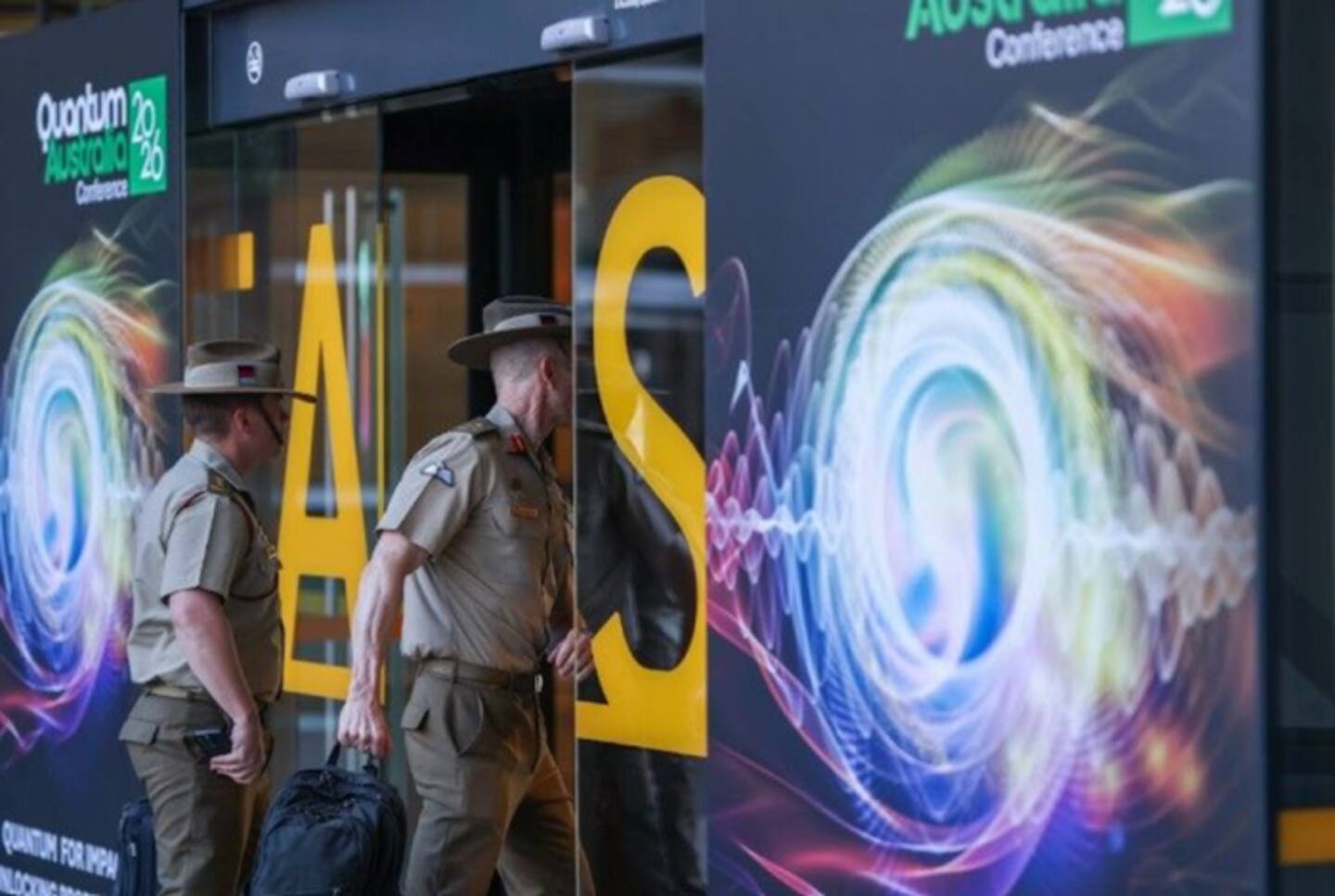
The Quantum Australia conference held in Adelaide last week showcased Australia's remarkable progress in quantum technologies, which it backed early on. Australia's National Quantum Strategy launched in 2023 with a clear ambition: to become a global quantum leader by 2030.
Since then, the federal government has committed billions across the quantum ecosystem – most spectacularly with an A$940 million (NZ$1.1 billion) joint investment with Queensland in PsiQuantum, the Silicon Valley-based quantum computing company whose roots trace back to research at the University of Queensland. Australia's chief scientist said at the time: “We need to do this now, otherwise we will be left behind.”
A flurry of Aussie quantum startups
That bet has triggered a cascade effect. Australia now hosts dozens of quantum firms and numerous research organisations, with around A$200m in private capital flowing into quantum companies since the launch of the National Quantum Strategy. Q-CTRL, an Australian startup, raised A$166m in Series B funding while partnering with IBM on quantum sensing.
By comparison, NZ is not a quantum powerhouse. But we are not starting from zero, either. Te Whai Ao – the Dodd-Walls Centre for Photonic and Quantum Technologies – brings together around 200 researchers and students from seven institutions.
It has a global reputation in quantum photonics and quantum optics, with world-leading work on controlling individual atoms and developing quantum memories. The centre currently leads Quantum Technologies Aotearoa, a nationally coordinated five-year programme funded to the tune of $12m through the Government's Catalyst Strategic fund.
Paihau–Robinson Research Institute at Victoria University of Wellington is developing superconducting quantum devices. We have advanced materials capabilities via the MacDiarmid Institute.
NZ also has an emerging track record in quantum sensing, and the Government recently backed a joint quantum communication initiative with South Korea. NZ's integrated photonics community has created a pipeline of commercial spin-outs.
But we are light on true “quantum” startups, and investor attention is elsewhere.
These are niche strengths, but they are real and respected.
The question NZIAT's discovery phase must answer, and which the institute’s board must ultimately make a call on, is whether they constitute a foundation worth building on, or an impressive but isolated cluster that will remain peripheral without significant investment.
The potential of quantum computing
People’s eyes tend to glaze over when I talk to them about quantum computing. But as McKinsey researchers who set the scene at Quantum Australia with a new report on global investment in quantum said, it is the most significant emerging technology after AI.
"Our research shows that investment in quantum technology start-ups reached US$12.6 billion [NZ$21.7b] in 2025, 6.3 times higher than in 2024," their latest Quantum Technology Monitor found.
“A full 90% of this investment went to quantum computing start-ups – with the remaining 10% flowing to the two other quantum technology subsectors: quantum sensing and quantum communication.”
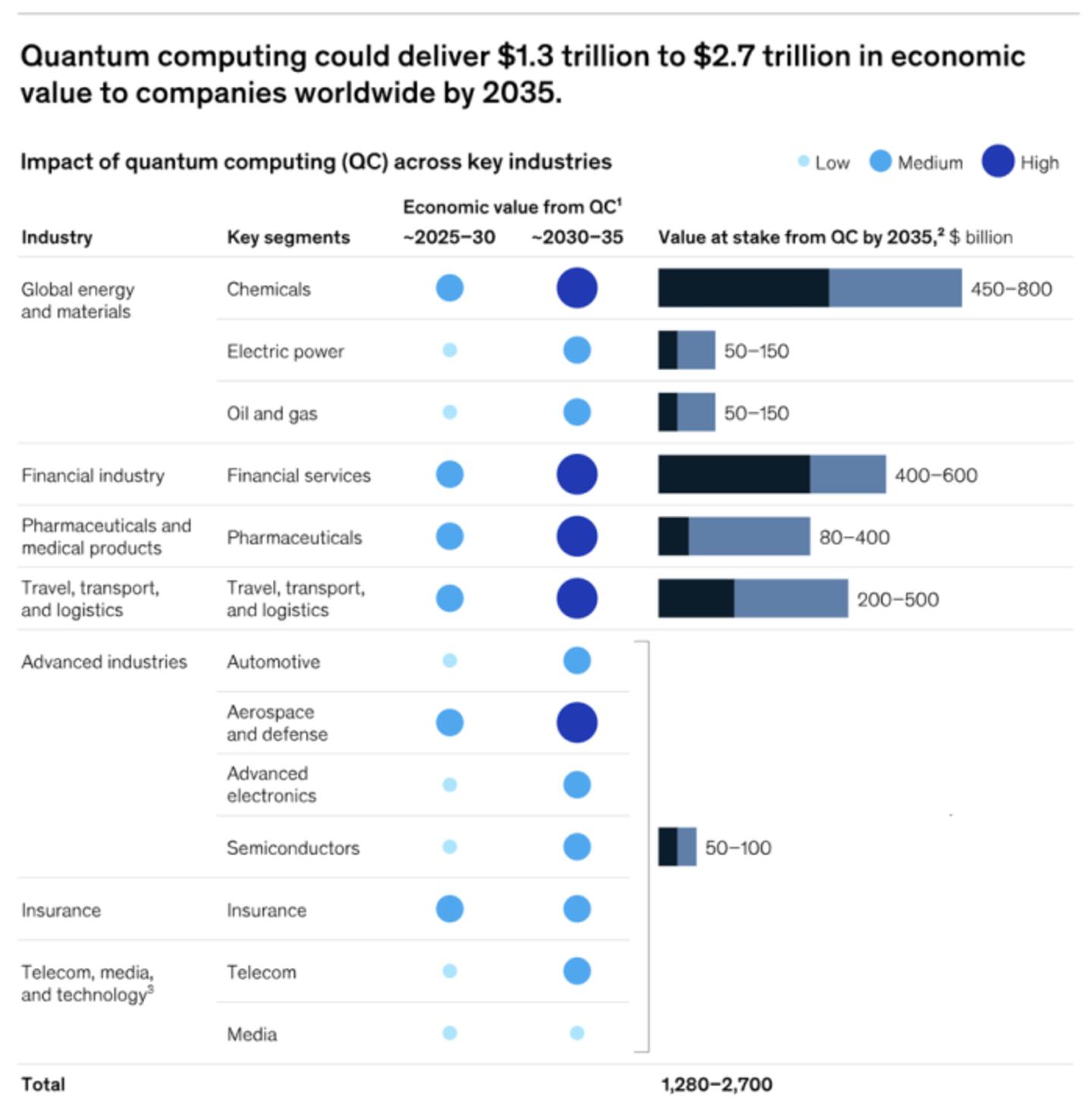
McKinsey estimates quantum technologies will generate between US$1.3 trillion and US$2.7t of “economic value” by 2035, mainly in the chemicals, pharmaceuticals, financial services, and transport and logistics sectors.
Quantum represents a fundamental shift in what computers can do – processing problems that would defeat today's most powerful supercomputers.
Drug discovery, materials design, climate modelling, financial optimisation, next-generation cryptography: these are not niche use cases; they underpin big chunks of the global economy.
Preparing for Q-Day
Then there’s “Q day”, the moment when quantum computers become available, that could break the encryption we use to secure data and communications everywhere.
Hardening tech platforms and exploring options for post-quantum cryptography don’t get nearly as much attention as the risks associated with runaway AI. But it is likely a more immediate problem.
A striking aspect of Australia’s big quantum talkfest last week was the presence of the Australian military, which has forged deep relationships with Australian scientists and startups.
A key imperative, military brass told the conference, is to develop an alternative navigation system to GPS, which adversaries could disable in a conflict.
Quantum devices using quantum sensing can detect minute variations in Earth’s magnetic or gravitational fields, providing precise positioning without satellite signals.
It could essentially create a “jam-proof” navigation system for ships, submarines and vehicles. The Adelaide-based Advanced Strategic Capabilities Accelerator (ASCA) develops advanced technologies for the Australian Defence Force and has funded 21 quantum projects totalling A$52m.
“Success here is not about replacing classical computing overnight,” Major General Hugh Meggitt, who heads up ASCA, told the conference.
“It's about building evidence capability and understanding, seeing where quantum technologies provide real-world advantage, and importantly, where they do not. This kind of practical experimentation grounded in sovereign technology is how quantum computing moves from theory to practicality,” he added.
Defence a key quantum customer
The Australian military is even contracting with local firms to develop sovereign quantum manufacturing capability so it can build its own quantum sensing devices.
Defence could emerge as an important part of our own quantum story here too, particularly if NZ joins the Aukus Pillar 2 trilateral agreement between Australia, the UK, and the US, which aims to accelerate the development and sharing of advanced military technologies.
Part of the NZ Defence Force’s budget boost includes $100m–$300m earmarked to foster partnerships between the NZDF and the advanced technology sector. Quantum tech could get a look in if the local ecosystem demonstrates it can boost our defence capabilities.
NZ should invest in quantum. But investment structured primarily as research funding – papers, conferences, PhDs – will not move the needle economically.
We've been around that track before. We need stronger research-to-commercialisation pathways that connect university consortia with industry.
Given Australia's momentum, it makes sense to ramp up transtasman collaboration. Quantum Australia’s CEO, Petra Andrén, told me that the government-funded organisation set up to deliver Australia’s quantum strategy is open to creating a “New Zealand node” to boost collaboration.
Back home, industry body Tech NZ, which ran three workshops nationwide as part of the quantum tech discovery project, is establishing a quantum industry group under its banner, alongside AI, fintech, blockchain and other tech subsectors.
Tech NZ CEO Graeme Muller told me that, in an area of cutting-edge technology where key pieces of equipment can cost up to $20m, the $70m in public funding potentially earmarked for quantum is a relatively modest investment.
“It is worth it as a signalling exercise, and we need to make sure that some of that science is connected into the Australia supply chain, that we've got some critical parts of the future infrastructure coming out of New Zealand,” he said.
The sense I got from talking to quantum experts in Australia last week is that we could easily blow through $70m and end up with little to show for it.
But NZ's photonics and quantum sensing strengths are well-positioned to carve out a specific position in the global quantum supply chain.
That does not involve building a full-stack quantum computer, but becoming an indispensable producer of quantum-enabling equipment: optical components, cryogenic sensors, precision instruments.
Think of it as the quantum equivalent of our niche in high-value agritech: not the biggest player, but a precision-focused, export-oriented one.
The July decision is not just about funding science. It's about whether NZ is serious about owning a piece of one of the defining technologies of our era. Done right, further public investment in quantum won’t just produce good research.
It will produce good companies, good jobs, and export revenue that compounds for decades as the quantum world takes hold.
* Peter Griffin attended Quantum Australia 2026 as a guest of Te Whai Ao, the Dodd-Walls Centre for Photonic and Quantum Technologies.