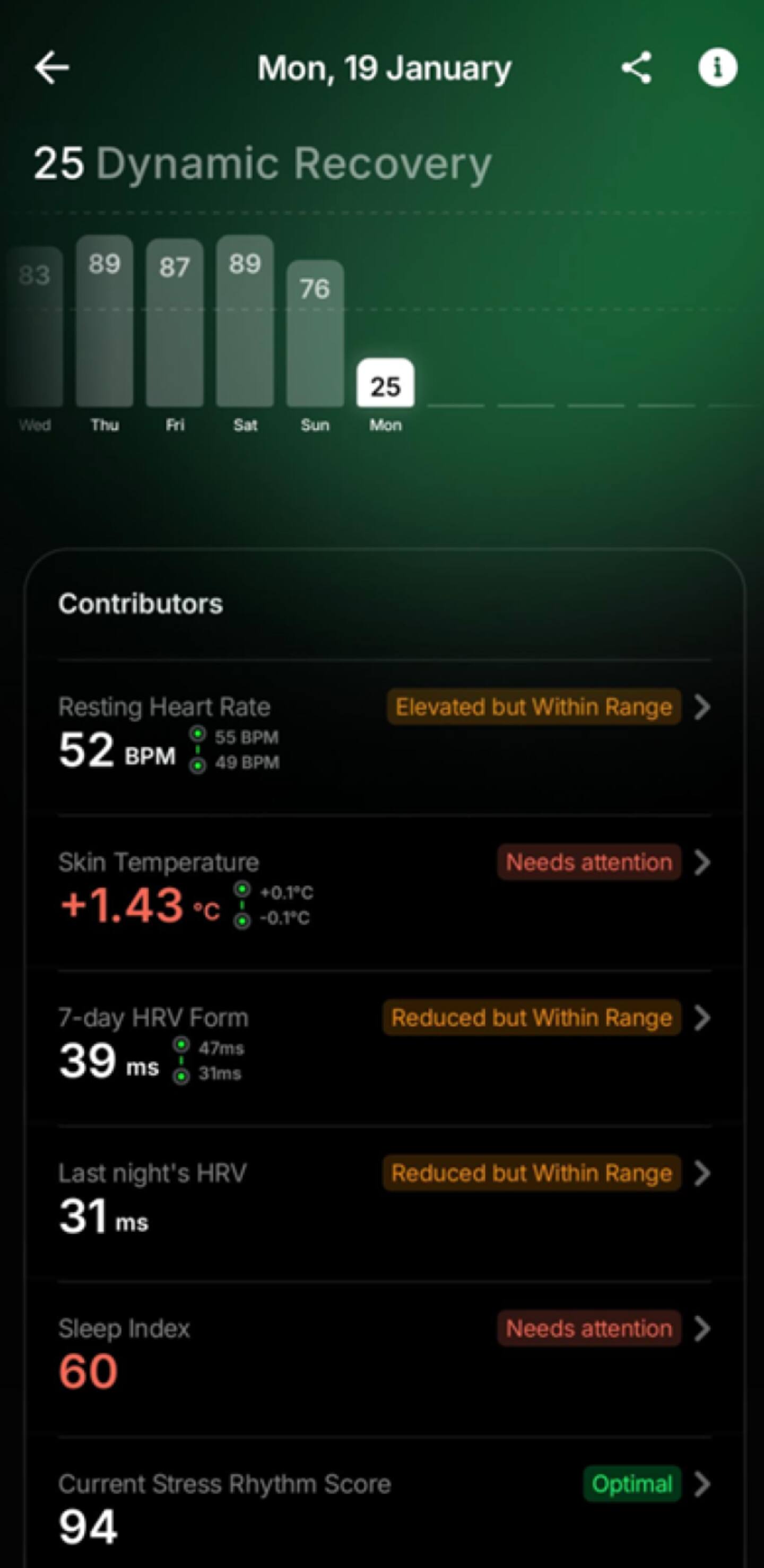
I had a pounding headache, a dry mouth and the dashboard in my Ultrahuman app was glowing red.
The sleek silver ring on my finger was urgently communicating that I had an elevated heart rate, a higher than normal skin temperature, a sleep index that “needs attention” and reduced “heart rate variability”, suggesting I was experiencing stress, fatigue, or potential illness.
Was my body falling apart? Was I in the grip of fever, or having some sort of medical episode?
No. I’d had an all-night bender, consuming far too many beers, cocktails, and red wines before committing the cardinal sin of binge drinking – I didn’t have a big glass of water and a couple of Panadol before I crawled into bed.
It was a good test of the Ultrahuman smart ring’s ability to understand my body, and since that big night out on the town a few months ago, I’ve fallen under the spell of Ultrahuman’s gamification, determined to keep my vital signs in the green.
I guess that’s progress, and the whole point of having yet another gadget in my life that I need to recharge on a regular basis.
Ultrahuman’s Ring Air is a feature‑rich, health‑tracking smart ring that can feel like too much for casual users. But it’s a powerful tool if you’re serious about optimising fitness, recovery and daily habits.
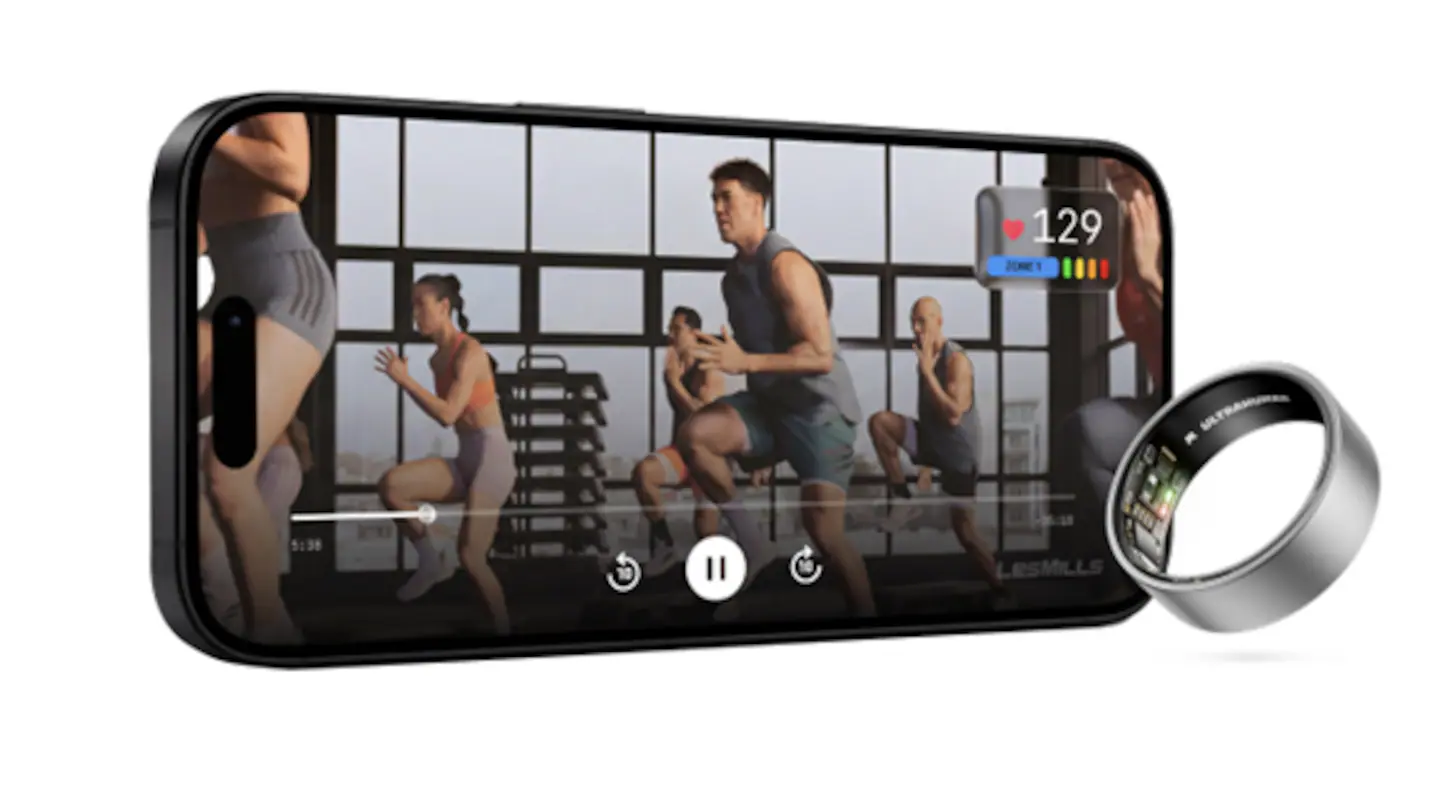
Its expanding ecosystem of “PowerPlugs”, paid add-ons that include a new Les Mills integration, pushes the Ring Air beyond a passive tracker into a guided coaching platform built around your data.
What the Ultrahuman Ring is
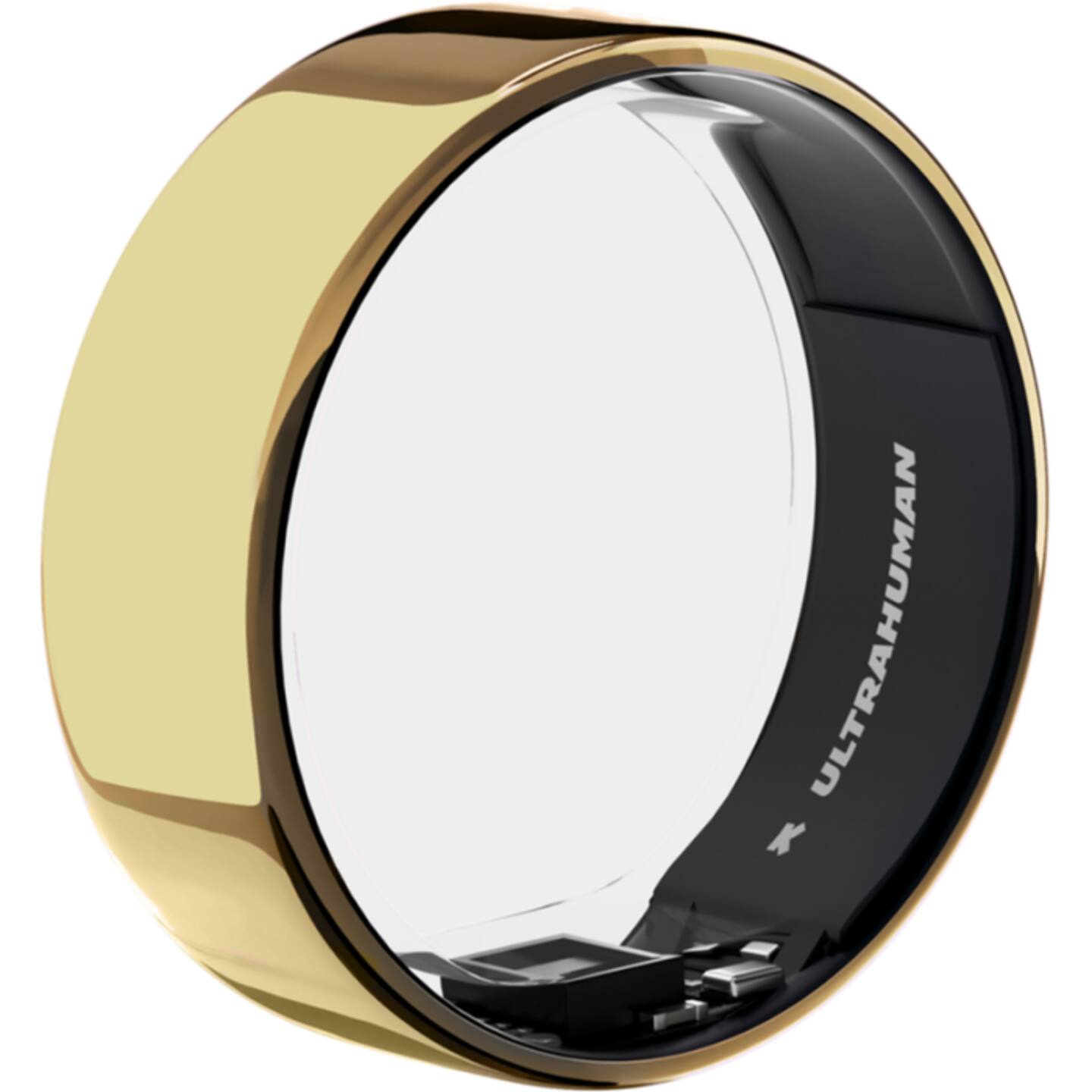
The Ring Air is a lightweight titanium smart ring (around 2.4–3.6g, depending on size) that tracks activity, sleep, stress, heart rate, and temperature, and pairs with a companion app on iOS and Android.
As a fashion accessory, it's fairly understated, available in six colours, including Bionic Gold, Matte Grey, and Space Silver. More complex designs are available online.
If you buy via the Ultrahuman website, a fitting pack will be sent to you so you get a comfortable ring size.
A series of sensors at the base of the ring track your biometrics, with a thin lithium-ion battery built into the ring and offering 4 -6 days of battery life on a single charge.
The Ring Air uses signals captured by the sensors to generate readiness, recovery, and sleep scores, then layers on prompts about when to train, when to rest, and even when to ease up on caffeine and screens.
Unlike Ultrahuman's key rival, Oura, which BusinessDesk publisher Matt Martel recently tested, Ultrahuman does not require a core subscription for basic metrics, which helps offset a price that sits in the same territory as premium fitness wearables.
It’s pitched as a “metabolism and performance OS” – the kind of device that wants to re‑engineer your day around deep recovery and long‑term health.
In practice, that means an app packed with graphs, scores, recommendations, and optional add‑ons that let you drill into everything from circadian rhythm alignment to menstrual-cycle-aware training plans. It’s a brave new world for me.
Strengths: depth, guidance and PowerPlugs
Ultrahuman offers one of the broadest sets of metrics of any smart ring, going beyond steps and sleep to track stress, body temperature trends, and recovery‑oriented signals such as sleep stages, sleep debt and circadian timing.
The app's real usefulness is in how it highlights today’s data compared with your baseline.
Colour‑coded indicators nudge you toward behaviour and lifestyle changes and provide concrete suggestions, such as getting more morning light, managing your caffeine window, or bringing your bedtime forward.
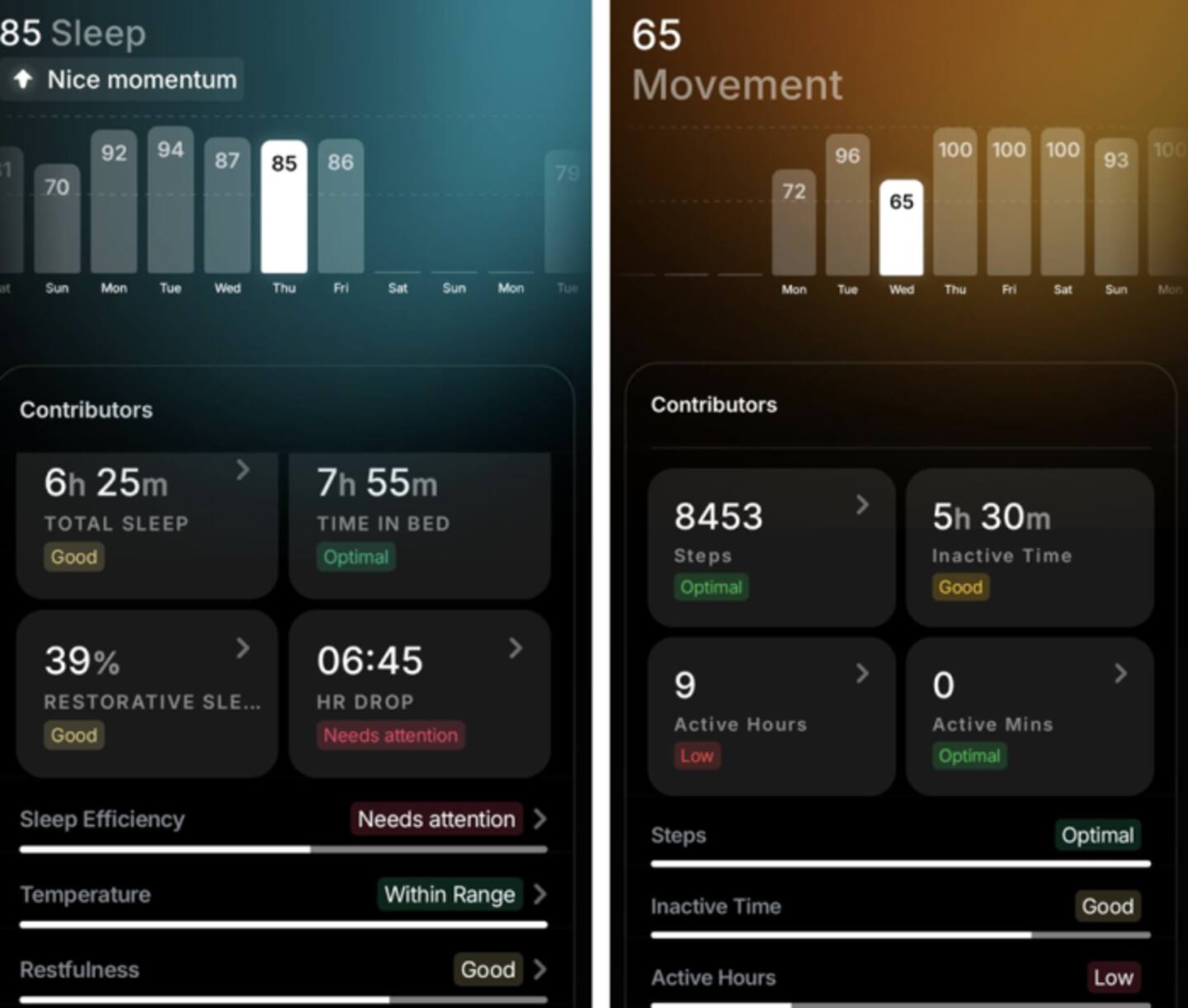
It was all a bit overwhelming for me initially. But after the ring established a baseline of my vital signs, a process that takes two weeks of wearing the Ring Air, I began to understand, trust, and eventually rely on the sleep and movement indicators to help keep me on track.
A key differentiator of Ultrahuman is the PowerPlugs – optional modules that sit on top of the core data to provide focused coaching around specific goals.
Existing PowerPlugs cover areas such as caffeine timing, circadian rhythm, sun exposure, social jetlag, women’s health, and screen time, often using notifications and dashboards to nudge you towards behaviour change rather than leaving you to interpret raw graphs.
The Cycle & Ovulation PowerPlug and the Caffeine Window PowerPlug are free.
You’ll pay $5.99 a month for the Migraine Insights Powerplug, while the UltraSync for Tesla, which suggests adjustments to speed, drive mode, and cabin settings in a Tesla vehicle based on your health data, costs $6.90 a month.
The growing catalogue of PowerPlugs makes Ultrahuman feel more customisable than rivals. Ultrahuman is really a software development company, with opt-in monthly subscriptions at the core of its business model.
The Les Mills connection and workouts
The Les Mills PowerPlug, rolling out globally this month ($11.99 per month), brings studio‑style workout programming into the Ultrahuman app, driven by the ring’s recovery and readiness data.
For instance, you can do a Les Mills BodyBalance or BodyPump video-based workout via the Ultrahuman app, and the ring will track your metrics, tailor them to the workout, and suggest how you can optimise your efforts.
Given the popularity of Les Mills workout classes, that’s likely to have widespread appeal.
For workouts, Ultrahuman says it will use biomarkers such as sleep quality and recovery to decide whether to push you harder or dial a session back, with options to focus on strength, cardio, flexibility or general fitness and to set preferred training days and session lengths.
Les Mills has long been part of the gym landscape here, so this integration is particularly relevant to New Zealand Ring Air users.
Weaknesses: complexity can overwhelm
The downside to Ultrahuman’s ambition is that the app can feel overwhelming, even to a seasoned wearables tester. This goes well beyond the Fitbit, Apple Watch, or rivals like the Samsung Galaxy Ring.
The upsell prompts in the app will grate on some, too.
Ultrahuman will really appeal to the serious biohacker. Much of the data and alerts amounted to noise for me.
Still, for anyone with a health condition or who is on a Nicola Willis-style health kick and really wants to get into the weeds on tracking progress, you’ve got everything you need here. The granularity of detail will be genuinely useful.
Even if you just want to track your exercise, heart rate and sleep, the main dashboard has you covered.
I was even able to feed in my ManageMyHealth blood test results to get a standard report. Of 22 biomarkers, 18 were optimal, and four were “borderline”.
Overseas, Ultrahuman partners with doctors to allow blood tests to be ordered through the app. That’s the sort of integration between health wearables and health services we need to see more of.
On the hardware side, the Ring Air has shorter battery life than some competitors. But it syncs reliably, is comfortable to wear and pleasant on the eye.
If you are already tracking your training, sleep and recovery, or working with a coach, the Ultrahuman offers a genuinely rich toolkit.
Over several months of use, I largely stayed in the green metrics on my dashboard, so the psychological nudging worked.
Price: From $649