Working Well is an ongoing series from BusinessDesk in partnership with Southern Cross Health Insurance, exploring the issues that shape employee health and wellbeing – and the practical solutions for happier, healthier workplaces.
New Zealand startup Seeo is turning ordinary workplace CCTV into an AI-powered early-warning system for injuries, unsafe practices and operational bottlenecks – while insisting it is not building a digital panopticon for the factory floor.
Factories, warehouses, ports, and processing plants worldwide already have cameras for security and operational visibility.
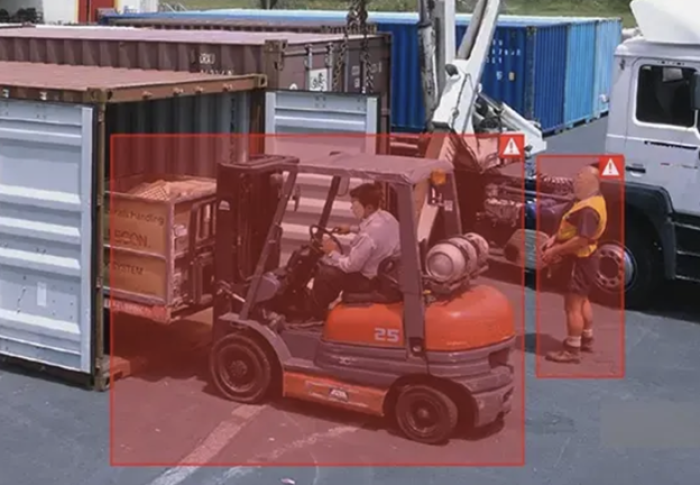
Seeo plugs into those existing feeds, applies AI at the edge of the network and flags potentially dangerous situations – a pedestrian stepping into a forklift zone, an unsecured load, a worker lifting badly or missing protective equipment.
“Saving lives, limbs and liability,” is the objective, co-founder Craig Marris told BusinessDesk from Seeo’s New York office in lower Manhattan.
But the bigger ambition is to connect safer work with better-run operations.
In a country like the US, where workplace injuries can result in expensive lawsuits, that has obvious benefits.
But in NZ, where the Accident Compensation Corporation (ACC) covers most injury claims, it also helps meat processing plants and transport logistics firms reduce injuries and near misses and improve compliance with the Health and Safety at Work Act.
Seeo emerged from the security business See Digital, founded by Bede Cammock-Elliott in 2003 as a remote video monitoring company.
It was substantially rebuilt after Marris and his brother Dean – founders of fleet-technology company Coretex, which in 2021 was acquired by eRoad for $157.7 million – got involved.
Their telematics background shaped the premise of Seeo. Vehicle data improved visibility into driver behaviour, assets, and risk. Why not apply the same thinking to workplaces already covered by CCTV?
Turning cameras into safety systems
Conventional CCTV is largely forensic. Something happens, then someone goes back through footage to find an explanation. Seeo aims to make it proactive.
The company connects to a site’s video-management system without interfering with the cameras’ primary security function. Its machine-learning models process feeds locally, enabling alerts in milliseconds for designated high-risk events.
That could alert a supervisor when a forklift and pedestrian breach a separation zone.
“It’s one thing to do an alert, it’s another thing to actually shut something down,” Marris says.
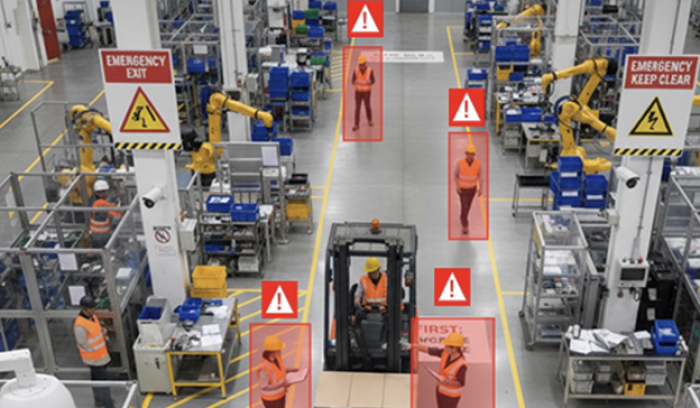
Through connections to production-line control systems, Seeo says it can trigger a siren or light, send an alert, or de-energise equipment when a person enters a dangerous area.
The system can also identify common but persistent hazards: hard hats or high-visibility gear not being worn, forklift activity near people, loads that aren't secured, and unsafe handling of truck side curtains.
Its more novel capability is what Marris calls “physical intelligence”: AI-based pose detection that assesses how someone is moving.
For example, a worker lifting repeated 20kg boxes may complete the task in a way that creates injury risk.
Likewise, a truck driver pulling a side curtain above their head rather than from a safer position can be identified as performing the task incorrectly.
The practical value is not catching people out, Marris says.
“There’s this big gap between work imagined and work done,” he says. Seeo is designed to “shed light on how big that gap is”.
From the SOP to the scene
The AI story does not end with object recognition.
Seeo is moving beyond conventional computer vision – identifying a person, forklift, load or item of protective equipment – by combining video with company safety operating procedures and regulatory information.
A business can upload its standard operating procedures, including site-specific instructions.
Those documents are then made available to the company’s AI system, which can analyse them alongside metadata and footage from detected events.
The result, Marris says, is a way to connect a real-world incident or near miss with the relevant procedure – and then turn that into practical coaching material.
The platform can help prepare a “toolbox talk”: the short, on-site safety briefing used in industrial environments.
It can recommend relevant clips, point to the applicable procedure and help frame the discussion around what went wrong and how work should be done safely.
That is where large language models have already become useful. But the next frontier, Marris says, is video-language models, which combine the visual sequence with language-based understanding.
A conventional language model cannot see a pallet sitting too long in a staging area or a load that has just arrived and has not moved. A video-language model potentially can. It considers both the footage and the surrounding operational context.
“We’re turning it completely around on its head, saying Seeo knows,” Marris says.
That capability opens the door to broader workflow analysis. The company is already using vision systems in NZ to count stock units in meat-processing plants.
It sees further applications in detecting damaged goods, identifying perishable products left too long on a dock, monitoring asset utilisation and tracing process bottlenecks.
Not a surveillance tool
The uncomfortable question is whether an AI layer on workplace cameras risks creating a surveillance culture, especially in sectors with a history of tension between workers, management and unions.
Marris acknowledges the concern and argues Seeo’s design and deployment approach must address it directly.
“What we do is we obfuscate the people,” he says. The system is not primarily intended to identify whether “Peter” or “Craig” broke a rule, but to identify the unsafe behaviour and understand why it is occurring.
There are roles where identification can be enabled, but Marris says that is not the default for safety coaching. Footage used in group toolbox talks is anonymised. The goal is not disciplinary action.
“This is not a tool where we’re trying to get someone fired,” he says. “Completely the opposite. We’re actually trying to look after a person.”
Seeo is expanding its focus from safety to productivity. Marris is wary of using the technology to squeeze extra minutes from individual workers.
“That would make the culture of the company quite toxic,” he says.
Instead, the company says the productivity gains should come from safer layouts, better traffic flows, reduced downtime and more effective use of equipment.
Heat maps of repeated incidents might reveal, for instance, that workers routinely take an unsafe shortcut around a bollard because a doorway or process design is wrong. Fix the system, rather than blame the worker.
For NZ employers, that may be the more compelling proposition. AI cameras will not substitute for competent supervision, or a culture in which workers can speak up.
But used transparently, with guardrails around privacy and discipline, they could help companies see risks they have long struggled to measure – before someone gets hurt.
Marris concludes: “If you take the right approach, use smart tech, and get your operating model and business model aligned to it, you can have a significant improvement in your operations that does lead to productivity.”
This is editorial produced by our journalists. Southern Cross Health Insurance is a sponsor of the Working Well series but does not necessarily endorse these articles. It is not its opinion.
Read more in the series as it progresses here.