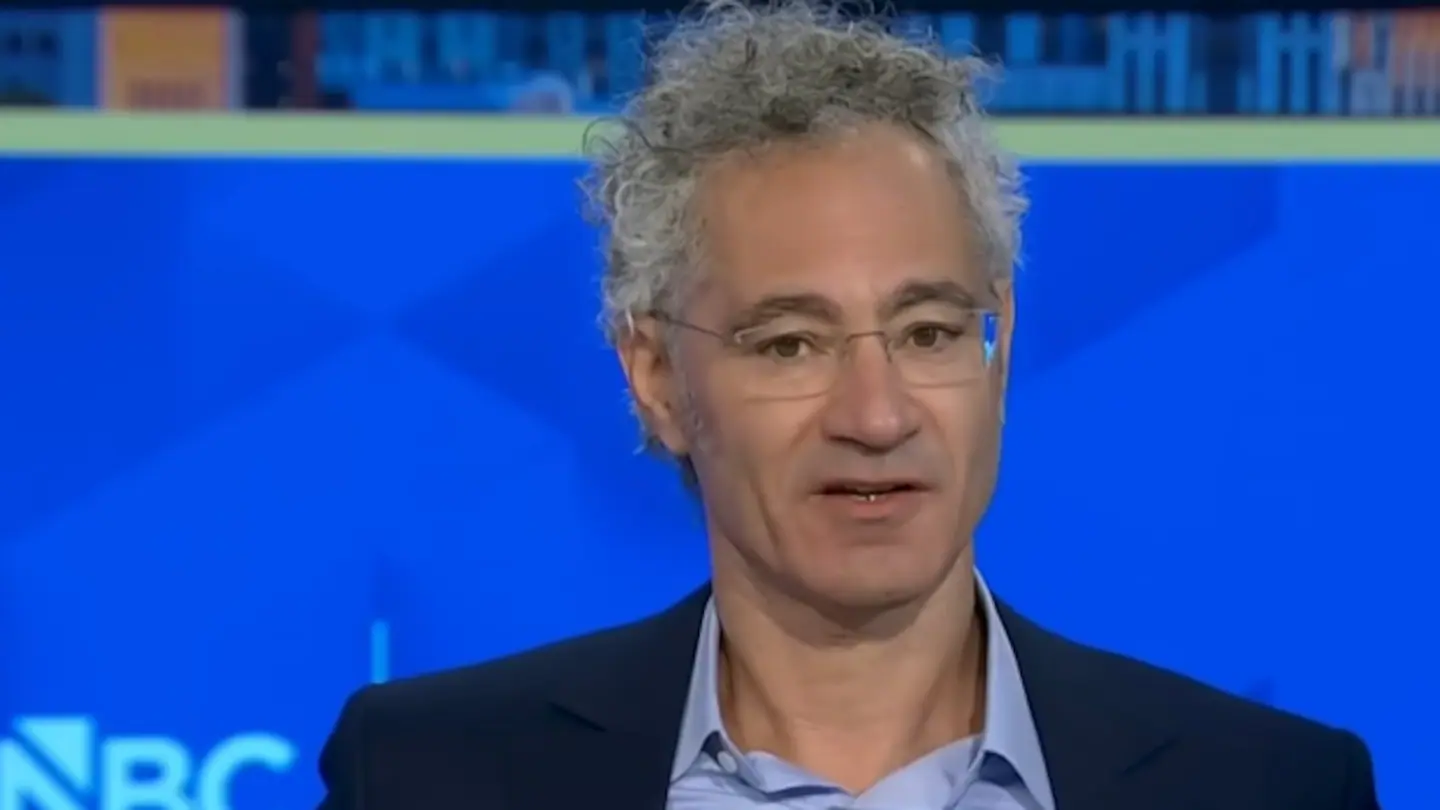
Palantir boss Alex Karp's heated rant on CNBC's Squawk Box show a couple of weeks back has resonated far and wide.
Say what you will about the eccentric tech entrepreneur and his controversial company, which is deeply embedded with the US military and surveillance agencies, but Karp was voicing what many business leaders are thinking about the AI revolution – something has indeed gone “completely wrong” with how AI is sold.
“The basic view among enterprises in this country is I’m going to chillax and waste my time with tokens,” Karp said.
On CNBC, he skewered the token-based pricing model used by OpenAI and Anthropic, which sees them charge by small chunks of data processed, labelling it a kind of “wealth tax on business” where companies burn cash on tokens, get little real value back, and surrender the “weights and alpha” of their business to frontier AI labs.
It’s an argument shot through with self-interest. Palantir’s applications draw on some of those frontier models, and while the smarts it provides are in the application layer, its customers can generate large bills using them in conjunction with AI models.
Karp’s answer is to push open‑weight models and architectures in which customers retain control of their models and data stack, rather than renting intelligence from the AI giants who charge like wounded bulls.
I’ve spoken to many business leaders who privately express their alarm that the AI they are implementing behaves like metered utility infrastructure, where every prompt and every background process counts toward a bill that can easily spiral out of control.
That would be okay if AI agents were delivering massive productivity gains and enabling new lines of business.
But they aren’t. Not yet, anyway.
AI’s commoditisation is accelerating
The “tokenmaxxing” by AI vendors is necessary to claw back some of the massive investments they are making in AI infrastructure.
But the reality is that just as businesses wake up to the true cost of AI, the underlying large language models are rapidly commoditising.
There’s now a crowded field of frontier and open‑weight models from OpenAI, Anthropic, Google, Meta, Mistral and others, with performance gaps narrowing and switching costs falling thanks to model‑agnostic tooling.
If the Chinese resist the urge not to ban foreign use of their open-source models, the commoditisation will only accelerate.
The real value, as Karp pointed out, increasingly resides in the application layer, domain‑specific data, and control over the underlying infrastructure. Because without that control, you still need to pay the AI wealth tax to make your applications really useful.
This is instructive for New Zealand’s approach to AI. We will never outspend the US or China building giant frontier models, but we don’t need to.
We can build specialised applications that fuse global models with local data and industry know‑how across sectors such as agritech, health, finance and government.
The problem is that our default position still assumes that the only way to do serious AI is to plug directly into offshore Big Tech, stacking token‑based charges on top of cloud bills, and exporting both our data and our margin in the process.
Towards digital self-determination
Don Christie, open-source evangelist and co-founder of locally owned cloud provider Catalyst, published an "election manifesto" on Tuesday.
No, he’s not running for Parliament. Instead, he’s urging our politicians to push for AI‑ready sovereign digital infrastructure built on open source and open standards.
Over the next five years, the public sector alone, Christie points out, is projected to invest $13 billion in technology. The AI-driven overhaul of the public sector, which will seek to trim 8,700 jobs, will likely push that figure much higher due to tokenmaxxing.
If that money mostly buys token‑metered access to offshore platforms, we entrench the very dependency Karp is warning about.
“Every unquestioned default to offshore Big Tech is a deliberate choice,” Christie said on Tuesday.
“We are giving all political parties a concrete framework to choose a different path, one that uses open and sovereign technology, backed by local partners, to put New Zealand back in control of its own digital infrastructure.”
Yes, there’s self-interest involved there too – Christie wants Catalyst to gain a larger chunk of the cloud market here.
But surely it’s better to pay local companies that funnel more money to Silicon Valley giants, many of whom pay little tax here. It also aligns with an accelerating global movement towards digital self‑determination.
The UK now mandates open source by default for government procurement. The EU operates under a formal Open Source Strategy, and France’s cybersecurity agency has concluded that open code is fundamentally more trustworthy.
A political inflexion point
A sensible NZ approach would blend open‑source and open‑weight models with local infrastructure and clear data governance, while still consuming the best of what frontier labs build, especially for cutting-edge uses.
We are a long way from that approach taking hold here. But the call for the country to take sovereign AI seriously is growing louder.
The Technology Users Association on Tuesday said the Government must be "brave" and "invest in New Zealand's own AI capabilities, including providing state-backed AI services to ensure our domestic research sector remains globally competitive".
The Human Rights Commission will launch a report next month on “AI and Digital Infrastructure for the Public Good”.
We are at what Catalyst rightly calls a political inflection point. Decisions made in this decade will determine whether our digital infrastructure, including AI, becomes a generation‑defining asset or a liability.
The frontier models will keep improving and commoditising.
The question for NZ is whether we are content to rent that intelligence on whatever terms Silicon Valley offers, or use this moment to build an AI‑ready sovereign stack that lets our companies create real value – high‑trust, domain‑specific applications rooted in our own data and law.
The bill shock may be coming either way.
The difference is whether we keep paying it as a wealth tax to someone else – or start investing it in ourselves.