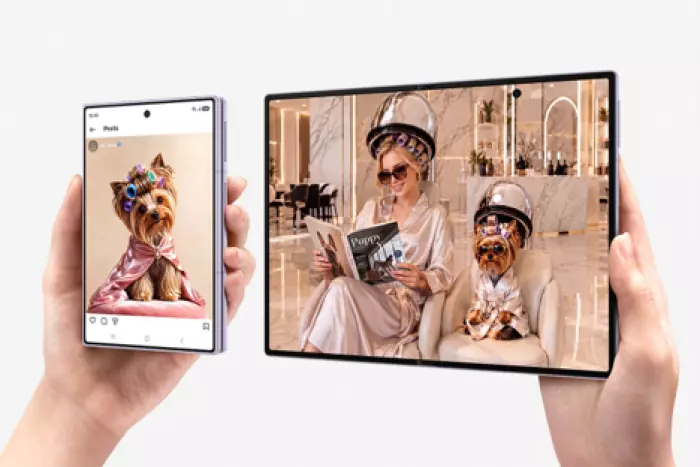
I feel like I’ve spent the year snapping foldable phones open and closed.
The format accounts for only about 2% of global smartphone shipments. New models typically debut at more than $3,000.
Still, with little innovation left to squeeze into the conventional smartphone, the industry seems hell-bent on making the foldable format stick.
The Duo factor
Apple’s debut of the iPhone Duo this week was somewhat ridiculous given the insane entry-level price tag: $4,199, which makes it a device for the one percenters.
But Apple’s spooky ability to mainstream a format can’t be underestimated.
The iPhone did not invent the smartphone, nor did the iPad invent the tablet. Both helped define the public’s idea of what those products were for.
If there’s one thing the engineers in Cupertino may give the consumer electronics industry, it’s normalising foldable devices, which could mean prices drop as sales volumes grow.
The reality is that the Android gang has been in the foldables game since 2019.
Samsung is the most committed to the format.
The South Korean electronics giant put out a major Apple spoiler last month with the new, passport-sized Galaxy Z Fold8.
It’s pretty much the same format as the Duo and really amounts to Samsung hedging its bets with the full-sized Fold, its new cut-down book-shaped model, and the Flip phone, which seems to have receded into the background.
Nevertheless, Samsung now has three horses in the foldable race.
The Fold8, I believe, is a far more appealing proposition than the tall, skinny Folds that came before it and which have also been updated this year. It’s compact enough to disappear into a jacket pocket, but opens into a properly useful 7.6-inch (193mm) screen.
At 201g, it is no featherweight, but it feels substantial rather than cumbersome.
Closed, it is only 123.9mm tall and opens into a 4:3 display that feels more like a small tablet than a stretched smartphone.
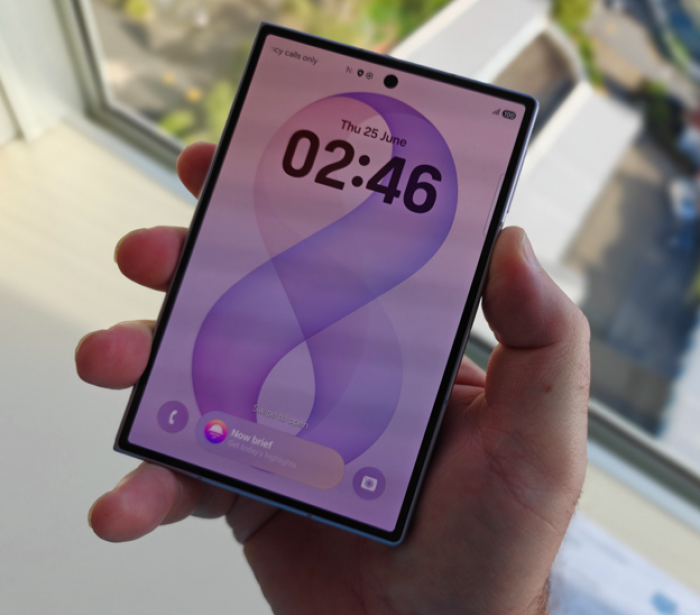
A passport, not a remote control
The old Fold’s cover screen was adequate for reading notifications and replying to the occasional message, but not a display one naturally wanted to use for long.
The Fold8’s 5.5-inch (139.7mm) display changes this equation. Its broad 16:10 shape gives apps, web pages and keyboards breathing room. It is compact in height, so reaching the top of the screen no longer requires shifting the phone in one’s palm.
It feels more like carrying a compact wallet than a giant slab of glass.
But that extra width does make operating the Fold8 with one hand slightly tricky. The breadth that makes the outside screen so pleasant for two-thumb typing also makes it awkward to use with a single hand.
People with smaller hands, in particular, may find themselves stretching a thumb towards the far side of the display or shifting their grip to reach keys. It won’t suit everyone.
Foldables have promised a “phone and tablet in one” future, but have given too few reasons to unfold the device.
The tablet hiding inside
Open the Fold8 and the virtue of the new proportions becomes clearer.
The 7.6-inch internal screen uses a 4:3 aspect ratio, a format that sounds old-fashioned but suits the messy mix of activities that make up modern phone use.
Reading is immediately better. Articles, books, recipes, travel itineraries, PDFs and web pages have room to breathe.
Apps can switch to tablet layouts, offering more columns in a spreadsheet, more canvas in a creative app, or simply more of a document at once.
The bright display handles multitasking smoothly – I typically run Gmail, a Google Doc I’m working on, and the Chrome browser at the same time. That’s my productivity suite.
For a business audience, that versatility is the Fold8’s strongest argument. This is a device where it is genuinely sensible to keep a video call or briefing open while taking notes.
You can compare documents, flight options or hotel bookings side by side.
Using Samsung’s DeX system, you can connect a large monitor and keyboard to use the Fold8 as your desktop computer.
Tent instead of flex
The Fold8 does away with Flex mode, which lets you prop previous Fold models open, often with media controls on one part of the screen while watching a video on the other.
This has been controversial, but as reviewers have pointed out, the trade-off is that the Fold8’s hinge is much better than on previous Fold models.
The fold action is much easier to complete.
You can also still prop the phone open to use it as a stand to consume content – in “tent” mode.
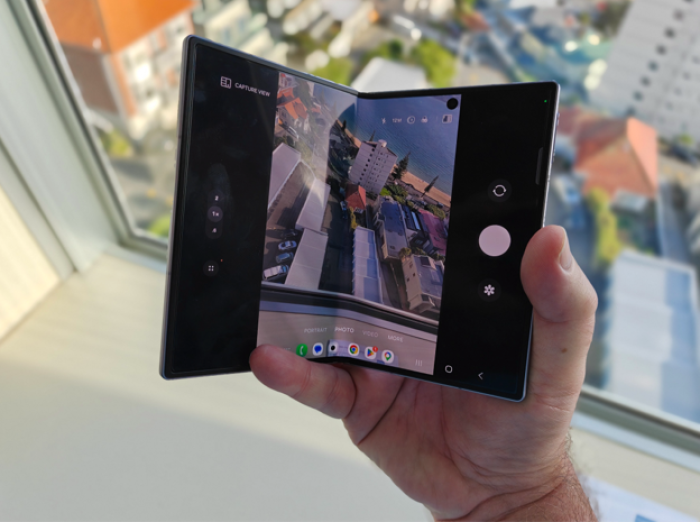
Other sacrifices include the lack of a telephoto camera and no S Pen support. But the camera setup is adequate overall. Battery life is reasonable.
The Fold8’s build quality is decent, and the crease is only noticeable at certain angles when the light catches it.
The IP48 rating is good enough to protect against splashes and spills, but not a full dunk underwater.
Verdict
The Galaxy Z Fold8 is expensive, imperfect and too wide to be a truly comfortable one-handed phone. But Samsung has finally found a shape that makes the foldable proposition feel natural.
Closed, it is a compact, pocket-friendly phone with a display that is genuinely pleasant to use. Open, it becomes a remarkably capable little tablet for reading, watching, browsing, writing and working across multiple apps.
Its format is more ergonomic and convenient than the traditional Fold shape because it acknowledges that we do not only want bigger screens.
We want screens that fit the ways we read, type, watch, and get things done.
The Fold8 does not make the conventional smartphone obsolete. It does, however, make the conventional Fold look obsolete.
Price: $2,699 (current sale price – 256GB model).