
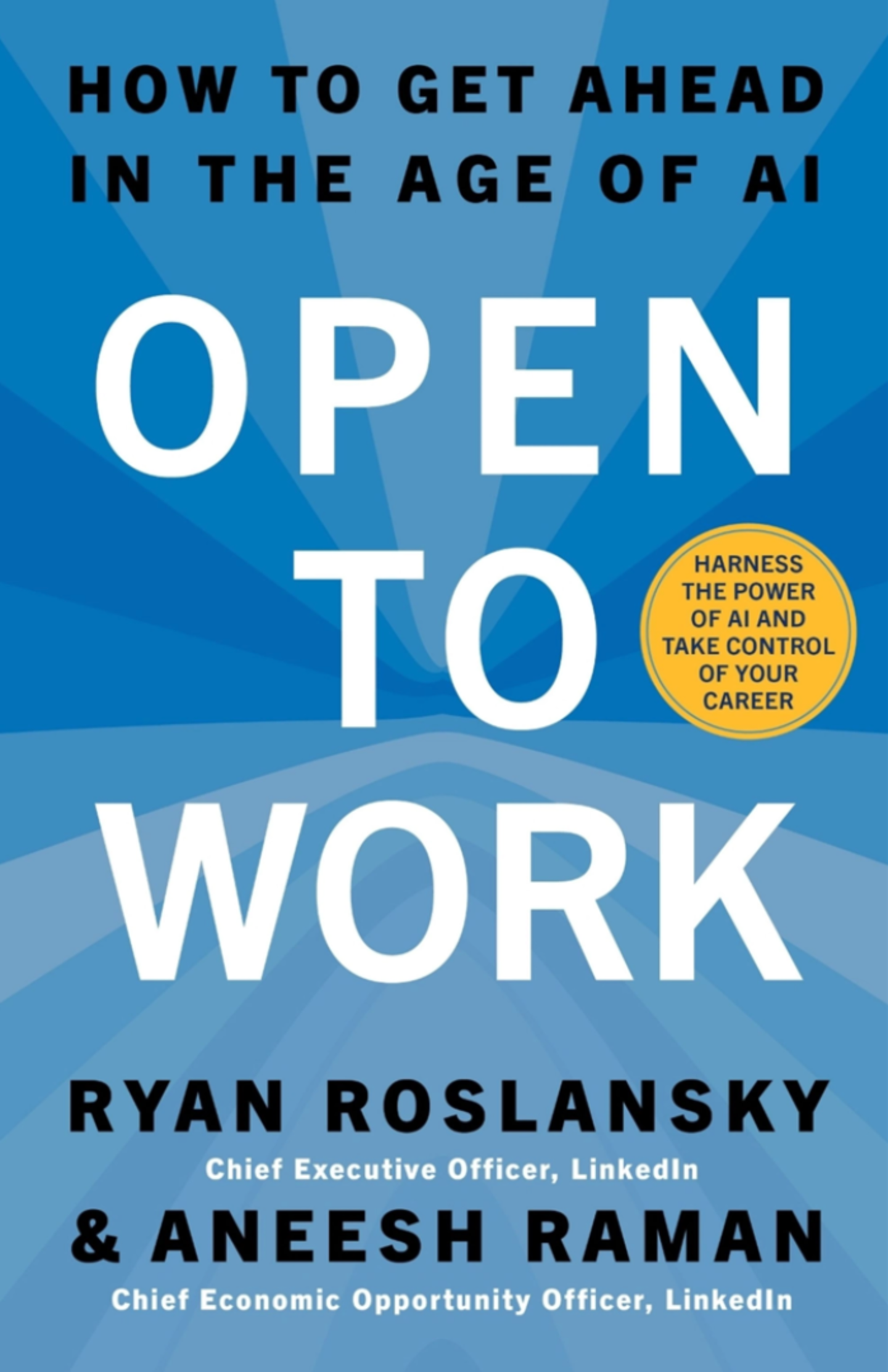
Open to Work, the new book from LinkedIn chief executive Ryan Roslansky and chief economic opportunity officer Aneesh Raman, is a quick read with a simple premise: work isn't ending, but it is changing faster than most people can process, and standing still is no longer an option.
It’s pitched squarely at anxious workers who feel the ground shifting under their feet but don’t know what to do next. I fall into that camp. AI is eating knowledge work.
Anything that involves you sitting in front of a computer for much of the day has the potential to be automated by AI agents and generative AI chatbots.
I used to make a good living writing reports, white papers, and ghost-written “thought leadership” blogs and articles for companies.
Now the marketing team or executive assistants just use Copilot or ChatGPT to do the bulk of the research and writing, with a quick polish before publication.
Like many colleagues in the same boat, I’ve been upskilling on AI tools and looking for opportunities to pivot – yes, that hackneyed term most associated with the startup world.
But it’s easier said than done, particularly in a soft economy.
Backed by LinkedIn's vast data on more than a billion professionals and wrapped in a relentlessly upbeat tone, Open to Work is part roadmap, part rallying cry – and, for some readers, that optimism will feel like both its strength and its limitation.
The king of pivots
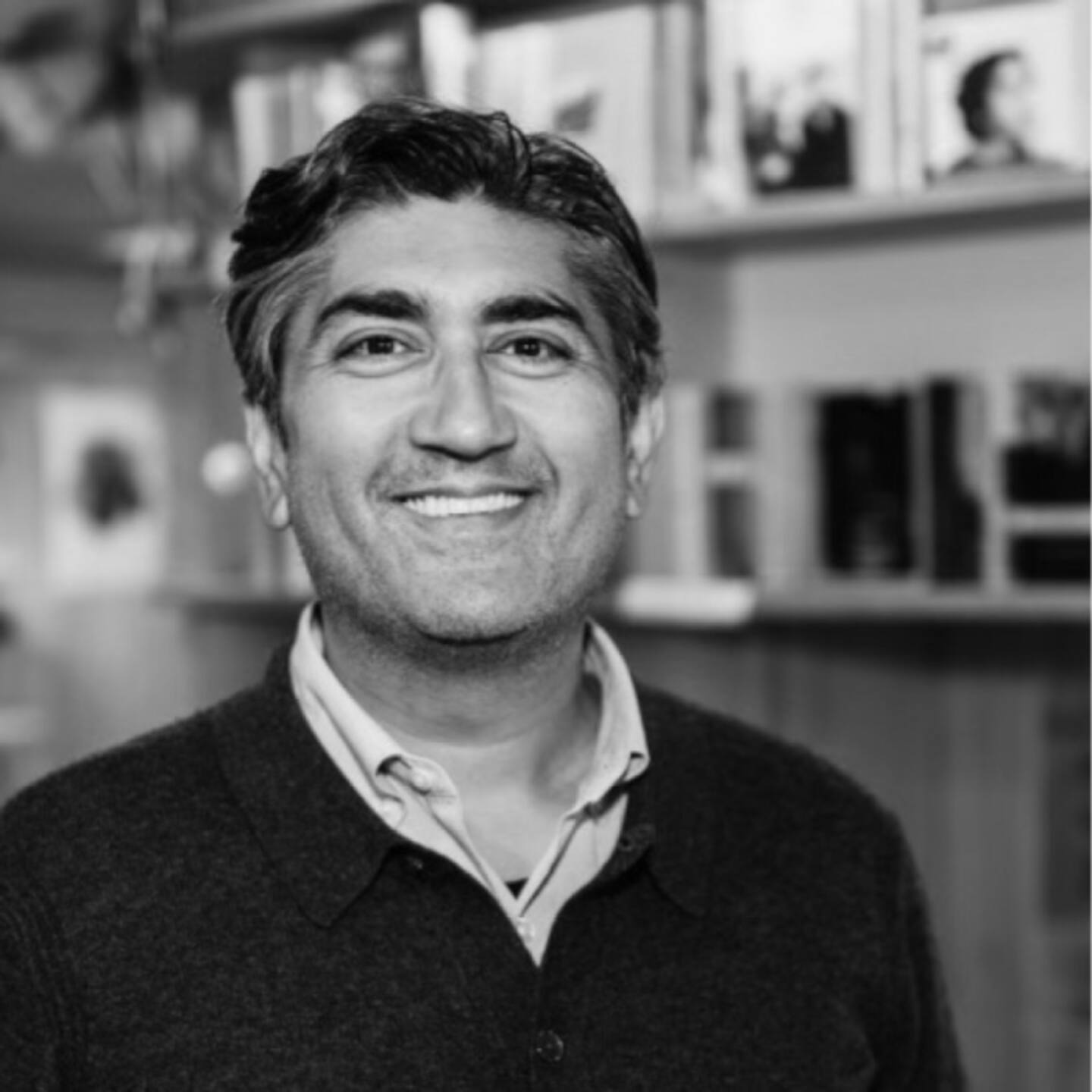
I read the book on a flight back to Auckland after visiting Microsoft’s Seattle headquarters, where I met Raman, who has himself pulled off a series of highly successful career pivots.
In the 2000s, he was a reporter at CNN, first in Southeast Asia and later as a war correspondent in Iraq, covering conflict zones across the Middle East. He later served as a speechwriter to President Barack Obama and also wrote for the US Treasury Secretary during the global financial crisis.
He then entered the tech world, first at the media startup OZY Media, then as vice-president of growth at Raiseme, an ed‑tech startup that used micro‑scholarships to broaden access to higher education.
He followed that with a stint leading economic impact strategy at Facebook (now Meta), a brief return to politics as California Governor Gavin Newsom’s economic adviser during the covid pandemic, before landing at LinkedIn.
Microsoft bought the social media platform for professionals in June, 2016, for US$26.2 billion (NZ$44.6b), recognising its power as the default online resume for hundreds of millions of people.
It proved to be a shrewd buy.
Earlier this year, LinkedIn passed US$5b in quarterly revenue for the first time, generated through advertising, premium subscriptions and hiring tools. Despite the milestone, Microsoft cut 875 jobs at LinkedIn, 5% of its workforce.
LinkedIn is a data gold mine, tracking the social graphs of the world’s most networked and upwardly mobile. And with Microsoft heavily invested in selling AI tools, LinkedIn represents a prime opportunity to nudge bewildered workers towards Microsoft’s product offerings and AI in general.
Work in 'the biggest disruption in human history'
Raman doesn’t mince words about the scale of the moment the workforce is facing.
“We are going through what I think is one of, if not the greatest, disruption to work in human history, given the speed and scale of change that is starting to hit,” he told me in Seattle.
The problem, as he sees it, is not just technological upheaval but a sense of fatalism that has seeped into the public conversation about AI and jobs. Most workers, he contends, are filled with dread about AI.
“AI already knows what it's going to do to work, and we're just waiting to find out … you're just along for a pretty bad ride that's going to end at some point with you losing your job and a lot of economic insecurity,” he says.
That’s the overriding narrative in the media, anyway.
Open to Work is a deliberate attempt to break that spell. The book leans heavily on LinkedIn and Microsoft labour‑market data to argue that change is real, but agency still matters.
It points out that 70% of the skills required in the average job will change by 2030, but workers themselves can help determine what that 70% looks like by how they choose to adopt and direct AI.
A 'how-to human with AI' manual
Raman is explicit that Open to Work is not a "how-to AI book". It's a "how to human with AI" book, he says.
The early chapters draw on neuroscience to validate why so many people feel overwhelmed.
“The human brain is wired to fear change, and the human brain is not wired to understand exponential change, and we are in a moment of exponential change,” Raman says.
For three centuries of industrialisation, he and Roslansky argue, we shrank the idea of human work down to efficiency above all else, whether on the factory floor or in front of a laptop.
AI, in this telling, is the technology that finally forces us to stop pretending that human worth equals throughput. The book’s core claim is that the most valuable skills in the AI era “aren't just technical. They're deeply human”.
To make that concrete, they offer a neat framework for “human capability”: five Cs – curiosity, creativity, compassion, courage and communication.
These, they argue, are what sit “at the intersection of our EQ and IQ”, and what AI cannot beat us at, especially when combined with habits like resilience and adaptability.
The tone is almost evangelical: “Humans are a remarkably intrepid, adaptive, innovative bunch … we are so much more than what the average worker has been positioned to be at work,” Raman says.
From job titles to tasks – and a 30‑60‑90 day plan
Where Open to Work will be most practically useful is in pushing you to deconstruct your own job. Raman describes a simple exercise that's central to the book.
“Put your title aside. It's a set of tasks. Bucket the tasks in three ways. You're going to move them like a conveyor belt, from stuff AI can do to stuff you can do with AI, [to] stuff you uniquely do,” he says.
That shift from job title to task mix underpins the book’s guidance on how to “engage with AI before you have to” and “become irreplaceable by leaning into what makes you uniquely you”.
The book closes with a 30-60-90-day plan designed to nudge readers into action: assess which parts of your job to delegate to AI, deliberately build your human capabilities, and start small experiments that compound over time.
Raman likens it to fitness.
“Do not have a 10-year plan, a five-year plan. Just have a today plan. Just learn today, grow today, push yourself today … the more you're doing that on a daily level, the more you get into a rhythm on it.”
Leaders, authenticity and the limits of optimism
Open to Work also wants to speak to leaders, and here it leans on a familiar historical analogy.
Raman recalls how many factory owners, on first encountering electricity, simply swapped a steam engine for an electric motor and waited for productivity to spike – it didn’t.
The gains came only when “radical thinkers” redesigned factories around the new energy source, giving workers more autonomy and changing how work was organised.
The lesson for executives approaching AI as a mere “software upgrade” is blunt – this is a business‑transformation challenge, not a tooling rollout.
In our conversation, I pressed Raman on authenticity in a world where executives are already pumping out AI‑generated thought leadership. Some would call it AI slop.
He acknowledged the risk, but argued that “quality always gets adjudicated by humans” and that LinkedIn sees a big part of its role as protecting spaces for “real people who have their professional reputation at stake as they share thoughts”.
Storytelling, he insists, still can’t be faked at scale.
“[We] couldn't have written this book with AI and just said, I'm gonna do it in an hour while I'm watching a TV show. It wouldn't have resonated. You have to know humans, be human, and go through the messiness and the slog,” he says.
Yet this is also where the book’s optimism can feel unmoored from the realities many workers face.
LinkedIn’s vantage point, and Raman’s own zig‑zag career from CNN war correspondent to Obama speechwriter to Silicon Valley executive, embody the “climbing a wall, not a ladder” metaphor the book champions. That means more jobs, more lateral moves, more chances to reinvent yourself.
For a mid‑career public servant in a back office role hearing news of the Government’s plan to cut 8,700 jobs, Raman’s claim that “the average worker … is going to be in a generation of humans that have more options and more control over [their] career than at any other point in human history” may ring hollow.
The data‑driven confidence that individuals can “drive what that 70% is” in their job also underplays structural factors such as employer investment in training, the quality of education systems, and policy choices about labour protections and safety nets.
Raman acknowledges that it's also on companies and educational institutions to adapt, but the book’s centre of gravity remains with the individual worker’s mindset and initiative.
A useful wake‑up call, if not a full survival guide
Open to Work wants to be both a roadmap and a rallying cry. On its own terms, it largely succeeds. It offers a human‑centric framework for thinking about skills, and gives readers simple structures – from the three task buckets to the 30‑60‑90 day plan – to start acting rather than doom‑scrolling.
It’s also refreshingly explicit that fear is normal.
“It's okay if you feel afraid; that's natural,” Raman says.
But staying frozen is no longer an option.
Where it is less satisfying is in grappling with how hard, messy and unequal this transition is likely to be. The book is steeped in what Raman calls “pro human belief” to the point where structural constraints almost disappear from view.
For workers who already feel ground down by precarious contracts, stagnant wages or weak social safety nets, the insistence that “you've got to get in the game, and if you aren't in there now it's getting late” may not sound particularly empowering.
Still, as a wake‑up call, Open to Work does its job. It won't tell you exactly what AI will do to your role, because it can't – and, to its credit, it doesn't pretend to.
What it does do is argue, persuasively if sometimes too enthusiastically, that the worst thing you can do now is nothing.
Start experimenting with the tools, start auditing your tasks, start strengthening the parts of your work that only you can do. In an AI moment defined as much by paralysis as by hype, that may be the nudge many workers need, even if they’ll have to look elsewhere for a more sober account of just how bumpy the road ahead may be.
Open to Work: How to Get Ahead in the Age of AI, Harper Collins, 288 pages, $30.