
There are many reasons 21st-century employees get fired. Read on to learn more.
Tim Gouw
Introduction to Employment and Job Retention
The photograph below is a typical bread line or unemployment line back in the 1930s, but we're having these today as well. In fact, every decade—or at least every change in presidential administration—brings with it a change in the economy that results in a recession.
Today, some employees lose their jobs through no fault of their own. However, some other times, there is realistic cause for termination.
Dishonesty, evasion, or lack of integrity on the job can be the culprit that results in termination, as well as lack of training and misunderstandings. It is important to be honest, straightforward, and forthcoming on the job with your management and then to insist on proper training and fair treatment as well.
Reasons 21st-Century Employees Get Fired
- Dishonesty, evasion, or lack of integrity on the job.
- Lying on a resume.
- Refusing to follow directions and orders.
- Talking too much and conducting personal business at work.
- Inconsistency—unreliable work and behaviors.
- Inability to get along with other people/reducing group productivity.
- Inability to actually do assigned job tasks.
- Performing tasks slowly, with numerous errors.
- High absenteeism rate.
- Drug and/or alcohol abuse.

Typical Bread Line and Soup Kitchen for the unemployed in the 1930s.
National Archives; public domain
References and Notes
- Article text includes data collected from 1995 through 2012 by Patty Inglish. All Rights Reserved.
- Featured with permission in the textbook Better Business, First Canadian Edition on Feb 28, 2012 and New Edition 2014.

Pixabay
1. Dishonesty, evasion, or lack of integrity on the job.
It is important to be honest, straightforward, and forthcoming on the job with management and coworkers. However, this does not mean that you should blurt out everything you know.
It is important to protect your company's proprietary information, such as copyrighted and trademarked materials, company manuals, program materials, and new projects, services, and inventions in order to prevent corporate espionage and theft. Time sheets and expense reports must be 100% true and accurate, without padding. Projects reports, especially facts and figures must not be faked.
Employees should not use company materials or equipment for their own personal purposes and this includes telephones, cell phones, copiers, laptops, PDAs, iPODs, and the Internet. However, some employers will make an exception in some cases - for example, printing up few flyers for a charity—but ask them first in order to preserve ongoing trust.
Most employers also permit emergency phone calls from and to family members and allow parents to call to check on their children. Absolutely no employee should use company time, equipment, and materials to operate a personal business on company time, such as an Internet sales page, or a Pampered Chef or Tupperware business, etc.
2. Lying on a resume.
Increasing numbers of employers are checking every single reference a job candidate provides, although EEO regulations make this more difficult to complete since the late 2000s. Employee privacy is becoming an issue.
If there are notations on your resume of more than one business "closed down" or one or more employers having died, or there are untraceable educational certifications, you risk being fired for fraud. Be prepared to show some sort of documentation for those closed down business and schools.
Many employers now require that you show them, and provide them a copy of, your High School, Vocational School, and College transcripts and diplomas, as well as certifications and licenses.If you lose any of these, they can be difficult and expensive to replace.
In many companies, reference checking continues after you are hired. Some employers run regularly occurring credit checks on workers more than once per year. Contracts with firms that do bulk credit and background checks make this cheaper to accomplish.
A local retail conglomerate containing a dozen chains of clothing and accessory outlets also owns a financial services division and a credit and collections division. Through vocational counseling duties, I learned that temporary employees in credit and collections sometimes underwent no credit checks, while full-time-with-benefits customer service reps were checked at hire and semiannually thereafter.
The two-art employer rationale often reported, albeit perhaps not a valid one for worker credit checks is
- To prevent theft and embezzlement, and
- To prevent a] sloppiness and mishandling of funds/resources, and b] low productivity.
In several workforce articles in the body of literature, evidence emerges that the poor credit check does not usually correlate with the problems supposedly linked with it in the workplace.
During a national recession, the poor credit check result may be even more meaningless and hopefully dropped by some companies. Financial and credit services seem to employee credit checks more often than other employers.
As a professional in other industries, I have gathered background checks and these recurring credit checks, and can testify to their time-consuming nature. In my experience, the background check at hire is the more important and should not be eliminated. Credit checks can be eliminated, except perhaps in the financial industry.
If anyone tells you to make up information and add it to make your resume look better, they are either
- Naïve or ill-informed, or
- Trying to get you into trouble. Some people make it their hobby to hurt others. I was advised twice in the past to add companies and jobs to my resume that I had never experienced. I did not do so, because my resume was already bringing comments of "overqualified" from some HR departments. It was suspicious for anyone to suggest that I add false information.
A Famous Case Example
- The Unexpected Consequences Of Exaggerating Or Lying...
Lying on your resume will be discovered and the larger the lie and the more famous you seem to be in a high- end job, the more likely you will be discovered... But does it matter?

Following directions and instructions is vital to successful business and your career.
Pixabay
3. Refusing to follow directions and orders.
This is fairly self explanatory and yet, some employees do not understand that their jobs require them to follow directions and to comply with the requests of their superiors at work..
Your company pays for (in wages) and owns your working time and you must do everything legal that your supervisors and bosses ask you to do.
If you have a better idea, you must talk to them and go through proper channels in order to "do it your way." If you are asked to do something illegal, unethical, or what you consider immoral, you need to take a stand on that in a professional manner.
Sometimes, people who cannot follow directions simply need to start their own businesses, and that's perfectly OK. It's a part of the Multiple Intelligences phenomenon and absolutely acceptable.
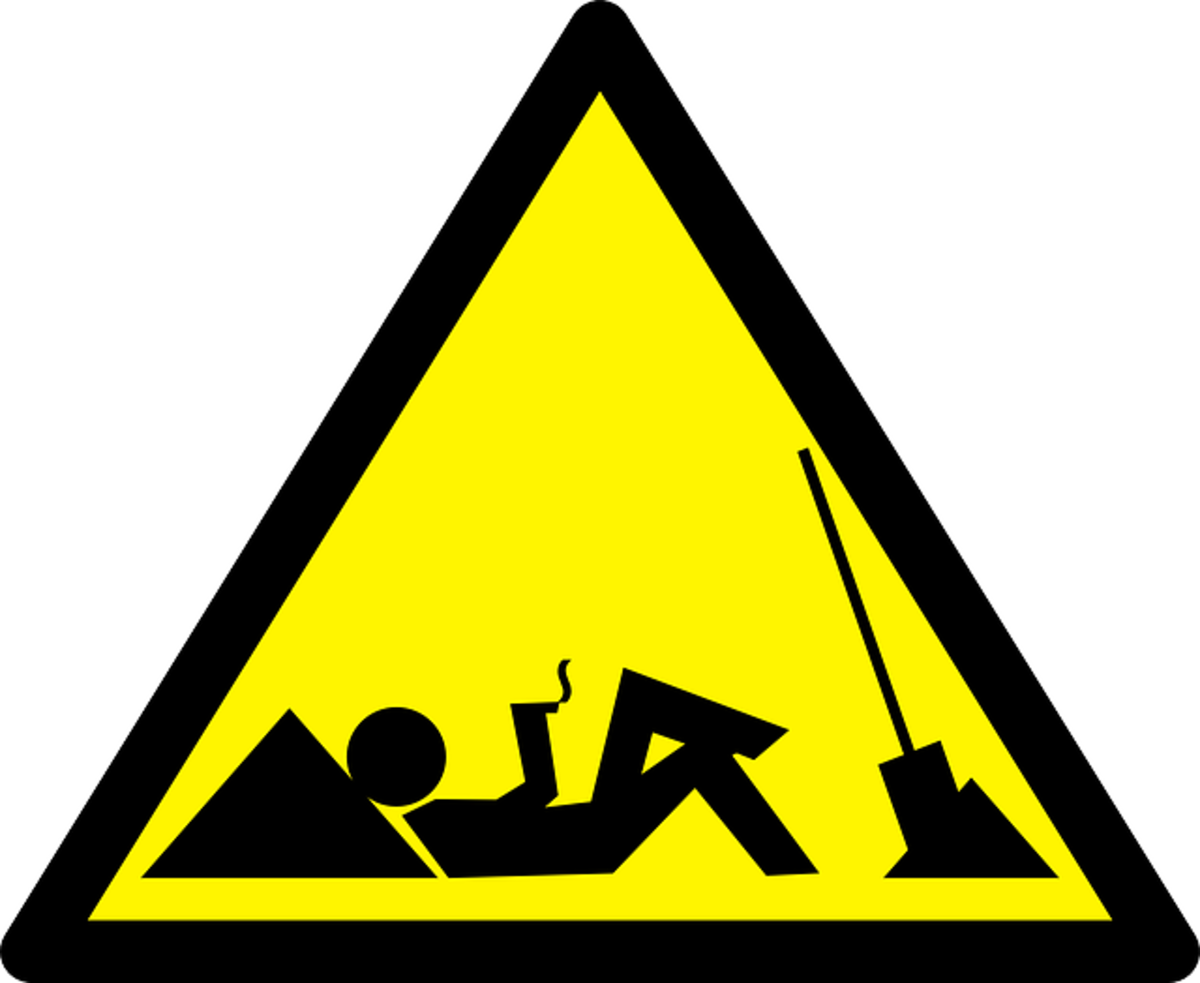
Time wasters at work can ruin your career.
Pixabay
4. Talking too much and conducting personal business at work.
Don't be guilty of misusing company resources, including the Internet, office supplies, and especially telephones; too much idle (personal talking) with coworkers. Non-business talking wastes more company dollars than any other activity. It should be saved for lunch and break times. This includes talking on the phone/email with stockbrokers, travel agents, hairdressers, bankers, etc.
In the 1960s and into the early 1970s, many offices and factories did not allow any conversation - employees were to work, not talk. This policy loosened somewhat in the 1980s and 1990s and then as employers discovered how much talking costs them, they began laying off the talkers. HOWEVER, some employers allow a certain amount of this type of activity and it is important to understand YOUR company policies and follow them.
Inconsistency Can Be a Red Flag for Mental Health Issues
5. Inconsistency—unreliable work and behaviors.
Employees must be stable and consistent in behaviors and productivity in order to benefit the company and produce profits or positive outcomes.
While most people have ups and downs in energy, if these interfere with productivity and accuracy in their jobs, they need to contact their Employee Assistance Program (EAP) or seek professional help.
If employee reviews are given regularly, these trends can be caught in time to be guided into something more positive. If you are not receiving employee reviews, ask for one.

Getting along with colleagues is a must.
Pixabay
6. Inability to get along with other people/reducing group productivity.
Some people have a lower "Social IQ" than others, some are loners, and some are sociopathic or have personality disorders. Unless there is a mental health disorder present (like the sociopathic or personality disorder symptoms) people can learn to be civil and have productive conversations—even those with Asperger's syndrome and other autism spectrum disorders.
Management should notice extreme problems with employee's getting along with others and intervene professionally with a referral to the Employee Assistance Program for consultation and help or the Professional Development Program for training like awareness and communications education.
Without these latter two programs, many more employees would be fired and end up possibly in jail or homeless.

Inability to perform a job is a career killer.
Pixabay
7. Inability to actually do assigned job tasks.
If employees lie convincingly enough during an interview or on a resume, stating that they can do certain tasks, but proving unable to perform these duties on he job, they will likely be fired if they cannot learn to do them very quickly.
However, some tasks that require certifications and licenses cannot be quickly learned on the job during the first weeks. These deficits will expose the employee as unable to perform assigned duties and having lied during the application process .
However, occasionally there is a lack of initial orientation and training on the job and the employee needs to ask for help early on. Sometimes, through misunderstanding, an employee will be assigned tasks that are beyond their training or education or in an entirely different field.
This is certainly a mismatch. Such an employee needs to speak up right away in a professional manner and ask for help or reassignment. These employees may need to report their circumstances to Human Resources, an Employee Assistance Program, a Union Steward, or their attorney if the situation escalates..
8. Performing tasks slowly, with numerous errors.
Some employees are sloppy and not invested in doing a good job. Unless their attitudes change for more productive beliefs, they will likely be fired.
On the other hand, and unwisely, some employees try to "string out" their work and make it last longer in order to have job security. This is dishonest. A better plan is to finish their tasks at an acceptable rate and ask coworkers if they can help them, and after that, go to the boss and ask for more work. Not only is this honest, but it lets the boss know that you are a good worker and deserving of raises and promotions.
Unfortunately, some companies do not have adequate training and follow-up programs in place, leaving employees to figure out their jobs on their own. In these cases, slow work and high error rate are not actually the workers' fault.
Alternatively, some people are simply in the wrong job for them and they need to be placed into jobs in which they can excel. These people need to ask for help from their supervisors and bosses and these management persons need to notice the problem and be prepared to help, either with training and coaching, or a job change.

Employers need workers who can perform accurate work according to a set timeline.
By Sean MacEntee on Flickr; CC by 2.0
9. High absenteeism rate.
When you are hired as an employee, your company owns the time that you are at work, except for lunches, breaks, and authorized time off.
It is not a sign of integrity to take every minute of sick time you have, just because you are allotted that amount and are not actually sick. Some employers have solved this problem by lumping vacations, mental health days, sick time, holidays, days for family funerals, and personal days into one category called "Time Off" or similar. You don't have to give any explanation. Longer family-leave and parental leave time usually requires previous authorization though. However, if you need to take sick time for another reason, confide in your bosses and they may make an accommodation for you.
If an employee is having problems with job burnout that often manifests as absences and tardiness or is suffering frequent accidents, drug/alcohol abuse, family difficulties, or other mental health or physical issues, many employers have Employee Assistance Programs to help guide and treat these problems. Employees should take advantage of this help to 1) increase the quality of their own lives and 2) become more consistent and productive workers.
10. Drug and/or alcohol abuse.
This leads to inconsistent work, errors, accidents, poor interpersonal relationships, increased absenteeism, lower morale among coworkers and supervisors, bad publicity for the company, and other negatives. Drug and alcohol problems both are usually only one of a set of serious disorders known as Co-Occurring Disorders, so there is usually much more to the problem than drug use or drinking that got out of hand.
This article is accurate and true to the best of the author’s knowledge. Content is for informational or entertainment purposes only and does not substitute for personal counsel or professional advice in business, financial, legal, or technical matters.
© 2007 Patty Inglish MS