
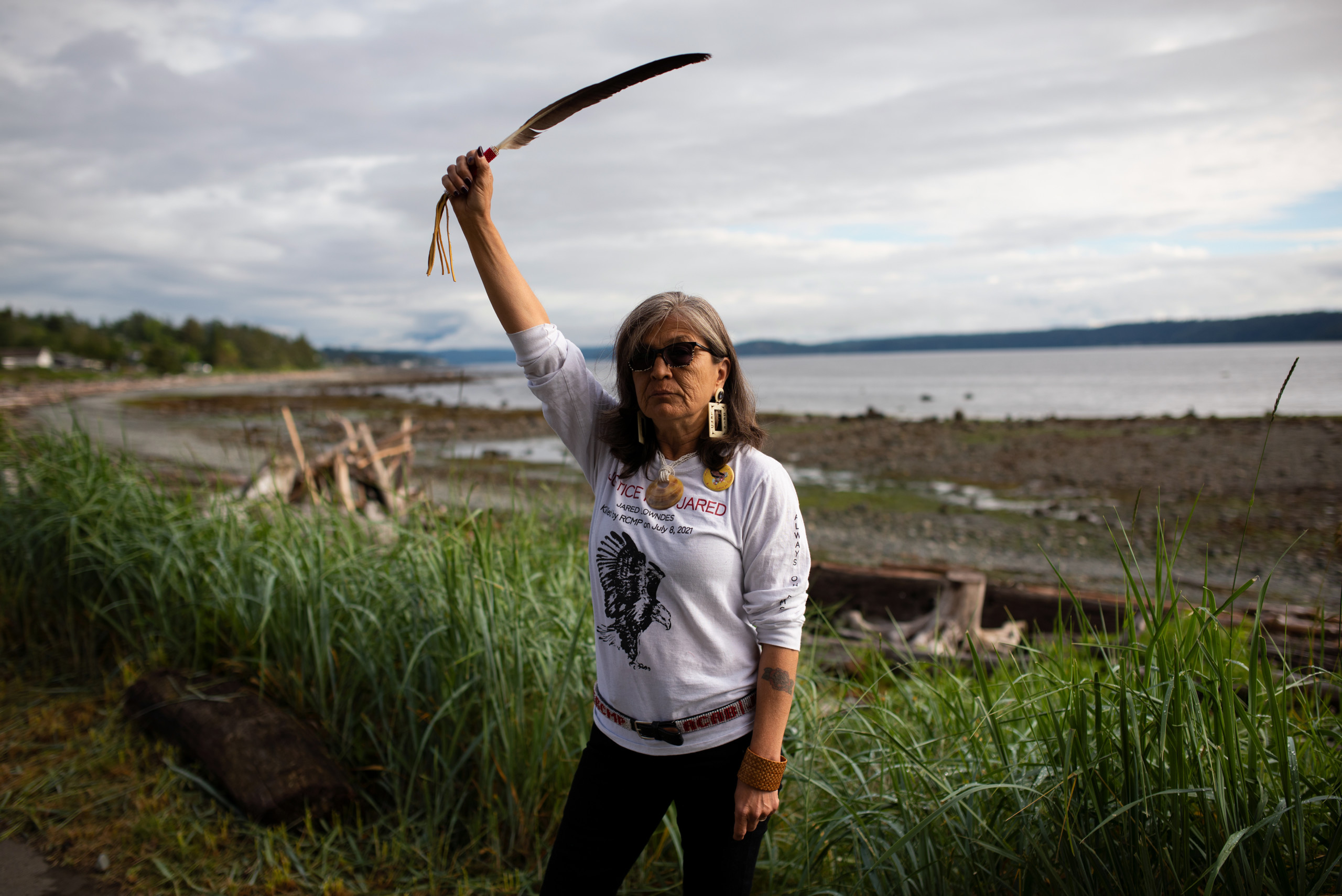
Jared (Jay) Lowdnes was shot by ‘Campbell River’ RCMP in 2021 — his friends and family members are still seeking systemic change by turning 'rage into action,' 'pain into power’
Content warning: This story contains details of police violence against Indigenous people. Please read with care.
The sound of drums and driftwood sticks are like a quickening heartbeat as Alunaye Laura Holland begins to open sealed bags of her son’s clothing — the same garments he was wearing the day he was killed by RCMP exactly one year ago.
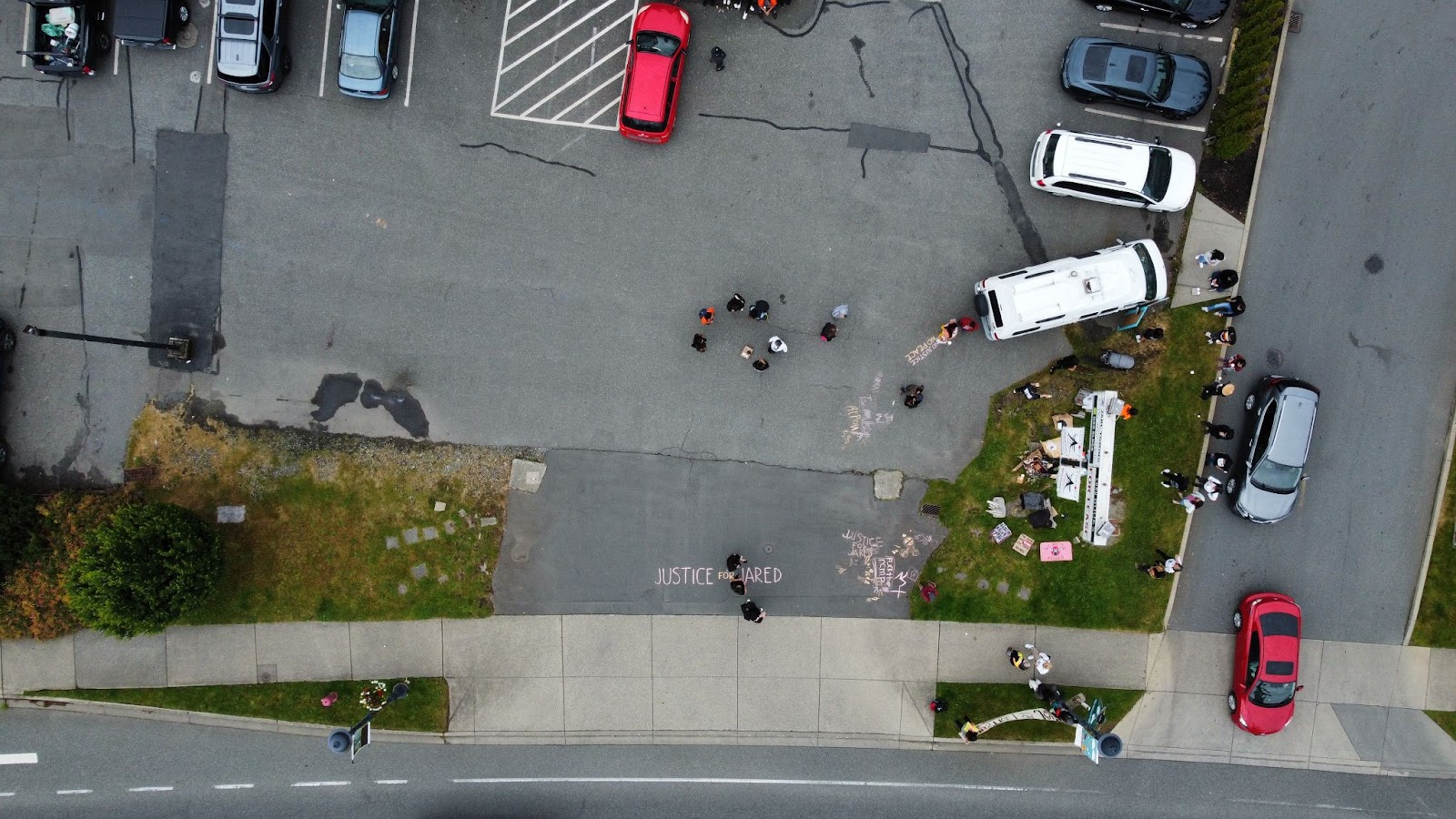
It’s the morning of July 8, and Laura is standing in the parking lot in “Campbell River” where Jared (Jay) Lowdnes, 38, was shot by police on this day in 2021. Now, with family, friends and supporters standing in solidarity, she’s preparing herself to see the clothing he died in, and count the bullet holes.
It’s a painful moment, but something Laura feels is necessary as she advocates for justice for her son. She recalls on the day she lost him, Jay was photographing eagles at sunrise — a special love of his.
“And that’s the last photo he sent me,” shares Laura.
Jay and Laura are of the Laksilyu (Small Frog) House of Wet’suwet’en. Following protocol, this past year has been focused on grieving for Laura. Now begins “my year of love and rage,” she says. “I’m going to turn my rage into action, and my pain into power.”
‘We will never forget what they did to you’
After lighting sage and sweetgrass, Laura turned her attention to a box wrapped in black fabric and tied with red strings — its presence heavy among flowers and other memorial displays.
Laura went to court twice, and acquired an order from a judge to take home the box of Jay’s clothing from the Independent Investigations Office (IIO), a police oversight agency which has been probing into the shooting at the hands of “Campbell River” RCMP.
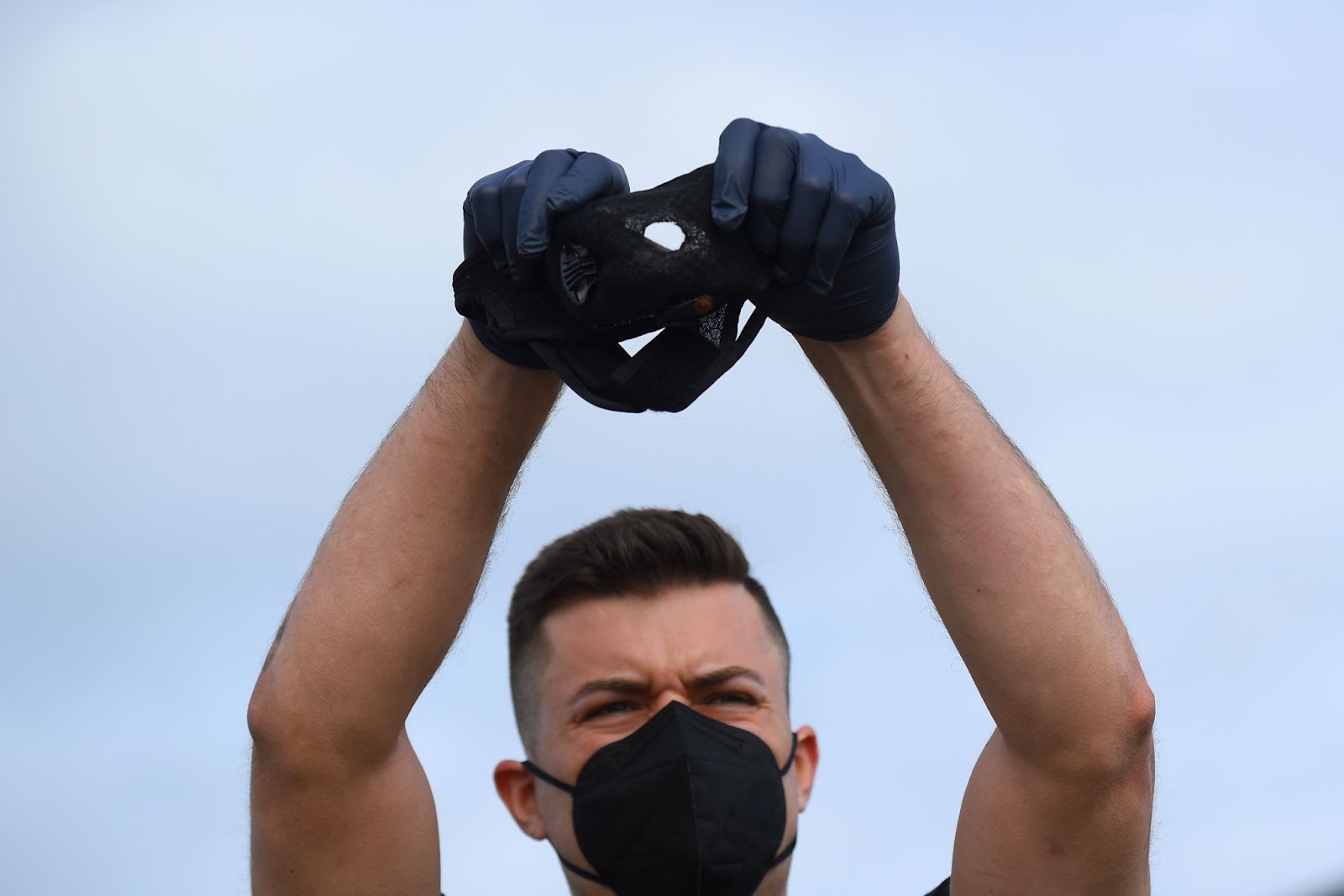
There are several sealed bags within the box, the first containing a black COVID-19 mask marred with what appears to be a bullet hole. Laura counts three more holes in Jay’s shirt, as some witnesses begin to cry.
“A bullet hole to the neck,” Laura observes. She questions why there are so many shots. His pants are soaked in blood.
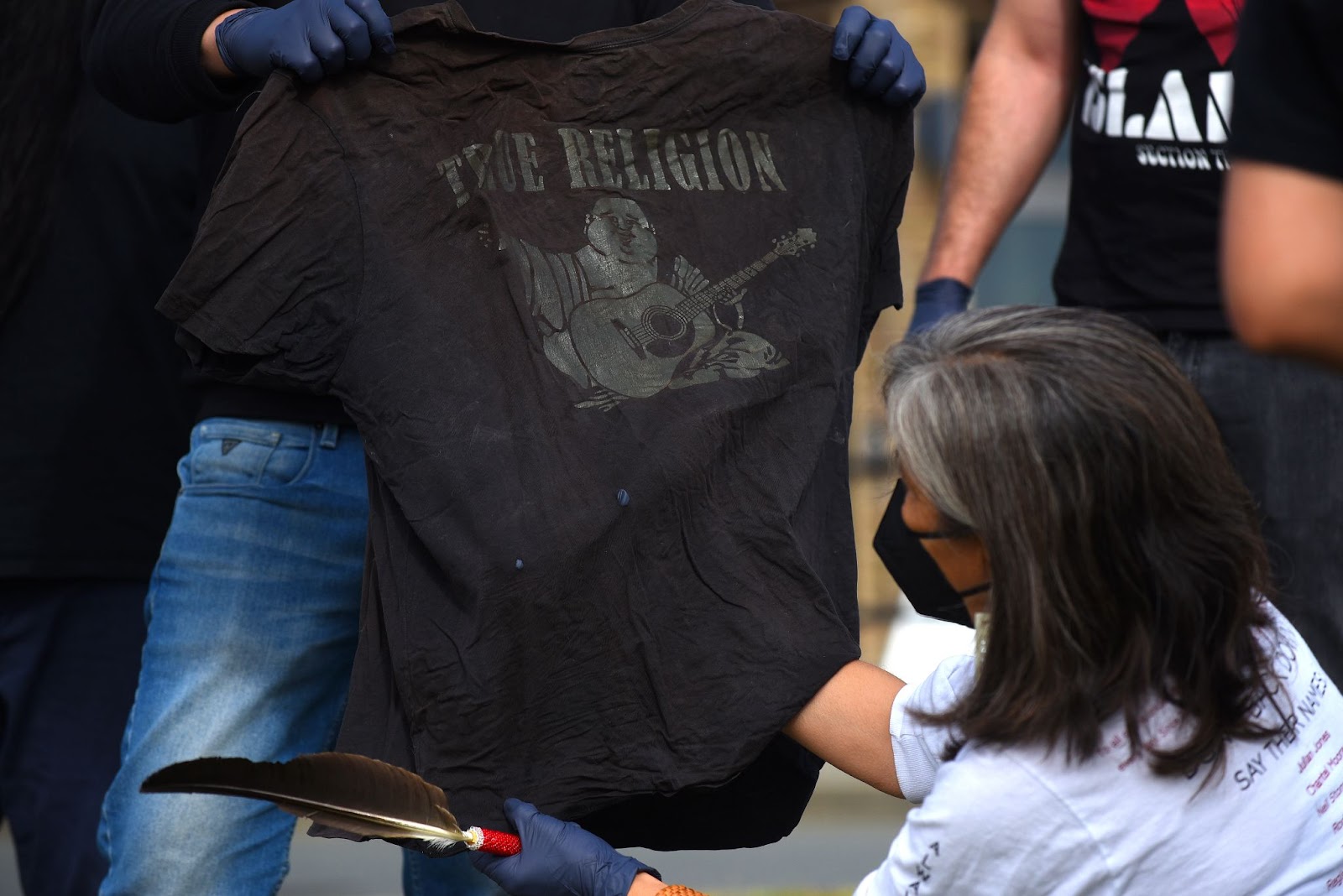
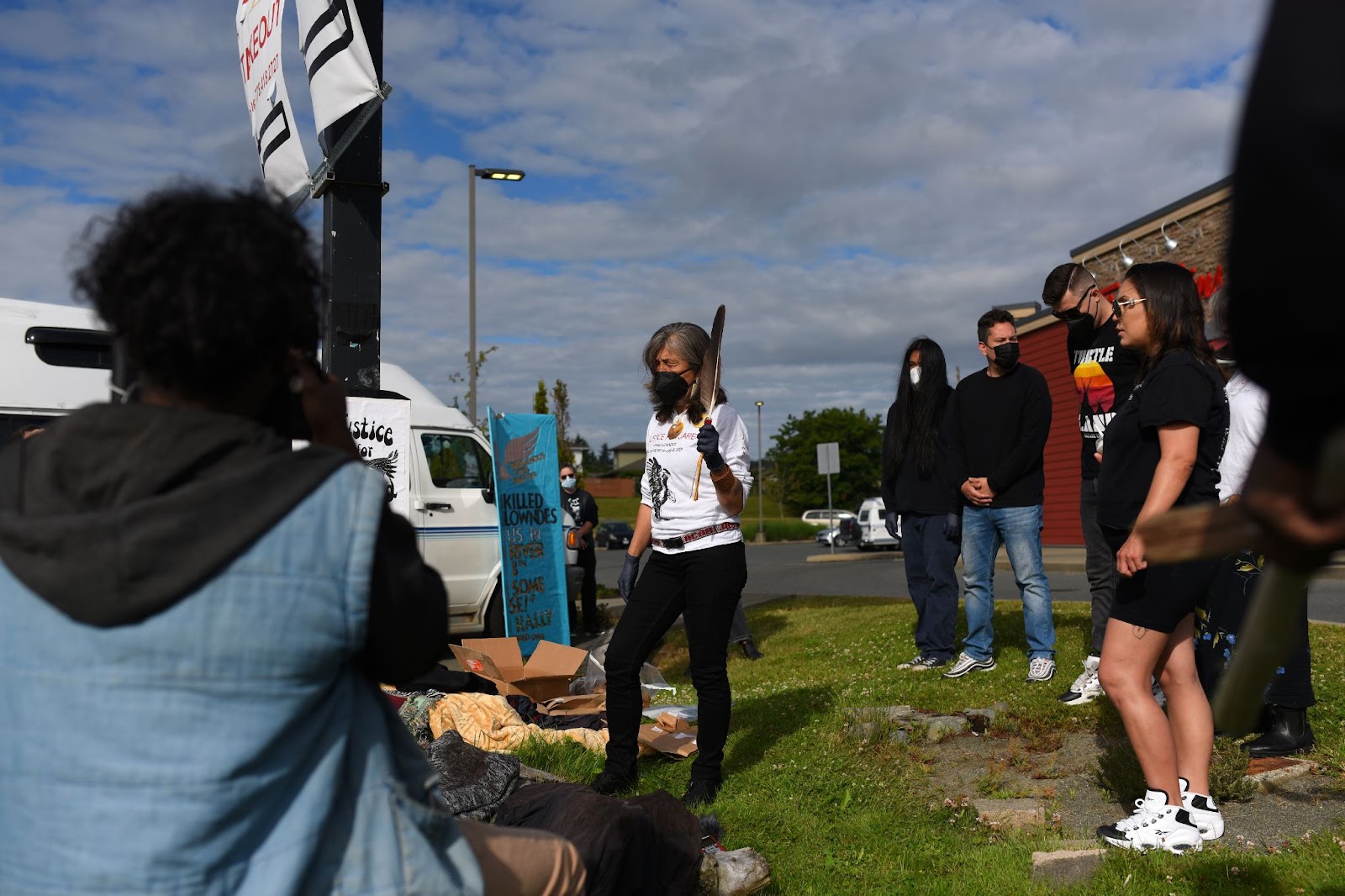
“This is what they didn’t want anyone to see. They may have killed my son, but his name will live for a long time. Long live Jared Lowndes. … We will never forget what they did to you. We will keep on fighting for you and all Indigenous Peoples.”
The IIO told Laura the clothes were contaminated, she says, but she believes there is also an element of “be quiet, go away, we’re going to brush this under the rug.”
“We have a right to have these items back. UNDRIP guarantees it for any sort of ceremony for our families. For our dead. We get to have all their clothing back, all their instruments, all their tools,” she says. Her family will be planning a Burning Ceremony of the clothing with family and close friends.
“Every time you fight back, it’s a win because they’re so used to people going away. They’re so used to people being ashamed and fearful.”
‘It’ll always feel like yesterday’
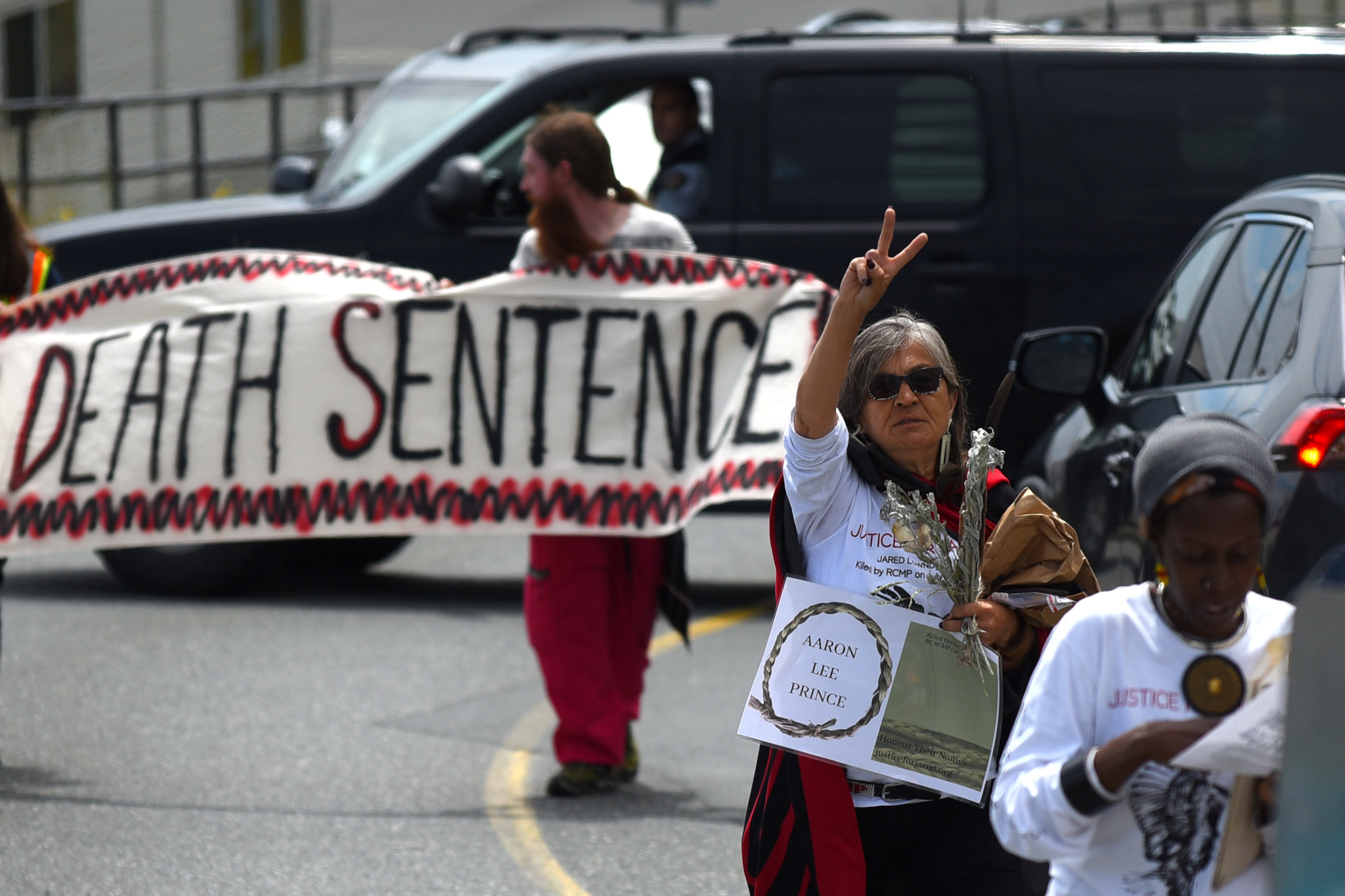
After the clothing was ceremonially unboxed, more people joined the group and about 40 people marched from the initial site of the shooting, a Tim Hortons parking lot, to the “Campbell River” RCMP detachment.
The aim of the rally — and the entire “Justice for Jared” movement that has formed since the killing — is to advocate to end disproportionate police violence against Indigenous Peoples.
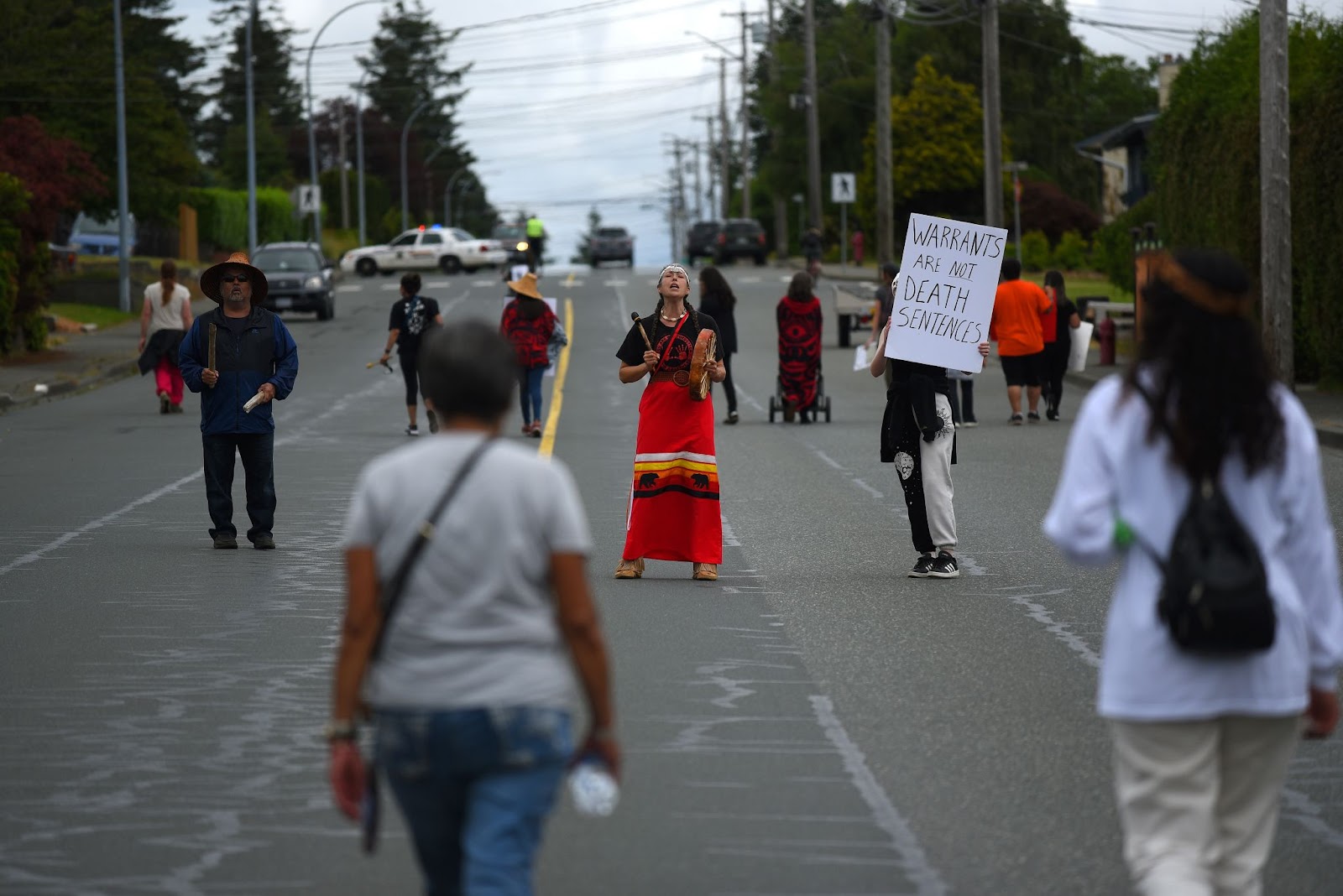
Walking along the road, Laura marched beside Martha Martin, the mother of Chantel Moore, a Tla-o-qui-aht woman who was killed by RCMP in 2020 during a “wellness check.” Chantel’s death has since been ruled a homicide.
Martha addressed the Assembly of First Nations on July 4, calling for real changes to be made to policing — to “stand behind us, for these changes to happen.”
Laura and Martha both call for changes in policies, how policy development happens, and how the investigative offices are created.
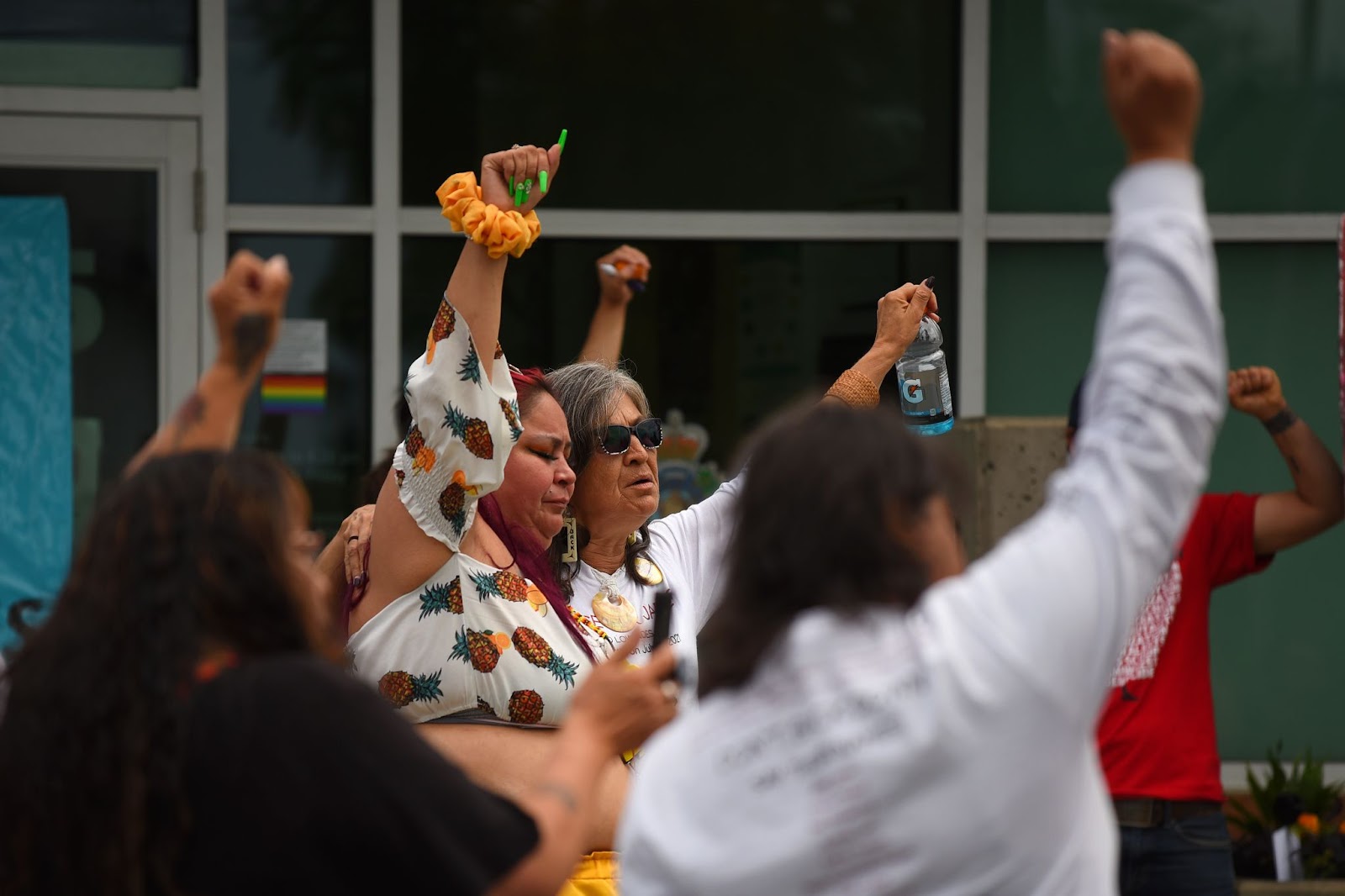
“Organizations and institutions are talking about racism and discrimination in the police forces. But we need to do more than that. We need to do more than talk,” Laura says.
“We need to make our government do something. They need to change the laws. They need to change the policies. They need to protect us. All of us. They need to serve all of us.”
Jay’s spirit is a driving force behind all of Laura’s work, she shares. Over the past year, she has gathered with other families who have also lost loved ones to police violence.
“That adds fuel to my fire. I just want to fight harder,” she says.
“I see parents who are hurting like it was yesterday. And that gives me some insight into what the rest of my life is going to be like,” Laura adds. “Ten years from now, it’ll always feel like yesterday.”
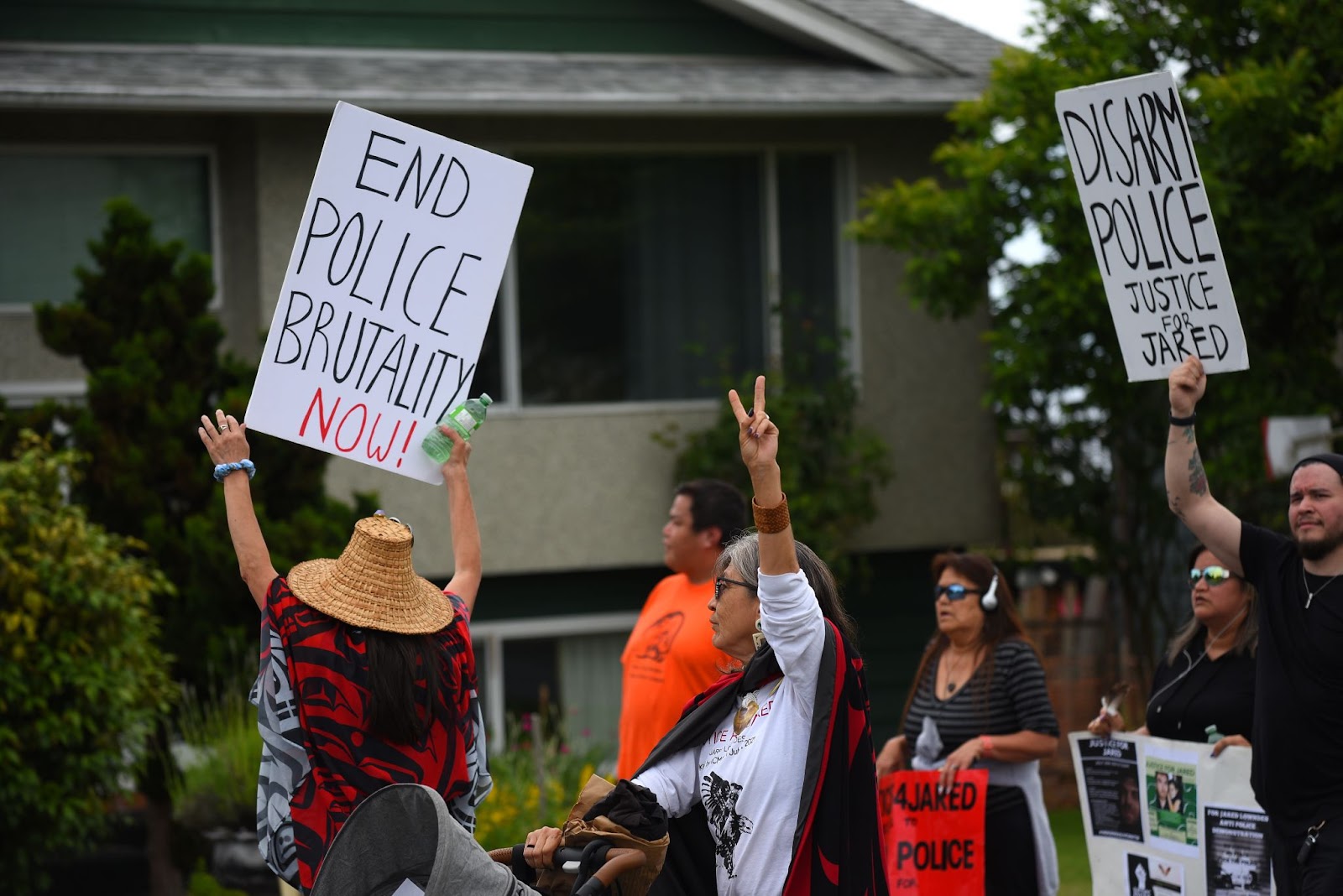
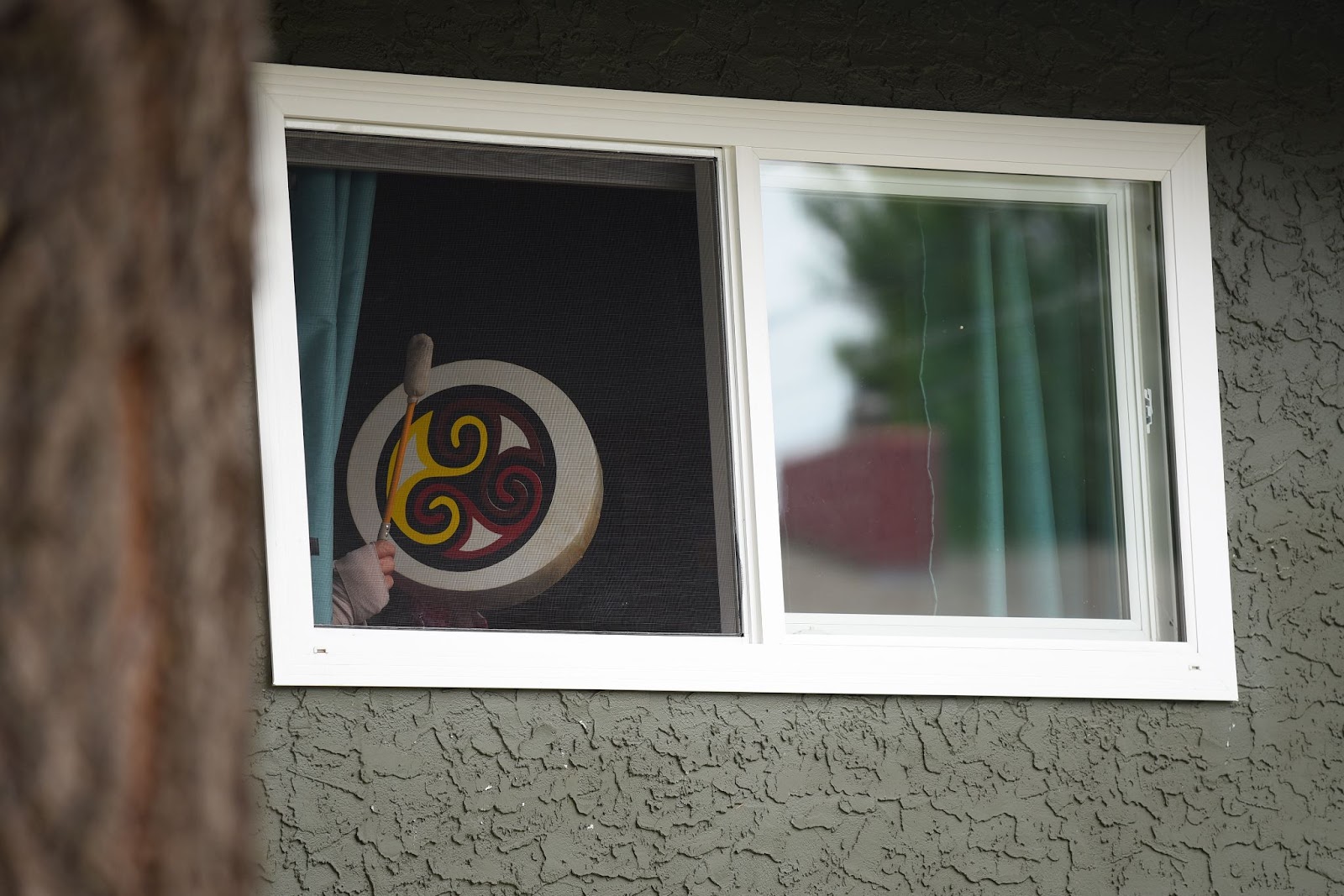
While some people along the route of the rally, which temporarily blocked a road, displayed anger at the fact that they were delayed, there were also moments of support. Along the route, there was a family of three, a couple with their mother. Laura had a conversation with them, and told them about her experience unboxing Jay’s clothing.
“They were listening with the intention of actually hearing me. They were sympathetic and offered their condolences.”
The RCMP were present during the march to conduct traffic, and later put out a press release saying people “felt unsafe” to approach the police detachment during the rally which followed. The release says there was “graphic imagery at the front doorway” of their building and demonstrators were “unwilling to work with police.” It also put focus on a police dog which died during the same incident where Jay was shot.
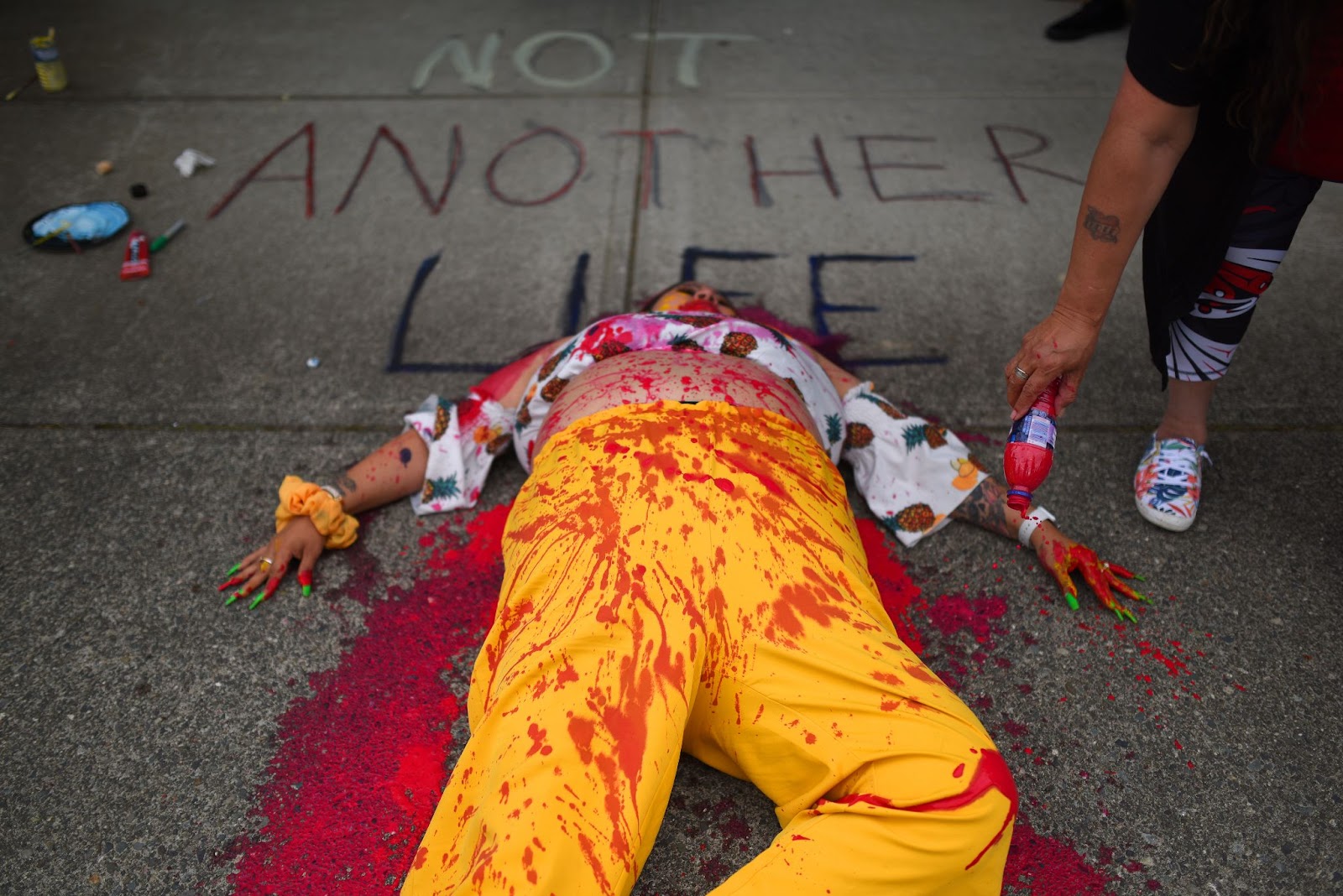
The RCMP were previously criticized for putting more focus on the life of a dog than on that of a human being.
“It was determined that the demonstration was in relation to the death of Jared Lowndes who died during an interaction with police one year prior, the same incident in which Campbell River’s police service dog Gator was killed in the line of duty,” the release attributed to Cst. Maury Tyre and Sgt. Voller from July 8 says, in part.
“The Campbell River RCMP would like to thank the public for their patience & support relating to the demonstration. In addition to the many expressed condolences for PSD Gator.”
The Justice for Jared movement calls for an end to police violence, defunding and dismantling the police, and an end to the use of police dogs. Pivot Legal Society has also called on the province to regulate police service dogs.
“[Police service dog] bites are the leading cause of injury at the hands of police, exceeding by a factor of six injuries incurred by all other weapons,” says a 2014 report from Pivot Legal Society.
“Stripping away the pomp and circumstance around police dogs reveals a different type of relationship between police dog and handler. Far from equals, police dogs are used by police forces as high impact weapons.”
Calling for truly independent civilian oversight and investigative offices, Justice for Jared organizers also demand support for grieving families. There is currently a lack of formal and systemic mechanism for documenting and reporting police killings — and investigations by the IIO are a big piece of the problem, explains Meenakshi Mannoe, a criminalization & policing campaigner from Pivot Legal Society. She has been a supporter of Laura’s work over the past year.
Although the IIO is a civilian oversight agency, “We know for sure that 50 per cent of them are former police officers,” explains Mannoe. She questions how this can be a truly independent investigation, “of their friends, coworkers? Whether they’re in the IIO, the VPD, the Edmundston police — they’re all standing behind that blue line.”
“That line is not about what they say it is,” Mannoe tells the crowd. “That line is about the brotherhood that they belong to, the gang that they belong to, the code of conduct that they enforce, that means there’s a wall of silence when we try to talk about what they’re doing.”
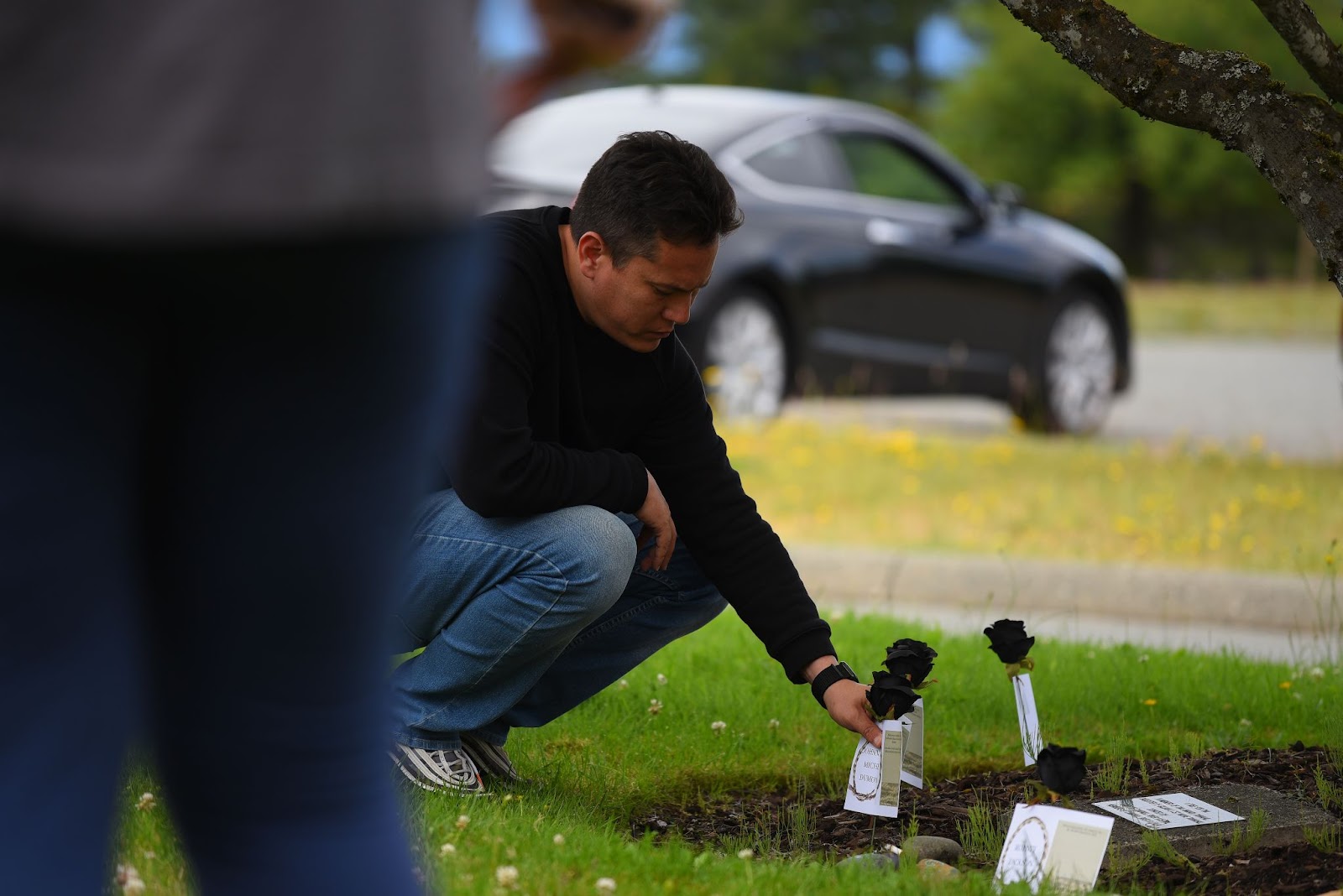
Jay’s eagles
Jason Watts was a close friend to Jay, and he shared his experiences from early childhood into his teen years, being at the receiving end of heavy-handed policing. These experiences formed his reality as an Indigenous man.
“So I developed very strong relationships with the families and my local community because we don’t phone the police to stay safe. We phone each other. I’m phoning Jared. And we protected each other,” he says.
“It’s been decades that we’ve been doing that and it didn’t start with us. It started with the generations before us. That’s who Jared was to me as my brother. He was a person that protected his community. He was a person that protected his family, his children.”
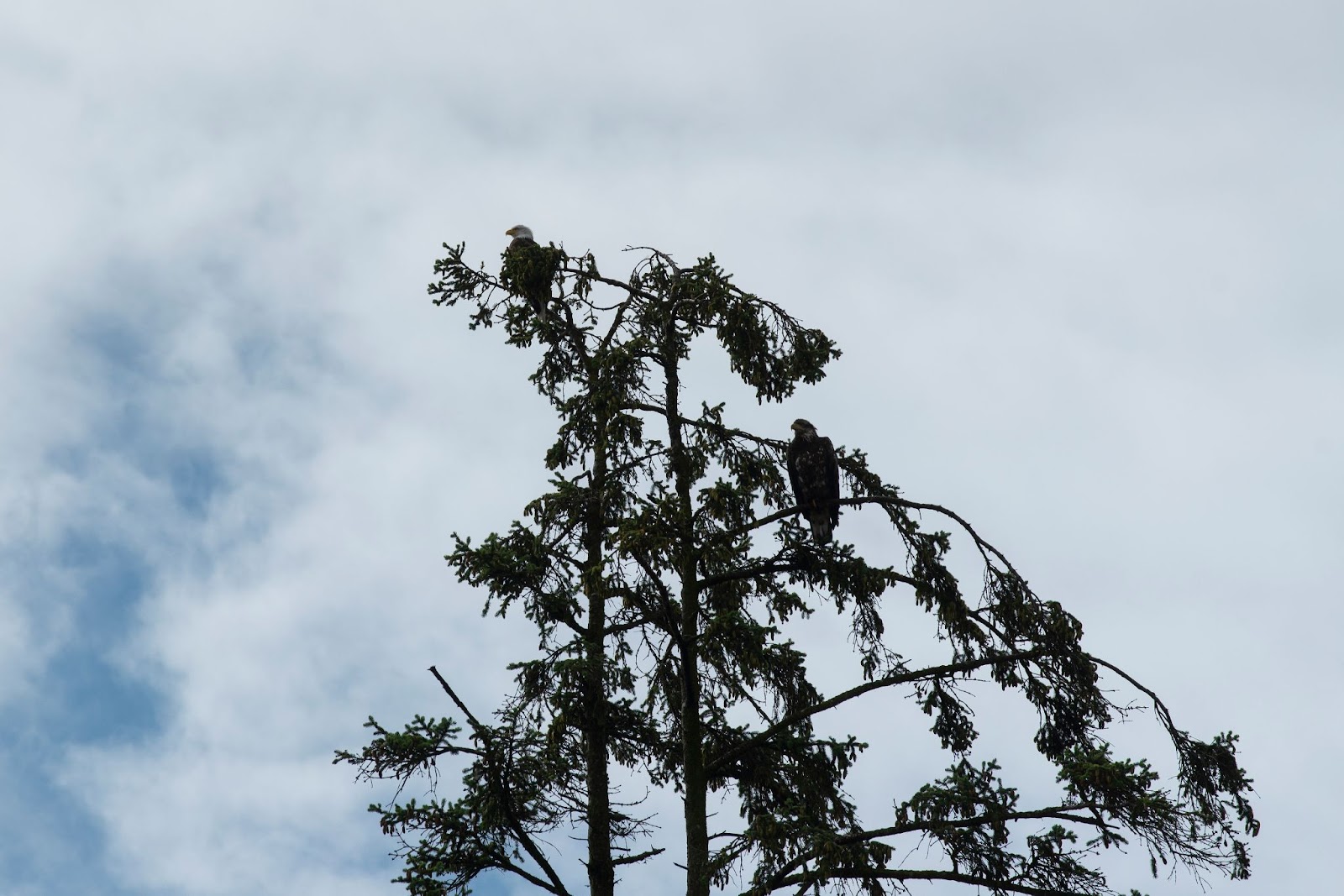
An eagle that has been observing the ceremony and making occasional chatter calls now pipes up louder. The eagles are agreeing, people murmur. There’s a pause as everyone listens to the eagle song.
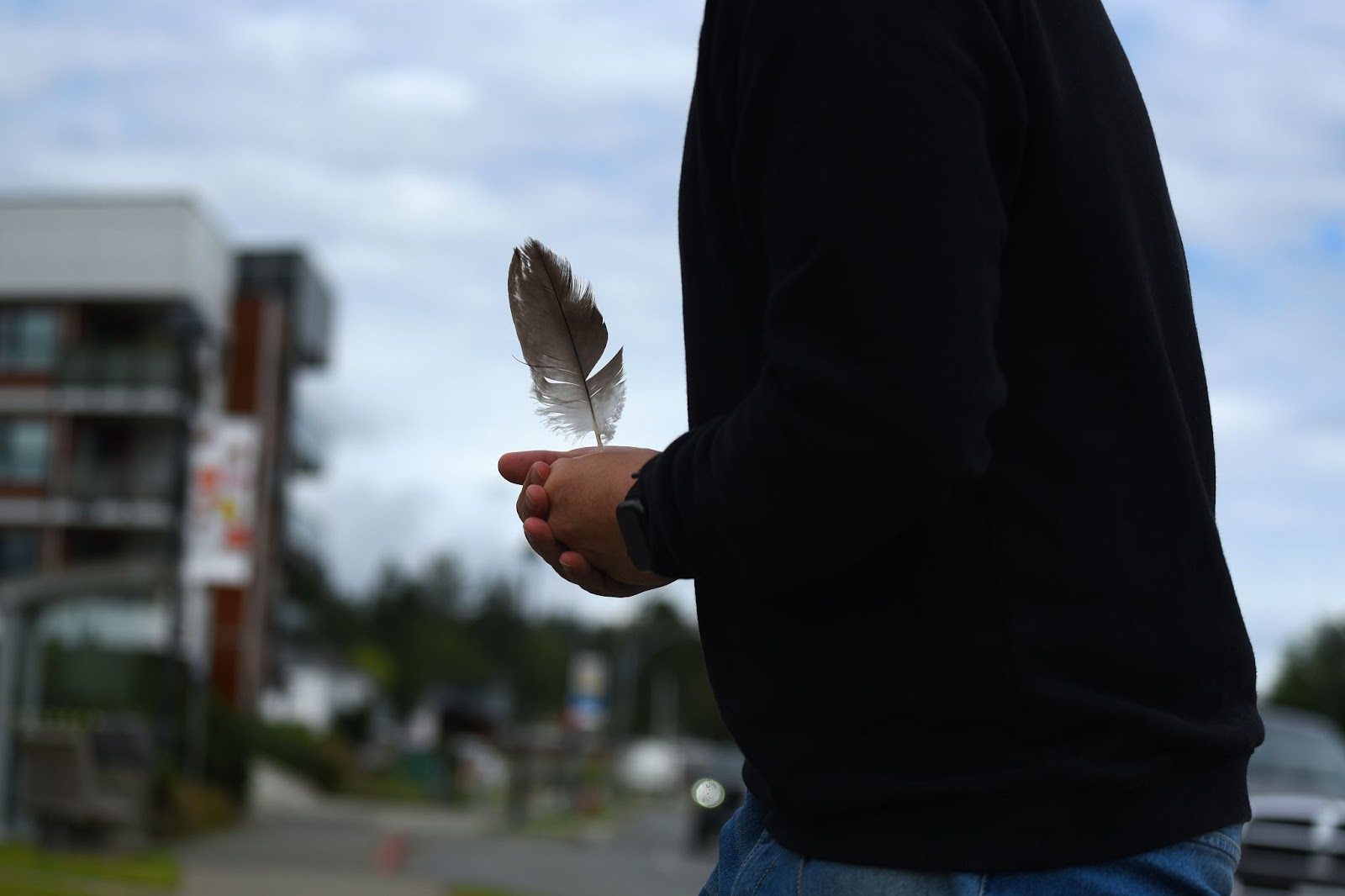
Circling down, the eagle swoops towards the gathering. The crowd gasps as a single feather falls slowly. Traffic stops, as Jason runs to retrieve the feather for Laura. She will later pass it on to a couple, dear friends of Jay who are now expecting a baby. They’ll give the feather to their daughter, in remembrance of uncle Jay.
Laura will use her voice full force now, motivated by love for her son, and for future generations. “There’s no one that can guarantee me that the RCMP will not shoot one of my grandchildren,” she says.
“I have no guarantee. I want to work towards a guarantee that they will not shoot your grandchildren.”
Editor’s Note: IndigiNews has purposefully avoided publishing images of the supporters in attendance throughout the day, to protect their privacy and identities, knowing that these images have been used against people who participate in public actions.