When it comes to agenda, celebrities, brands and influencers are now forced to draw lines in the sand, or risk getting left behind. Noelle Faulkner shares her thoughts on cancel culture 2.0 and the rise of accountability.
From parading through the town atop a donkey to the act of pelting rotten vegetables, public shaming in one form or another has been a constant throughout history. The English threw bricks (or if you were lucky, cabbage). The people of Siam made adulterous women wear a hibiscus. Western Europeans’ version of a one-star Pitchfork review was bolting a “shame flute” around the neck of terrible musicians. Today’s rotten produce are words, flung powerfully like arrows through the sky, millions per second, aimed at toppling blue-ticked empires.
Is cancel culture bad? It depends on who you ask.
Of course, victims or those at risk of cancellation are going to wail "yes!". In an interview in 2019, Taylor Swift vehemently dammed the vitriol she received post-Kanye West’s “Famous” beef—which, granted, was full of nuance.
“When you say someone is cancelled, it’s not a TV show. It’s a human being,” she said.
After her “cancellation”, the 31-year-old’s spine stiffened—she reversed her formally apolitical stance when she publicly endorsed a Democrat candidate in her home state and began speaking out about her personal politics. In a very on-brand move, Swift made bank from being a victim of bullying: she wrote songs about cancel culture, politics and LGBTQI+ rights; in her Netflix documentary Miss Americana she damned Republicans for using “Christian values” as a cover for hate, and she took to Twitter to call out Donald Trump.
After stoking the fires of white supremacy and racism your entire presidency, you have the nerve to feign moral superiority before threatening violence? ‘When the looting starts the shooting starts’??? We will vote you out in November. @realdonaldtrump
— Taylor Swift (@taylorswift13) May 29, 2020
This is a textbook example of how call-out culture has evolved—the public has bigger expectations of example-setting from those with the privilege of an audience. Swift had fought for herself before (see: her beef with Spotify), but this was different. She took it to the mattresses. And though her white nationalist fans then ironically cancelled her for speaking out, the artist gained global respect by using her enormous platform. Ever in tune with her young audience, Swift recognised her role as a person of influence in a brave new world.
Karlie Kloss has been a different matter altogether. The model and entrepreneur is married to Joshua Kushner, brother to Jared Kushner, Ivanka Trump’s husband and senior advisor to Donald Trump, and her approach on politics has been named as soft touch by others. After last week’s terrifying attempted coup on the US Capitol, Kloss condemned the violence as unpatriotic.
Tavi Gevinson was quick to call out the model: "Karlie, give it a rest. You have a lot of nerve to make a show of championing girls' coding and your other causes while only politely disowning your family in public (lmao @ you ignoring Ivanka on social media; she still went to your wedding)," she tweeted. "I can't believe you're not more embarrassed not just by them but YOUR decision to only publicly disown their politics in polite ways so you can have it both ways."
Accepting the results of a legitimate democratic election is patriotic. Refusing to do so and inciting violence is anti-American.
— Karlie Kloss (@karliekloss) January 7, 2021
This brings us to an interesting intersection in modern cancel culture and the celebrity's role. See also: the person closest to those who might be harming others. And in all honesty, this is not about dragging the oligarchs or eating the rich; it's about the ensuring wizard has accountability when the emerald curtain is drawn.
The planet is broken. With a new collective cultural trauma unfolding before us nearly weekly, many are asking: If you're in a position to fix it for the greater good, why wouldn't you just… do the right thing? It is a far more noble cause to create change despite disruption than sitting on the fence on the sidelines. Non-famous people with very little power do this every day. But that’s how we got to this new world era of activism culture, is it not? Anger, sweat, blood, death, exhaustion and tears.
For many celebrities, influencers and personalities with big platforms, the issue is less and less about whether they have the right to say silent on such topics (they do), but about why they choose to.
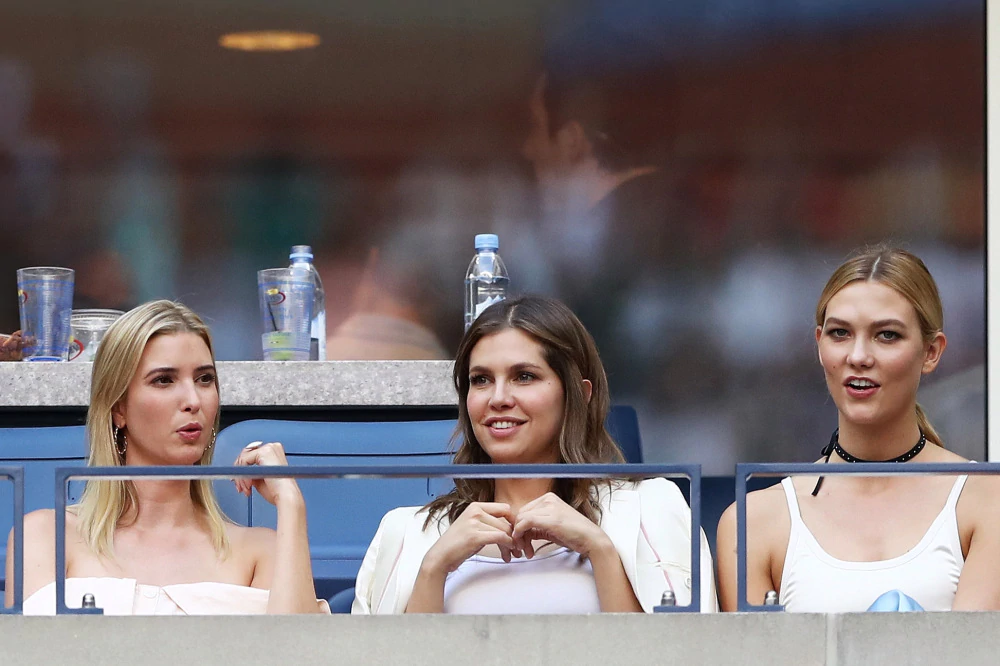
Let me be more clear: if millions of young people—AKA the generation that will inherit this mess of a planet—look up to you as a role model but your inner-circle frequently acts to contradict the beliefs you put on display, and your personal brand is based on empowerment for disadvantaged young women, I would recommend drawing a line in the sand of where you stand against those things sooner, rather than later.
And it can be done.
Gen Z, who have zero brand loyalty, zero tolerance for bullshit and all the power of an inquisitive mind and Google at their fingertips are showing us how. Look at Claudia Conway, the 15-year-old daughter of Trump advisor Kellyanne Conway. She very publicly called her mum out and said something to the effect of "I love my mum, but I don't agree with her politics and I will try to educate her," her TikTok activism led her mother to resign from The White House. The two are working on their relationship around their moral stances.
Kloss' version of that, has been targeted as a much weaker defence. Via Twitter: “I tried, ” she said.
Celebrities, influencers and brands trade in popularity and engagement it is their main currency—you can have the latter without the former, and you will make money, but soon the cream will float to the top. A dissolved social status and loss of popular following is a genuine fear for people in power, and the trickle-down repercussions of cancellation can be huge (with the help of good PR, most bounce back). This is why, just like during the Studio-dominated the golden era of Hollywood, where stars had to be seen and not politically heard, many celebrities now choose to stay out of risky discussions. They fear upsetting both sides of whatever the issue might be because they fear unpopularity. Cue the performative virtue signalling and out-of-touch acts– such as the cringe Imagine video of 2020. It might have worked for Bob Geldof and the charity supergroups of the '80s, but at this point in history, nobody has the stomach.
Sadly, there are bigger things at play here than just scrapping over celebrity rankings: we are all bearing witness to a planet in an emergency state. One of post-truth and "alternative facts", where environmental devastation is colliding with social destruction, the most valuable things like education and health and science have been too undervalued, justice is ambiguous and where freedom is anything but free.
If that means that certain gatekeepers or people in power who have been silver-plattered or earned influence through fame have to consider the consequences of their actions, so be it. As the public, we should be pulling at curtains' threads to see what is hidden behind the spectacle, anyway.
It's about time Newton's Third Law of motion came into play. If the last four years of global politics have taught anything, its that the world has come too far the wrong way and it's time to snap it back.
Subscribe to become a Vogue VIP and receive monthly magazine delivery, digital edition access, VIP event invitations, insider content, exclusive offers from our luxury partners and more. Subscribe today.