The old-world Naples hotel that's filled with art and style.
Every city has its travel clichés. Sydney has its beaches, Melbourne its coffee, Paris its landmarks and croissants, and Venice its canals. Now, travel clichés aren’t bad by any means, they’re simply expected and oft-promised experiences of culture. For us, that promise is long summer days, but for the Italians, it’s passion, history and food that encompasses both.
These cliches are most amplified by the flagship patron saint hotels of the world. You know the type – the Waldorf Astoria in New York, the Chateau Marmont in Los Angeles, the Park Hyatt in Sydney, the Ritz in London and the Four Seasons Hotel George V in Paris. But often, especially for the seasoned traveller or those with an incredibly discerning and heightened sense of style, service and value, those hotels are just that: gimmicks. Don’t get me wrong, each that I’ve mentioned are magnificently luxurious and bucket-list stays, but sometimes one just wants impeccable service, comfortable and well-thought-out rooms and a place that feels like it isn’t trying too hard. The Romeo Hotel in Naples, as one of Naples' most luxurious hotels, is all these things. It is a place of simple decadence, without any Neapolitan tourist taff.
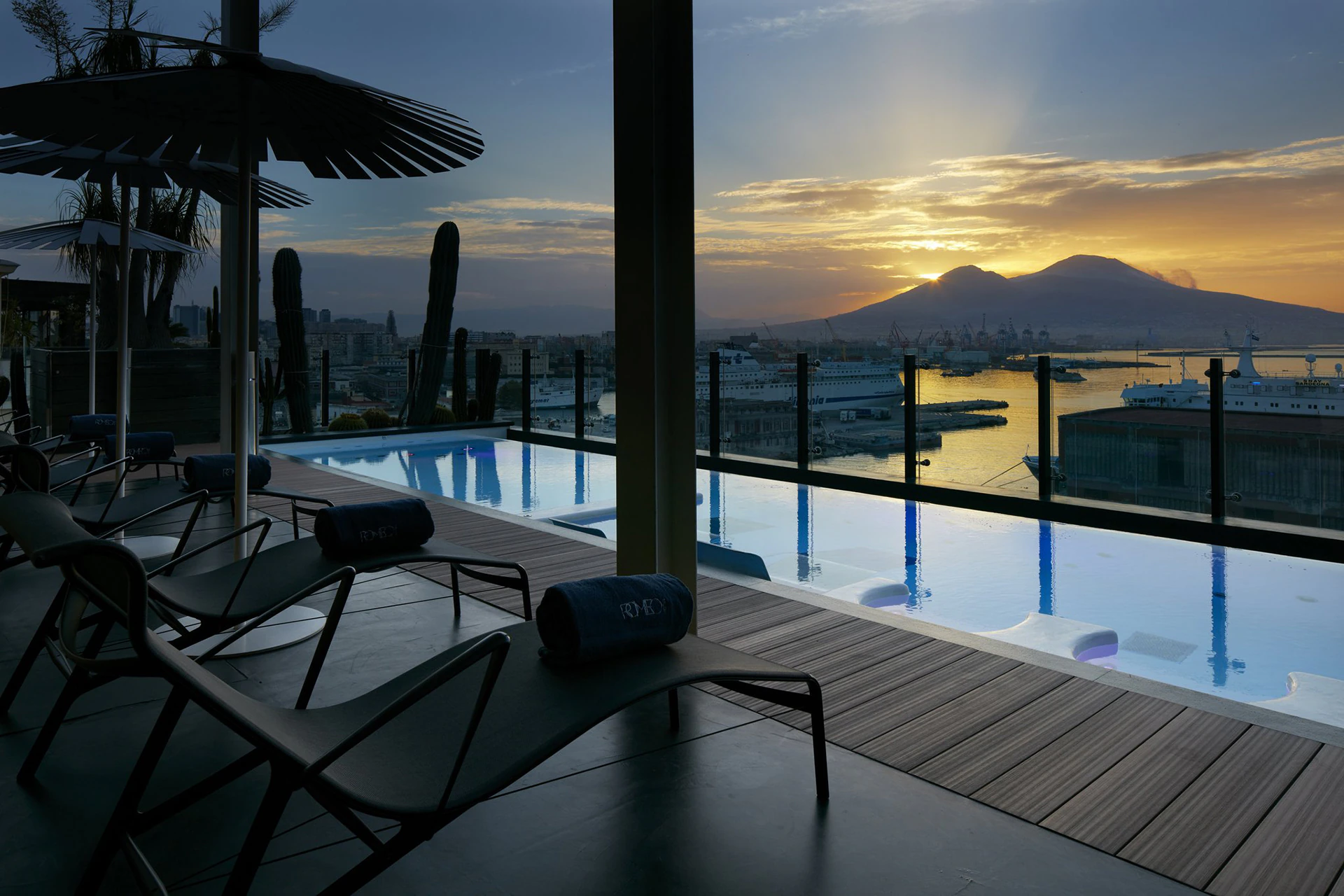
Situated on the dusty port of Naples, the departure point to the Almafi Coast Naples, which is otherwise like every other port in every other city, Romeo Hotel boasts incredible views out to the twin tops of Mount Vesuvius. Having had somewhat of a revival in recent years, the birthplace of pizza, muse to Caravaggio, home to a fusion of Baroque and Renaissance architecture and the place attributed to the most Michelin Stars of any city in Italy (and you bet that includes Il Comandante, inside Romeo Hotel), the regional capital of Campania has seemingly got its groove back, Where it was once the rough cousin to Rome and gateway to paradise, now, it is a bubbling pot of culture, cuisine and history, juxtaposed with modernity.
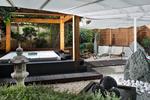
Romeo Hotel has all the promise of an urban, luxury hotel – a pool that feels very L.A, despite the fact it overlooks the island of Capri and Mount Vesuvius, a spa that will instantly remove all traces of jetlag, a cigar room, temping and delightfully excessive dining options (including in-room) and architecture that beckons for your attention.
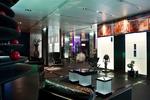
The hotel is located within ten minutes to the beautiful city centre (a UNESCO world heritage site and home to 448 historical churches), the higher your floor number, the better the view out onto the sea. Opened in 2008, which oddly, is an aesthetic is also all over Italy, so it goes without notice, the hotel boasts a mixture of Japanese and Euro fusion - its crystal façade was designed by lauded Japanese architect Kenzo Tange and associates, arguably one of the best-known modernist architects of Japan. The foyer is filled with a contemporary mix of art, antiques and curious talking points, like a water feature that despite feeling so incredibly kitsch, adds to the eclectic ambience profoundly. The Romeo Hotel oozes the kind of stylistic risk-taking that rarely happens in luxury hotels, but when it happens, should be applauded.
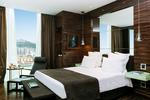
The rooms are comfortable and plush, featuring materials that highlight the contemporary-ness of the hotel – the use of marble and wood acts as a reminder of Italian design, but it doesn't feel "Italian", like many of the other hotels that seemingly ham it up. Our room had a coolly futuristic feel, via the use of button controls for the lighting and barely-there frosted glass to separate the bathroom and living area. The cruellest feature? A bathroom scale. Nobody needs that when in Italy.
A peek into the top tier suites saw am expansive use of light, art, wood and a to-die-for bath in a huge bathroom – if you can afford it, consider it, the use of space and minimalism is a palette cleanser among many Italian luxury hotels. Plus, the large, standalone bath is a blessing after a long day stomping the cobblestones of Naples the heat of Pompeii if you venture out for a day trip during summer or take a day trip via Hydrofoil or ferry to one of the many islands of the Almalfi. Just make sure to take time to enjoy the pool while you can.

Romeo also boast a Gattaca-esque spa for those who seek to escape the Campanian streets. The spa, Dogana del Sale plays on the thread of modernity that flows through the wood, marble and metal, as well as the cross-continent aesthetic. On offer? Facials rooted in Chinese medicine, Hawaiian massage and a pleasant throw to Australia, treatments by our very own brand Sodashi.
There is something to be said for the hotels that celebrate art, design, architecture but also defy what their surroundings dictate with a new world air of independence. You won’t find the old Italian traditional notes here – like those ludicrously heavy drapes with tassels and gold embroidery that seem to appear in every hotel here. Instead, Romeo, with all its art and cultural quirks, is a refreshing adaptation of the busting port on which overlooks, not to mention Naples as we find it today: optimistic, style-driven, global and history conscious but future-facing.
Visit: romeohotel.it