
Tokenization of funds and other assets onto blockchains is gaining momentum as a way to deliver greater access, liquidity, and efficiency to investors. On-chain settlement could mean faster transactions, new ways to access yield, and even new asset classes. But for many investment advisors, innovations around tokens, decentralized finance (DeFi), gas fees, smart contracts, on-chain settlement, and staking remain buzzwords in a market still finding its footing.
That is where the role of asset managers comes in. As interest in investing in digital assets grows, firms with the scale, regulatory alignment, and credibility to bridge the gap between traditional finance (TradFi) and digital assets are becoming essential. They can help translate complex technologies into practical portfolio strategies, offering advisors tools to talk with clients about diversification, risk, and real-world use cases.
Techopedia spoke with Max Gokhman, CFA, Deputy Chief Investment Officer for Franklin Templeton Investment Solutions (FTIS), about how tokenized funds and digital assets are reshaping portfolio strategies. From why scale and trust matter, to how tokenization can provide new efficiencies, he explained what advisors need to know to guide their clients to incorporate digital assets into their portfolios.
Key Takeaways
- Tokenizing private assets and new asset classes on-chain can open up opportunities that were previously illiquid for institutions and inaccessible for individual investors.
- Digital assets and tokenized products can offer investors diversification and yield opportunities, but they require careful risk management.
- The crypto industry must shed its Wild West reputation and mature to gain credibility and earn the trust of advisors and clients.
- Institutional investors are starting to see the potential of digital assets, but many remain hesitant.
- Blockchain-based finance is moving closer to the mainstream, and advisors who educate themselves now will be better positioned to serve clients.

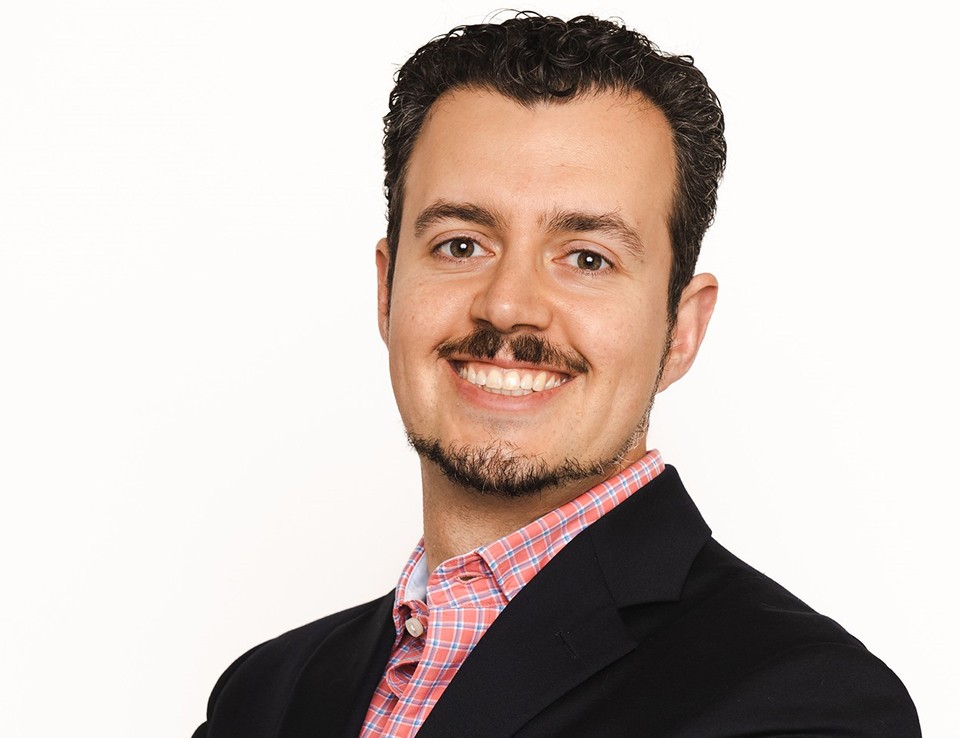
Max Gokhman is Deputy Chief Investment Officer for Franklin Templeton Investment Solutions (FTIS). In this role, he is responsible for leading global investment research, including quantitative, fundamental, and manager research teams.
His role includes co-chairing FTIS investment committees and portfolio management responsibilities. Gokhman is also driving the digital transformation of investment processes for FTIS through the MosaiQ(TM) platform, a proprietary multi-asset operating system unifying portfolio construction, management, and analysis.
Previously, he was President and Chief Investment Officer of the start-up asset manager AlphaTrAI, where he harnessed artificial intelligence (AI) to build objective-oriented investment strategies.
Before that, he was head of asset allocation at Pacific Life Fund Advisors, a portfolio manager with Mellon Capital’s multi-asset group, and a founding member of Coefficient Global, a quantitative macro hedge fund.
The Growing Appeal of Tokenized Assets
Q: What is driving the shift in investor appetite towards tokenization now?
A: The interesting things will be tokenizing private assets and new asset classes, which you could not trade before – both for institutions that may not have been able to generate sufficient liquidity and for individuals who did not have the minimums to be able to access those opportunities.
That is where tokenization is driving a lot of interest, especially from firms like ours that have significant private market capabilities. We would like to deploy them across a broader footprint and generate new liquidity venues as well.
That is the biggest benefit of taking those assets on-chain. I’m not sure there is as much of a case for tokenizing individual stocks, but I support anything that further moves TradFi onto blockchain rails.
Q: How are tokenized funds and on-chain settlement changing access to yield?
A: Tokenization does give access to broader liquidity. One example is with our Benji platform, where we offer intraday yield, ensuring your money never sleeps. If you need to transact in our money market fund on a weekend, that transaction happens instantaneously. No one loses any yield the moment it hits the wallet of the next person you transfer it to.
We can think about it from a money market fund that has a relatively low yield, and especially at an individual level, but if you think about significant transactions with instruments that have a higher yield, those benefits matter. We can offer intraday yield and 24/7, frictionless settlement on-chain.
That is what you are going to see from us and other innovators in the space over the next couple of years, building upon those proof statements to more utility.
Q: What are the types of assets you see developing?
A: There is going to be a lot of new asset classes, including private assets. With anything from private equity, venture capital, and private credit, there is a two-fold benefit.
First is liquidity, which brings institutions in because now they can directly transact and generate liquidity in existing positions. That is a huge element, especially for our institutional clients who are looking at assets for a total portfolio approach, where they can’t bucket something as illiquid and just hold it separately from the rest of their portfolio.
And then for individual users, it gives access to new opportunities. One of the biggest reasons for inequality has been a lack of opportunity. The reality is, if you buy an index fund, that does not represent the real economy, because most of the real economy is in private equity. Anything we can do to broaden the opportunity set so that the average person can buy the same investments that someone who is ultra-wealthy can, or some institution, is a critical component.
The other component is that there are brand-new asset classes that we can create.
One of the things we are going to start seeing is, for example, royalty streams for an artist. Imagine you follow an artist and they become the next Taylor Swift. If you had bought their token when they were just starting out, you would now be collecting significant passive income from those royalties. You may also get airdrops of things like concert tickets, VIP experiences, and that is where we start seeing the line between your personal life and investing blur.
We are looking at tokenization of fine art, where, to be a collector, you may not be able to buy a Monet, but you can get exposure to a Monet, and you can then have a decentralized autonomous organization (DAO) that allows you to decide where it gets exhibited.
We spend a lot of time talking to advisors about how their role is evolving from a portfolio manager to a financial coach, to almost like a life coach, where everything related to investing starts being a broader part of a person’s life.
Those are all things that we have seen in DeFi-land. They are now becoming more mainstream through tokenization. That is exciting – these new asset classes that create brand new income opportunities and asset appreciation opportunities for individuals and expand how they view their financial picture.
Most Zoomers who grew up in touch with DeFi – and players in TradFi who are linked to that – understand that it is happening. And there are going to be folks who say this is a fad. We will see where the cards lay. But we are making a play on the former being the case.
Reframing Portfolio Construction for a Tokenized Future
Q: How should advisors think about advising on portfolio strategies to incorporate digital assets?
A: Part of it is not thinking about digital assets as a monolith. Too often, I hear the memecoin analogy, and my point to that is when I talk about stocks, do you think of OTC pink sheets?
Because there are plenty of speculative, borderline fraudulent things in that space. With memecoins, there is generally little to no legitimate investment. But we also have gaming tokens, utility tokens, projects in DeFi, major smart contract platforms like Ethereum, and that is part of the education that is critical for firms like us to give to advisors.
This is a diverse space. Some of these sectors are still very small. But there are multiple sectors, and we can value them the way we value different investments anywhere else.
My team has been developing a long-term valuation framework to create strategic asset allocation using digital assets, and we do differentiate between Decentraland versus Uniswap, in terms of DeFi versus a consumer tech smart contract token.
If we rewind the clock all the way back to the 80s, we would be doing the same thing, talking about high yield, which is now a core part of every investor’s portfolio. In the 90s, it was emerging markets.
People sometimes think of any new asset class as being fundamentally irrelevant until it becomes core to a portfolio. This is where we are with digital assets. The difference is that some of the names of digital assets are a little funkier and easy to dismiss; ‘childish’ is a word that I’ve heard before, but that misses the broader point.
This is a diverse space, but it is still a bit of the Wild West. For every legitimate token, you have synthetic stablecoins. Luna was a good example of that; it was basically subprime loans. But that is the point – we have seen these concepts in TradFi.
We need to mature the space. We need to remove a lot of the gatekeeping because the crypto bro concept is real. There are people who purposely try to make things sound more complex or introduce language that makes it seem different from what it is, which is a new asset class with brand-new ways of working.
Q: How do you recommend advisors approach risk management when they are looking at incorporating blockchain-based assets?
A: The simplest rule of thumb is no single asset should be more than 20% of your total risk. When we are taught to talk about assets that are inherently much more volatile, that means your notional allocation could be relatively small.
For example, in a 100% equity portfolio, you are looking at allocating 6-7% into digital assets, or in a 60-40% approach, you may be looking at 3-4%, but you need to scale your allocation based on the expected risk of the asset.
We tell advisors that if a client wants to invest in digital assets, make that part of the objective by putting it on the benchmark. This is a benefit for the advisor too – if you have a 3-4% allocation on the benchmark and you have matched that in the portfolio, if there is another 60% drawdown in the asset class, assuming you did okay, you are still doing okay relative to the benchmark as well. That seems like a small tweak, but it is critical.
One of the concerns from advisors and institutional investors is that if they add digital assets, even at a 2% allocation – which may be too low for what the client wants – and then it goes to zero, they have just lost 2% and it is hard to recover from that. But if it is on the benchmark, the benchmark is going to have lost 2% as well.
Rather than patronizing their clients, advisors should talk to them and ask if they are interested in digital assets. The same thing happened with sustainable investing, where a lot of advisory clients said no one cared. But sure enough, when they asked their clients, a lot of them did want a sustainable fund. We wound up doing well with that.
Q: Are institutional investors coming into digital assets reluctantly because they see it as the Wild West, or do they see the potential?
A: A lot of them are starting to see the potential, but there is a lot of hesitancy. There were more risks when the regulation was not as clear. Regulatory standards are becoming much more transparent. It is a lot easier to know how we are going to account for this, how we are going to trade and settle it.
Institutions are looking at this in various ways. Many don’t want to be leaders in the space. They are afraid of it, oftentimes because of a lack of knowledge. But they can learn. This is a space where everything is public, by definition.
My advice to other institutional managers is to learn about it now when you still have a long runway, rather than when you are forced to do so, because this is a legitimate asset class. Just looking at the ETFs across the industry, they are at $175 billion, and they have had $30 billion in inflows just year to date. And that is just people who are not on-chain, who are looking to access cryptocurrency in the simplest way possible.
When we look at the broader on-chain transactions, for example, almost all Bitcoin (BTC) transactions now are over $100,000. These are not retail players. There are more large players in the space.
Whether they are digital asset funds or more sophisticated asset managers, institutions are coming in and playing in the space, and they are profiting from it. The industry needs to realize that this change is happening.
The Next Phase of Portfolio Innovation
Q: How will the balance between the promise of blockchain innovation and the need for regulation and investor protection affect adoption?
A: The more clarity we have across regulators, and more importantly, the more there is synchronicity between regulators, the better. An issue for us as a global asset manager with clients all around the world is that it is difficult to launch products when we must have them work under different regulatory standards in the US, in Europe, in the UK, and in Asia.
That is not strictly a digital asset problem. But within digital assets, there are some places, where you still can’t touch them, and there are other regions where there is regulation, but it is not clear yet.
Having clarity as step one is critical, and step two is a more unified approach across the different global regulators – at least within major economies – so that you can create a fund and you don’t have to completely change it if you want to offer it in a different region. As that happens, we are going to see much more adoption.
Q: Looking ahead, what milestones should we watch for that signal tokenized finance has moved from early adoption to the mainstream?
A: First, transactions are becoming larger. You will see a significant centralization across exchanges, with average volumes, especially of Tier 1 and Layer 1 tokens, growing to hundreds of thousands of dollars, if not millions of dollars, per transaction.
There will be some impact from that – the correlation will likely increase with traditional assets, but volatility is expected to drop. There are benefits, not so much from the correlation rising, but from the volatility dropping. That will make it easier to increase risk allocation when you are looking at an asset that has a volatility of around 40% versus 70%, and eventually goes down to around 30%, which is comparable to some emerging market asset classes in TradFi.
And then you will see funds where you may have a digital asset version of a portfolio. Right now, I am not going to put digital assets into every client’s portfolio, because I want to make sure they opt into that. Over time, it is going to be like high yield, where you assume that it is going to be part of a standard allocation, because it is part of the investable universe and a generally agreed-upon principle.
That will be the next marker – digital assets will become a normal asset class visible in most portfolios, including 401K funds. Simultaneously, you will see much more institutional adoption. We will see a dedicated component within institutions that holds digital assets and then diversifies within them, which will drive larger adoption as well.
Q: If you had to give anyone looking at this space one piece of advice about digital assets and tokenization, what would it be?
A: Look beyond the top two coins. Most people understand at least the general idea behind Bitcoin. Not as many people understand that Ethereum (ETH) is a technology platform.
Start there, but then look at what exists beyond that – understand utility tokens and what they do; how DeFi opens up entirely new ways of transacting; how Solana (SOL) can compete with Visa and MasterCard.
As people learn about this, they will understand the potential of the space, and in learning, they will get comfort and dip their toe in. We are not suggesting anyone go all-in and ape into memecoins. We are saying this is a legitimate asset class. Have a risk-aware framework put in, the right amount relative to your risk tolerance. But explore the space and get comfortable with it.
The Bottom Line
Tokenization is no longer just a buzzword – it’s reshaping how investors access markets, create liquidity, and diversify portfolios. As blockchain-based assets move closer to the mainstream, the line between traditional finance and digital innovation is blurring.